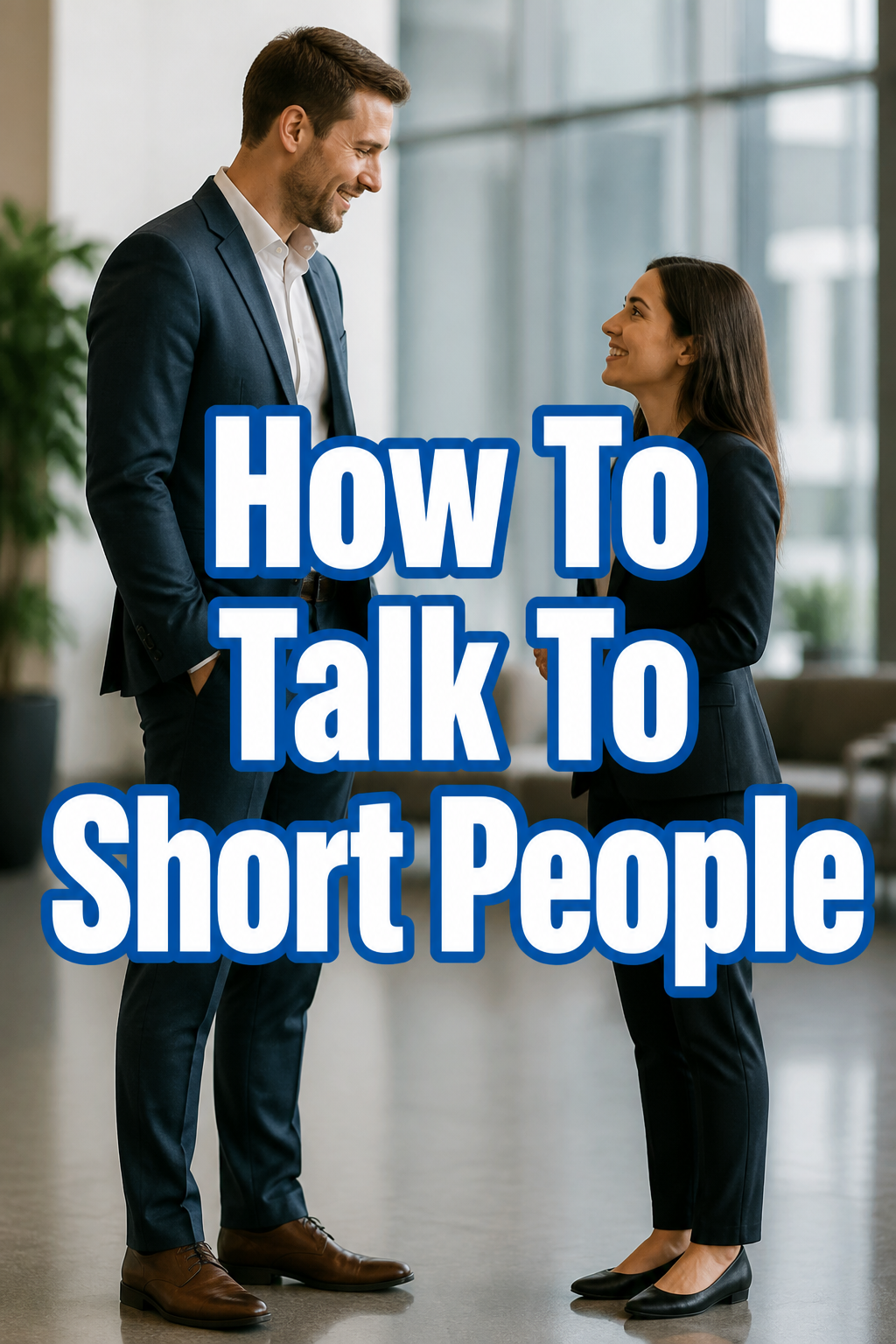
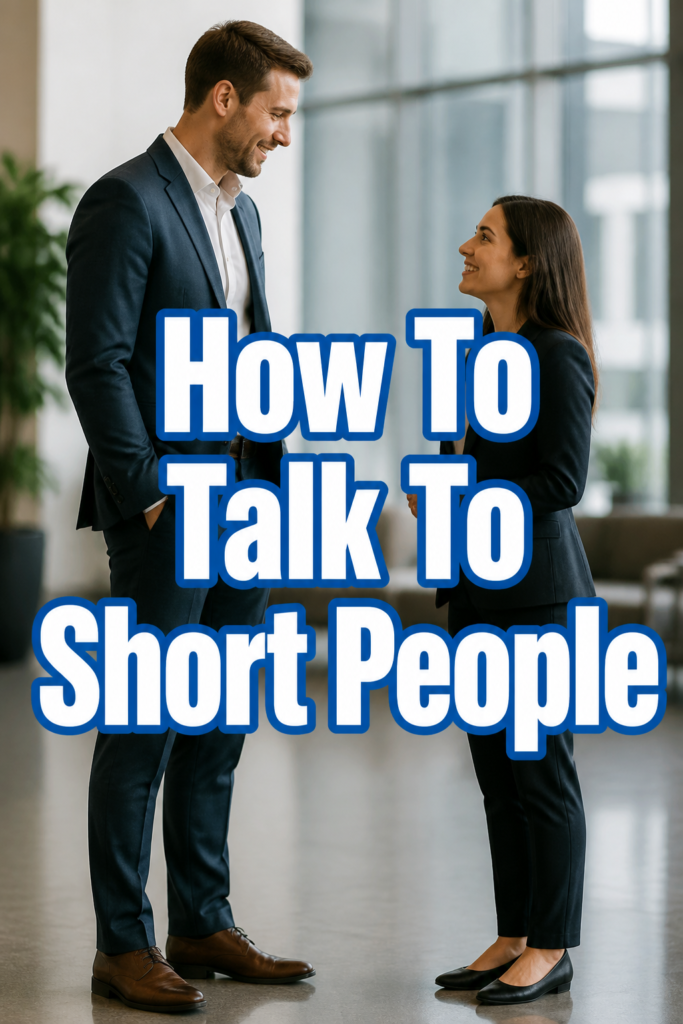
🗣️ How To Talk To Short People
Effective communication bridges all gaps, including those of height.
Navigating conversations with people of varying statures is a common social dynamic, and mastering it enhances every interaction.
Having observed countless communication styles and sometimes fumbled myself, I’ve learned that small adjustments make a world of difference in fostering connection and respect.
Quick Overview
This guide will equip you with practical strategies to communicate more effectively and respectfully with individuals shorter than yourself.
You’ll learn how to create a more inclusive and comfortable conversational experience for everyone involved.
- Time needed: 15-20 minutes to read, a lifetime to practice
- Difficulty: Beginner
- What you’ll need: An open mind, empathy, and a willingness to adjust your habits
Step-by-Step Instructions
Step 1: Adjust Your Physical Stance Thoughtfully
Consider your relative height and how it might impact the other person’s comfort.
Take a moment to assess the situation and decide if a slight adjustment is beneficial.
Sometimes, simply taking a step back or finding a natural way to lower your head slightly can make a big difference.
Bend your knees slightly, or lean against a surface if available, to bring your eye level closer to theirs.
This isn’t about crouching awkwardly, but about making a subtle, respectful effort.
Pro Tip: Avoid sudden, dramatic movements. A gentle lean or a relaxed posture adjustment feels more natural and less performative.
Step 2: Make Eye Contact Naturally and Respectfully
Focus on maintaining consistent, comfortable eye contact, just as you would with anyone else.
This shows engagement and respect, regardless of physical height differences.
Resist the urge to stare down or look over their head, which can feel dismissive.
Instead, find their eyes and hold your gaze as you speak and listen.
Shift your weight or tilt your head slightly to facilitate this connection without straining.
Step 3: Mind Your Personal Space and Proximity
Maintain an appropriate conversational distance that feels comfortable for both parties.
Standing too close can feel intimidating, while standing too far can make the conversation feel disconnected.
Observe their body language for cues about their comfort level with your proximity.
A slight step back or forward can adjust the dynamic positively.
Ensure you’re not inadvertently blocking their view or making them crane their neck excessively to see you.
Step 4: Speak Clearly and Use Appropriate Volume
Enunciate your words clearly, ensuring your message is easy to understand.
Sometimes, height differences can subtly affect how sound travels between two people.
Adjust your volume to suit the environment and the person you’re speaking with.
Avoid shouting down, which can be perceived as condescending or aggressive.
Maintain a natural, conversational tone that conveys warmth and engagement.
Step 5: Listen Actively and Patiently
Give your full attention to what the other person is saying.
Active listening is fundamental to all good communication, irrespective of physical stature.
Nod occasionally, make affirming sounds, and ask clarifying questions to show you’re engaged.
This demonstrates that you value their input and perspective.
Allow for pauses and don’t interrupt, creating space for them to express themselves fully.
Pro Tip: True listening involves more than just hearing words; it’s about understanding the message and the emotion behind it. This builds rapport and trust.
Step 6: Avoid Height-Related Jokes or Comments
Refrain from making any remarks about their height, even if you intend them as lighthearted.
What seems harmless to you might be a sensitive topic for them.
Focus your conversation on shared interests, topics, and ideas that are relevant to your interaction.
Treating height as a non-issue is a sign of respect.
Challenge yourself to see the person beyond their physical attributes.
Step 7: Consider the Environment and Seating
Be mindful of your surroundings when initiating or continuing a conversation.
A noisy, crowded room might require closer proximity or a quieter spot.
Suggest moving to a seated area if the conversation is extended or if standing is becoming uncomfortable for either of you.
Sitting down naturally levels the playing field, making interaction more comfortable.
Choose seating that allows both individuals to sit comfortably and face each other without strain.
Step 8: Offer Practical Assistance Thoughtfully and Respectfully
Offer help with tasks like reaching high shelves or navigating crowds, but always do so with sensitivity.
Never assume someone needs assistance without asking first.
Phrase your offer as a genuine question, such as “Can I help you reach that?” or “Would you like a hand with this?”
Respect their answer, whether they accept or decline.
Avoid making a spectacle of your offer or highlighting their height in the process.
Step 9: Engage in Inclusive Conversation Topics
Focus on the content of the conversation, discussing topics that are mutually engaging and relevant.
Your goal is to connect on an intellectual and personal level.
Ask open-ended questions that invite detailed responses and show genuine interest in their thoughts and experiences.
This fosters a sense of equality and shared participation.
Share your own perspectives and experiences, creating a balanced and flowing dialogue.
Common Mistakes to Avoid
Talking Down (Literally or Figuratively)
One common pitfall is physically looking down at someone while speaking, which can feel condescending.
Figuratively talking down, by using overly simplistic language or a patronizing tone, is equally damaging.
Instead, make a conscious effort to adjust your stance or seek a seated position to bring your eye levels closer.
Speak to them as an equal, using appropriate vocabulary and a respectful tone.
Making Height the Topic of Conversation
It’s easy to fall into the trap of commenting on someone’s height, perhaps with a “wow, you’re so tiny!” or “how do you reach anything?”
These remarks, even if intended innocently, can make the other person feel singled out or uncomfortable.
Shift your focus immediately to their interests, their work, or the actual subject of your discussion.
Treat their height as a non-factor in your interaction to foster a more natural connection.
Ignoring or Overcompensating
Some people ignore height differences entirely, leading to uncomfortable neck craning or strained conversations.
Others overcompensate by bending excessively or making exaggerated movements, which can feel awkward and unnatural.
The goal is a subtle, respectful adjustment, not a performance.
Find a comfortable medium that allows for natural eye contact and comfortable proximity without drawing undue attention to the height difference.
Assuming Limitations or Special Needs
A significant mistake is assuming that a shorter person automatically needs help or has limitations due to their height.
This can be incredibly frustrating and disempowering for the individual.
Always offer assistance as a question, giving them the agency to accept or decline.
Trust in their capabilities and treat them as fully capable individuals, which they almost certainly are.
Troubleshooting
Feeling Awkward About Adjusting Your Stance
It’s common to feel a little self-conscious when first trying to adjust your physical stance during a conversation.
The key is to make subtle, natural movements rather than dramatic ones.
Practice by leaning against a wall or taking a slight step back, aiming for a relaxed posture rather than a rigid one.
Over time, these adjustments will become second nature and feel less awkward.
Misinterpreting Body Language Cues
Sometimes you might misread a person’s body language, thinking they’re uncomfortable when they’re simply listening intently.
If you’re unsure, a gentle, open-ended question can help clarify.
For example, “Is this a comfortable spot for you?” or “Would you prefer to sit down?” can open a dialogue.
Trust your instincts but don’t be afraid to politely confirm if you sense discomfort.
Dealing with Others’ Insensitivity
You might encounter others who are less mindful of their communication with shorter individuals, making inappropriate comments or actions.
If you’re in a position to, you can subtly model inclusive behavior by making your own adjustments and focusing on respectful interaction.
In more direct situations, a polite but firm redirection of the conversation or a quiet word to the insensitive party might be appropriate, if you feel comfortable doing so.
Key Takeaways
- Adjust your physical stance subtly: Aim for comfortable eye level without awkwardness.
- Maintain natural eye contact: Show engagement and respect, avoiding looking down or over.
- Respect personal space: Find a comfortable distance that works for both parties.
- Speak clearly and respectfully: Use an appropriate volume and tone, avoiding condescension.
- Listen actively and patiently: Give full attention and show genuine interest in their words.
- Avoid height-related remarks: Focus on shared interests and treat height as irrelevant.
- Offer assistance thoughtfully: Always ask before helping, respecting their autonomy.
Frequently Asked Questions
Is it always necessary to adjust my height?
Not always, but it’s always worth considering. For brief interactions, a simple lean or step back might suffice. For longer conversations, especially in a standing position, a more deliberate adjustment or seeking a seated option can significantly improve comfort and connection for both individuals.
What if they make a joke about their own height first?
If they initiate a joke about their height, you can respond lightheartedly if it feels natural and appropriate for your relationship. However, avoid escalating the humor or making it a running theme. Let them lead on that topic, and if they move on, follow suit, keeping the focus on other aspects of the conversation.
How can I make someone feel comfortable if I’m much taller?
The best way is through genuine respect and empathy. Make a conscious effort to get closer to their eye level, even if it’s just a slight lean or a step back. Listen attentively, validate their contributions, and ensure your physical presence isn’t overbearing. Your actions and attentiveness speak louder than words.
Should I avoid shaking hands if they’re much shorter?
Absolutely not! A handshake is a universal sign of greeting and respect. Offer your hand naturally, just as you would to anyone else. A slight bend at the waist or a step closer can make the handshake comfortable for both parties without drawing undue attention to height differences.
Our Top Recommended Finds
- Portable Folding Step Stool: Handy for those moments when you need to reach something quickly without asking for help.
- Ergonomic Office Chair with Adjustable Height: Ensures comfortable seating and eye-level communication in a professional setting.
- Noise-Cancelling Headphones: Useful for clearer communication in noisy environments, allowing you to hear and be heard better.
Connecting Beyond the Inches
Mastering communication with people of all heights is a skill that enriches every interaction.
It’s about fostering an environment of mutual respect, understanding, and genuine connection.
Start practicing these simple, thoughtful adjustments today, and watch your communication become more effective and inclusive.
Embrace the opportunity to connect with everyone on an equal footing, regardless of physical stature.