
📚 11 Middle School Classroom Decorating Ideas English Language Arts
Staring at those beige walls again, huh
Feeling like your ELA classroom needs a serious glow-up to actually engage those ever-so-discerning middle schoolers
You’re not alone, friend.
Ditch the drab and check out these seriously cool ideas to transform your space from “meh” to “OMG, I love reading now”

1. Literary Mural Masterpiece
- Best For: Making a bold statement, inspiring awe.
- Vibe: Epic, immersive, artistic.
- Why it works: Visually stunning scenes grab attention and spark conversation.
Pick a large, unused wall. Commission a local art student or even tap into your own inner Picasso to paint a mural depicting iconic scenes from classic or contemporary middle school novels.
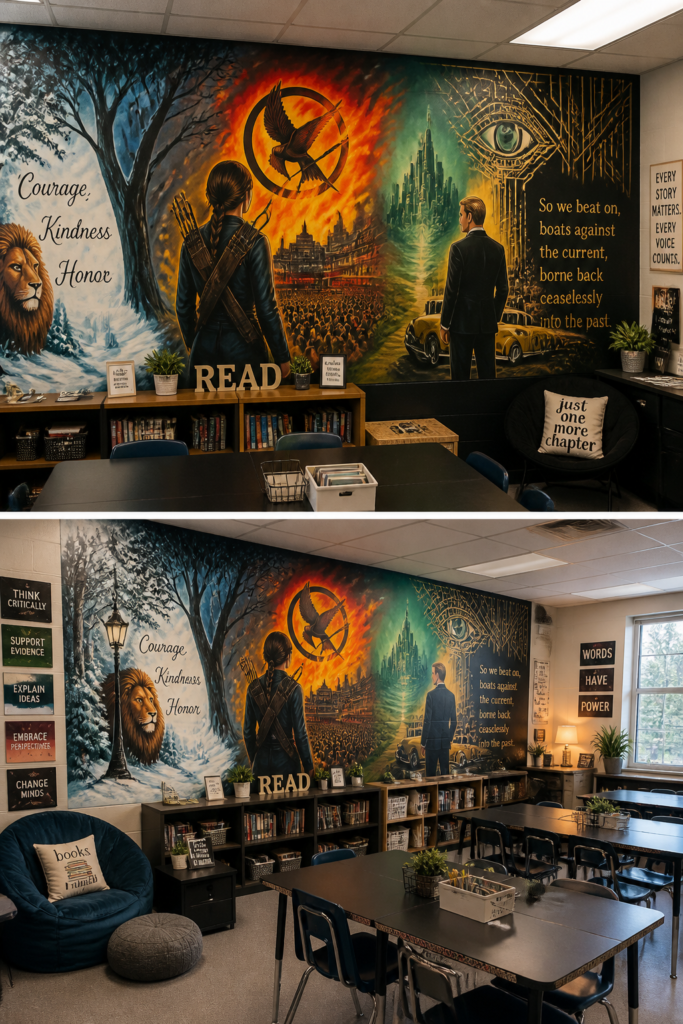
Think Katniss in the arena, a whimsical Narnia landscape, or even a subtle “Great Gatsby” art deco vibe.
Use vibrant acrylics and seal it with a clear coat for longevity. This isn’t just decor; it’s a conversation starter and a constant source of inspiration.
Pro Tip: Involve students in the design process; they’ll feel more ownership and pride.
2. The “Bookstagram” Photo Booth Corner
- Best For: Encouraging book talk, social sharing (safely).
- Vibe: Trendy, interactive, social media ready.
- Why it works: Taps into their digital world, making reading feel cool and shareable.
Create a dedicated corner with a fun backdrop—maybe a faux brick wall or a chalkboard painted with witty literary sayings.
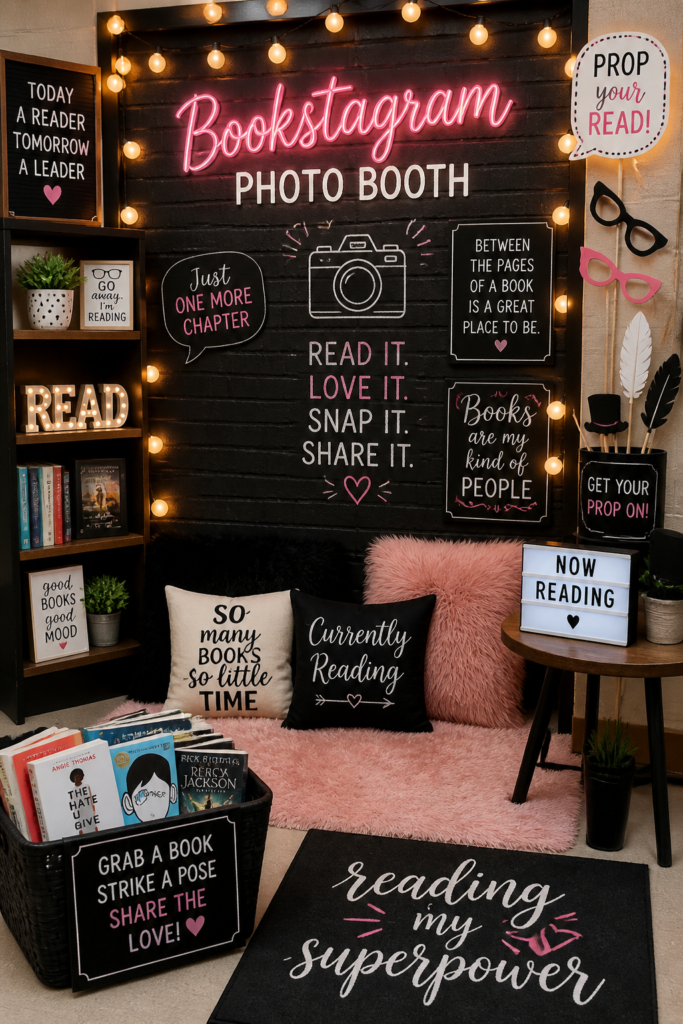
Add some comfy cushions, a small side table with a “now reading” sign, and a few quirky props like oversized glasses or a feather quill.
Students can grab a book from your classroom library, strike a pose, and share their “reads” (minus the actual internet, obviously) with their classmates.
Pro Tip: Change the backdrop theme monthly to align with different genres or author studies.
3. Genre-Specific Reading Nooks
- Best For: Differentiated reading experiences, quiet reflection.
- Vibe: Cozy, curated, inviting.
- Why it works: Helps students explore different literary worlds and find their comfort zone.
Divide your classroom into distinct zones for different genres. Think a “Fantasy Forest” corner with green beanbags and string lights, or a “Mystery Manor” with dark blues, a magnifying glass prop, and perhaps some faux cobwebs.
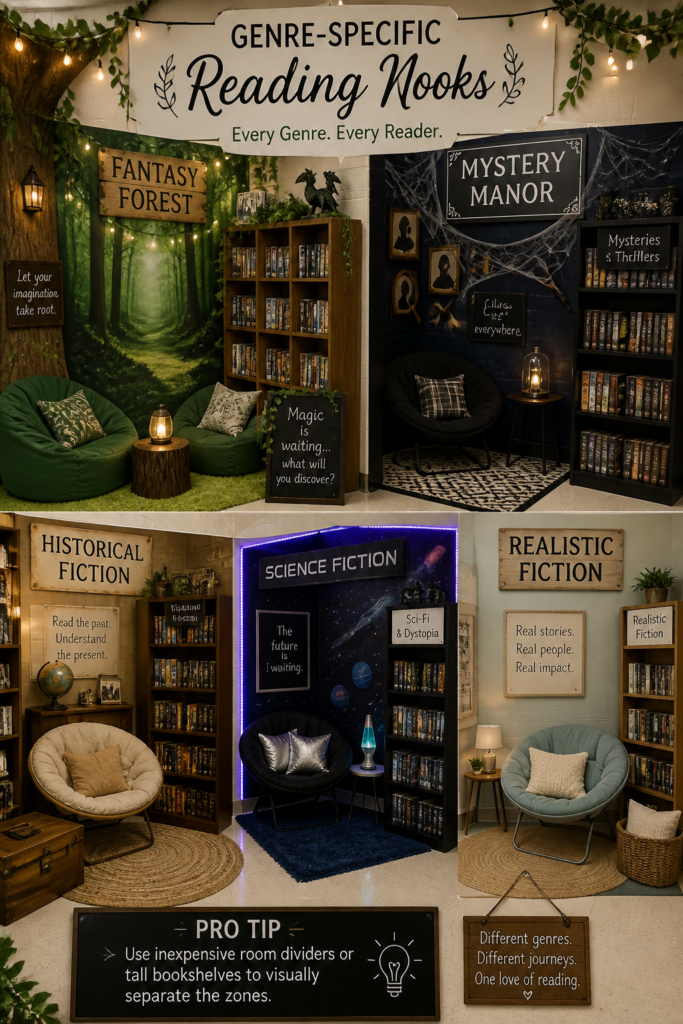
Each nook should have books specific to its genre, making it easy for students to dive into their preferred style.
It’s like a literary theme park, but with less screaming.
Pro Tip: Use inexpensive room dividers or tall bookshelves to visually separate the zones.
4. Interactive Vocabulary Word Wall
- Best For: Active vocabulary acquisition, visual learners.
- Vibe: Dynamic, educational, engaging.
- Why it works: Transforms passive learning into an active, hands-on experience.
Forget static word walls. Dedicate a large whiteboard or bulletin board to key vocabulary words.
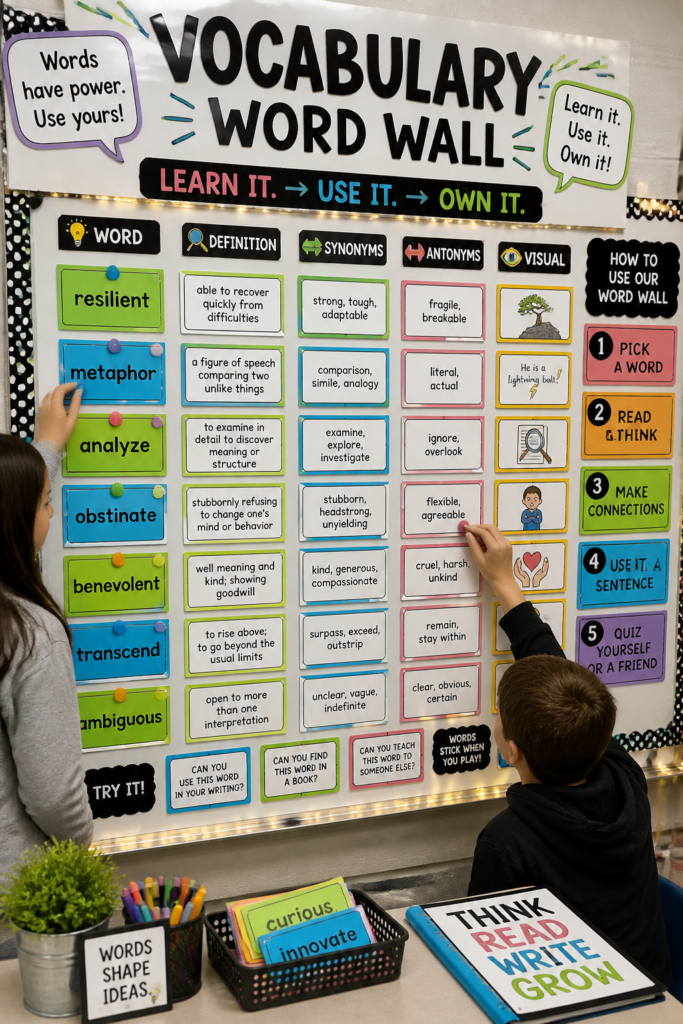
Use magnetic cards or laminated slips for words, definitions, synonyms, antonyms, and even small illustrations.
Students can rearrange, match, and quiz themselves, making vocab practice feel less like a chore and more like a game.
Pro Tip: Color-code word categories (e.g., green for verbs, blue for nouns) for visual organization.
5. Author Spotlight Gallery
- Best For: Humanizing authors, broadening literary horizons.
- Vibe: Inspirational, biographical, artistic.
- Why it works: Connects students with the creators behind the stories they love.
Dedicate a wall or bulletin board to showcasing different authors. Print large, engaging photos of authors—both historical and contemporary—alongside a compelling quote and a fun, lesser-known fact about them.
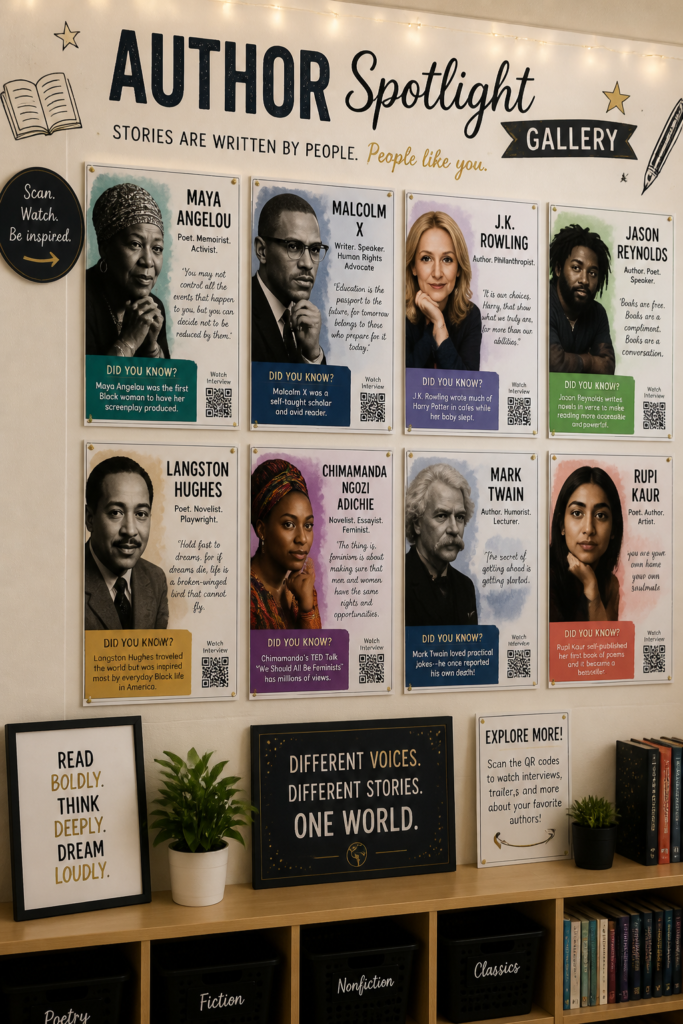
You can even include QR codes that link to short author interviews or book trailers.
It’s like a Hall of Fame, but for literary rockstars.
Pro Tip: Feature diverse authors from various backgrounds and genres to broaden student perspectives.
6. Grammar Games Wall
- Best For: Making grammar fun, collaborative learning.
- Vibe: Playful, instructional, hands-on.
- Why it works: Turns often-dreaded grammar lessons into an interactive puzzle.
Create a wall where grammar rules aren’t just posted, but can be manipulated. Think large sentence strips with magnetic words, or laminated cards for parts of speech that students can arrange to build correct sentences.

You could even have a “comma conundrum” section where students correct punctuation errors using dry-erase markers.
Who knew conjunctions could be so exciting
Pro Tip: Use bright, contrasting colors for different grammatical elements to aid visual learners.
7. “Character Confessions” Bulletin Board
- Best For: Deepening character analysis, creative writing.
- Vibe: Mysterious, empathetic, thought-provoking.
- Why it works: Encourages students to think critically about character motivations and inner lives.
Set up a bulletin board titled “Character Confessions” or “What Are They REALLY Thinking”

Students can anonymously write down their interpretations of a character’s secret thoughts, fears, or unsaid desires from a current novel.
Use sticky notes or small index cards for contributions, creating a dynamic, evolving display of literary empathy.
Pro Tip: Provide specific prompts like “If Hermione could confess one secret, what would it be” to guide their thinking.
8. The Poetry Pad
- Best For: Fostering appreciation for poetry, creative expression.
- Vibe: Serene, artistic, reflective.
- Why it works: Creates a dedicated, calming space for students to engage with verse.
Designate a quiet corner with soft lighting, perhaps some battery-operated string lights, and a few comfy floor cushions or a small rug.
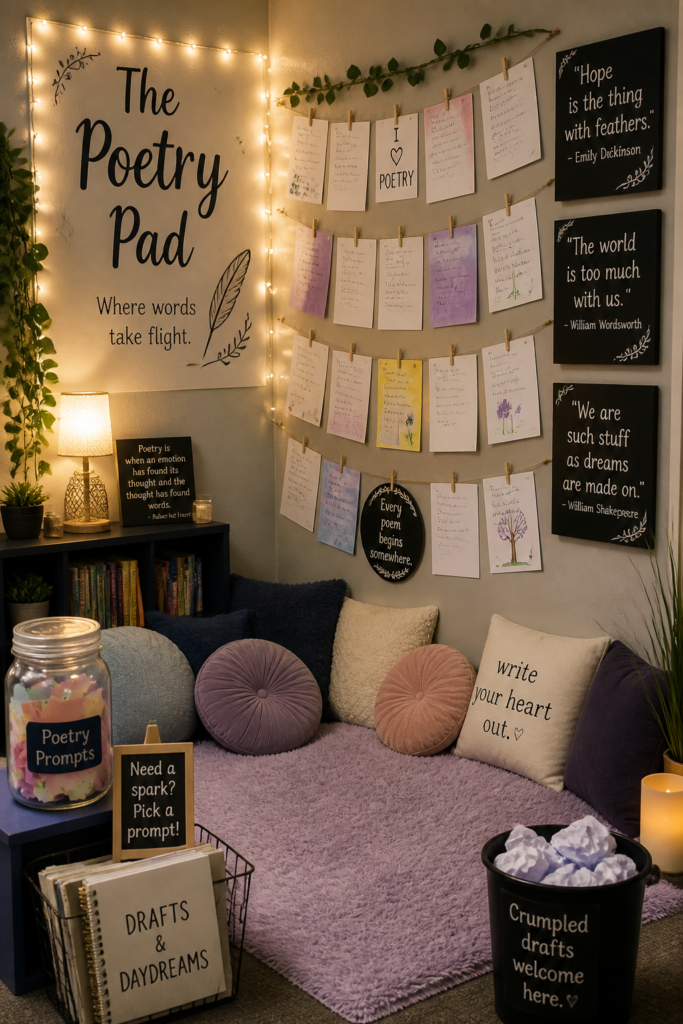
Display student-written poetry on clotheslines with tiny clothespins, alongside inspiring quotes from famous poets.
It’s a safe haven for haikus and sonnets, where the only judgment comes from the occasional crumpled draft.
Pro Tip: Include a jar with “Poetry Prompts” for students needing a creative spark.
9. Literary Quote Stair Risers or Door Frames
- Best For: Constant literary exposure, subtle inspiration.
- Vibe: Intellectual, surprising, understated cool.
- Why it works: Integrates powerful literary messages into everyday pathways.
If your classroom has stairs leading up to a platform or a prominent door frame, use vinyl decals or stencils to apply short, impactful literary quotes.

Each riser or section of the frame can feature a different quote from a beloved book or author.
It’s a subtle way to infuse your space with wisdom, one step or glance at a time.
Pro Tip: Choose quotes that are uplifting or thought-provoking, avoiding anything too lengthy or complex.
10. “Where Are We Reading” World Map
- Best For: Geographic literacy, contextual understanding.
- Vibe: Adventurous, global, educational.
- Why it works: Connects literature to real-world locations, broadening student perspectives.
Hang a large, colorful world map. As students read books set in different locations, have them place a pin or a small book icon on the corresponding spot on the map.
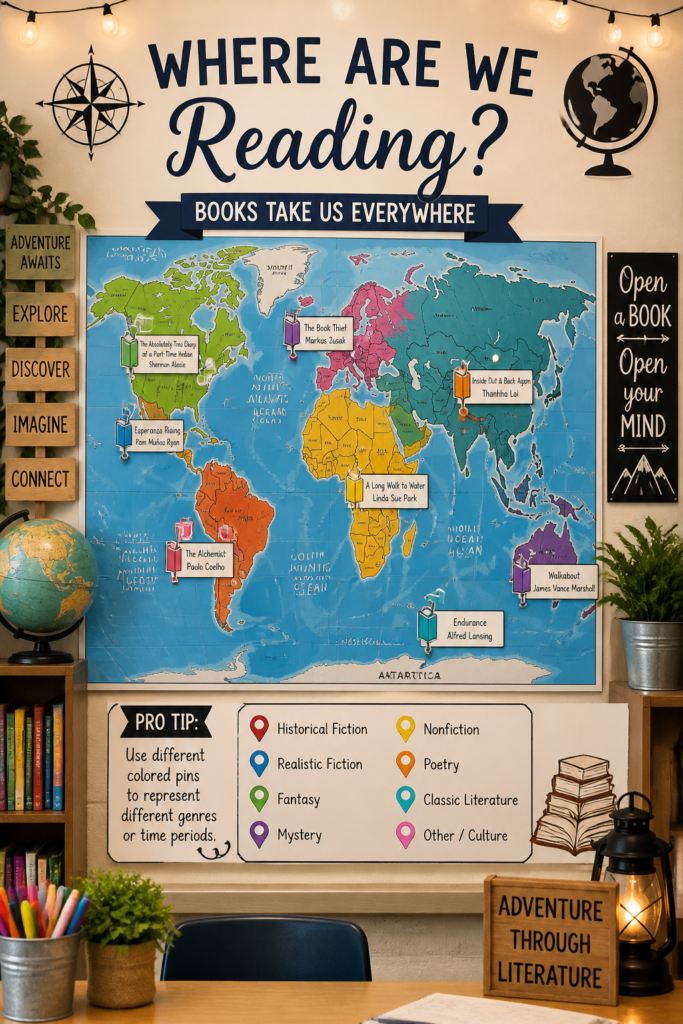
You can even add a tiny label with the book’s title and author.
Soon, your classroom will boast a visual journey through countless literary landscapes.
Pro Tip: Use different colored pins to represent different genres or time periods.
11. DIY Giant Book Spine Wall Decals
- Best For: Creating a library feel, showcasing favorite titles.
- Vibe: Classic, cozy, intellectual.
- Why it works: Transforms blank walls into a visually rich “bookshelf” without taking up space.
Grab some large sheets of colored paper or cardstock. Design and cut out giant book spines, complete with titles and author names of beloved ELA novels.

Laminate them for durability, then arrange them vertically on a blank wall to create the illusion of a massive, well-stocked bookshelf.
It’s a clever, space-saving trick that screams “book lover lives here.”
Pro Tip: Mix classic titles with contemporary young adult fiction to appeal to all students.
Our Top Recommended Finds
- Adjustable Book Display Stands: Perfect for showcasing featured reads or student projects without clutter.
- Colorful Fine-Point Dry Erase Markers: Essential for interactive boards and adding pops of color to student work.
- Battery-Operated LED String Lights: Instantly adds warmth and a cozy ambiance to any reading nook or display.
Which of these will you try first?
So, there you have it.
Eleven ways to ditch the dull and make your middle school ELA classroom the envy of the entire school.
Which one are you buzzing to tackle first

Is there a place where a person could purchase these grammar game wall and vocabulary word wall?