
📚 How To Study Like Hermione Granger
Ever wondered how Hermione Granger managed to ace every class, even Ancient Runes and Arithmancy?
Her academic prowess wasn’t just magic; it was a result of incredibly disciplined, effective study habits.
I once struggled with truly grasping complex subjects, but by adopting these very principles, I transformed my own learning experience and saw significant improvements in my understanding and grades.

Quick Overview
This guide will teach you the systematic approach Hermione used to master any subject. You’ll learn to organize your studies, engage deeply with material, and retain knowledge effectively. By the end, you’ll have a robust framework for academic success.
- Time needed: Initial setup (1-2 hours), then daily application (1-3 hours per subject).
- Difficulty: Intermediate – requires discipline and consistent effort.
- What you’ll need: A planner, notebooks, pens, highlighters, a quiet study space, and your textbooks.
Step-by-Step Instructions
Step 1: Prepare Your Study Sanctuary
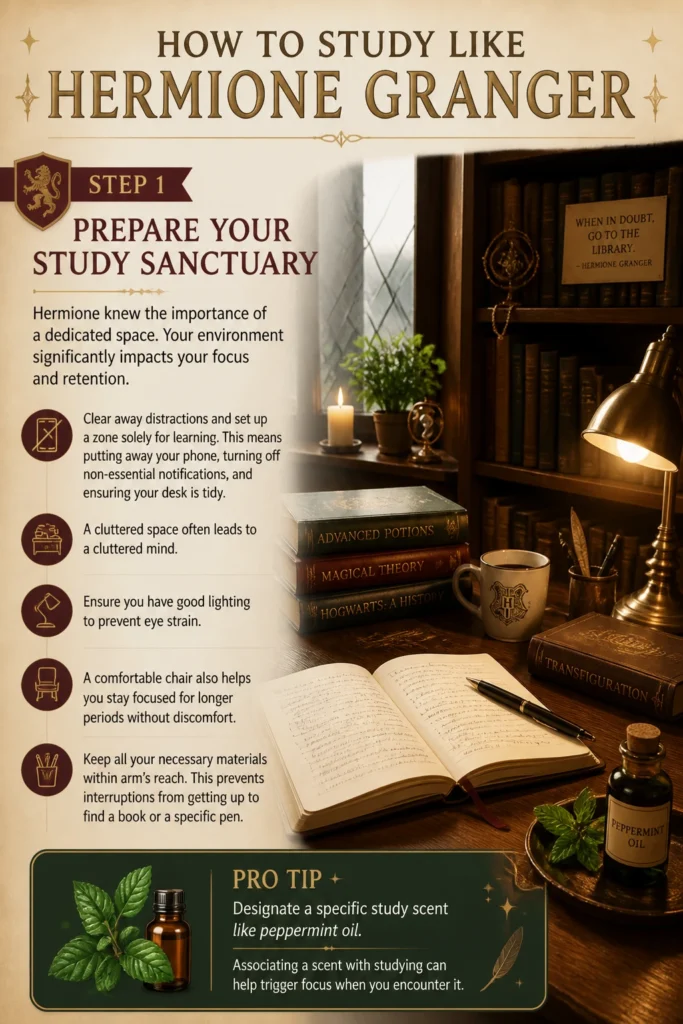
Hermione knew the importance of a dedicated space. Your environment significantly impacts your focus and retention. Clear away distractions and set up a zone solely for learning.
This means putting away your phone, turning off non-essential notifications, and ensuring your desk is tidy. A cluttered space often leads to a cluttered mind.
Ensure you have good lighting to prevent eye strain. A comfortable chair also helps you stay focused for longer periods without discomfort.
Keep all your necessary materials within arm’s reach. This prevents interruptions from getting up to find a book or a specific pen.
Pro Tip: Designate a specific “study scent” like peppermint oil. Associating a scent with studying can help trigger focus when you encounter it.
Step 2: Plan Your Academic Assault
Hermione never went into a lesson unprepared, nor did she tackle exams without a meticulous schedule. Planning is your first line of defense against overwhelm.
Start by mapping out your entire academic term. Note down all major assignments, projects, and exam dates in a central planner.
Break down large tasks into smaller, manageable chunks. Instead of “Study for History Exam,” write “Review Chapter 1,” “Create History Timeline,” and “Practice Essay Questions.”
Allocate specific time slots for each subject and task in your daily or weekly schedule. Be realistic about how much you can accomplish in each session.
Prioritize tasks based on urgency and importance. Tackle high-priority items when your energy levels are highest.
Step 3: Engage Actively with Material
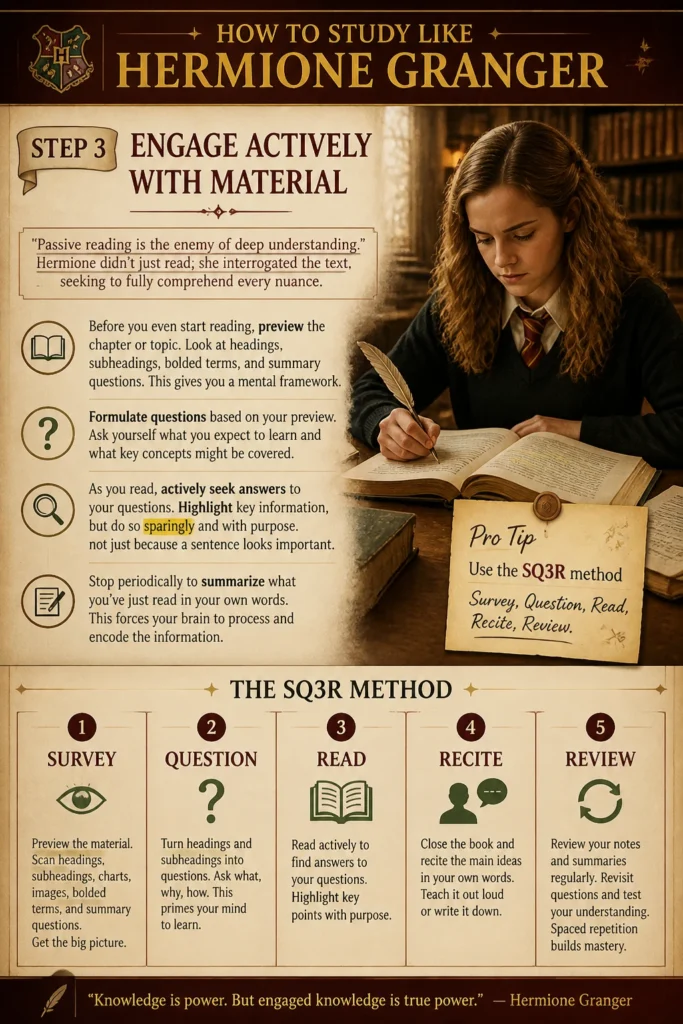
Passive reading is the enemy of deep understanding. Hermione didn’t just read; she interrogated the text, seeking to fully comprehend every nuance.
Before you even start reading, preview the chapter or topic. Look at headings, subheadings, bolded terms, and summary questions. This gives you a mental framework.
Formulate questions based on your preview. Ask yourself what you expect to learn and what key concepts might be covered.
As you read, actively seek answers to your questions. Highlight key information, but do so sparingly and with purpose, not just because a sentence looks important.
Stop periodically to summarize what you’ve just read in your own words. This forces your brain to process and encode the information.
Pro Tip: Use the SQ3R method: Survey, Question, Read, Recite, Review. This structured approach ensures active engagement at every stage.
Step 4: Master the Art of Note-Taking
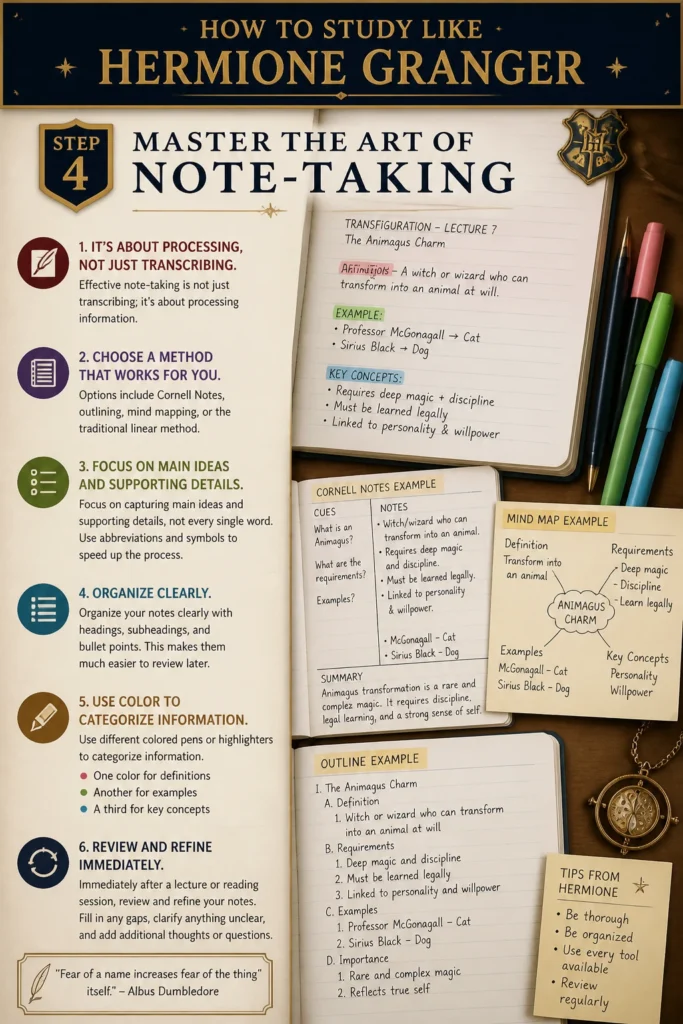
Hermione’s notes were legendary for their thoroughness and clarity. Effective note-taking is not just transcribing; it’s about processing information.
Choose a note-taking method that works for you. Options include Cornell Notes, outlining, mind mapping, or the traditional linear method.
Focus on capturing main ideas and supporting details, not every single word. Use abbreviations and symbols to speed up the process.
Organize your notes clearly with headings, subheadings, and bullet points. This makes them much easier to review later.
Use different colored pens or highlighters to categorize information. For example, one color for definitions, another for examples, and a third for key concepts.
Immediately after a lecture or reading session, review and refine your notes. Fill in any gaps, clarify confusing points, and add your own thoughts or questions.
Step 5: Review Relentlessly and Strategically
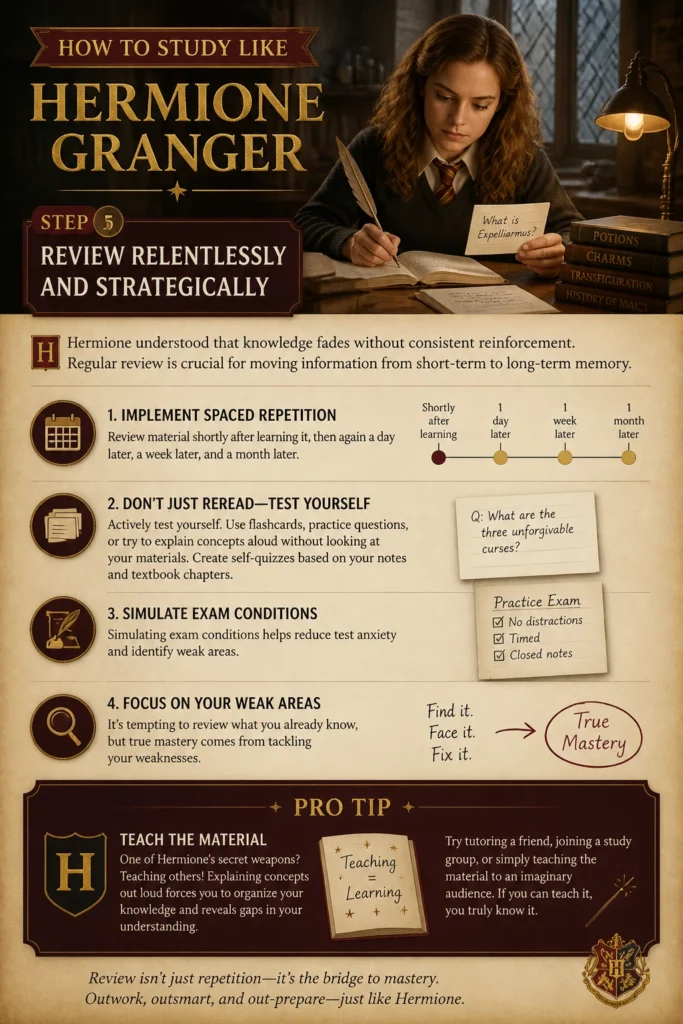
Hermione understood that knowledge fades without consistent reinforcement. Regular review is crucial for moving information from short-term to long-term memory.
Implement spaced repetition into your study routine. Review material shortly after learning it, then again a day later, a week later, and a month later.
Don’t just reread your notes. Actively test yourself. Use flashcards, practice questions, or try to explain concepts aloud without looking at your materials.
Create self-quizzes based on your notes and textbook chapters. Simulating exam conditions helps reduce test anxiety and identify weak areas.
Focus your review efforts on areas where you struggle most. It’s tempting to review what you already know, but true mastery comes from tackling your weaknesses.
Pro Tip: Teach the material to an imaginary student, a pet, or a study partner. Explaining concepts aloud solidifies your understanding and reveals gaps in your knowledge.
Step 6: Seek Understanding, Not Just Answers
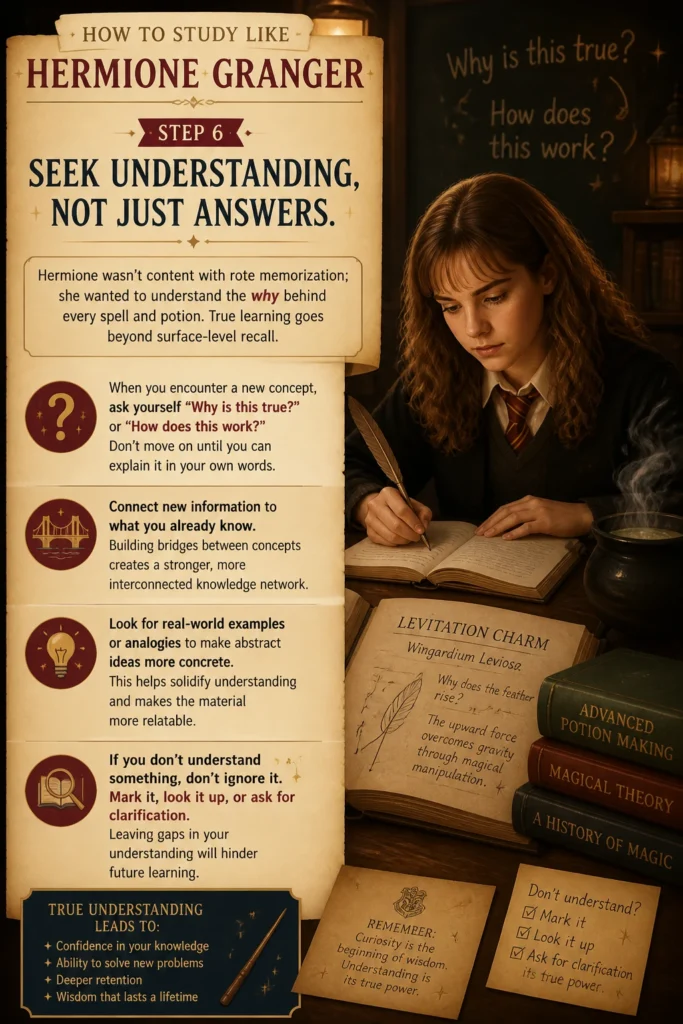
Hermione wasn’t content with rote memorization; she wanted to understand the “why” behind every spell and potion. True learning goes beyond surface-level recall.
When you encounter a new concept, ask yourself “Why is this true?” or “How does this work?” Don’t move on until you can explain it in your own words.
Connect new information to what you already know. Building bridges between concepts creates a stronger, more interconnected knowledge network.
Look for real-world examples or analogies to make abstract ideas more concrete. This helps solidify understanding and makes the material more relatable.
If you don’t understand something, don’t ignore it. Mark it, look it up, or ask for clarification. Leaving gaps in your understanding will hinder future learning.
Step 7: Collaborate and Consolidate Knowledge
Even Hermione occasionally relied on Harry and Ron, whether for moral support or a different perspective. Study groups can be incredibly powerful.
Form a study group with motivated peers. Choose members who are committed to learning and contribute positively.
Use group sessions to discuss challenging concepts, quiz each other, and explain topics. Teaching others is a highly effective way to learn.
Assign different topics to group members to research and present. This ensures everyone contributes and learns from each other’s insights.
Be prepared for group sessions. Do your individual studying beforehand so you can contribute meaningfully and ask informed questions.
Pro Tip: Treat study group sessions as opportunities to consolidate your understanding and identify any remaining weak points, not as a replacement for individual study.
Step 8: Prioritize Well-being and Balance
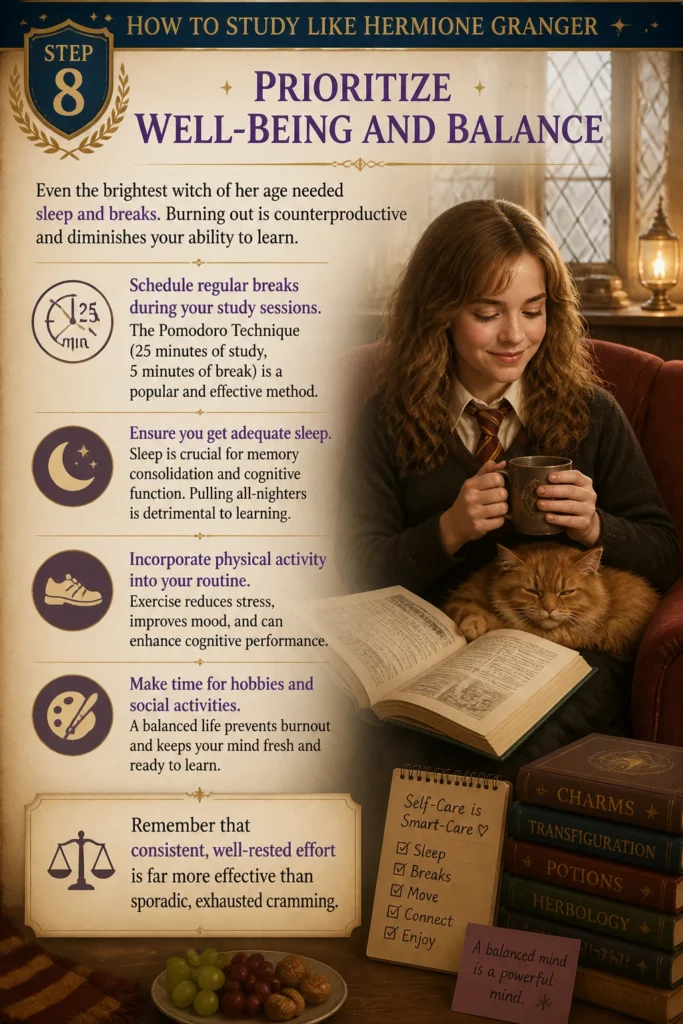
Even the brightest witch of her age needed sleep and breaks. Burning out is counterproductive and diminishes your ability to learn.
Schedule regular breaks during your study sessions. The Pomodoro Technique (25 minutes of study, 5 minutes of break) is a popular and effective method.
Ensure you get adequate sleep. Sleep is crucial for memory consolidation and cognitive function. Pulling all-nighters is detrimental to learning.
Incorporate physical activity into your routine. Exercise reduces stress, improves mood, and can enhance cognitive performance.
Make time for hobbies and social activities. A balanced life prevents burnout and keeps your mind fresh and ready to learn.
Remember that consistent, well-rested effort is far more effective than sporadic, exhausted cramming.
Common Mistakes to Avoid
Passive Reading
Just skimming through your textbook or notes without actively engaging is a common pitfall. Your brain won’t retain information effectively if it’s not processing it. Instead, interact with the text by questioning, summarizing, and connecting ideas as you read.
Cramming Before Exams
Trying to absorb a semester’s worth of information in a few frantic days before an exam is highly inefficient. This leads to superficial memorization that quickly fades. Regular, spaced review sessions throughout the term are far more effective for long-term retention.
Ignoring Weak Spots
It’s natural to gravitate towards subjects you find easy or enjoyable. However, neglecting your challenging areas will leave significant gaps in your understanding. Actively identify your weak points and dedicate extra study time to them for true mastery.
Disorganized Notes
Haphazard notes that lack structure or clarity become almost useless when it’s time to review. They can even create more confusion. Invest time in organizing your notes effectively from the start, using headings, bullet points, and a consistent system.
Troubleshooting
Feeling Overwhelmed by the Material
When a subject feels too vast, it’s easy to get discouraged. Break the material down into the smallest possible units. Focus on mastering one concept or one page at a time before moving on. Review your overall plan to regain perspective.
Losing Motivation to Study
Everyone experiences dips in motivation. Reconnect with your goals and remind yourself why this learning is important to you. Try switching up your study location, rewarding yourself for small achievements, or studying with a friend to reignite your enthusiasm.
Difficulty Understanding Complex Topics
Some concepts are genuinely challenging. Don’t be afraid to seek help. Consult your professor, a tutor, or a knowledgeable peer. Sometimes a different explanation or perspective is all you need to grasp a difficult idea. Break it down into simpler components.
Key Takeaways
- Strategic Planning: Always begin with a clear study schedule and break down large tasks.
- Active Engagement: Don’t just read; question, summarize, and connect with the material.
- Effective Note-Taking: Organize and refine your notes to create valuable study tools.
- Consistent Review: Utilize spaced repetition to solidify knowledge in your long-term memory.
- Seek Deep Understanding: Focus on the “why” and “how,” not just memorization.
- Prioritize Well-being: Balance study with rest, exercise, and breaks to prevent burnout.
Frequently Asked Questions
How often should I study?
Consistency is more important than duration. Aim for daily study sessions, even if they are short (30-60 minutes per subject). This reinforces learning without overwhelming you. Longer sessions can be scheduled for weekends or before major exams.
What if I’m not naturally smart like Hermione?
Hermione’s brilliance stemmed from her dedication and effective methods, not just innate ability. Anyone can cultivate these study habits. Focus on consistent effort and applying these practical strategies, and you will see significant improvement over time.
How do I stay motivated when the material is boring?
Try to find an angle that interests you, even if it’s just connecting the material to a real-world application. Set small, achievable goals and reward yourself. Studying with a motivated friend can also provide an external push. Remember your ultimate goal.
Can I study with friends, or is solo study better?
Both have their place. Solo study is crucial for initial learning and deep comprehension. Group study is excellent for discussing concepts, testing each other, and consolidating knowledge. Ensure group sessions remain focused and productive, not social gatherings.
Our Top Recommended Finds
- Academic Planner: A physical planner helps you visualize your schedule and commitments, making it easier to stick to your study plan.
- High-Quality Gel Pens: Smooth-writing pens make note-taking more enjoyable and legible, encouraging you to write more detailed and organized notes.
- Digital Flashcard App (e.g., Anki): These apps use spaced repetition algorithms to optimize your review schedule, ensuring you study concepts just before you forget them.
Master Your Academic Destiny
You now have the blueprint to transform your study habits and achieve academic excellence. This isn’t just about passing tests; it’s about truly understanding and retaining knowledge that will serve you well beyond the classroom.
Start small today. Pick one step, like organizing your study space or planning your next study session. The journey to becoming your own academic champion begins with a single, intentional action. Embrace these strategies and watch your understanding flourish.