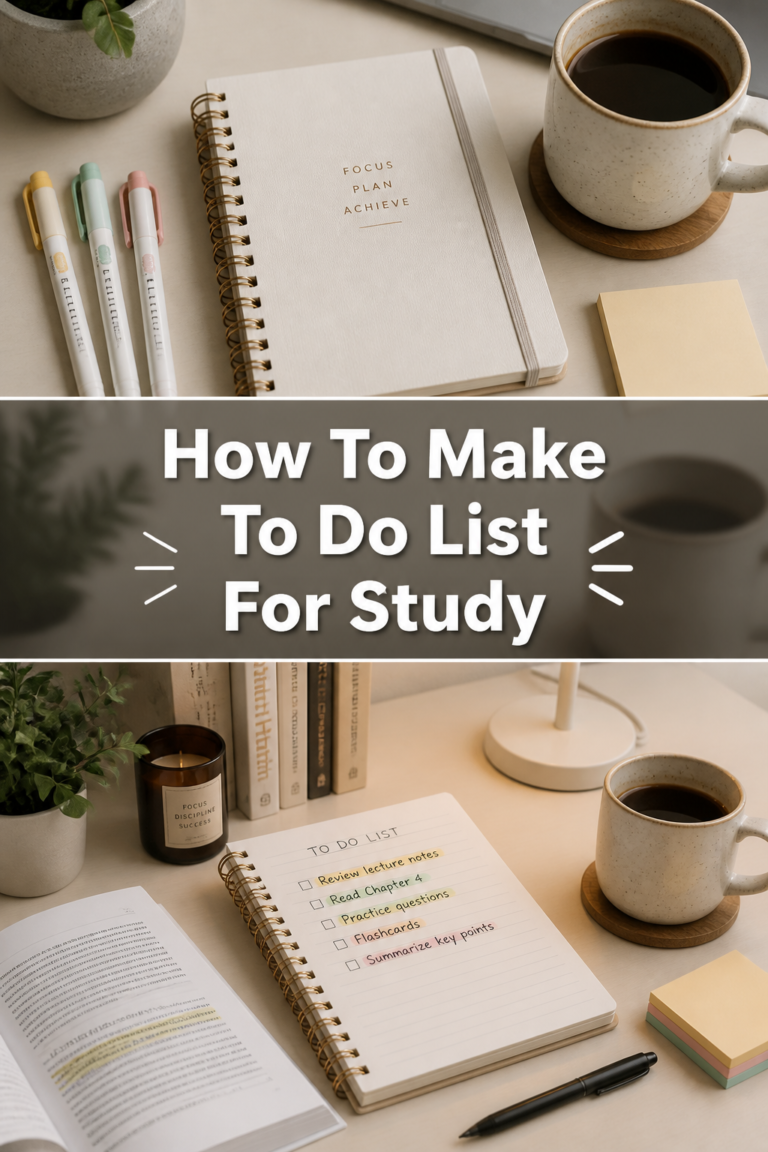
📚 How To Be A Good Student
Remember that feeling of struggling, wondering if you were truly doing enough?
I’ve navigated the complexities of academic life, learning firsthand what truly makes a difference.
This guide distills those experiences into practical steps, helping you transform your approach to learning.

Quick Overview
This guide will equip you with actionable strategies to improve your academic performance, manage your time effectively, and foster a genuine love for learning.
You’ll learn how to move beyond simply getting by, becoming a truly engaged and successful student.
- Time needed: Ongoing effort, initial setup and habit building 1-2 hours per week
- Difficulty: Beginner
- What you’ll need: Notebooks, pens, a calendar or planner, an open mind, and a willingness to adapt
Step-by-Step Instructions
Step 1: Cultivate a Growth Mindset
Your attitude towards learning shapes your entire experience. Embrace the idea that your intelligence and abilities can grow with effort and dedication.
See challenges not as roadblocks, but as opportunities to develop new skills and deepen your understanding.
- Believe in your capacity to learn and improve.
- View mistakes as valuable learning experiences, not failures.
- Focus on effort and process, not just outcomes.
- Seek out new challenges to expand your comfort zone.
Pro Tip: When you encounter a difficult subject, tell yourself, “I haven’t mastered this yet,” rather than, “I can’t do this.” This subtle shift in language reinforces a growth-oriented perspective.
Step 2: Master Time Management
Effective time management is the cornerstone of academic success. It helps you balance coursework, extracurriculars, and personal life without feeling overwhelmed.
Planning your time ensures you allocate sufficient attention to all your responsibilities.
- Use a planner or digital calendar to track assignments, deadlines, and study sessions.
- Break down large tasks into smaller, manageable chunks.
- Prioritize your tasks based on urgency and importance.
- Schedule dedicated study blocks and stick to them.
- Allocate time for breaks and self-care to prevent burnout.
Step 3: Develop Active Learning Strategies
Passive learning, like simply reading notes or re-watching lectures, is often ineffective. Active learning engages your brain more deeply, leading to better retention and comprehension.
Actively interacting with the material helps solidify your understanding.
- Summarize information in your own words after reading.
- Teach concepts to a friend or an imaginary audience.
- Create flashcards for key terms and ideas.
- Practice solving problems and answering potential exam questions.
- Ask “why” and “how” questions as you study to connect ideas.
Pro Tip: After a lecture, try to recall the main points without looking at your notes. Then, compare what you remembered with your actual notes, filling in any gaps. This retrieval practice significantly boosts memory.
Step 4: Practice Effective Note-Taking
Your notes are a vital tool for understanding and review. Good note-taking isn’t just about writing everything down; it’s about capturing key information in a way that makes sense to you.
Well-organized notes become a powerful study resource.
- Listen for main ideas and keywords during lectures.
- Use abbreviations and symbols to speed up writing.
- Organize your notes with headings, bullet points, and numbering.
- Review and refine your notes shortly after class, adding details or clarifying points.
- Experiment with different methods like Cornell notes or mind mapping to find what works best.
Step 5: Engage Actively in Class
Your presence in the classroom is an opportunity to learn directly from your instructors and peers. Active participation enhances your understanding and demonstrates your commitment.
Engagement makes learning a two-way street.
- Arrive prepared by completing assigned readings.
- Listen attentively and make eye contact with the speaker.
- Ask thoughtful questions when you need clarification.
- Participate in discussions and group activities.
- Contribute your perspectives respectfully.
Step 6: Seek Help When Needed
Being a good student doesn’t mean knowing everything. It means knowing when and how to get support. Struggling in silence can hinder your progress and lead to frustration.
Asking for help is a sign of strength, not weakness.
- Reach out to your teachers or professors during office hours.
- Form study groups with classmates.
- Utilize tutoring services offered by your school.
- Consult online resources or educational videos for additional explanations.
- Be specific about what you don’t understand.
Pro Tip: Before approaching your instructor, try to pinpoint the exact concept or problem you’re struggling with. This shows you’ve made an effort and helps them provide more targeted assistance.
Step 7: Prioritize Your Well-being
Academic success is unsustainable without a foundation of good physical and mental health. Neglecting your well-being can lead to stress, burnout, and decreased performance.
Taking care of yourself is an essential part of being a good student.
- Ensure you get enough sleep each night.
- Eat nutritious meals and stay hydrated.
- Incorporate regular physical activity into your routine.
- Practice stress-reducing techniques like mindfulness or meditation.
- Allow yourself downtime and pursue hobbies you enjoy.
Step 8: Reflect and Adjust Regularly
Learning is an ongoing process of growth and adaptation. Periodically evaluating your strategies helps you identify what’s working and what needs tweaking.
Self-reflection allows you to continuously improve your approach.
- Review your study habits and academic performance at the end of each week or month.
- Identify areas where you’re excelling and areas that need improvement.
- Experiment with new study techniques or time management strategies.
- Don’t be afraid to change your approach if something isn’t yielding results.
- Celebrate your progress and small victories along the way.
Common Mistakes to Avoid
Procrastinating on Assignments
Putting off tasks until the last minute creates immense stress and often results in rushed, lower-quality work. It prevents you from truly engaging with the material and learning effectively.
Instead, break assignments into smaller parts and start early, spreading the work over several days or weeks. This allows for deeper understanding and less pressure.
Studying Passively
Simply rereading notes or highlighting text without active engagement is a common trap. This method gives the illusion of learning but often leads to poor retention and recall during exams.
Actively test yourself, summarize concepts in your own words, and teach the material to others. This forces your brain to process and retrieve information more effectively.
Neglecting Self-Care
Many students believe that sacrificing sleep, healthy eating, and leisure time is necessary for academic success. This approach is counterproductive, leading to exhaustion, poor concentration, and increased stress levels.
Prioritize your well-being by scheduling regular breaks, getting adequate sleep, eating nutritious food, and engaging in activities you enjoy. A well-rested mind learns more efficiently.
Fear of Asking Questions
Some students hesitate to ask questions in class or seek help from instructors, fearing they might look unintelligent. This prevents them from clarifying doubts and understanding difficult concepts, creating knowledge gaps.
Embrace curiosity and recognize that asking questions is a sign of engagement and a desire to learn. Your instructors are there to help, and clarifying doubts benefits everyone.
Troubleshooting
“I feel overwhelmed by all my assignments.”
Feeling overwhelmed often stems from a lack of clear planning. Start by writing down every single assignment and deadline.
Then, break each large task into smaller, actionable steps. Use a planner to schedule specific times for each step, treating them like appointments you can’t miss. Focus on completing one small step at a time.
“I study for hours but don’t remember anything.”
This usually indicates passive study habits. Rereading notes or textbooks without active engagement is inefficient. Your brain isn’t being challenged to recall or process the information deeply.
Shift to active recall methods: test yourself with flashcards, explain concepts aloud, create mind maps, or try to solve problems from memory. These techniques force your brain to work harder and embed information more effectively.
“I struggle to stay motivated.”
Motivation often wanes when goals feel too distant or tasks too daunting. Connect your studies to your larger goals or interests to find intrinsic motivation. Remind yourself why you’re learning this material.
Set small, achievable goals for each study session and reward yourself for meeting them. Partner with a study buddy for accountability, and ensure you’re taking care of your physical and mental well-being to maintain energy levels.
Key Takeaways
- Adopt a growth mindset, viewing challenges as opportunities for learning and improvement.
- Implement effective time management strategies to organize tasks and prevent overwhelm.
- Engage in active learning methods like summarizing and teaching to deepen comprehension.
- Take clear, concise notes that you review and refine regularly.
- Participate actively in class, asking questions and contributing to discussions.
- Don’t hesitate to seek help from instructors or peers when you encounter difficulties.
- Prioritize your physical and mental well-being to sustain long-term academic success.
- Regularly reflect on your study habits and adjust your approach as needed.
Frequently Asked Questions
How much time should I dedicate to studying each day?
The ideal study time varies based on your courses’ difficulty and your learning style. A common guideline is 2-3 hours of study for every hour of class time. However, focus on effective, active study sessions rather than just clocking hours. Consistency is more important than marathon sessions.
Is it better to study alone or in a group?
Both methods offer unique benefits. Studying alone allows for deep focus and independent problem-solving. Group study can be excellent for discussing concepts, teaching each other, and clarifying doubts. The best approach often involves a combination of both, using group sessions to reinforce individual learning.
How can I overcome test anxiety?
Test anxiety often stems from feeling unprepared or overwhelmed. Combat it by being thoroughly prepared through consistent study and practice. Practice relaxation techniques like deep breathing, and ensure you get enough sleep before the test. Visualize yourself performing well, and remember that a single test does not define your worth.
What if I don’t enjoy a particular subject?
It’s normal not to love every subject. Try to find a personal connection to the material, even if it’s just understanding its practical application or how it fits into a larger picture. Break down the subject into smaller, more manageable parts. Focus on mastery for the sake of learning, rather than solely for enjoyment, and remember it’s a temporary challenge.
Our Top Recommended Finds
- Quality Notebooks: Durable notebooks (like Moleskine or Leuchtturm1917) encourage neatness and make reviewing notes a pleasure.
- Reliable Pen Set: A good set of pens (gel or fine-point) in various colors can make note-taking more engaging and aid in organizing information visually.
- Digital Planner/Calendar App: Tools like Google Calendar, Todoist, or Notion help you organize assignments, set reminders, and manage your schedule efficiently.
Embrace Your Learning Journey
Becoming a good student isn’t about innate talent; it’s about developing effective habits and a resilient mindset.
Each step you take, each strategy you implement, builds momentum towards greater academic success and personal growth.
Start today by choosing one small change from this guide. Your journey to becoming a more effective and fulfilled student begins with that first intentional action.