
😊 How To Get People To Like You At School
Navigating the social landscape at school can sometimes feel like a puzzle.
You want to connect with others, make friends, and feel accepted, but it’s not always clear how to start.
Having experienced my own share of awkward school moments, I’ve learned that building genuine connections comes down to a few simple, powerful actions.

Quick Overview
This guide will show you practical ways to build positive relationships and make new friends at school.
You’ll learn how to approach others confidently, communicate effectively, and be someone people genuinely enjoy being around.
- Time needed: Ongoing effort, but you’ll see results in weeks
- Difficulty: Beginner
- What you’ll need: An open mind, a willingness to try new things, and a little courage
Step-by-Step Instructions
Step 1: Cultivate a Positive Mindset
Your attitude is often the first thing people notice about you. Approaching school with a positive outlook makes you more approachable and attractive to others.
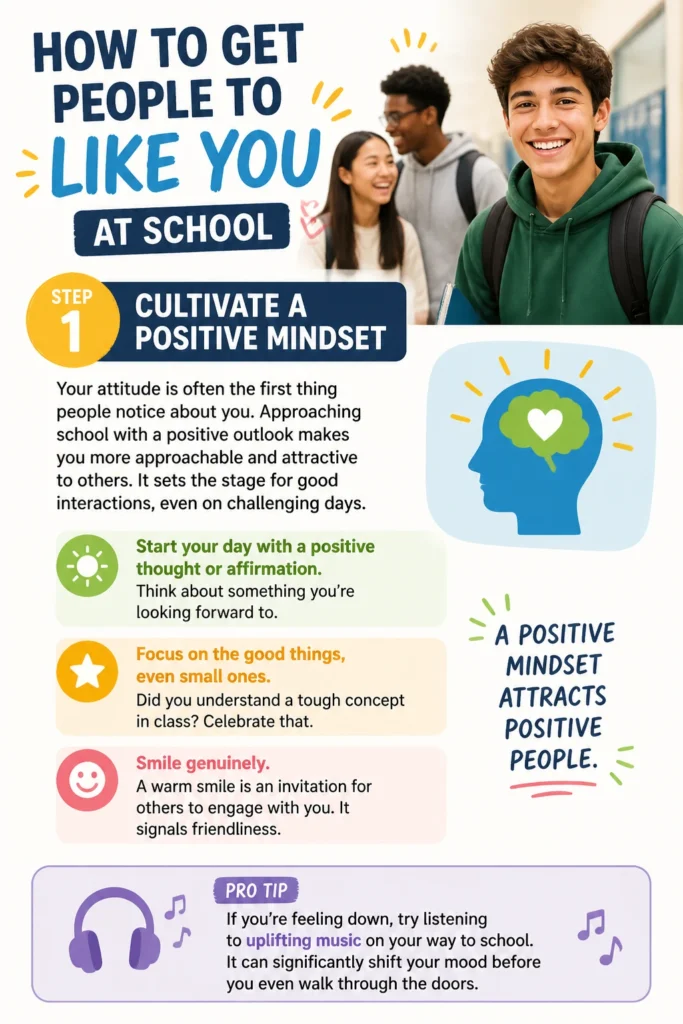
It sets the stage for good interactions, even on challenging days.
- Start your day with a positive thought or affirmation. Think about something you’re looking forward to.
- Focus on the good things, even small ones. Did you understand a tough concept in class? Celebrate that.
- Smile genuinely. A warm smile is an invitation for others to engage with you. It signals friendliness.
Pro Tip: If you’re feeling down, try listening to uplifting music on your way to school. It can significantly shift your mood before you even walk through the doors.
Step 2: Be Approachable and Open
People are more likely to talk to you if you look like you want to be talked to. Your body language speaks volumes before you say a single word.
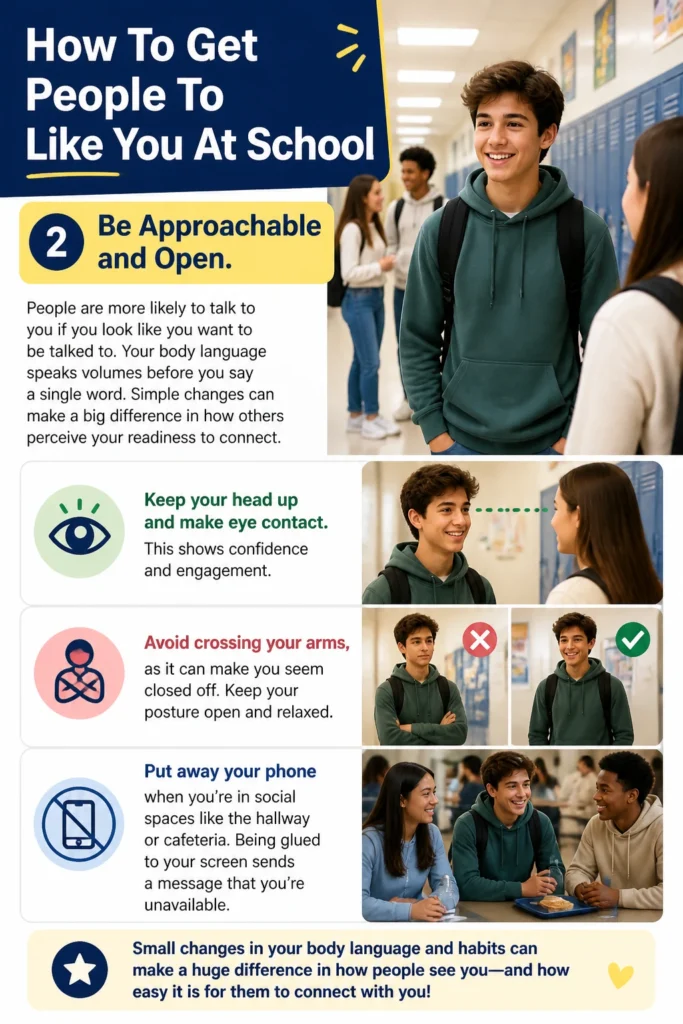
Simple changes can make a big difference in how others perceive your readiness to connect.
- Keep your head up and make eye contact. This shows confidence and engagement.
- Avoid crossing your arms, as it can make you seem closed off. Keep your posture open and relaxed.
- Put away your phone when you’re in social spaces like the hallway or cafeteria. Being glued to your screen sends a message that you’re unavailable.
Step 3: Show Genuine Interest in Others
Everyone loves to feel heard and understood. When you truly listen to someone and ask thoughtful questions, you make them feel valued.
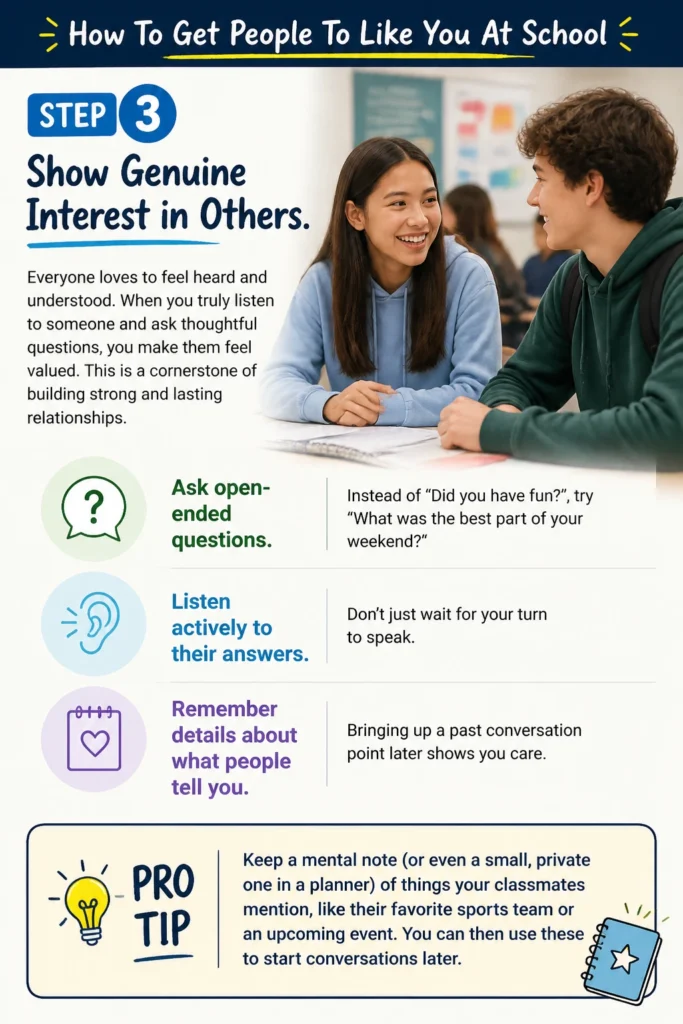
This is a cornerstone of building strong and lasting relationships.
- Ask open-ended questions. Instead of “Did you have fun?”, try “What was the best part of your weekend?”
- Listen actively to their answers. Don’t just wait for your turn to speak.
- Remember details about what people tell you. Bringing up a past conversation point later shows you care.
Pro Tip: Keep a mental note (or even a small, private one in a planner) of things your classmates mention, like their favorite sports team or an upcoming event. You can then use these to start conversations later.
Step 4: Practice Active Kindness
Kindness is magnetic. Small acts of thoughtfulness can leave a big impression and make people feel comfortable around you.
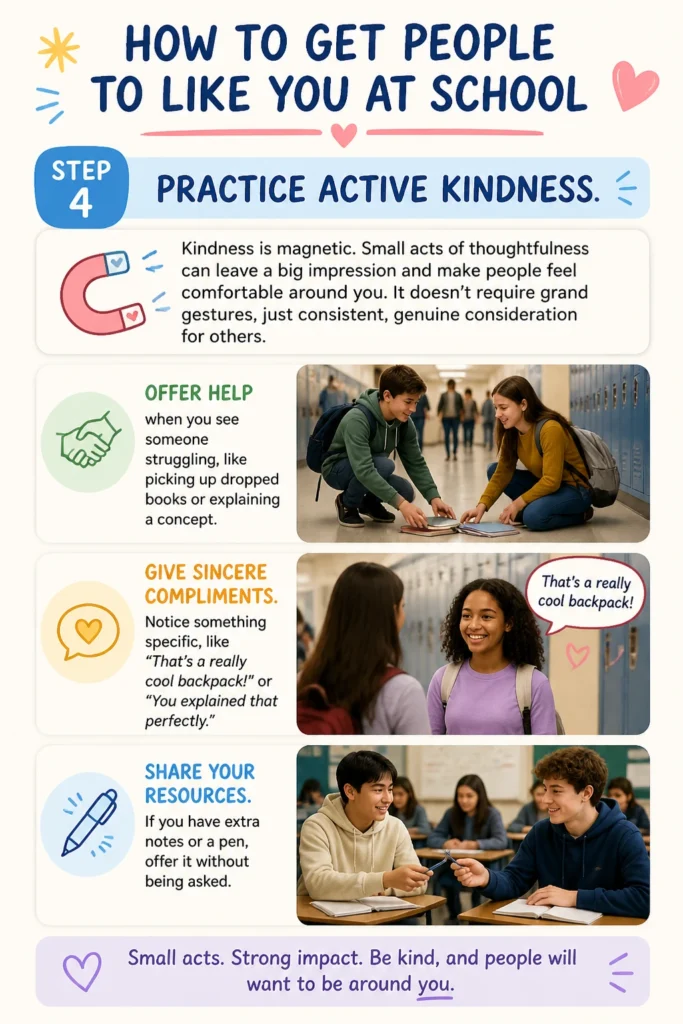
It doesn’t require grand gestures, just consistent, genuine consideration for others.
- Offer help when you see someone struggling, like picking up dropped books or explaining a concept.
- Give sincere compliments. Notice something specific, like “That’s a really cool backpack!” or “You explained that perfectly.”
- Share your resources. If you have extra notes or a pen, offer it without being asked.
Step 5: Participate and Engage
Being present and involved in school activities gives you more opportunities to meet people and show your personality.

It’s easier to connect when you share common experiences and goals.
- Join a club, a sports team, or a study group. These are natural places to find people with shared interests.
- Speak up in class discussions when you have something to contribute. Share your ideas respectfully.
- Volunteer for school events or projects. Working together fosters camaraderie.
Pro Tip: If joining a club feels too intimidating, start by just attending one meeting or event to observe. You don’t have to commit right away.
Step 6: Be Your Authentic Self
Trying to be someone you’re not is exhausting and often transparent. People appreciate genuine individuals who are comfortable in their own skin.
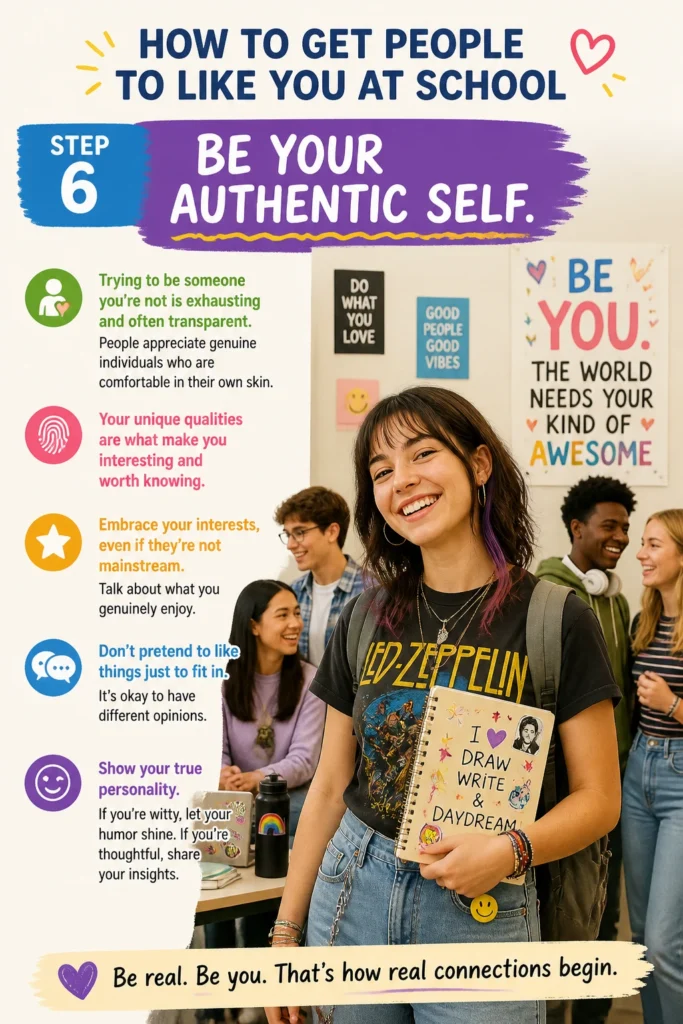
Your unique qualities are what make you interesting and worth knowing.
- Embrace your interests, even if they’re not mainstream. Talk about what you genuinely enjoy.
- Don’t pretend to like things just to fit in. It’s okay to have different opinions.
- Show your true personality. If you’re witty, let your humor shine. If you’re thoughtful, share your insights.
Step 7: Handle Rejection Gracefully
Not everyone will become your best friend, and that’s completely normal. Learning to handle minor social setbacks without letting them crush your spirit is a vital skill.
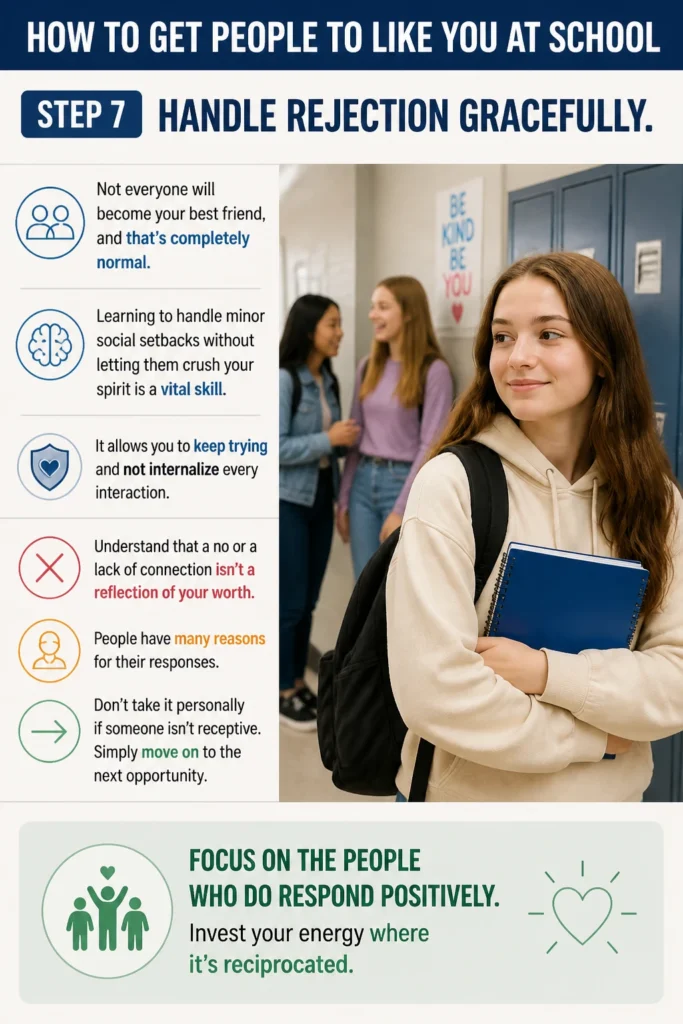
It allows you to keep trying and not internalize every interaction.
- Understand that a “no” or a lack of connection isn’t a reflection of your worth. People have many reasons for their responses.
- Don’t take it personally if someone isn’t receptive. Simply move on to the next opportunity.
- Focus on the people who do respond positively. Invest your energy where it’s reciprocated.
Step 8: Maintain Good Hygiene and Appearance
While personality is paramount, taking care of your physical self shows respect for yourself and others. It builds your confidence and makes you feel good.
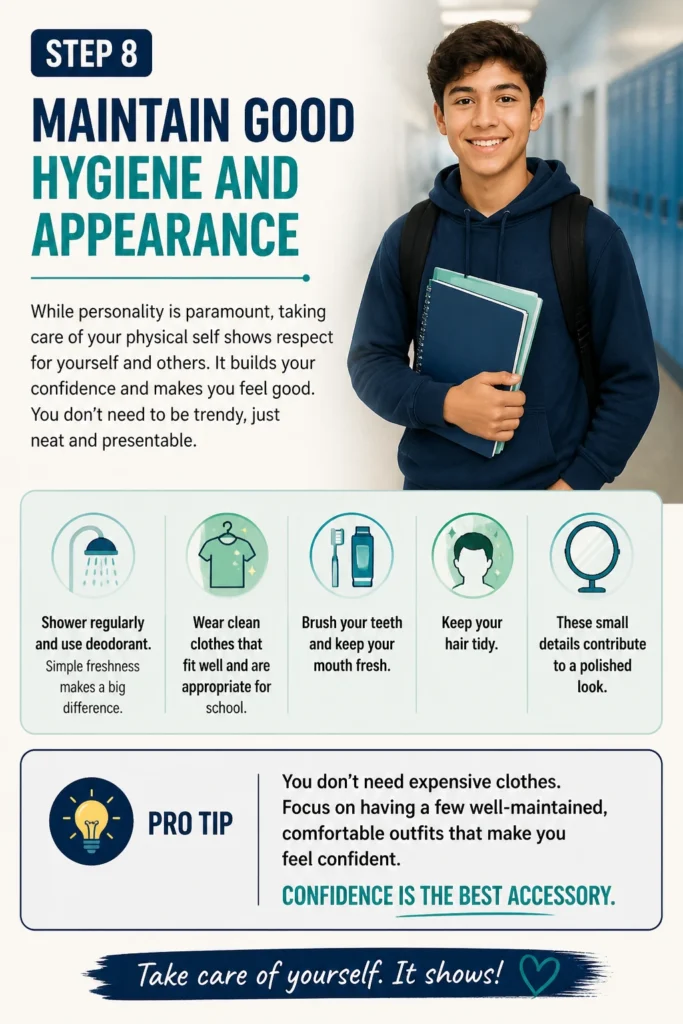
You don’t need to be trendy, just neat and presentable.
- Shower regularly and use deodorant. Simple freshness makes a big difference.
- Wear clean clothes that fit well and are appropriate for school.
- Brush your teeth and keep your hair tidy. These small details contribute to a polished look.
Pro Tip: You don’t need expensive clothes. Focus on having a few well-maintained, comfortable outfits that make you feel confident. Confidence is the best accessory.
Common Mistakes to Avoid
Trying Too Hard or Being Fake
People can usually spot insincerity a mile away. If you try to force friendships or pretend to be someone you’re not, it often backfires.
It can make you seem desperate or untrustworthy, pushing potential friends away.
Instead, focus on being genuine and letting connections develop naturally. Authenticity attracts real friends.
Gossiping or Spreading Negativity
Engaging in gossip, even if you’re just listening, can quickly erode trust. People will wonder if you’re talking about them behind their backs next.
Constantly complaining or being negative also makes you less pleasant to be around.
Strive to be a source of positive energy and kindness. When you have nothing nice to say, it’s often best to say nothing at all.
Ignoring Personal Boundaries
Everyone has different comfort levels with personal space, conversation topics, and how much they want to share. Pushing these boundaries can make others uncomfortable.
It’s important to be observant and respectful of cues that someone might need space or isn’t ready to discuss certain things.
Give people room to be themselves and offer what they’re comfortable with. Respecting boundaries builds trust and shows maturity.
Waiting for Others to Make the First Move
While it’s good to be approachable, if you always wait for others to initiate, you might miss out on many opportunities. Taking the first step requires courage but is often rewarded.
You don’t have to be the loudest person in the room, but a simple “Hi” or a question can open doors.
Challenge yourself to initiate a conversation once a day. It gets easier with practice and shows you’re open to connecting.
Troubleshooting
“I’m Too Shy to Approach Anyone”
Shyness is a common feeling, and it’s okay. Start small by setting tiny, achievable goals. Instead of a full conversation, aim for a quick smile and a “hello” to someone new.
Practice in low-stakes situations, like greeting a cashier or a librarian. Remember that most people are focused on themselves and won’t judge a simple greeting.
Gradually increase your goals, maybe by asking a classmate about homework or commenting on a shared experience. Small wins build confidence over time.
“People Seem to Ignore Me”
It can feel disheartening when you try to connect and don’t get a response. First, consider if your approach is open and inviting, as discussed in Step 2.
Sometimes, people are simply preoccupied or focused on their own tasks. It’s not necessarily a personal slight.
Try engaging with different groups or individuals. Some people are naturally more outgoing and will be more receptive to your efforts. Don’t give up on finding your tribe.
“I Feel Like I Don’t Fit In”
Feeling like an outsider is tough, but remember that many people feel this way at some point. It often stems from comparing yourself to others or believing you need to change who you are.
Focus on your unique strengths and interests. Seek out clubs, activities, or classes where those interests are shared. You might find a niche where you truly belong.
Authenticity is key. When you are genuinely yourself, you attract people who appreciate the real you, leading to more meaningful connections.
Key Takeaways
- Your attitude and positive mindset are powerful tools for attracting others.
- Being approachable through open body language and eye contact invites interaction.
- Genuine interest and active listening make people feel valued and understood.
- Small acts of kindness and helpfulness leave lasting positive impressions.
- Participating in school activities creates natural opportunities for connection.
- Authenticity is magnetic; be yourself to attract true friends.
- Handling social setbacks gracefully builds resilience and helps you keep trying.
Frequently Asked Questions
How long does it take to make friends at school?
Building genuine friendships takes time and consistent effort. Some connections might form quickly, while others develop over months. Focus on the quality of your interactions, not just the speed.
What if I’m new to the school?
Being new is actually an advantage! Most people are curious about new students. Introduce yourself to classmates, ask questions about the school, and be open to invitations. Join a club or activity immediately to meet people.
Is it okay to have only a few close friends?
Absolutely! The quality of your friendships is far more important than the quantity. Having a few close, supportive friends who genuinely understand you is often more fulfilling than having many superficial acquaintances.
What if I get nervous when talking to new people?
It’s normal to feel nervous. Try deep breathing exercises before approaching someone. Start with low-pressure interactions, like a quick comment about a shared class or asking for directions. Remember that most people are friendly and won’t judge you for being a little shy.
Our Top Recommended Finds
- A small, personal notebook or planner: Great for jotting down names, interests, or conversation starters you want to remember about new people.
- A comfortable, stylish backpack: Helps you feel prepared and confident, and can even be a conversation starter if it reflects your personality.
- A positive affirmation journal: A private space to write down things you appreciate about yourself and your day, boosting your self-esteem and positive outlook.
Building Your Best Social Self
Making friends and feeling liked at school isn’t about being popular; it’s about building meaningful connections and feeling a sense of belonging.
It’s a journey of self-discovery and learning how to interact positively with the world around you.
Start today by choosing just one step from this guide to focus on. A small change can lead to a ripple effect, transforming your school experience for the better.