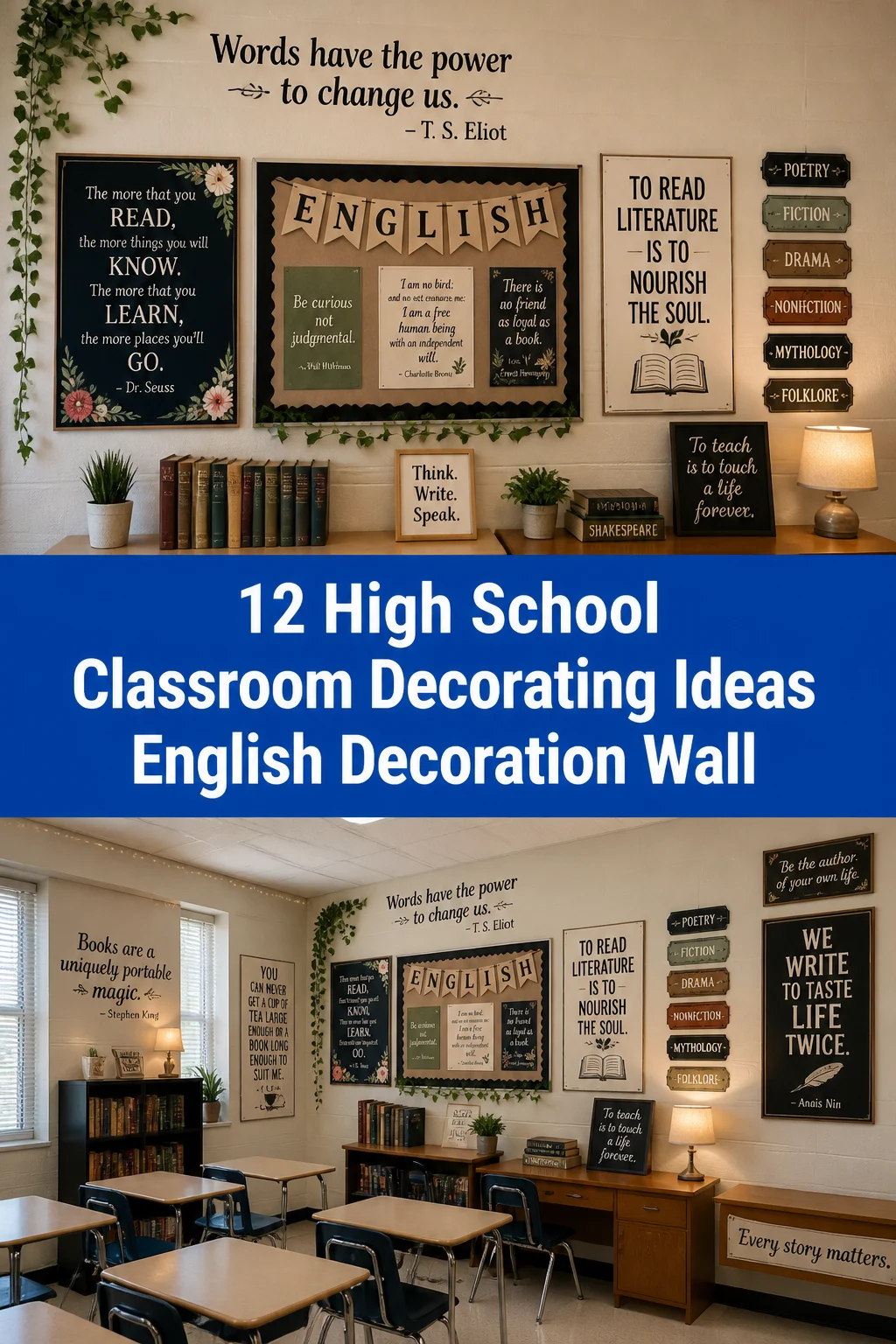
📚 12 High School Classroom Decorating Ideas English Decoration Wall
Okay, let’s be real. That beige classroom wall? It’s probably seen more snooze-fests than a Monday morning assembly.
Your students deserve a space that screams “inspiration” not “institutional beige.”
Ready to ditch the drab and deck out that English class wall like a boss? We’ve got the goods.

1. The Epic Literary Quote Wall
- Best For: Sparking daily thought and igniting discussions.
- Vibe: Intellectual chic, slightly rebellious.
- Why it works: It’s a constant source of wisdom and a visual feast.
Forget those tiny, pre-printed posters. We’re talking big, bold quotes from literary giants like Maya Angelou, F. Scott Fitzgerald, or even a cheeky Shakespeare line.
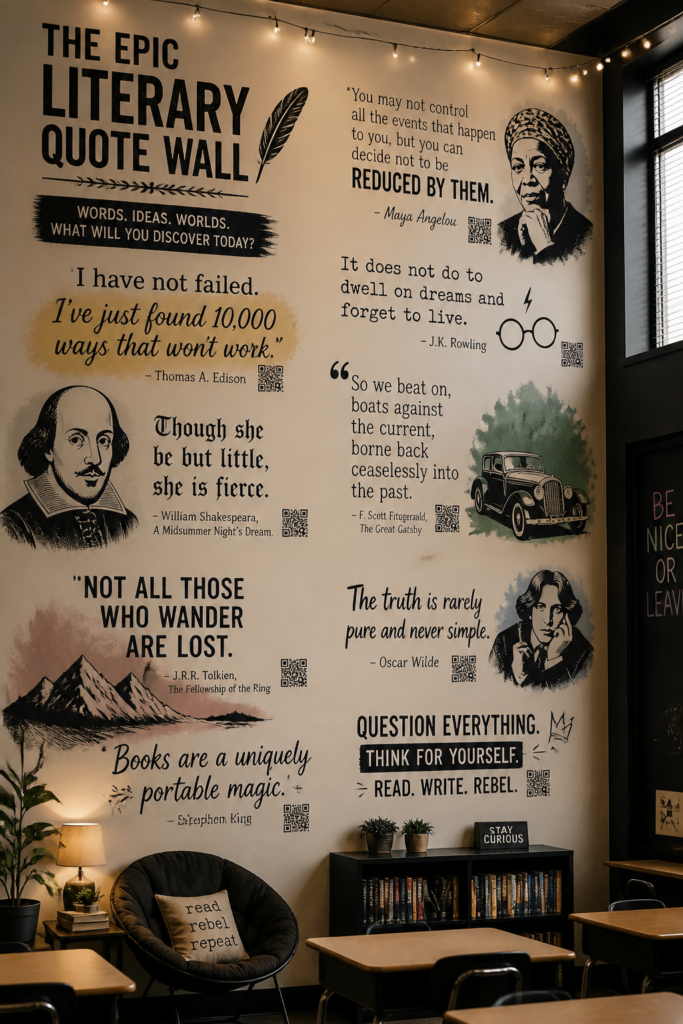
Mix up fonts and sizes, maybe even let students vote on their favorites. Think vinyl decals for a clean look, or hand-painted murals if you’re feeling extra artsy.
Pro Tip: Include a QR code next to each quote that links to a short bio of the author or the work it came from. Instant rabbit hole for curious minds!
2. Genre Galaxy Zone
- Best For: Visual learners and genre exploration.
- Vibe: Curated, adventurous, organized chaos.
- Why it works: It makes the vast world of literature digestible and exciting.
Designate different wall sections for literary genres. One corner for Dystopian (think dark blues and grays), another for Fantasy (whimsical greens and purples), and don’t forget the Classics (maybe a touch of sepia).
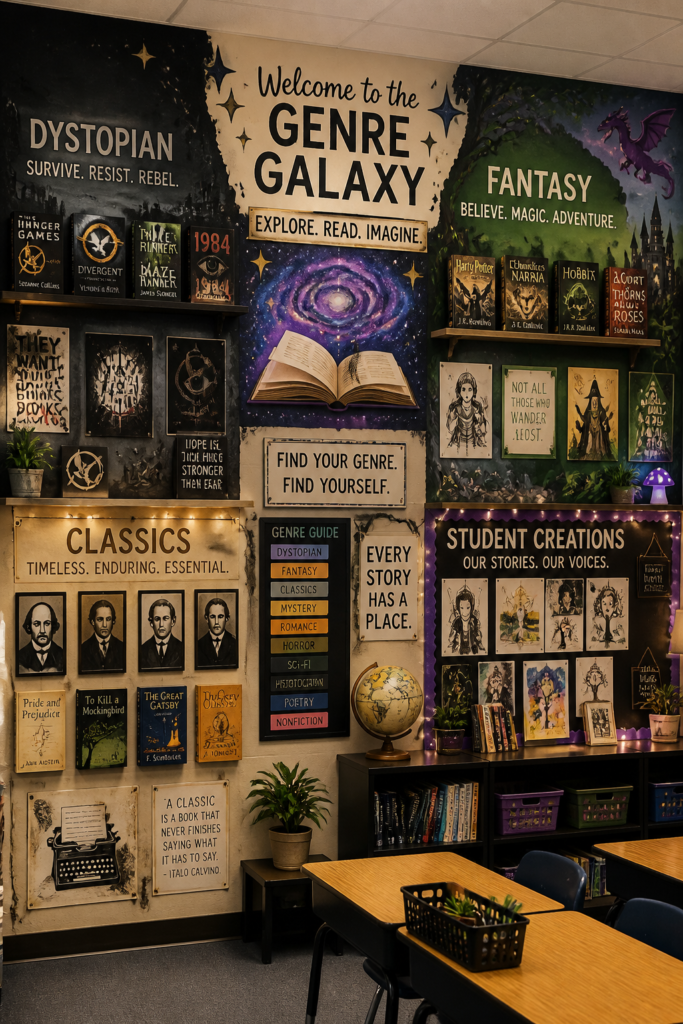
Feature iconic book covers, character sketches, or even student-created artwork representing each genre. It’s like a mini-museum, but way cooler.
Pro Tip: Use removable wall decals so you can easily switch up genres as your curriculum evolves. Nobody wants last year’s vampires haunting this year’s sonnets.
3. “Book Spine” Mural Masterpiece
- Best For: Creating a library feel without the actual books.
- Vibe: Cozy, studious, a little bit whimsical.
- Why it works: It instantly transforms a boring wall into a literary landscape.
Paint a wall to look like a giant bookshelf, complete with colorful book spines. You can even “title” them with works your class is studying or classic novels.
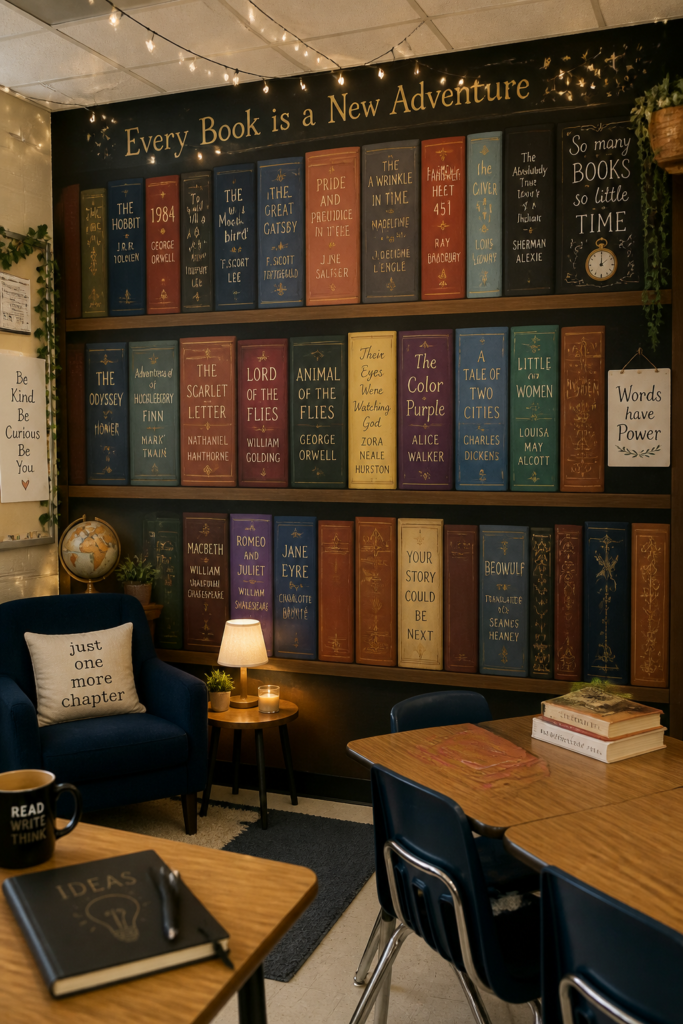
Add some faux wear and tear for that authentic, well-loved library feel. It’s surprisingly easy with a few paint samples and some painter’s tape.
Pro Tip: Leave a few “blank” spines for students to design and add their own dream book titles. Instant engagement!
4. Dynamic Word Cloud Art
- Best For: Vocabulary building and visual impact.
- Vibe: Modern, thought-provoking, a touch abstract.
- Why it works: It’s a striking visual that reinforces key terms.
Create a massive word cloud using literary terms, powerful verbs, or adjectives related to writing. Use different fonts, colors, and sizes to make it pop.
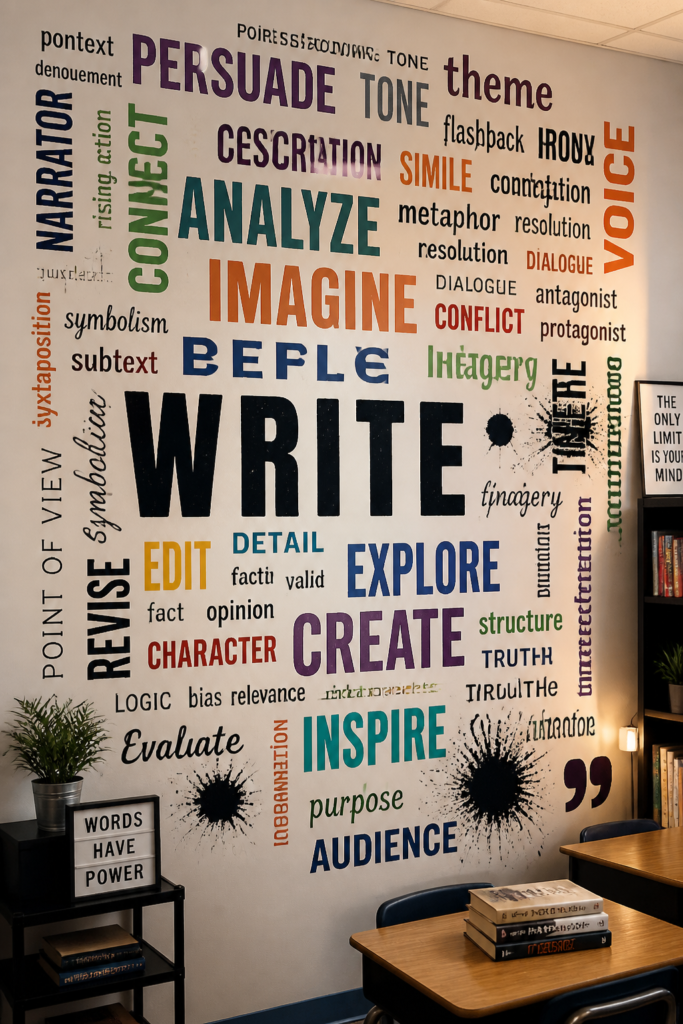
You can print large sections and assemble them, or project it onto the wall and trace for a DIY mural. It’s like a vocabulary test, but way less scary.
Pro Tip: Involve students by having them submit words for the cloud at the start of the semester. Ownership is everything, folks.
5. Author Spotlight Gallery
- Best For: Humanizing literature and celebrating diversity.
- Vibe: Inspiring, respectful, a bit like a hall of fame.
- Why it works: It connects students with the faces and voices behind the stories.
Curate a gallery of diverse authors – classic, contemporary, local, global. Include a striking portrait, a memorable quote, and a super brief bio for each.
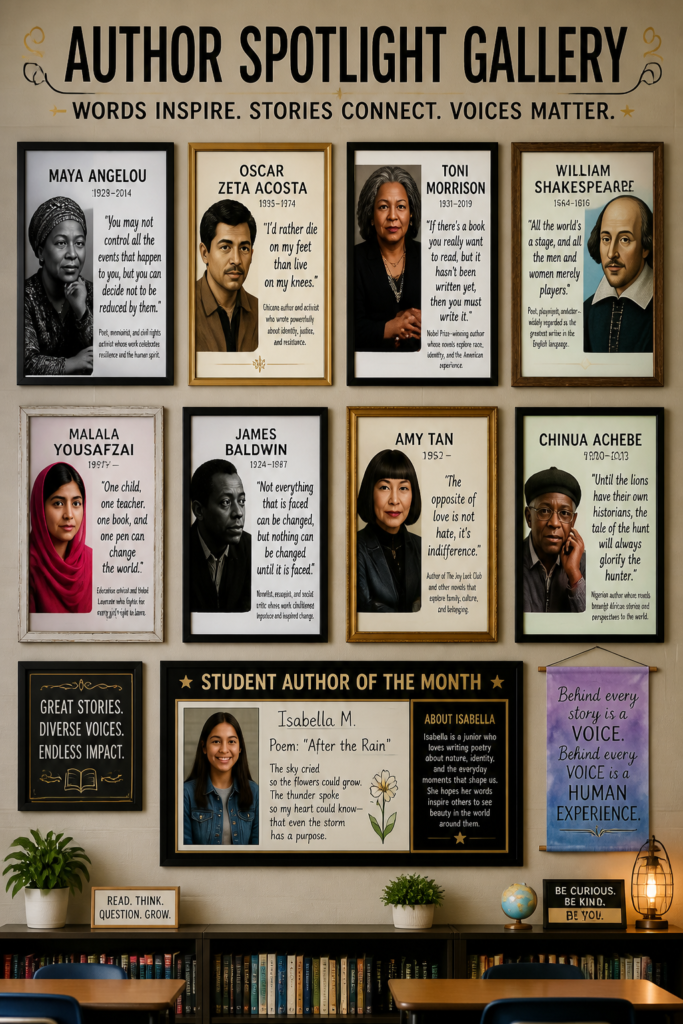
Use sleek, uniform frames or go eclectic with different styles for an art gallery feel. Think about authors from different backgrounds and time periods to keep it fresh.
Pro Tip: Dedicate a rotating spot for a “Student Author of the Month,” showcasing their best work alongside the pros. Talk about a confidence booster.
6. Grammar/Punctuation Pit Stop
- Best For: Quick reference and subtle learning.
- Vibe: Practical, clear, a little bit sassy.
- Why it works: It makes those pesky grammar rules less intimidating.
Turn common grammar pitfalls into visually engaging posters. Think “Your vs. You’re” with a wrestling match theme, or “Comma Chaos” with a playful infographic.
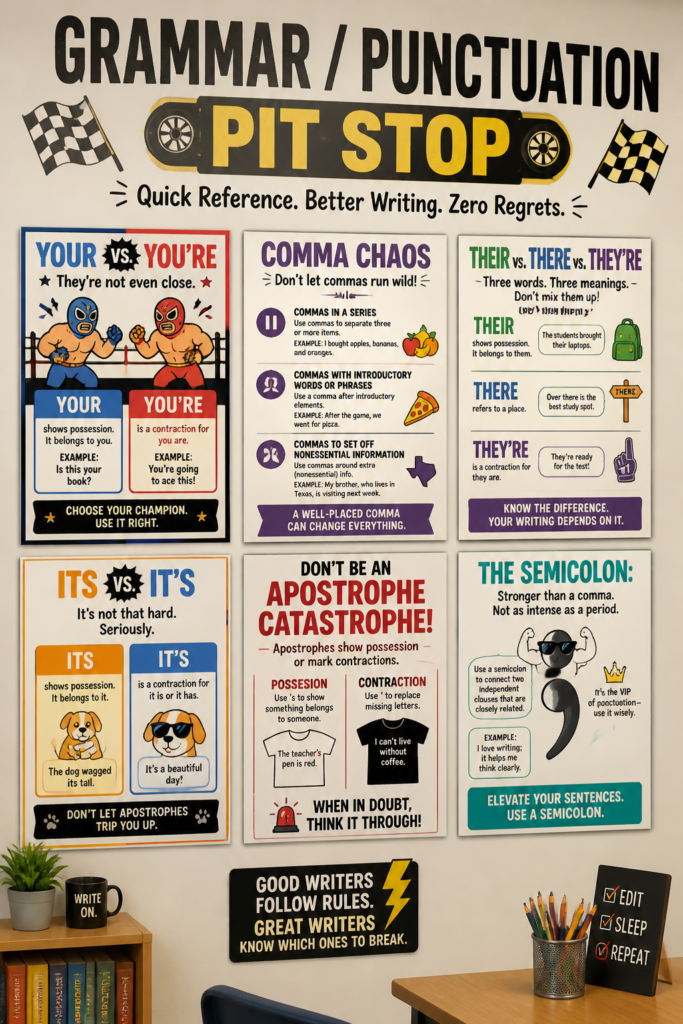
Use bright colors and clear examples. It’s a gentle, constant reminder of proper English, without having to correct every single comma splice out loud.
Pro Tip: Design them with a touch of humor. “Don’t be an apostrophe catastrophe!” is far more memorable than “Possessive nouns require an apostrophe.”
7. “Character Corner” Display
- Best For: Deepening character analysis and creative expression.
- Vibe: Engaging, imaginative, a bit like a literary detective board.
- Why it works: It brings literary characters to life.
Create a dedicated space where students can display their character analyses. Think “wanted” posters for villains, “dating profiles” for romantic leads, or “social media feeds” for modern characters.
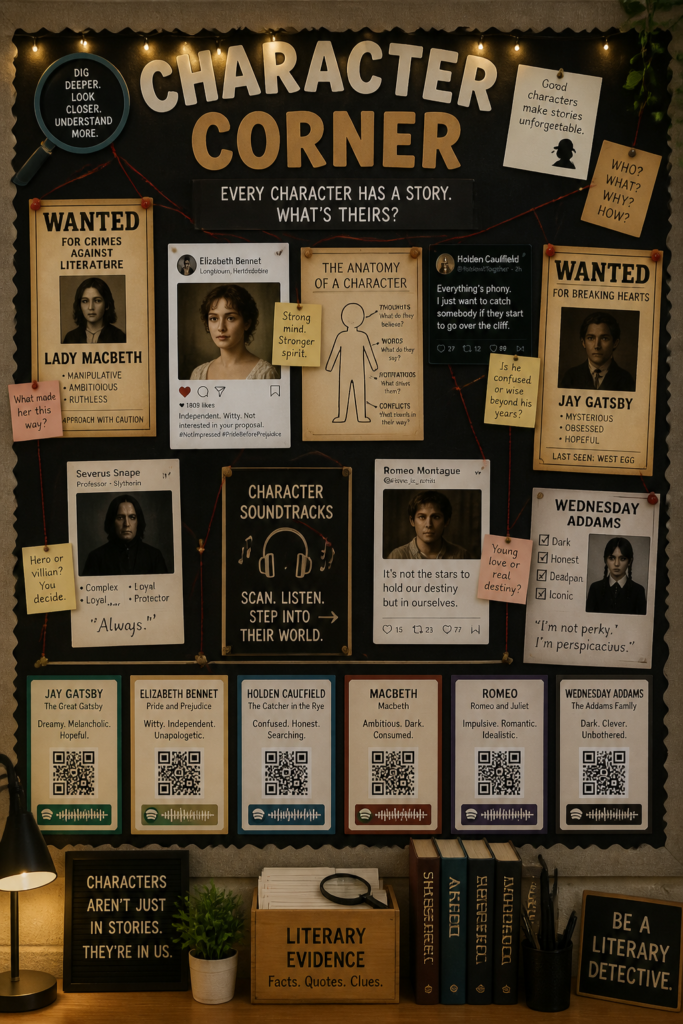
Use pushpins, string, and small clips to make it an interactive display. This moves beyond just writing about characters to truly visualizing them.
Pro Tip: Have students create “Character Soundtracks” with QR codes linking to playlists. Imagine Gatsby’s melancholy tunes filling the air.
8. The Interactive Poetry Wall
- Best For: Fostering creativity and collaborative writing.
- Vibe: Expressive, communal, a little bit bohemian.
- Why it works: It encourages spontaneous poetic expression.
Designate a large section of the wall for poetry. You could have magnetic words for “magnetic poetry,” or a chalkboard section where students can write and erase poems.
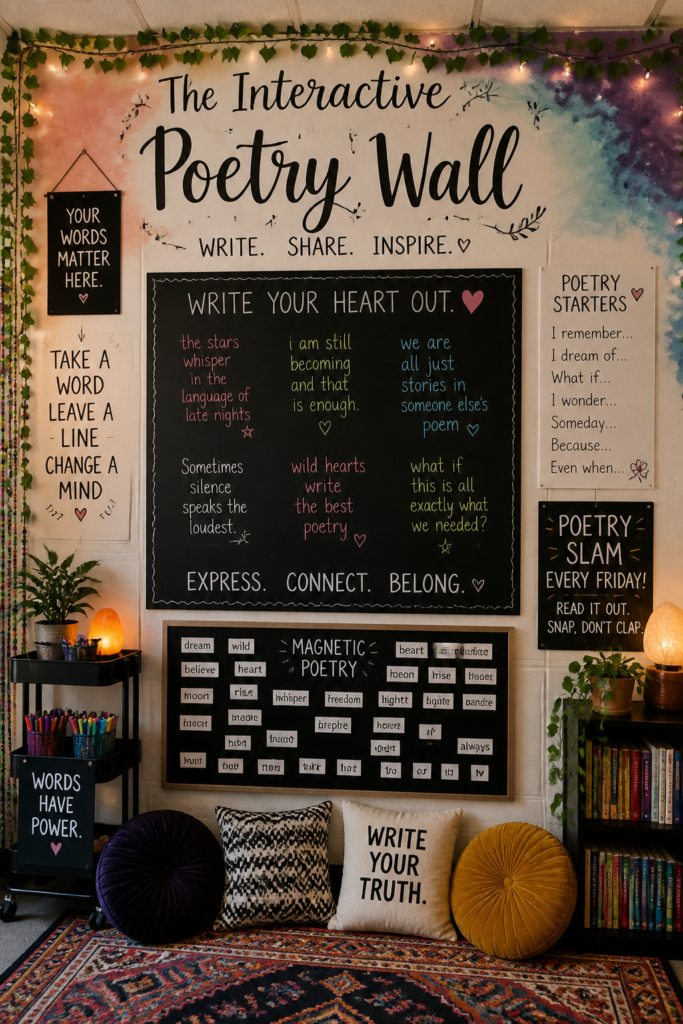
Provide colorful markers or chalk and let them go wild. It’s a low-stakes way for students to experiment with language and share their voices.
Pro Tip: Host a weekly “Poetry Slam” where students read their wall creations aloud. Bonus points for snapping fingers instead of clapping.
9. Reading Nook Accent Wall
- Best For: Promoting a love of reading and creating a calm space.
- Vibe: Cozy, inviting, a sanctuary.
- Why it works: It makes reading feel less like work and more like a treat.
If you have a corner with some comfy seating (or even just floor cushions), make the wall behind it a reading haven. Think soft, calming colors like muted blues or greens.
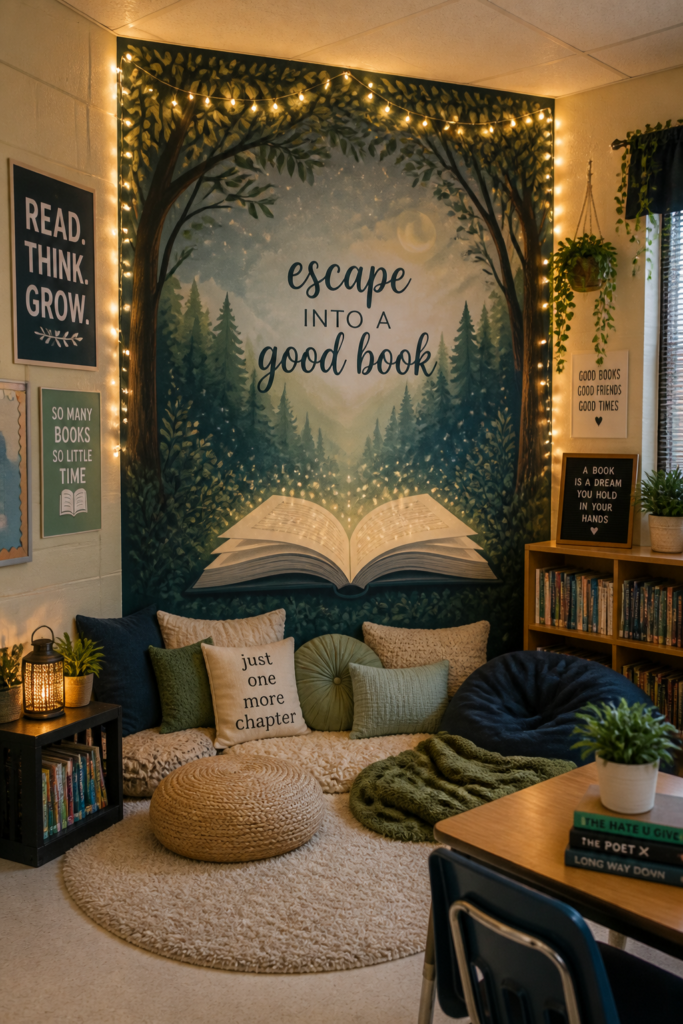
Add a mural of an open book, a forest scene, or a starry night sky. It transforms a simple area into a dedicated escape for literary adventures.
Pro Tip: Install some soft, dimmable string lights around the wall for extra ambiance. Just make sure they’re classroom-safe, of course.
10. The Literary World Map
- Best For: Connecting literature to geography and history.
- Vibe: Educational, adventurous, a global perspective.
- Why it works: It shows students how stories span continents and cultures.
Get a large world map and mark the settings of famous novels, the birthplaces of authors, or even the routes of epic journeys (think Odysseus).
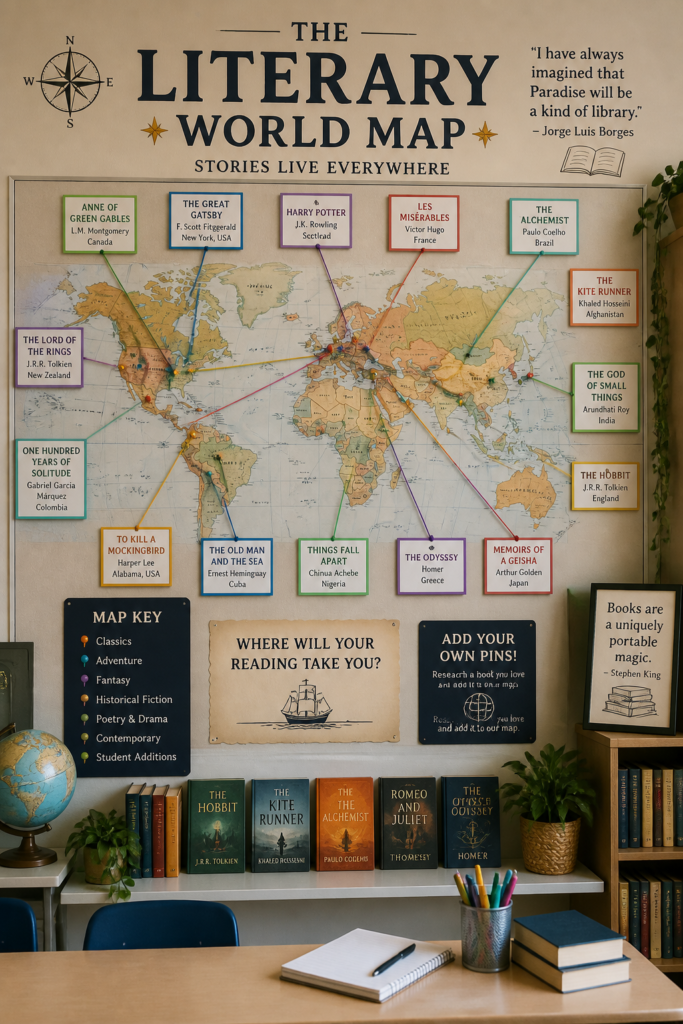
Use different colored pins or string to connect books to their locations. It’s a fantastic visual for understanding cultural contexts and broadening horizons.
Pro Tip: Have students research and add their own pins for books they’ve read independently. It makes the map a living, growing resource.
11. Student Work Showcase
- Best For: Celebrating achievements and building community.
- Vibe: Proud, inspiring, a gallery of greatness.
- Why it works: It validates student efforts and encourages peer learning.
Dedicate a prominent wall section to showcasing student writing, artwork, or projects related to English class. Rotate the display regularly to keep it fresh and fair.
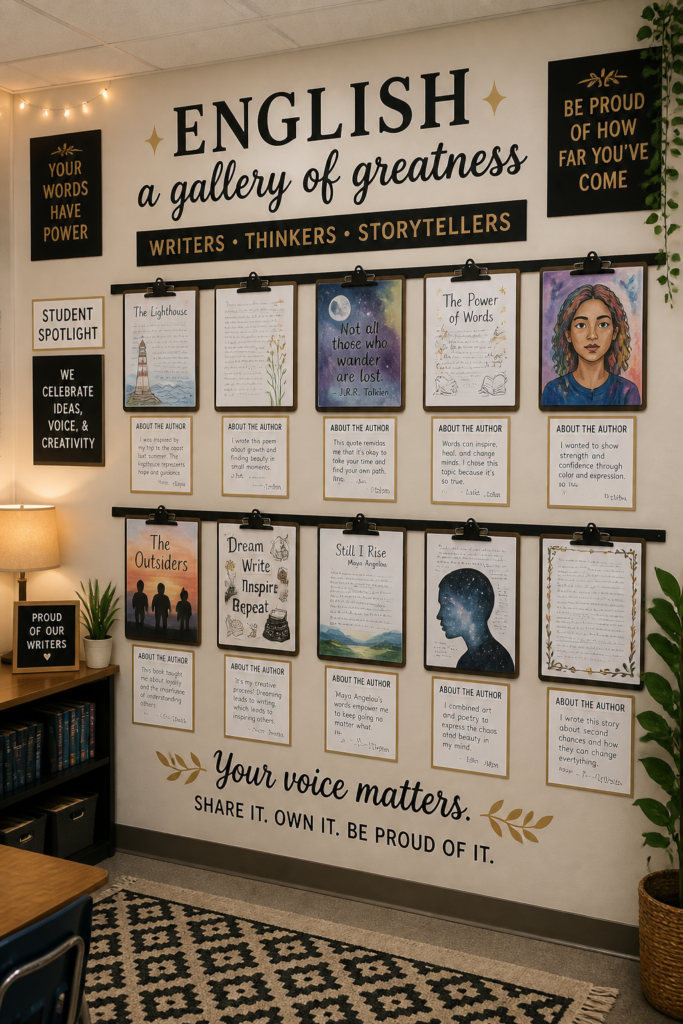
Use stylish clipboards, magnetic strips, or simple frames to elevate their work. Seeing their peers’ accomplishments can be incredibly motivating.
Pro Tip: Include a small “About the Artist/Author” card next to each piece. It gives students a chance to share their process or inspiration.
12. Interactive Vocabulary Wall
- Best For: Active vocabulary acquisition and review.
- Vibe: Engaging, dynamic, a brain workout.
- Why it works: It turns vocabulary learning into a hands-on activity.
Create pockets or cards with new vocabulary words on one side and definitions/example sentences on the other. Students can flip them, test themselves, or even add new words.
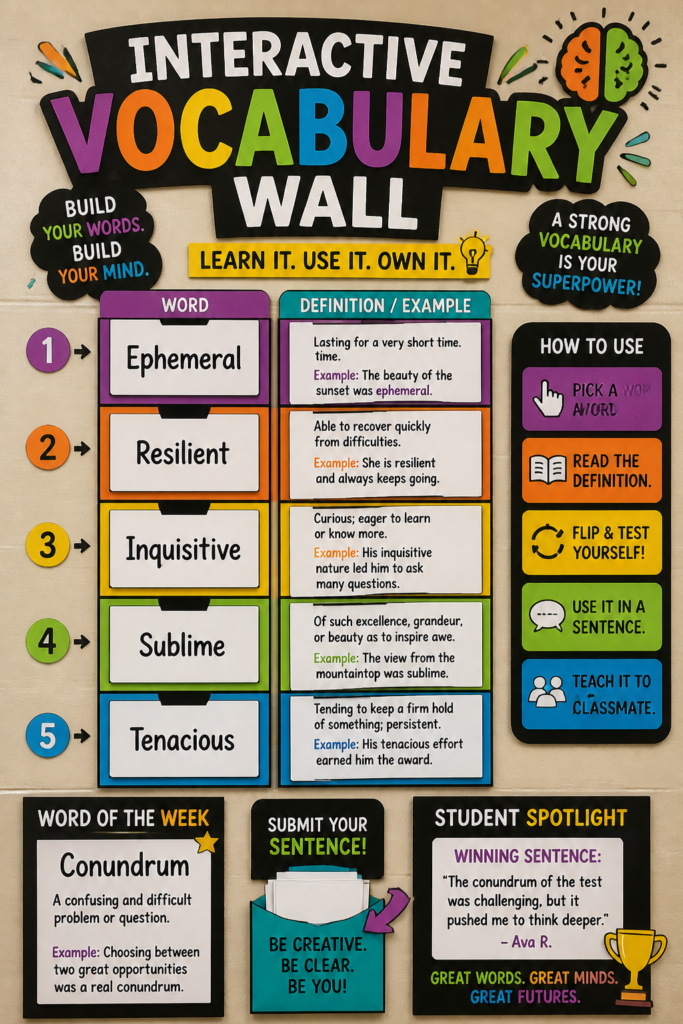
Use bold colors and clear, concise definitions. This becomes a living dictionary that students can interact with daily, rather than just staring at a list.
Pro Tip: Have a “Word of the Week” spotlight where students can submit sentences using the featured word, with the best one getting a small prize.
Our Top Recommended Finds
- Large Vinyl Wall Decals: Perfect for quotes or book spine murals without permanent paint. Easy to apply, easy to remove when you’re ready for a refresh.
- Magnetic Whiteboard Panels: Great for interactive poetry or vocabulary walls. They’re durable and offer endless possibilities for changing content.
- Assorted Clipboards & Command Strips: Ideal for creating a flexible student work showcase or author gallery. No nails needed, so your walls (and your admin) will thank you.
Which of these will you try first?
Seriously, those bland walls are practically begging for a glow-up. Go forth and transform your English classroom into a literary wonderland.
Tell us in the comments which idea you’re eyeing first!