✨ 11 Life Cycle Of A Star Project Ideas
Stuck staring at a blank page, wondering how to make the life cycle of a star actually, well, sparkle for your next big project?
You’re not alone, friend. It’s a cosmic challenge, but totally doable.
Forget the boring old posters. We’ve got 11 out-of-this-world ideas that will make your project shine brighter than a supernova.

1. Edible Star Life Cycle Timeline
- Best For: Visual learners, potlucks, anyone with a sweet tooth.
- Vibe: Deliciously educational, surprisingly accurate.
- Why it works: Who doesn’t love learning with snacks?
Imagine a timeline of a star’s life, but each stage is a different treat. Start with a fluffy marshmallow for a nebula, then a gummy bear for a protostar. A chocolate chip cookie makes a great main sequence star.
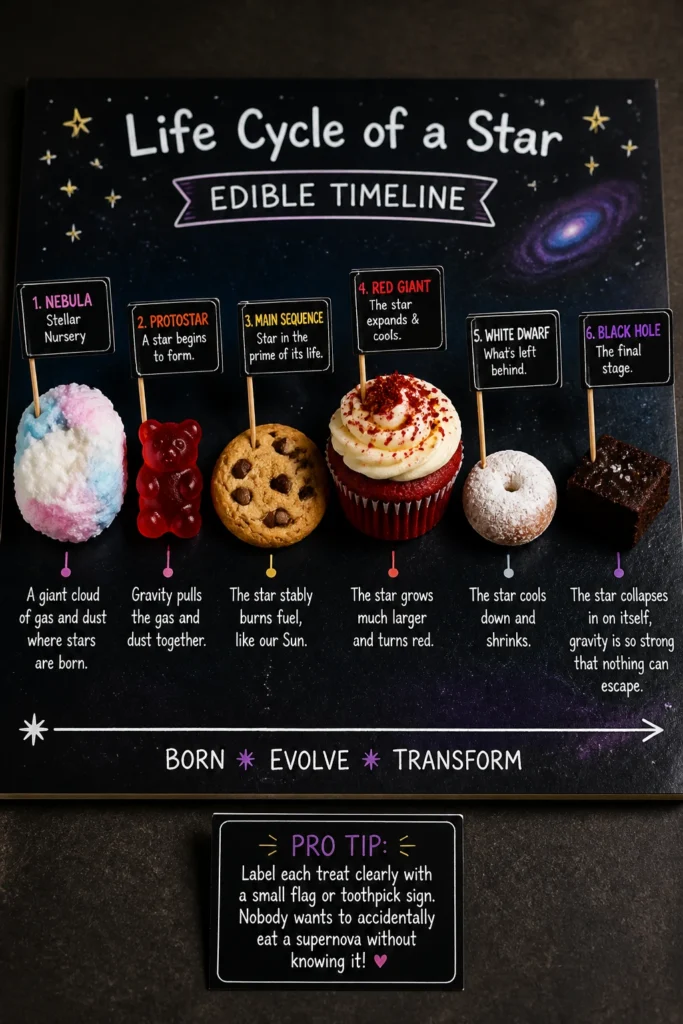
For a red giant, think a large red velvet cupcake. A tiny donut hole could be a white dwarf, and a dark brownie bite a black hole. It’s an easy, engaging way to show stellar evolution.
Pro Tip: Label each treat clearly with a small flag or toothpick sign. Nobody wants to accidentally eat a supernova without knowing it!
2. DIY Galaxy Jar Nebula
- Best For: Crafty types, desktop display, calming visuals.
- Vibe: Ethereal, mystical, surprisingly simple.
- Why it works: Captures the beauty of a stellar nursery in a jar.
Grab some cotton balls, water, glitter (fine and chunky), and a few different shades of acrylic paint (think blues, purples, pinks). Layer the cotton, paint-infused water, and glitter in a clear mason jar.
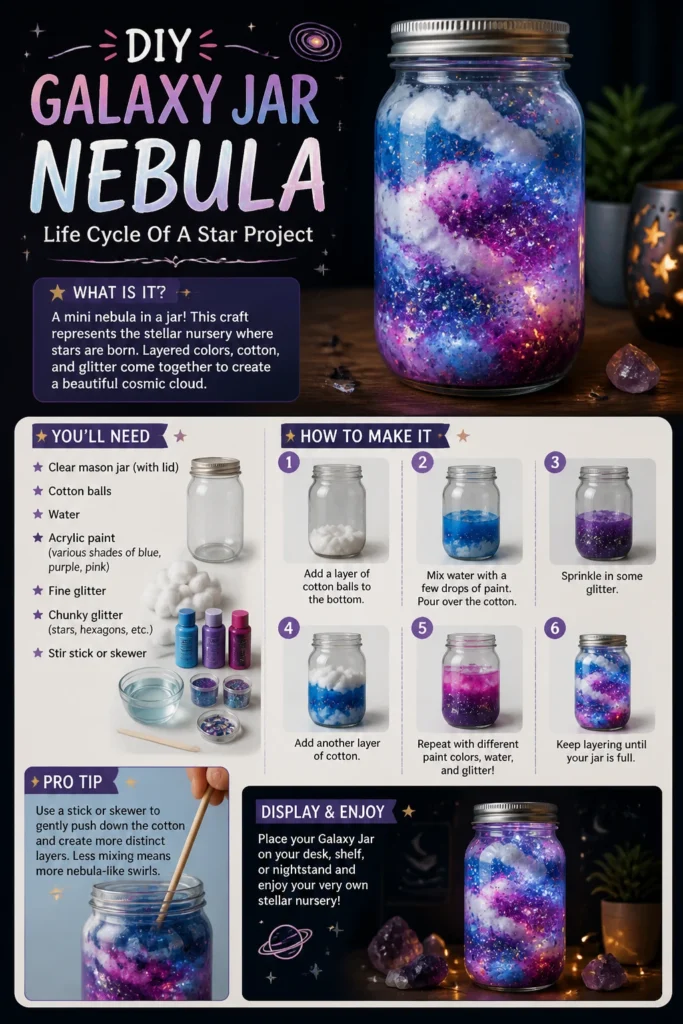
You’re essentially creating a mini nebula, the birthplace of stars. Add layers until your jar is full, swirling gently to create that cosmic effect. It’s a gorgeous, hands-on way to visualize the beginning of a star’s journey.
Pro Tip: Use a stick or skewer to gently push down the cotton and create more distinct layers. Less mixing means more nebula-like swirls.
3. Stop-Motion Animation Star Story
- Best For: Tech-savvy creators, dynamic presentations, storytelling.
- Vibe: Engaging, modern, a little bit quirky.
- Why it works: Brings the abstract concept of a star’s life into motion.
Use clay, paper cutouts, or even LEGOs to represent each stage of a star. Think a small orange clay ball growing into a large red one, then shrinking. Set up a simple backdrop and use a smartphone camera with a free stop-motion app.
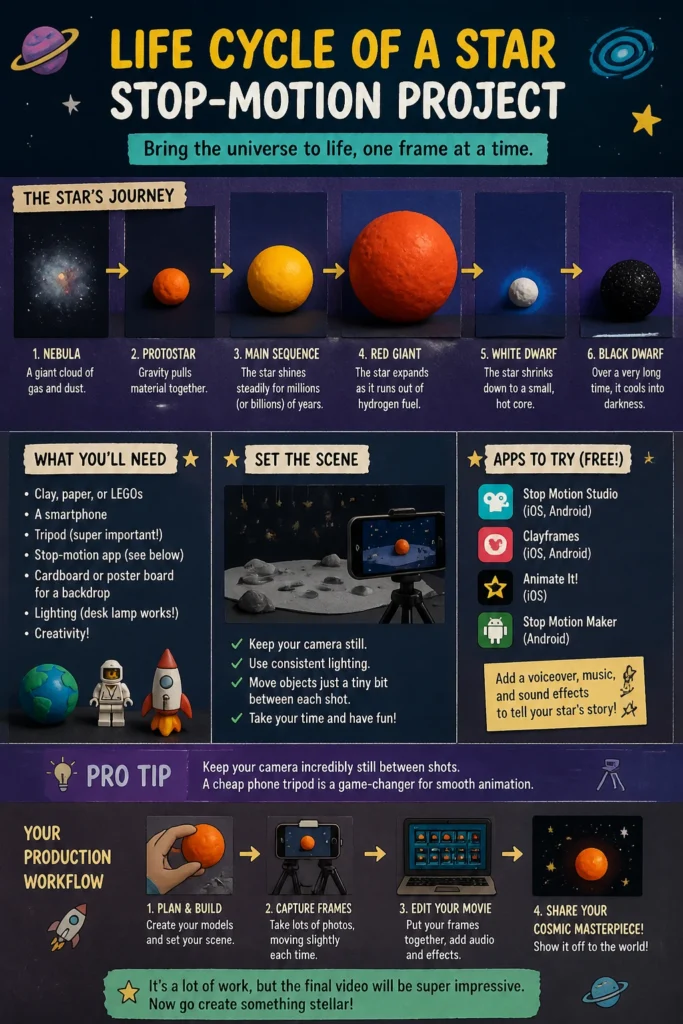
Capture each tiny movement, then string them together. Add a voiceover explaining each phase, maybe some dramatic cosmic sound effects. It’s a bit of work, but the final video will be super impressive.
Pro Tip: Keep your camera incredibly still between shots. A cheap phone tripod is a game-changer for smooth animation.
4. Interactive Flipbook Stellar Journey
- Best For: Hands-on learners, quick explanations, portable projects.
- Vibe: Playful, informative, surprisingly satisfying.
- Why it works: Allows for quick visual changes between stages.
Take a stack of index cards or a small notepad. On each page, draw or glue a simple image representing a stage of a star’s life. Start with a diffuse cloud, then a small sphere, growing and changing color.
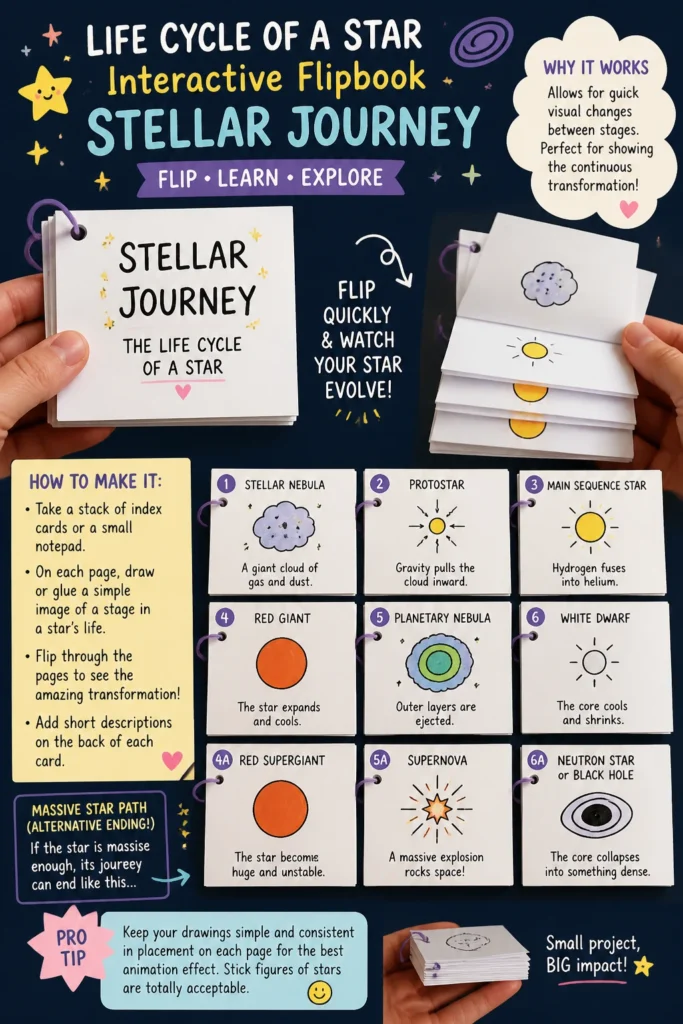
Flip through the pages quickly, and watch your star evolve! You can add short descriptions on the back of each card. This project is great for showing the continuous transformation, rather than static images.
Pro Tip: Keep your drawings simple and consistent in placement on each page for the best animation effect. Stick figures of stars are totally acceptable.
5. “Star Reporter” News Broadcast
- Best For: Public speakers, creative writers, group projects.
- Vibe: Humorous, informative, a bit theatrical.
- Why it works: Puts a fresh, relatable spin on scientific facts.
Imagine you’re a news anchor reporting live on the dramatic events in space. “Breaking news: A massive star has just gone supernova in the Andromeda galaxy!” Create a script covering the birth, life, and death of a star from a cosmic news perspective.
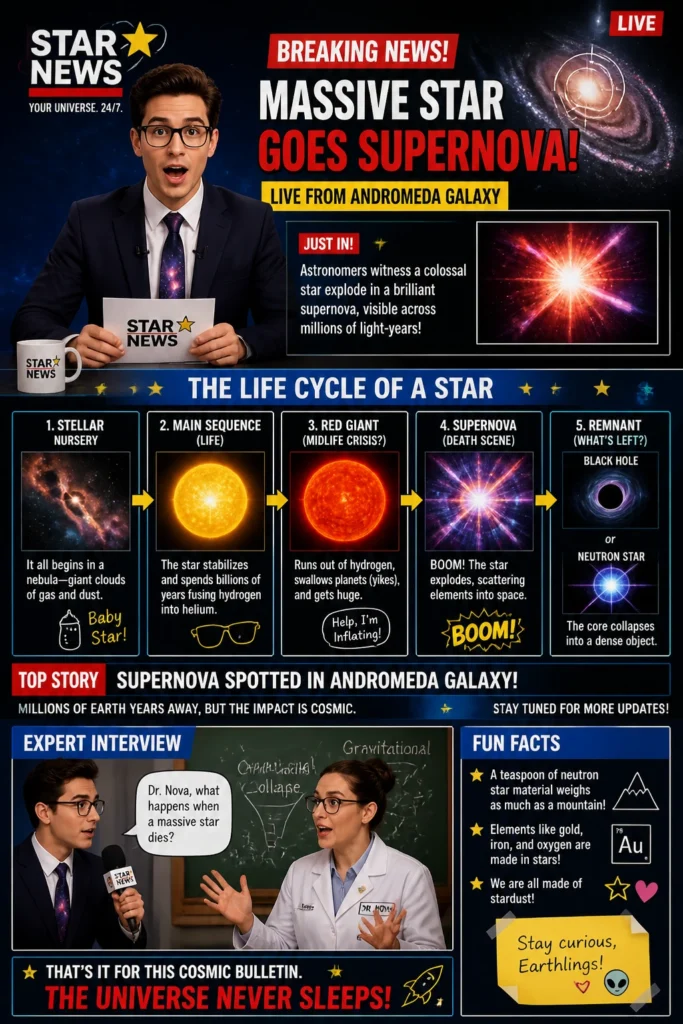
Dress up a bit, maybe make a simple “Star News” backdrop. You can even interview a “scientist” (a friend or family member) about the implications of a black hole formation. It’s a fun, engaging way to present information.
Pro Tip: Incorporate some cheesy news graphics or sound effects for extra flair. Think bold red text and a dramatic “whoosh” sound.
6. 3D Mobile of Star Stages
- Best For: Visual learners, decorative display, tangible representations.
- Vibe: Whimsical, educational, visually appealing.
- Why it works: Shows the progression and scale of stellar evolution.
Use different sized and colored foam balls, paper lanterns, or even painted balloons to represent each stage of a star. A large, fluffy white ball for a nebula, a medium yellow ball for a main sequence star.
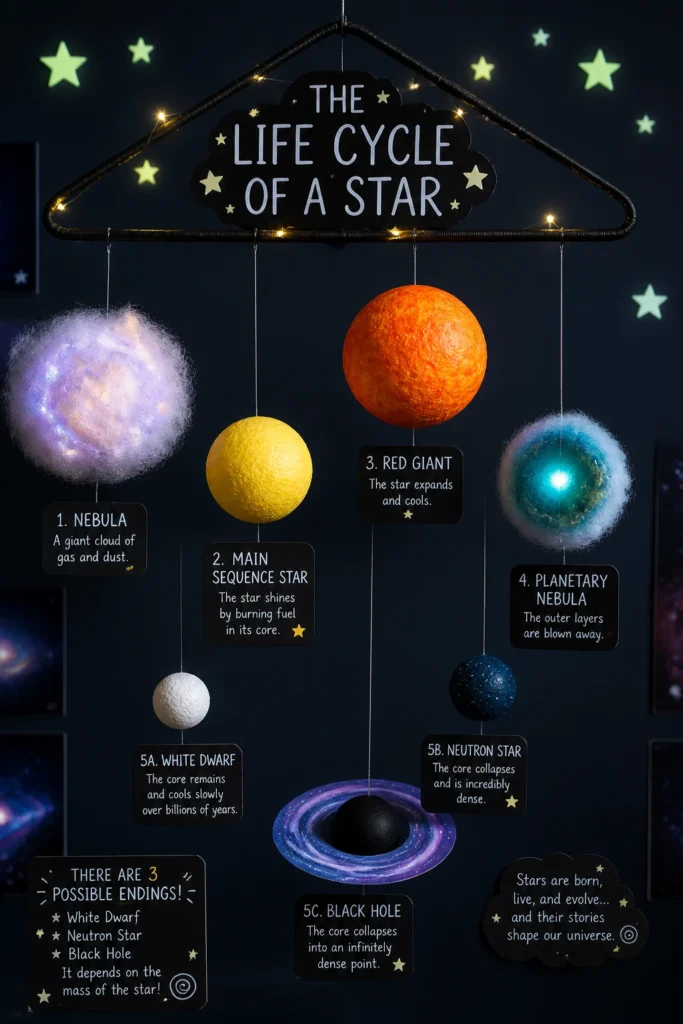
Hang them from a coat hanger or a wooden dowel using fishing line at varying lengths. Label each stage clearly. This creates a beautiful, dynamic visual that can hang in your room long after the project is due.
Pro Tip: Consider painting some glow-in-the-dark stars on your main sequence and red giant spheres for an extra wow factor in a darkened room.
7. Life Cycle of a Star Board Game
- Best For: Interactive learning, group activities, competitive spirits.
- Vibe: Fun, strategic, unexpectedly educational.
- Why it works: Gamifies the learning process, making it memorable.
Design a board game where players move through the stages of a star’s life. Use a large piece of cardboard as your board. Create “event” cards that either help or hinder your star’s progress (e.g., “Collide with another nebula – move forward two spaces” or “Run out of hydrogen fuel – move back one space”).
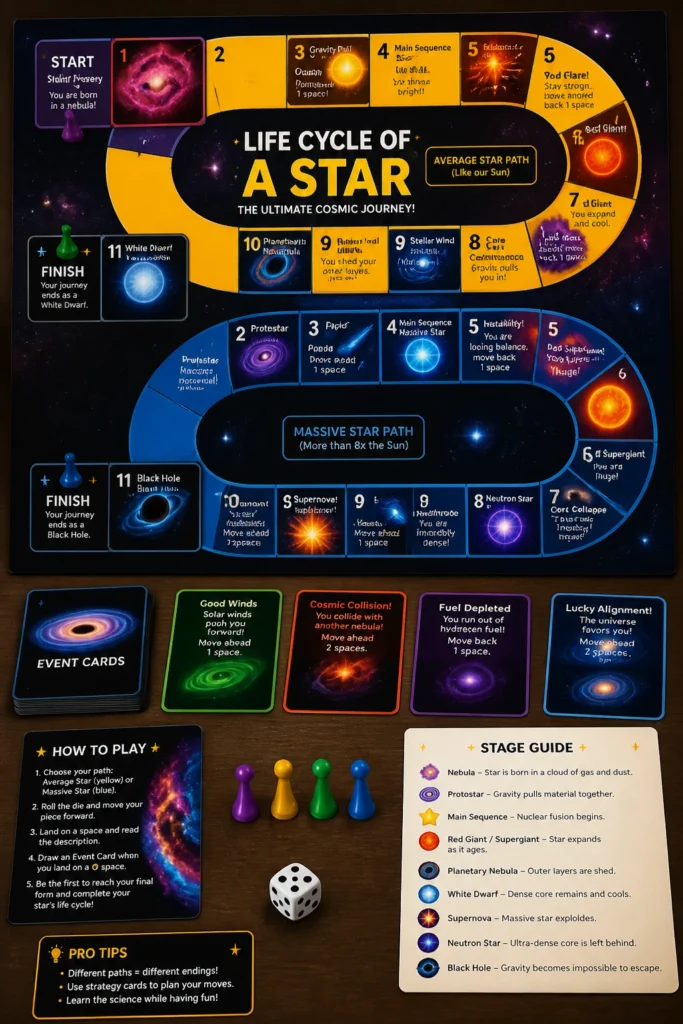
Players could roll a die to advance, landing on spaces that explain each stage. The goal is to successfully navigate your star from nebula to its final form. It’s a brilliant way to make complex science digestible.
Pro Tip: Create different pathways for massive stars versus average stars, leading to different end-game scenarios like black holes or white dwarfs. Adds a cool layer of complexity.
8. Augmented Reality (AR) Star Viewer
- Best For: Tech enthusiasts, immersive experiences, future-forward thinkers.
- Vibe: High-tech, futuristic, mind-blowing.
- Why it works: Brings a 3D, interactive star right into your space.
This one’s a bit more advanced but incredibly cool. Use a free AR app like Merge Cube Explorer or create a simple AR experience using platforms like CoSpaces Edu. You can model different star stages in 3D.
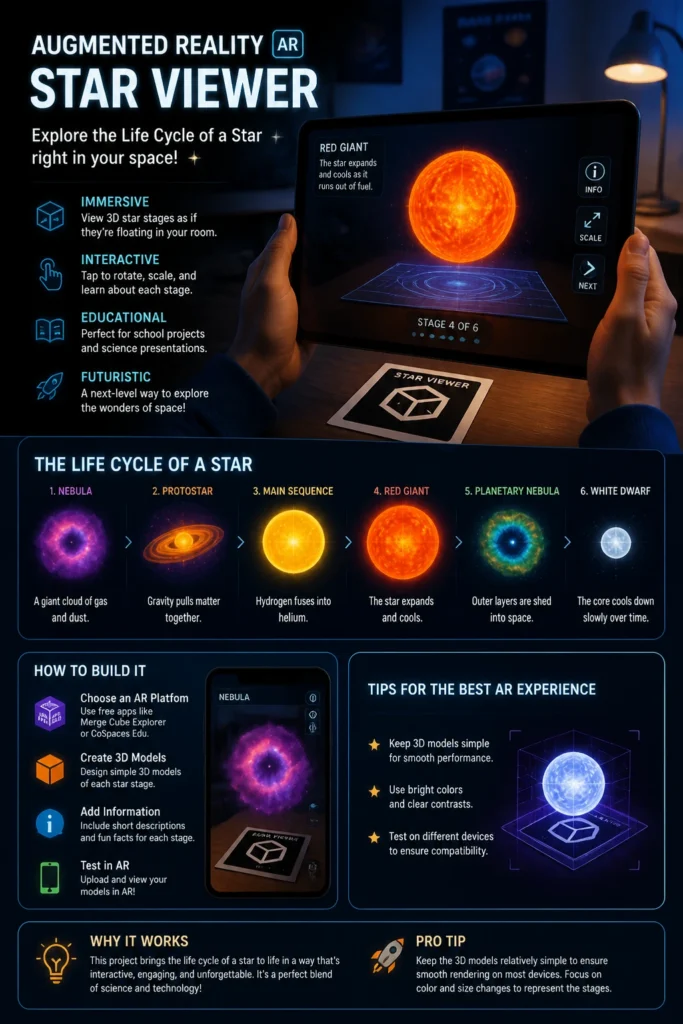
Then, use your phone or tablet to view these stages as if they’re floating in your room. Imagine a tiny red giant expanding right on your desk! It’s an unforgettable way to interact with the science.
Pro Tip: Keep the 3D models relatively simple to ensure smooth rendering on most devices. Focus on color and size changes to represent the stages.
9. Star Life Cycle Diorama in a Box
- Best For: Visual learners, detailed craftspeople, traditional project lovers.
- Vibe: Classic, intricate, miniature universe.
- Why it works: Provides a tangible, multi-stage visual representation.
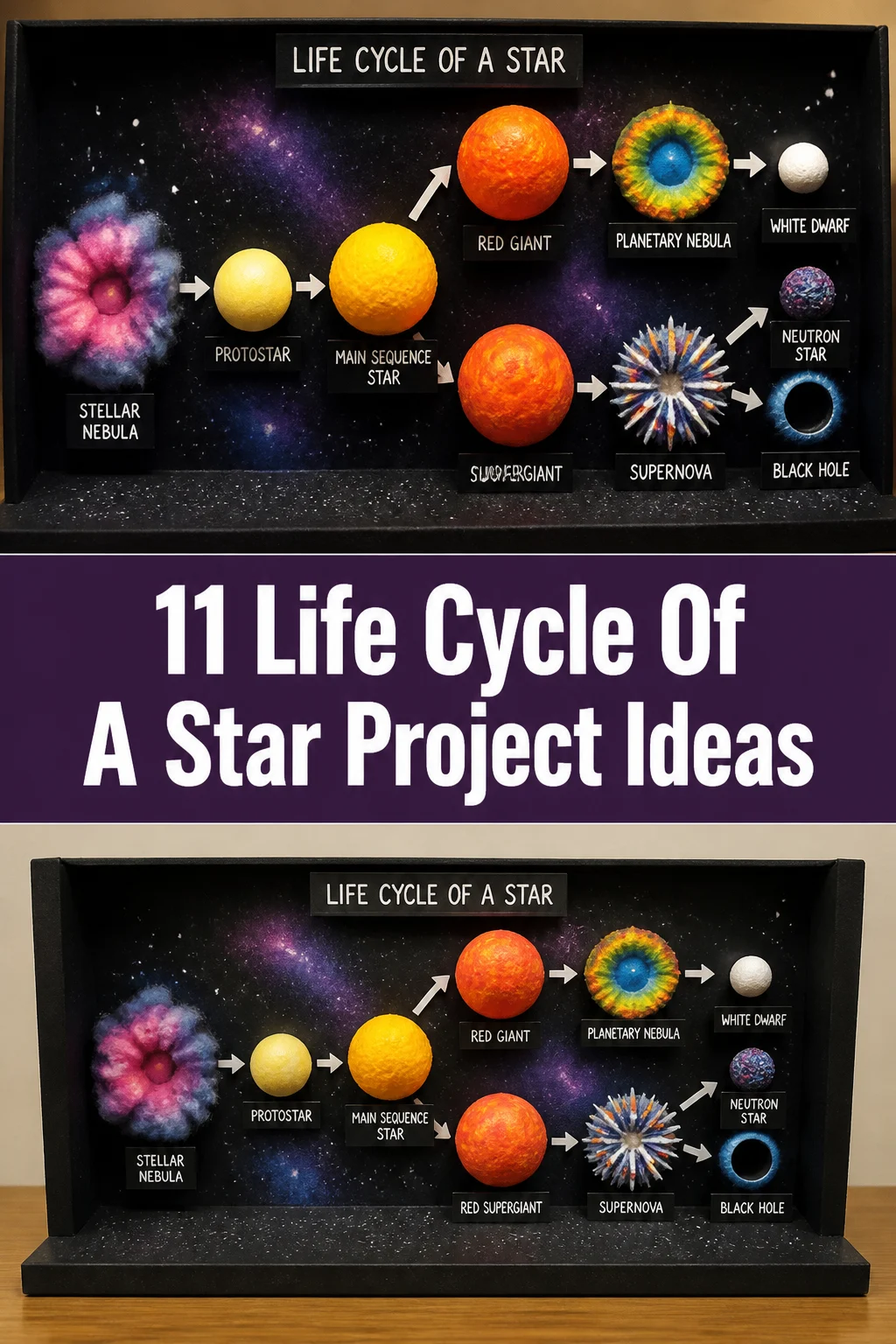
Grab a shoebox or a larger cardboard box. Divide it into sections, each representing a stage of a star’s life. Use cotton batting for nebulae, painted styrofoam balls for different star types (yellow for main sequence, red for giant).
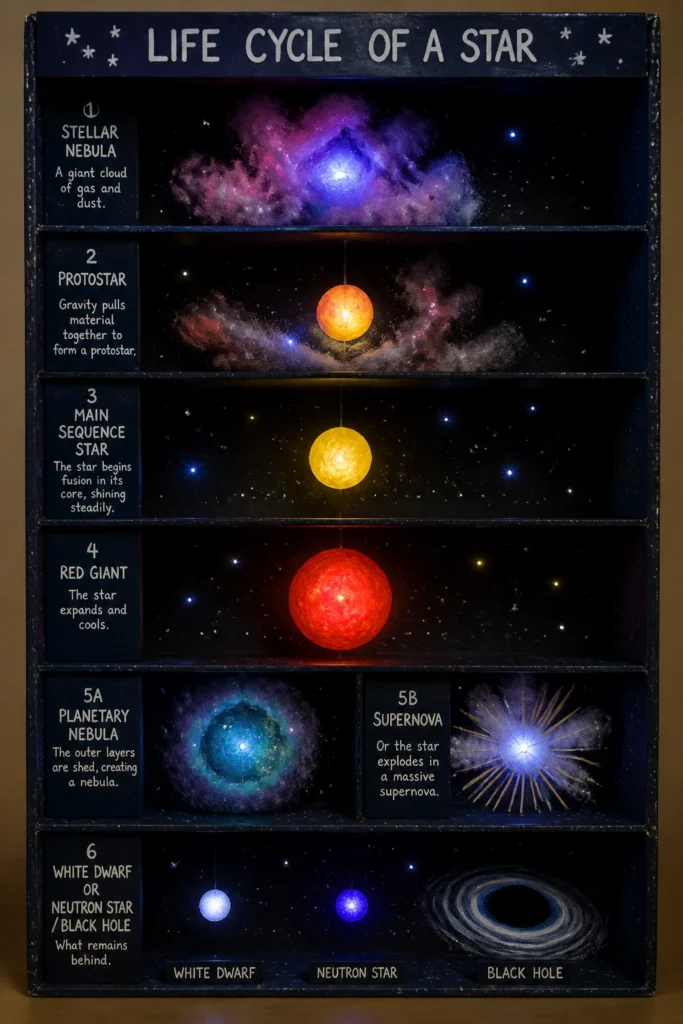
Add tiny lights (battery-operated LEDs work great) for stars or supernovae. Paint the inside of the box dark blue or black with speckles of white paint for stars. It’s a compact, detailed model of cosmic evolution.
Pro Tip: Use clear fishing line to suspend some of your stars at different depths within the box, giving it a more realistic, three-dimensional feel.
10. “Star’s Diary” Creative Writing Project
- Best For: Writers, imaginative thinkers, empathetic learners.
- Vibe: Poetic, personal, surprisingly insightful.
- Why it works: Humanizes the scientific process, making it relatable.
Write a series of diary entries from the perspective of a star. “Day 1: Just a cloud of gas, feeling a bit gassy, honestly.” “Year 5 Billion: Still burning bright, feeling quite stable, though the hydrogen is getting low.”
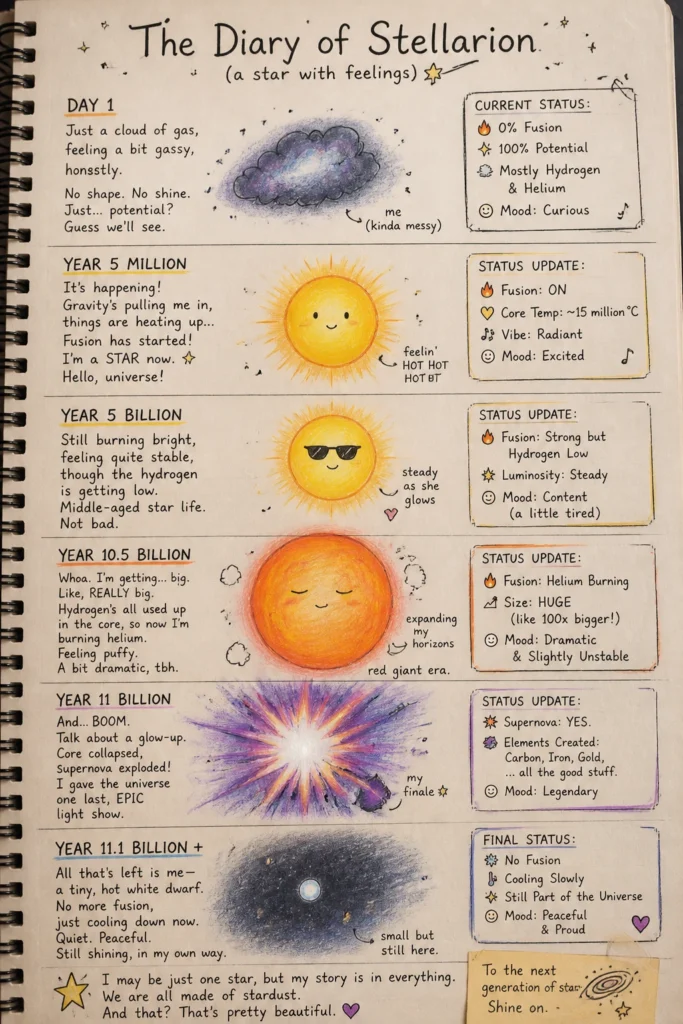
Chronicle its birth, its long main sequence life, the dramatic expansion into a red giant, and its eventual death. You can even include little sketches or doodles. It’s a creative way to explore the science with emotion.
Pro Tip: Give your star a personality! Is it a grumpy old star, a flashy supernova, or a quiet, contemplative white dwarf? This adds a layer of fun.
11. Exploding Supernova Piñata
- Best For: Energetic learners, group celebrations, dramatic conclusions.
- Vibe: Explosive, exciting, incredibly satisfying.
- Why it works: Visually and physically represents the dramatic end of a massive star.
Craft a piñata shaped like a large, brightly colored star (think reds, oranges, yellows). Fill it with small “debris” – confetti, tiny candies, maybe even slips of paper with facts about supernovae or heavy elements.
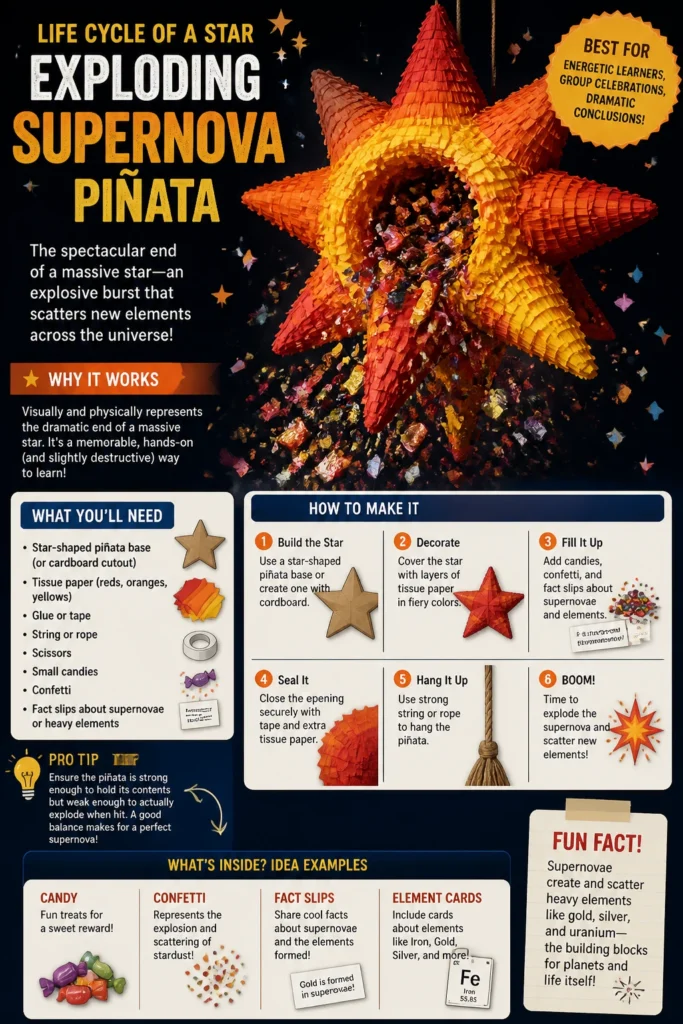
When it’s time to “explode” the supernova, explain that massive stars end their lives in these spectacular bursts, scattering new elements across the universe. It’s a memorable, hands-on (and slightly destructive) way to learn.
Pro Tip: Ensure the piñata is strong enough to hold its contents but weak enough to actually “explode” when hit. A good balance makes for a perfect supernova experience.
Our Top Recommended Finds
To really nail these projects, having a few staples on hand makes all the difference.
- A reliable hot glue gun: For sticking everything together, from dioramas to mobile pieces. It’s quick and holds like a champ.
- Assorted craft paint set: You’ll need various colors for stars, nebulae, and backdrops. A basic acrylic set covers most cosmic hues.
- Good quality art paper/cardboard: For everything from flipbooks to game boards, having sturdy surfaces is key for a polished look.
Which of these will you try first?
Honestly, these ideas are so good, you might just want to try them all. Whether you’re making an edible galaxy or animating a star’s dramatic final act, you’re going to rock this project.
So, tell us, which stellar idea are you diving into first? Let us know in the comments!