💌 How To Write A Letter To A Friend
Remember the joy of finding a handwritten letter in your mailbox? That personal touch, the unique feel of the paper, the ink from a friend’s hand – it’s a special connection digital messages often can’t replicate. I’ve sent and received countless letters over the years, from quick notes to long, heartfelt missives, and each one has deepened a friendship or brought a smile. This guide will help you rediscover that simple, powerful act of communication.
You’re about to create something truly meaningful for someone you care about.
Quick Overview
Writing a letter to a friend is a delightful way to connect and share. You’ll learn how to structure your thoughts, choose the right words, and prepare your letter for sending. It’s a journey back to a more personal form of communication.
- Time needed: 30-60 minutes (depending on how much you want to write)
- Difficulty: Beginner
- What you’ll need: Paper, a pen, an envelope, and a stamp
Step-by-Step Instructions
Step 1: Gather Your Supplies
Before you begin writing, make sure you have everything ready. This simple preparation sets the stage for a smooth and enjoyable experience. You don’t want to interrupt your flow by searching for a pen.
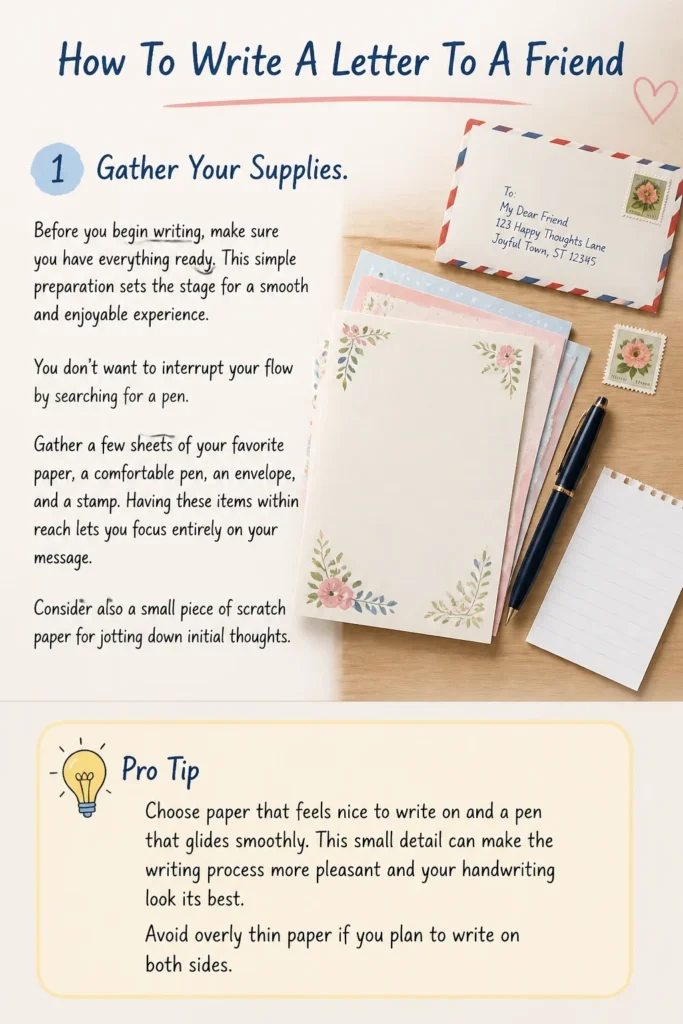
Gather a few sheets of your favorite paper, a comfortable pen, an envelope, and a stamp. Having these items within reach lets you focus entirely on your message. Consider also a small piece of scratch paper for jotting down initial thoughts.
Pro Tip: Choose paper that feels nice to write on and a pen that glides smoothly. This small detail can make the writing process more pleasant and your handwriting look its best. Avoid overly thin paper if you plan to write on both sides.
Step 2: Find Your Quiet Space and Time
The best letters are often written when you can truly concentrate. Distractions can break your train of thought and make your letter feel rushed or disjointed. Set aside a specific block of time.
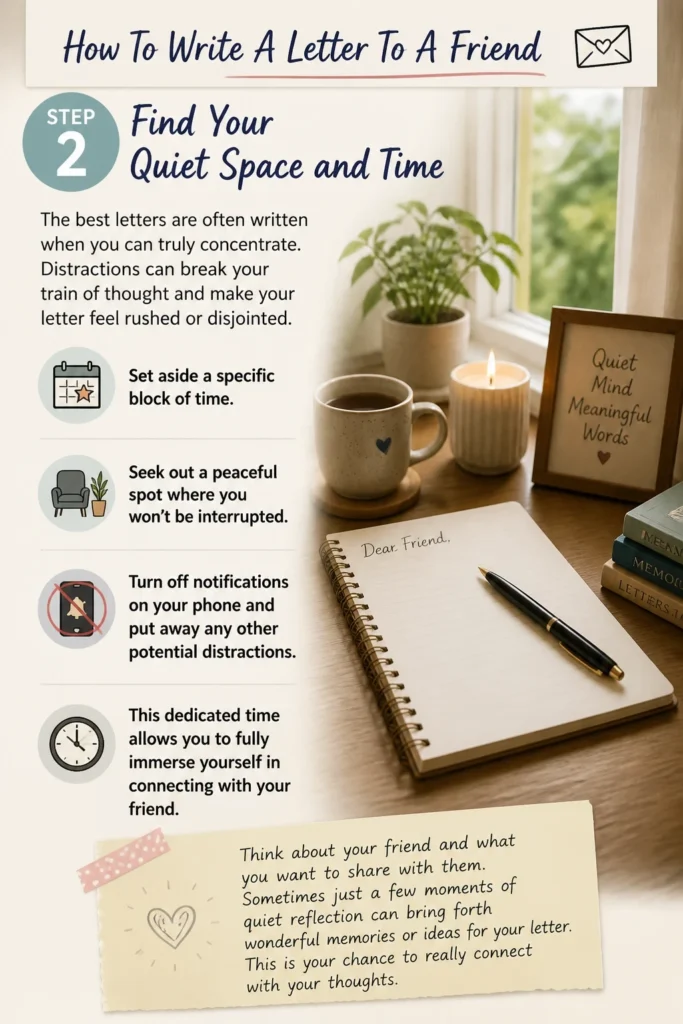
Seek out a peaceful spot where you won’t be interrupted. Turn off notifications on your phone and put away any other potential distractions. This dedicated time allows you to fully immerse yourself in connecting with your friend.
Think about your friend and what you want to share with them. Sometimes just a few moments of quiet reflection can bring forth wonderful memories or ideas for your letter. This is your chance to really connect with your thoughts.
Step 3: Start with a Warm and Personal Greeting
Every good letter begins with a thoughtful salutation. This sets the tone for your entire message and immediately addresses your friend directly. It’s the first step in establishing that personal connection.
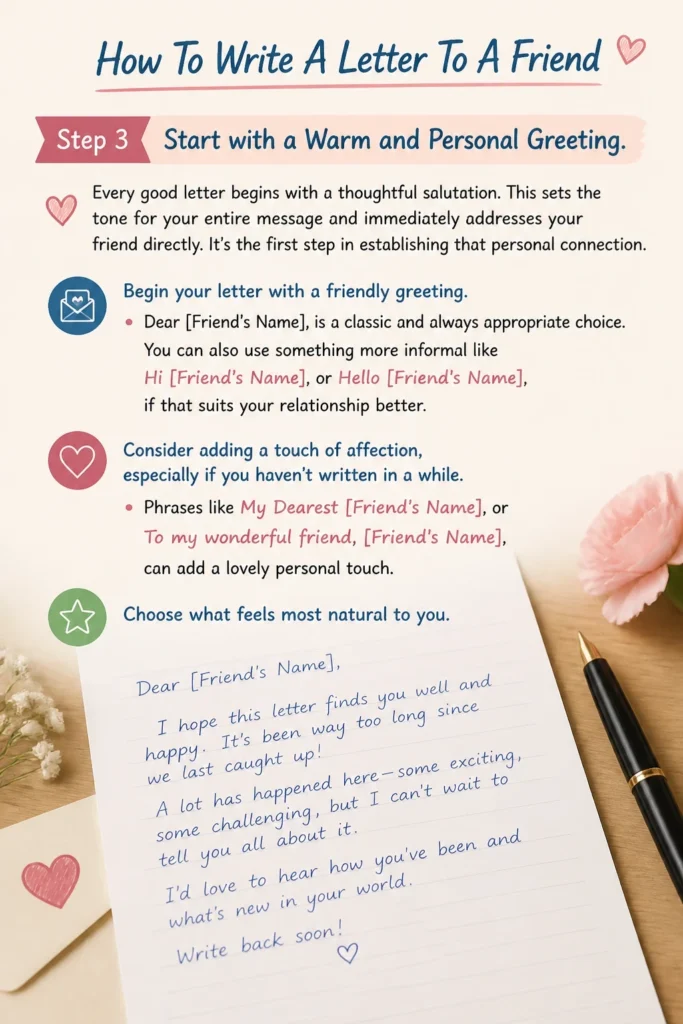
Begin your letter with a friendly greeting. “Dear [Friend’s Name],” is a classic and always appropriate choice. You can also use something more informal like “Hi [Friend’s Name],” or “Hello [Friend’s Name],” if that suits your relationship better.
Consider adding a touch of affection, especially if you haven’t written in a while. Phrases like “My Dearest [Friend’s Name],” or “To my wonderful friend, [Friend’s Name],” can add a lovely personal touch. Choose what feels most natural to you.
Step 4: Open with a Genuine Catch-Up
After your greeting, it’s nice to start with a brief, warm opening paragraph. This shows you’re thinking of them and provides a gentle transition into the body of your letter. It can also serve as a polite inquiry about their well-being.
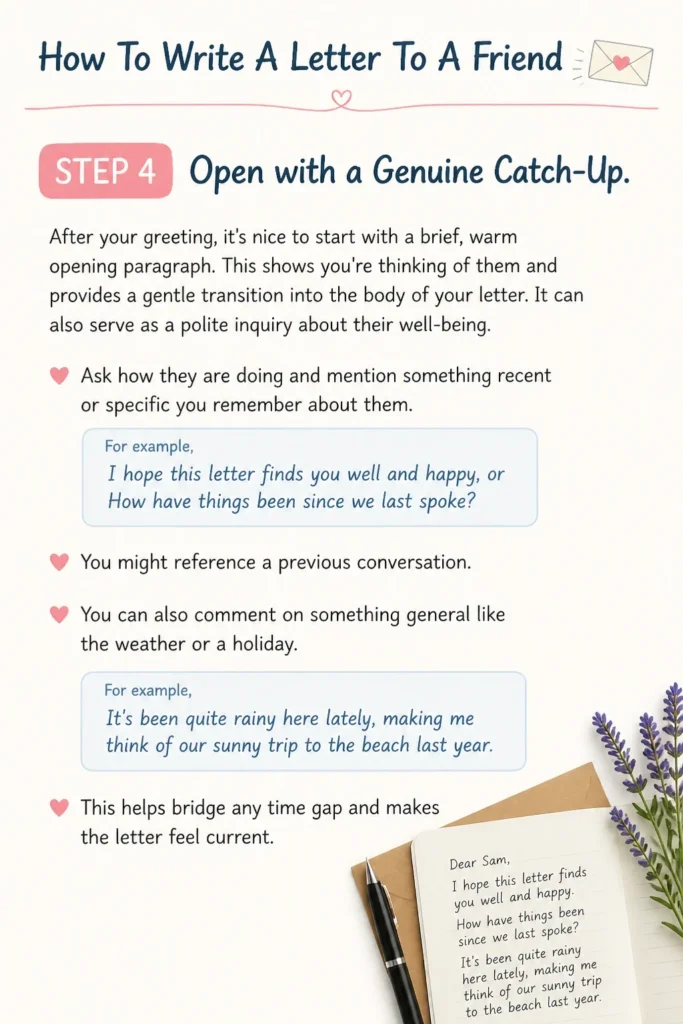
Ask how they are doing and mention something recent or specific you remember about them. For example, “I hope this letter finds you well and happy,” or “How have things been since we last spoke?” You might reference a previous conversation.
You can also comment on something general like the weather or a holiday. “It’s been quite rainy here lately, making me think of our sunny trip to the beach last year.” This helps bridge any time gap and makes the letter feel current.
Step 5: Share Your News, Stories, and Thoughts
This is the heart of your letter, where you truly connect with your friend. Don’t feel pressured to be profound; simply share what’s been on your mind or what you’ve been experiencing. Authenticity is key here.
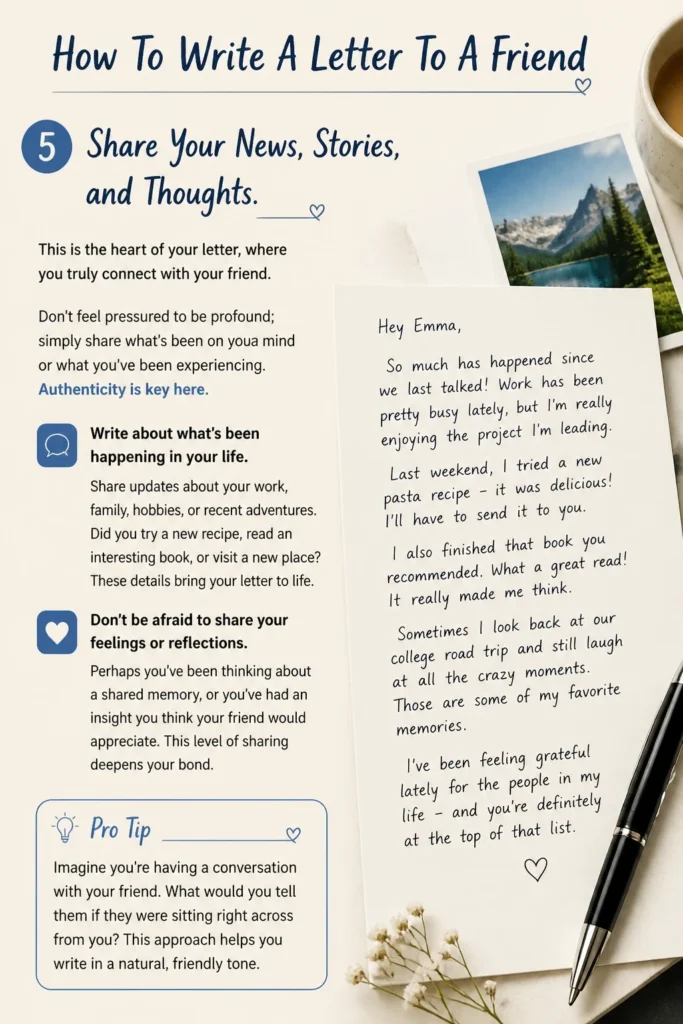
Write about what’s been happening in your life. Share updates about your work, family, hobbies, or recent adventures. Did you try a new recipe, read an interesting book, or visit a new place? These details bring your letter to life.
Don’t be afraid to share your feelings or reflections. Perhaps you’ve been thinking about a shared memory, or you’ve had an insight you think your friend would appreciate. This level of sharing deepens your bond.
Pro Tip: Imagine you’re having a conversation with your friend. What would you tell them if they were sitting right across from you? This approach helps keep your writing natural and personal. Don’t censor yourself too much.
Step 6: Ask Engaging Questions and Show You Care
A good letter isn’t just about sharing your own news; it’s also about showing interest in your friend’s life. Asking questions encourages them to write back and makes them feel valued. It demonstrates active listening, even in written form.
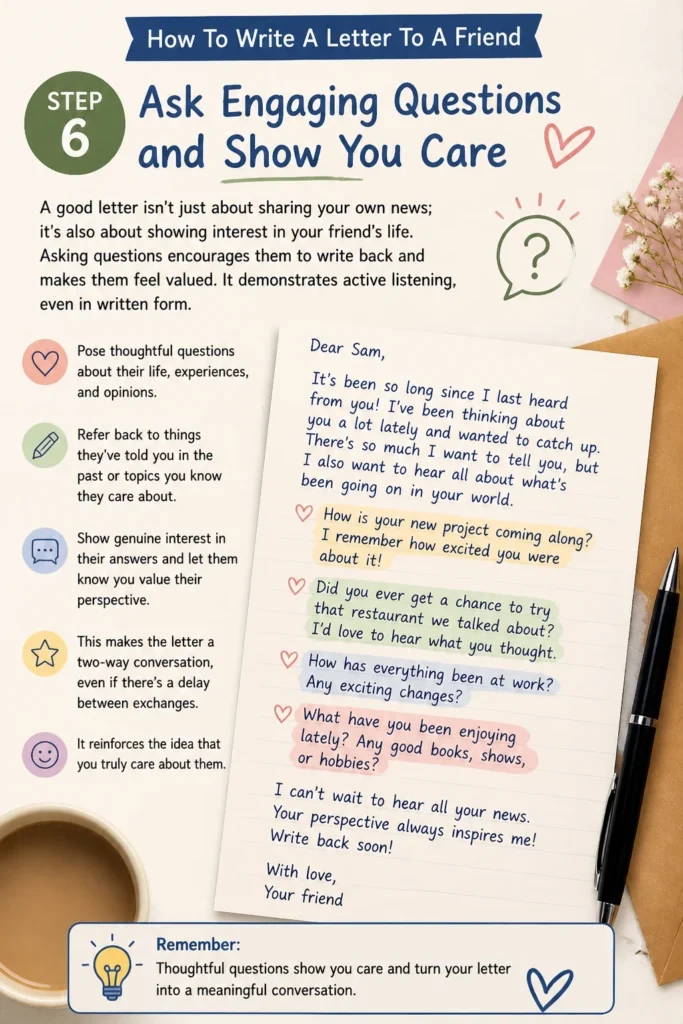
Pose thoughtful questions about their life, experiences, and opinions. Refer back to things they’ve told you in the past or topics you know they care about. “How is your new project coming along?” or “Did you ever get a chance to try that restaurant we talked about?”
Show genuine interest in their answers and let them know you value their perspective. This makes the letter a two-way conversation, even if there’s a delay between exchanges. It reinforces the idea that you truly care about them.
Step 7: Craft a Kind and Thoughtful Closing
As you near the end of your letter, wrap up your thoughts gracefully. A good closing leaves your friend with a warm feeling and reinforces your connection. It’s your final opportunity to express affection.
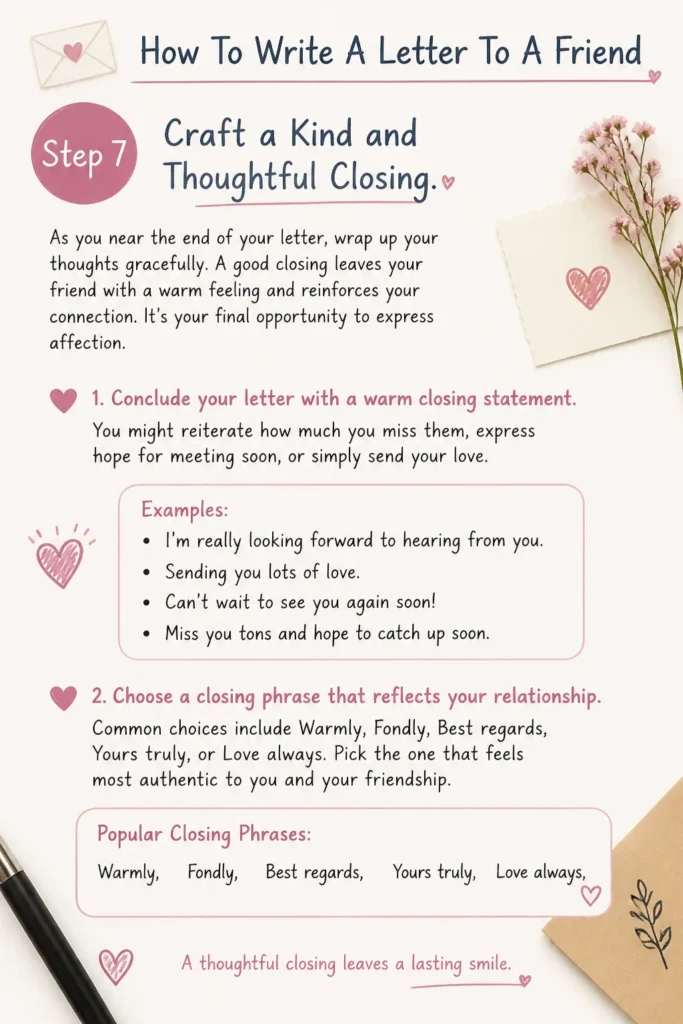
Conclude your letter with a warm closing statement. You might reiterate how much you miss them, express hope for meeting soon, or simply send your love. “I’m really looking forward to hearing from you,” or “Sending you lots of love.”
Choose a closing phrase that reflects your relationship. Common choices include “Warmly,” “Fondly,” “Best regards,” “Yours truly,” or “Love always.” Pick the one that feels most authentic to you and your friendship.
Step 8: Sign Off with Your Name
This step is straightforward but essential. Your signature personalizes the letter and completes the message. It’s the final stamp of your identity.
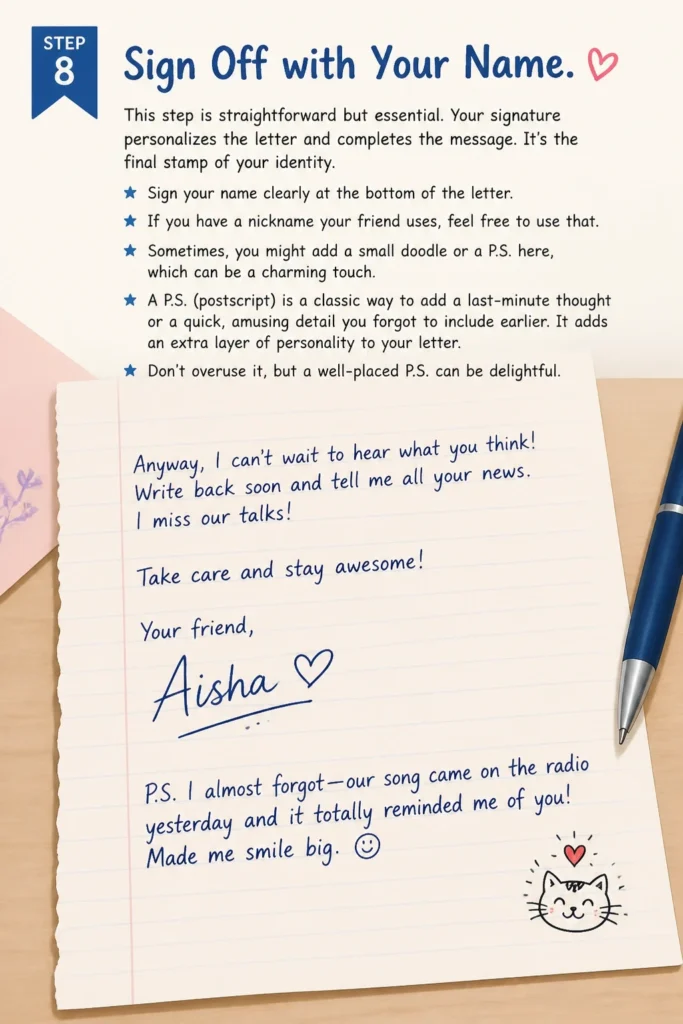
Sign your name clearly at the bottom of the letter. If you have a nickname your friend uses, feel free to use that. Sometimes, you might add a small doodle or a P.S. here, which can be a charming touch.
A P.S. (postscript) is a classic way to add a last-minute thought or a quick, amusing detail you forgot to include earlier. It adds an extra layer of personality to your letter. Don’t overuse it, but a well-placed P.S. can be delightful.
Step 9: Address the Envelope Clearly
Properly addressing the envelope ensures your letter reaches its destination. Take your time to write legibly and accurately. A poorly addressed envelope can lead to delays or even a lost letter.
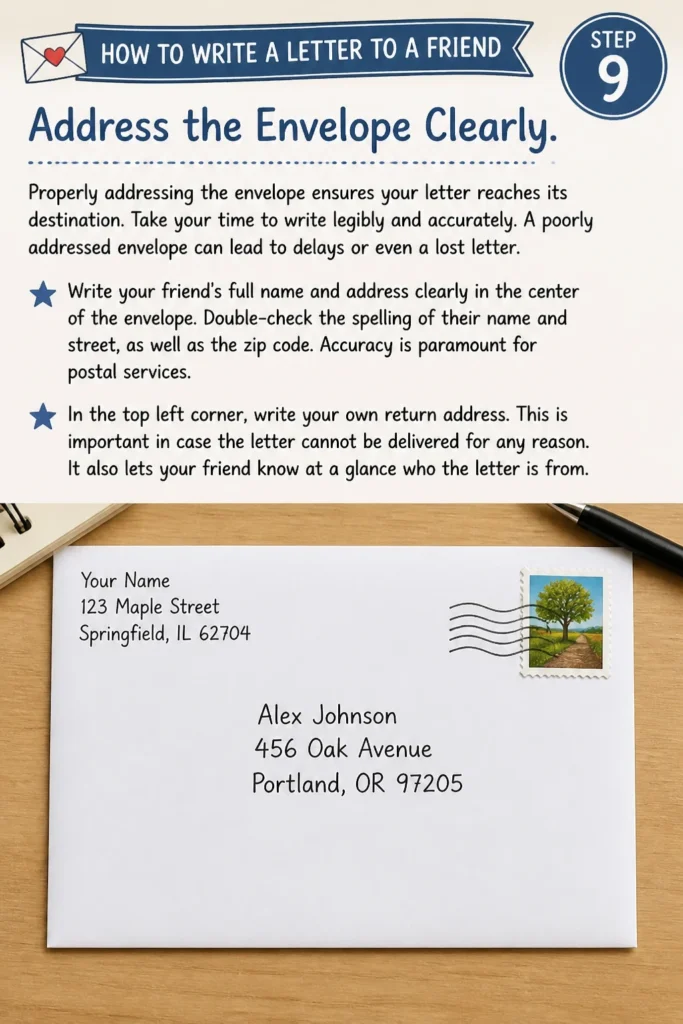
Write your friend’s full name and address clearly in the center of the envelope. Double-check the spelling of their name and street, as well as the zip code. Accuracy is paramount for postal services.
In the top left corner, write your own return address. This is important in case the letter cannot be delivered for any reason. It also lets your friend know at a glance who the letter is from.
Step 10: Affix a Stamp and Send It Off
The final, satisfying step is to prepare your letter for its journey. This is where your thoughtful words transform into a tangible message traveling to your friend. It’s the culmination of your effort.
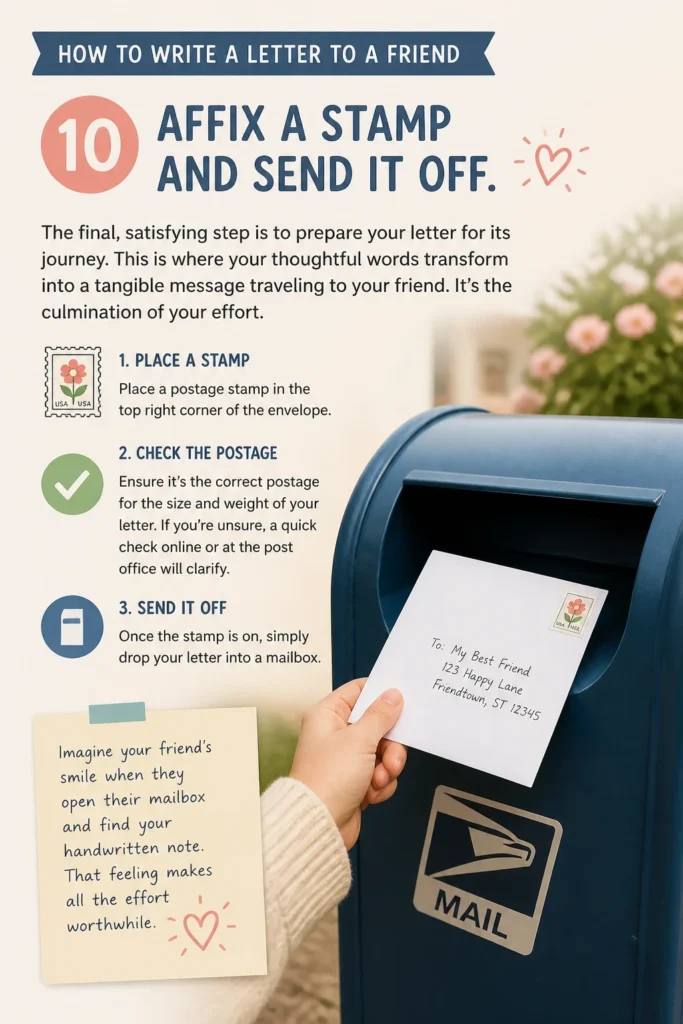
Place a postage stamp in the top right corner of the envelope. Ensure it’s the correct postage for the size and weight of your letter. If you’re unsure, a quick check online or at the post office will clarify.
Once the stamp is on, simply drop your letter into a mailbox. Imagine your friend’s smile when they open their mailbox and find your handwritten note. That feeling makes all the effort worthwhile.
Common Mistakes to Avoid
Overthinking and Procrastination
Many people hesitate to write a letter because they feel pressured to make it perfect or incredibly profound. This often leads to procrastination and the letter never getting written at all. The goal is connection, not literary genius.
Instead, remember that your friend values your genuine thoughts and effort far more than perfect prose. Just start writing, even if it feels a little messy at first. The act of reaching out is what truly matters.
Focusing Only on Yourself
While sharing your news is important, a letter that is entirely self-focused can feel one-sided. Your friend wants to know you care about them too, and wants the letter to feel like a conversation.
Make sure to include questions about their life, reference past conversations, and show interest in their experiences. A balanced letter shares your world while also inquiring about theirs, creating a true dialogue.
Illegible Handwriting
Even the most heartfelt message can be lost if your friend can’t read it. While not everyone has perfect penmanship, making an effort to write clearly is a sign of respect for your reader.
Take your time and write as neatly as you can. If your handwriting is naturally difficult to read, consider printing your letter or practicing a slower, more deliberate script. Clarity ensures your message is received.
Forgetting to Include Your Address
It’s an easy oversight, but forgetting your return address on the envelope means your letter won’t be returned if undeliverable. More importantly, if your friend has moved or misplaced your address, they won’t know where to send their reply.
Always include your return address in the top left corner of the envelope. This simple step ensures your letter can always find its way back to you and facilitates a response from your friend.
Troubleshooting
“I don’t know what to write about!”
It’s common to draw a blank when starting. The pressure to fill a whole page can be daunting. Don’t let this stop you from starting.
Try jotting down a few bullet points of recent happenings in your life, funny anecdotes, or questions you have for your friend. Think about shared memories or upcoming plans. Even a simple list can spark inspiration. Remember, a short, thoughtful letter is better than no letter at all.
“My handwriting isn’t good enough.”
Many people feel self-conscious about their handwriting, especially in the age of typing. However, a handwritten letter’s charm often lies in its personal, unique touch, imperfections and all.
Focus on legibility rather than perfection. Write a bit slower and more deliberately. If you’re truly uncomfortable, you could type your letter and then print and sign it, but a handwritten note generally holds more warmth. Your friend will appreciate the effort.
“I’m worried about sounding awkward or cheesy.”
Writing can sometimes feel different from speaking, making you second-guess your words. The key is to write in your natural voice, as if you were talking to your friend in person.
Read your letter aloud to yourself. Does it sound like you? If a phrase feels too formal or forced, rephrase it. Authenticity is what makes a letter truly special. Your friend knows and loves your unique voice, so let it shine through.
Key Takeaways
- The act of writing a letter is a personal and powerful way to connect with friends.
- Preparation, including gathering supplies and finding a quiet space, enhances the writing experience.
- A good letter includes a warm greeting, personal updates, thoughtful questions, and a kind closing.
- Authenticity and genuine interest in your friend’s life are more important than perfect prose.
- Addressing the envelope clearly and adding a stamp are crucial final steps for delivery.
- Don’t overthink it; just start writing and let your personality shine through.
Frequently Asked Questions
How long should a letter to a friend be?
There’s no strict rule for length. A letter can be a short, sweet note on a single page or a longer, multi-page update, depending on how much you have to say and how often you write. The most important thing is that it feels genuine and complete for your current message.
Is it okay to include photos or small items in a letter?
Absolutely! Including a small, flat photo, a pressed flower, a sticker, or even a tea bag can be a wonderful, personal touch. Just be mindful of the weight, as it might require extra postage. Make sure the item isn’t too bulky or fragile.
How often should I write to a friend?
The frequency depends entirely on your relationship and personal preference. Some friends exchange letters monthly, others annually. There’s no pressure to write on a schedule. The beauty of a letter is that it’s a pleasant surprise whenever it arrives.
What if I make a mistake while writing? Should I start over?
A small mistake, like a crossed-out word or a minor smudge, adds character to a handwritten letter. It shows it was made by a human hand. Unless it makes the letter illegible or significantly disrupts the flow, there’s no need to start over. Embrace the imperfection!
Our Top Recommended Finds
- Quality Stationery Set: A nice set of paper and matching envelopes makes writing feel more special. Look for acid-free paper to ensure your words last.
- Smooth-Writing Pen: A comfortable gel pen or a fine-point rollerball pen can make a huge difference in your writing experience and legibility.
- Decorative Stamps: Check your local post office or online for unique and artistic stamps. They add a touch of personality to your envelope before it even reaches your friend.
Unleash Your Inner Scribe
Writing a letter to a friend is more than just putting words on paper; it’s an act of love, connection, and thoughtfulness in a fast-paced world. It’s a tangible piece of your friendship, a memory in the making. Imagine the smile on your friend’s face when they open their mailbox and find your personal message waiting for them.
Don’t wait for a special occasion. Pick up a pen and paper today. Think of a friend who could use a little cheer, a shared memory, or just a simple hello from you. Perhaps you could even start a regular letter exchange with someone. The joy of sending and receiving these personal treasures is truly unmatched.