❄️ How To Be Cold Person In School
I remember walking through the school hallways feeling exhausted by the constant need to please everyone and fit into every social circle.
I decided to stop reacting to the noise and started prioritizing my own peace, which transformed my entire school experience from chaotic to controlled.
This guide comes from months of observing social dynamics and refining a persona that commands respect through distance rather than aggression.
Quick Overview
This guide will help you transition from being socially reactive to becoming a calm, detached, and focused individual within your school environment.
- Time needed: 2 to 4 weeks for a full habit shift
- Difficulty: Intermediate
- What you’ll need: Mental discipline, a neutral wardrobe, and a focus on personal goals
Step-by-Step Instructions
Step 1: Master the Neutral Expression
Control your facial muscles to avoid showing immediate emotional reactions to news, jokes, or insults.

Most people use their faces to broadcast exactly how they feel, which makes them easy to read and manipulate.
To be cold, you must maintain a “resting” face that is neither angry nor happy, but simply present.
Pro Tip: Practice looking at yourself in the mirror while thinking about something annoying or exciting, and train your face to remain still.
Avoid excessive smiling when greeting people you aren’t close with.
A slight nod is sufficient for an acknowledgment without giving away too much warmth.
Maintain steady eye contact when someone is speaking to you, but keep your gaze relaxed rather than intense.
Step 2: Implement the Economy of Words
Limit your verbal output to what is strictly necessary for the conversation at hand.
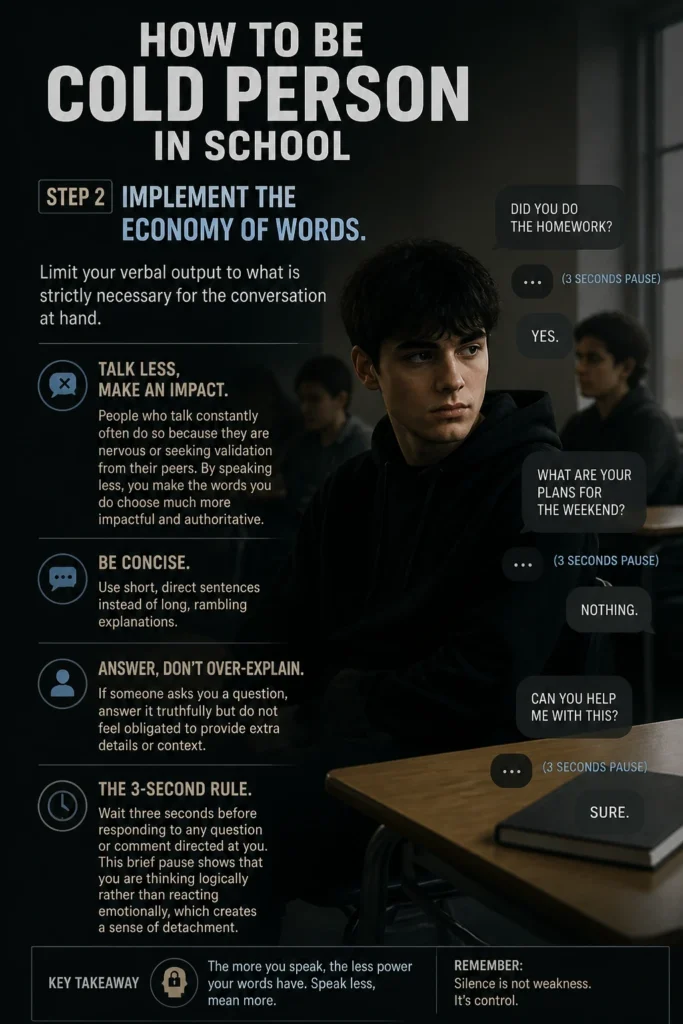
People who talk constantly often do so because they are nervous or seeking validation from their peers.
By speaking less, you make the words you do choose much more impactful and authoritative.
Use short, direct sentences instead of long, rambling explanations.
If someone asks you a question, answer it truthfully but do not feel obligated to provide extra details or context.
Wait three seconds before responding to any question or comment directed at you.
This brief pause shows that you are thinking logically rather than reacting emotionally, which creates a sense of detachment.
Step 3: Control Your Physical Presence
Adopt a posture that is upright and composed, avoiding slouching or fidgeting with your hands.
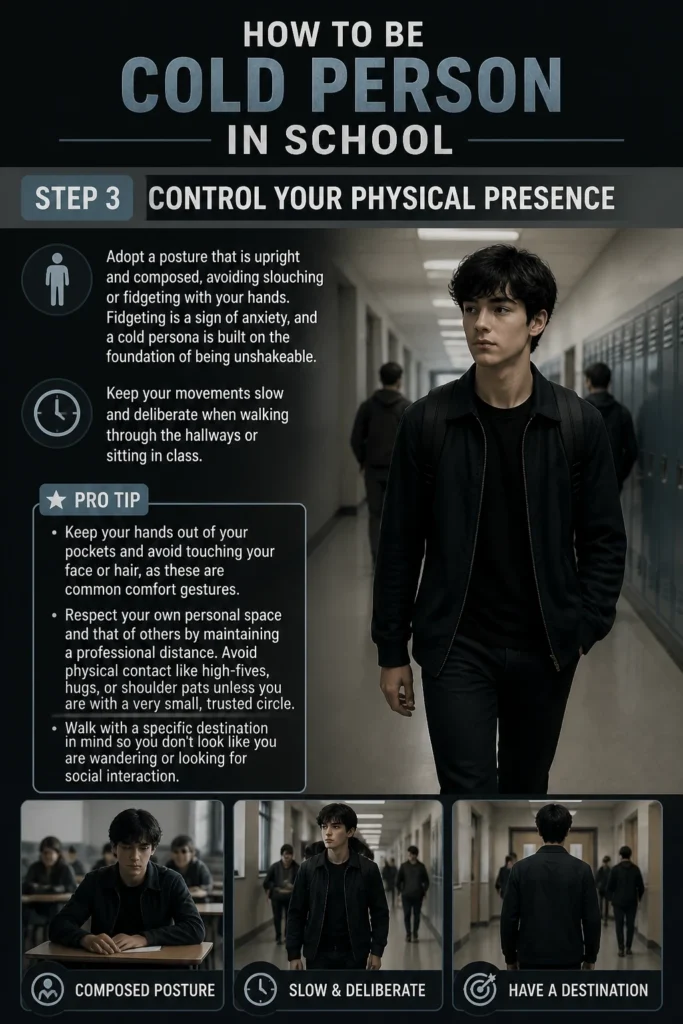
Fidgeting is a sign of anxiety, and a cold persona is built on the foundation of being unshakeable.
Keep your movements slow and deliberate when walking through the hallways or sitting in class.
Pro Tip: Keep your hands out of your pockets and avoid touching your face or hair, as these are common “comfort” gestures.
Respect your own personal space and that of others by maintaining a professional distance.
Avoid physical contact like high-fives, hugs, or shoulder pats unless you are with a very small, trusted circle.
Walk with a specific destination in mind so you don’t look like you are wandering or looking for social interaction.
Step 4: Prioritize Academic and Personal Goals
Focus your energy on your schoolwork and personal projects during school hours.
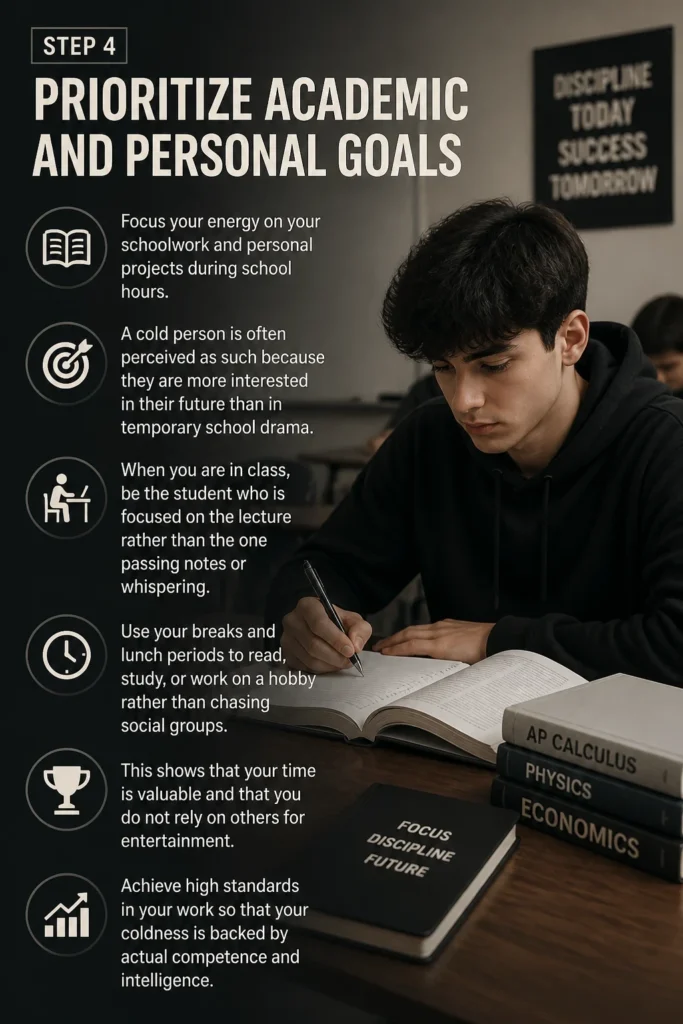
A cold person is often perceived as such because they are more interested in their future than in temporary school drama.
When you are in class, be the student who is focused on the lecture rather than the one passing notes or whispering.
Use your breaks and lunch periods to read, study, or work on a hobby rather than chasing social groups.
This shows that your time is valuable and that you do not rely on others for entertainment.
Achieve high standards in your work so that your “coldness” is backed by actual competence and intelligence.
Step 5: Manage Your Digital Footprint
Reduce your activity on social media platforms where school drama typically thrives.
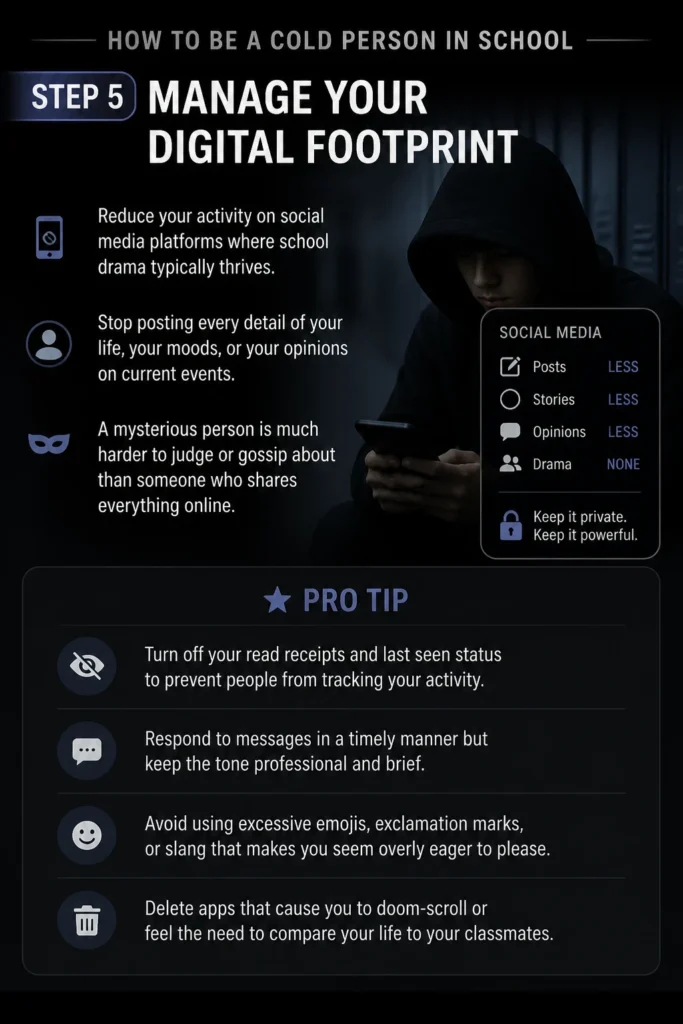
Stop posting every detail of your life, your moods, or your opinions on current events.
A mysterious person is much harder to judge or gossip about than someone who shares everything online.
Pro Tip: Turn off your “read receipts” and “last seen” status to prevent people from tracking your activity.
Respond to messages in a timely manner but keep the tone professional and brief.
Avoid using excessive emojis, exclamation marks, or slang that makes you seem overly eager to please.
Delete apps that cause you to doom-scroll or feel the need to compare your life to your classmates.
Step 6: Handle Conflict with Logic
Refuse to get baited into arguments or shouting matches with classmates.
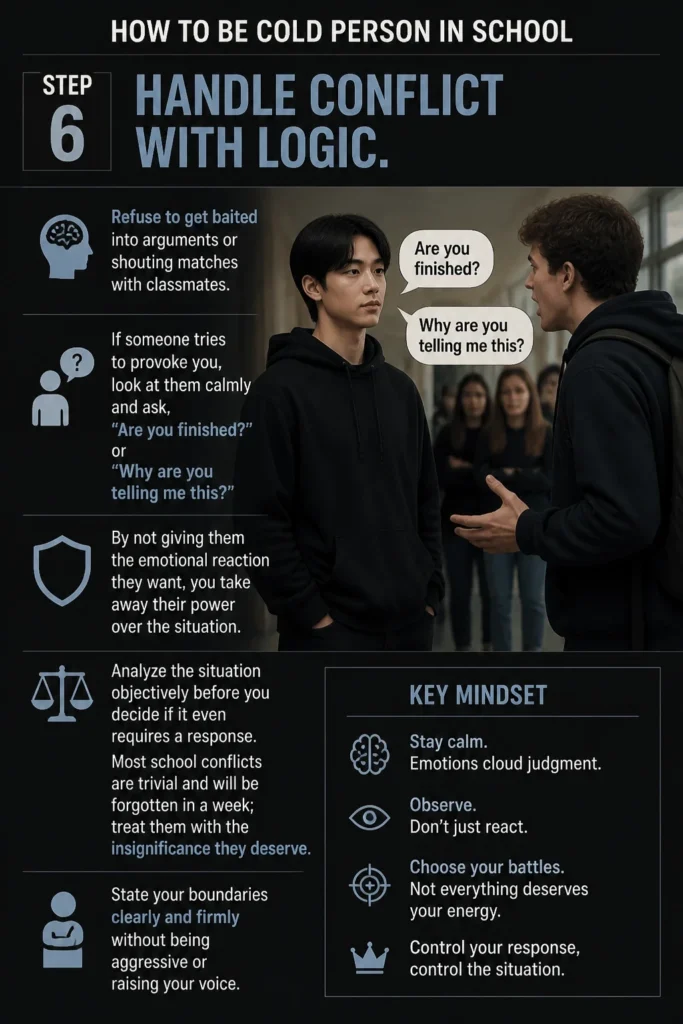
If someone tries to provoke you, look at them calmly and ask, “Are you finished?” or “Why are you telling me this?”
By not giving them the emotional reaction they want, you take away their power over the situation.
Analyze the situation objectively before you decide if it even requires a response.
Most school conflicts are trivial and will be forgotten in a week; treat them with the insignificance they deserve.
State your boundaries clearly and firmly without being aggressive or raising your voice.
Step 7: Curate a Minimalist Aesthetic
Choose a style of dress that is clean, simple, and functional rather than following every flashy trend.
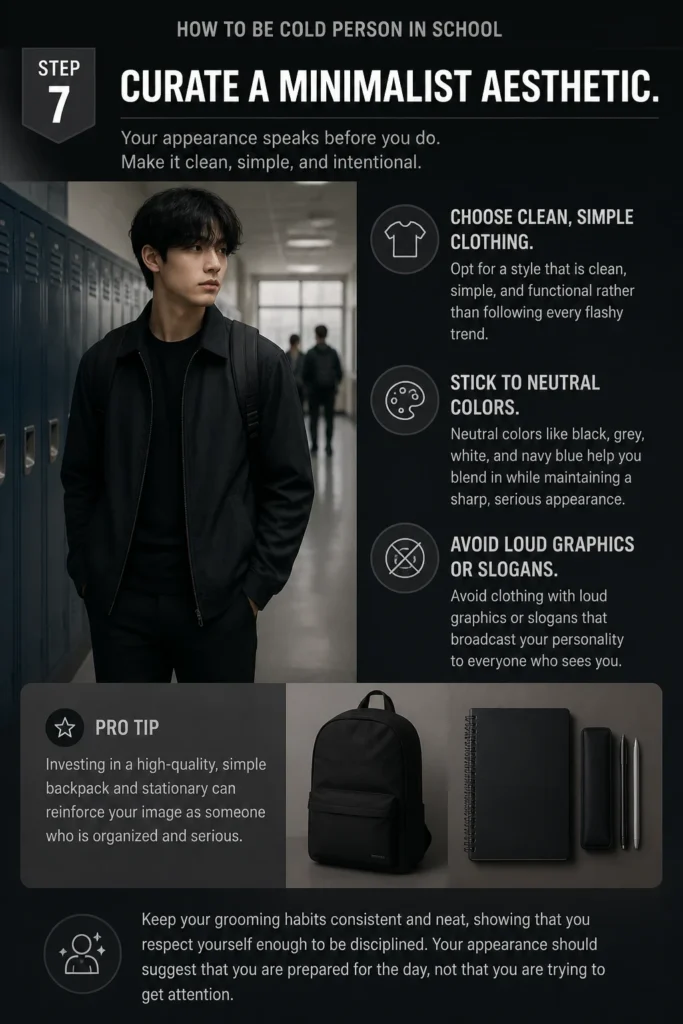
Neutral colors like black, grey, white, and navy blue help you blend in while maintaining a sharp, serious appearance.
Avoid clothing with loud graphics or slogans that broadcast your personality to everyone who sees you.
Pro Tip: Investing in a high-quality, simple backpack and stationary can reinforce your image as someone who is organized and serious.
Keep your grooming habits consistent and neat, showing that you respect yourself enough to be disciplined.
Your appearance should suggest that you are prepared for the day, not that you are trying to get attention.
Common Mistakes to Avoid
Confusing Coldness with Cruelty
Being cold means being indifferent and detached, not being mean-spirited or a bully. If you go out of your way to hurt people’s feelings or belittle them, you aren’t being cold; you’re just being toxic. True coldness is about lack of interest in drama, not the creation of it.
Neglecting Your Responsibilities
Some people think being cold means acting like they don’t care about anything, including their grades or their future. This is a mistake that only hurts you in the long run. A cold person is disciplined and focused, which usually results in high performance, not laziness.
Seeking Validation for Your New Persona
If you keep asking people if they’ve noticed how “different” or “cold” you are, you are failing at the persona. The goal is to actually be detached, not to perform detachment for an audience. If you are looking for a reaction, you are still being reactive to others.
Being Inconsistent
Switching between being cold one day and being the “class clown” the next makes you seem unstable rather than mysterious. Consistency is what builds the aura of being a cold person. Choose your path and stick to it even when it feels difficult to maintain.
Troubleshooting
People are calling you “emo” or “weird”
This is a common reaction when you stop following social norms and start being more reserved. The solution is to ignore the labels and continue being polite but distant. Eventually, the novelty of your change will wear off, and people will accept your new baseline as normal.
Friends feel hurt by your new boundaries
If you have existing friends, they might feel like you are pushing them away. You should explain to them once that you are focusing more on yourself and your goals lately. You don’t need to be cold to your true friends, but you can still maintain a more composed version of yourself around them.
You feel lonely or isolated
Being cold can lead to a smaller social circle, which might feel strange at first. Use this extra time to invest in your own hobbies, fitness, or learning. If the loneliness becomes overwhelming, remember that being cold is a tool for focus, not a prison sentence; you can always choose when to open up to the right people.
Key Takeaways
- Maintain a neutral facial expression to prevent others from reading your emotions.
- Speak only when necessary and keep your responses brief and logical.
- Use confident, still body language to project an aura of self-assurance.
- Prioritize your grades and personal growth over social hierarchies and drama.
- Minimize your social media presence to maintain a sense of mystery and privacy.
- Stay consistent in your behavior to ensure your persona is respected as genuine.
Frequently Asked Questions
Is being cold the same as being an introvert?
Not necessarily, though they share some traits. Introversion is about how you gain energy, while being “cold” in this context is a conscious choice to be emotionally detached and focused. You can be a naturally social person who chooses to adopt a cold persona at school for productivity or peace.
Can I still have a boyfriend or girlfriend while being cold?
Yes, but your relationship will likely be more private and less prone to public displays of drama. You can be warm and open with a partner while maintaining a cold, professional exterior with the rest of the school. Most people find a partner who is composed and focused to be quite attractive.
How do I start being cold without it looking fake?
Start by making small changes rather than a total transformation overnight. Begin with the economy of words—talking less and listening more. As you get comfortable with that, start working on your facial expressions and your focus in class. Gradual change looks more like personal growth and less like an act.
What if a teacher thinks I am being disrespectful?
Being cold should never include being rude to staff or ignoring instructions. Always be polite and use “Yes, sir” or “No, ma’am” as needed. Your goal is to be a model student who is simply very quiet and focused, which teachers usually appreciate rather than dislike.
Our Top Recommended Finds
- Noise-Canceling Headphones: These are perfect for signaling that you are busy and unavailable for small talk during study sessions.
- A High-Quality Minimalist Journal: Keeping your thoughts in a physical book helps you process emotions privately rather than venting to classmates.
- A Sleek, Solid-Colored Water Bottle: Small accessories in neutral tones reinforce your disciplined and organized aesthetic.
Taking Control of Your Environment
Becoming a cold person in school is not about becoming a robot or a villain.
It is about reclaiming your time and emotional energy so you can spend them on things that actually matter for your future.
Start tomorrow by observing how much you react to things that don’t benefit you, and then simply choose not to react next time.
You might find that the less you give to the school’s social machine, the more you have left for yourself.
Consider reading more about stoicism or time management to further strengthen your new mindset.