🤝 How To Make Friends In High School
Starting high school can feel like stepping onto a whole new playing field.
You might be excited, nervous, or a mix of both, especially when it comes to making new connections.
I remember those first few weeks vividly, navigating new hallways and wondering where I’d fit in. This guide shares the practical strategies I learned, helping you build genuine friendships from day one.

Quick Overview
This guide will equip you with actionable steps to confidently approach new people and cultivate lasting friendships throughout your high school journey. You’ll learn how to break the ice, sustain conversations, and find your tribe.
- Time needed: Ongoing effort, initial steps can be taken today
- Difficulty: Beginner
- What you’ll need: An open mind, willingness to engage, and a bit of bravery
Step-by-Step Instructions
Step 1: Be Present and Open
Making friends starts with showing up, both physically and mentally. The more you put yourself in situations where interactions can happen, the higher your chances of connecting.

This means actively participating in school life and making yourself approachable to others.
- Join clubs, sports teams, or volunteer groups that genuinely interest you. Shared activities create natural opportunities for conversation and bonding.
- Smile and make eye contact with people in the hallways or your classes. A friendly expression signals that you’re open to interaction.
- Keep your body language open. Avoid crossing your arms or looking down at your phone constantly, as this can make you seem unapproachable.
Pro Tip: Don’t just join a club to make friends; join one you’re passionate about. Your enthusiasm will naturally attract like-minded people.
Step 2: Initiate Simple Conversations
The first step in any friendship is a simple hello. Don’t overthink it; small talk is the bridge to deeper connections.

Practice starting with low-stakes interactions and build your confidence from there.
- Start with a friendly greeting like “Hey” or “How’s it going?” when you sit next to someone new in class.
- Comment on your shared environment. For example, “This math homework is really something, huh?” or “Are you excited for the football game this Friday?”
- Ask open-ended questions that encourage more than a yes or no answer. Instead of “Do you like this class?”, try “What do you think of this class so far?”
Step 3: Listen Actively and Show Interest
People love to feel heard and understood. When you truly listen, you not only learn about the other person but also demonstrate that you value them.

This builds trust and makes them feel comfortable opening up to you.
- Pay full attention when someone is speaking. Put away distractions like your phone and make eye contact.
- Ask follow-up questions about what they’ve shared. If they mention a hobby, ask “How did you get into that?” or “What’s your favorite part about it?”
- Remember details about their interests, family, or experiences. Bringing these up later shows you were listening and care.
Pro Tip: Active listening isn’t just about hearing words; it’s about understanding the feeling behind them. Try to empathize with their perspective.
Step 4: Find Common Ground
Shared interests are the bedrock of many friendships. Once you start conversing, look for subjects you both enjoy or experiences you have in common.
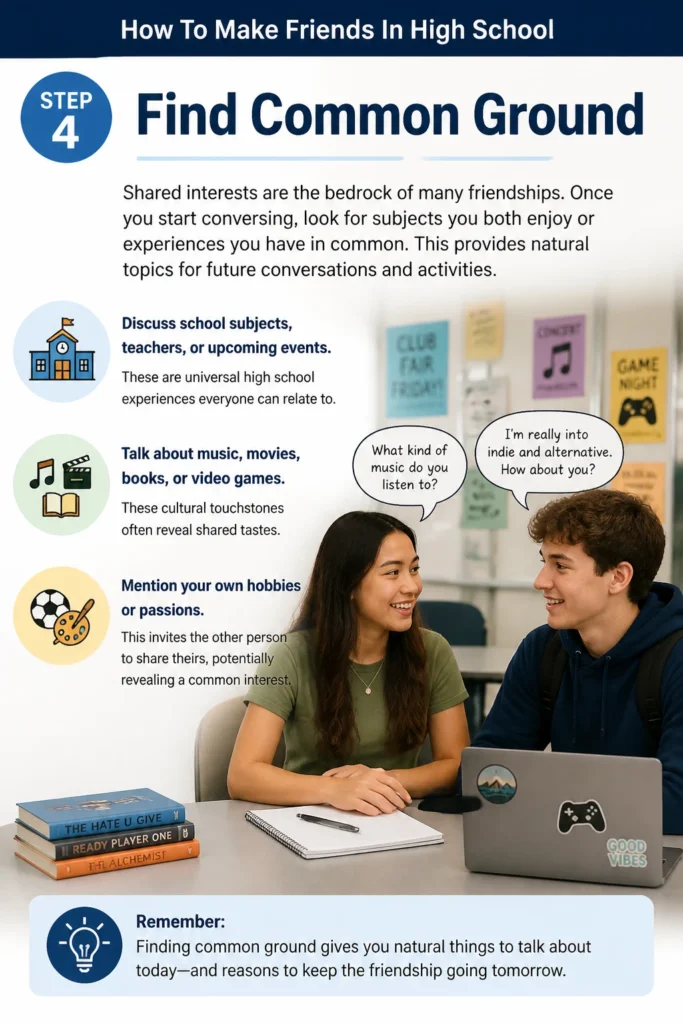
This provides natural topics for future conversations and activities.
- Discuss school subjects, teachers, or upcoming events. These are universal high school experiences everyone can relate to.
- Talk about music, movies, books, or video games. These cultural touchstones often reveal shared tastes.
- Mention your own hobbies or passions. This invites the other person to share theirs, potentially revealing a common interest.
Step 5: Be Authentic and Vulnerable
True friendships are built on honesty and genuine connection. Trying to be someone you’re not is exhausting and ultimately prevents others from getting to know the real you.

Allow yourself to be a little vulnerable; it signals trust and invites others to do the same.
- Share your honest opinions and feelings, even if they differ slightly from the group. People appreciate authenticity.
- Talk about your passions, quirks, and even your struggles. This allows others to see you as a complex, real person.
- Don’t be afraid to admit when you don’t know something or when you’re feeling a bit unsure. It makes you relatable.
Step 6: Extend and Accept Invitations
Friendships grow when you spend time together outside of school. Taking the initiative to suggest hanging out shows you’re interested in developing the connection.

Equally important is accepting invitations when they come your way.
- Suggest a low-pressure activity like studying together, grabbing coffee, or going to a school event. “Want to grab a slice after school?” is a great start.
- Be specific with your invitations. “Let’s hang out sometime” is less effective than “Do you want to come to the Friday night football game with me?”
- Say “yes” to invitations, even if you’re a little hesitant. New experiences often lead to new friendships.
Step 7: Be Patient and Persistent
Friendships rarely form overnight. They are built through consistent effort, shared experiences, and mutual trust over time.

Don’t get discouraged if connections don’t happen immediately.
- Keep reaching out and engaging with people, even if initial interactions feel small. Each conversation is a brick in the foundation.
- Understand that some friendships will click quickly, while others will develop slowly. Both are valid and valuable.
- Don’t take rejection personally. Sometimes people are busy, or it’s just not the right fit. Move on gracefully and keep trying with others.
Step 8: Be a Good Friend
Once you start making connections, the work isn’t over. Maintaining friendships requires effort, kindness, and reliability.

Being a good friend makes you someone others want to keep around.
- Show up for your friends when they need support, whether it’s help with homework or just a listening ear.
- Celebrate their successes and offer genuine encouragement. Be happy for them.
- Communicate openly and honestly, even when it’s difficult. Good friends can navigate disagreements.
Common Mistakes to Avoid
Trying Too Hard to Fit In
It’s natural to want to belong, but trying to change who you are to please others often backfires. People can sense when you’re not being genuine, and it creates a barrier to real connection.
Instead, focus on being your authentic self; the right friends will appreciate you for who you truly are.
Only Talking About Yourself
While sharing about yourself is important, dominating conversations can push people away. Friendships are a two-way street, requiring a balance of talking and listening.
Make sure to ask questions, listen intently, and show genuine interest in what others have to say.
Waiting for Others to Initiate
It’s easy to fall into the trap of waiting for someone else to say hello, invite you out, or start a conversation. However, this passive approach can leave you feeling isolated.
Take the initiative sometimes. Send that text, ask that question, or suggest that activity. You might be surprised by the positive response.
Being Afraid of Rejection
The fear of being turned down can paralyze efforts to make friends. Not every attempt to connect will result in a lasting friendship, and that’s perfectly normal.
See each interaction as a learning opportunity, not a pass-or-fail test. A “no” just means you’re one step closer to a “yes” with someone else.
Troubleshooting
“I’m too shy to start conversations.”
Shyness is a common feeling, but it doesn’t have to stop you. Start incredibly small. Practice smiling at people in the hallway. Then, try a simple “Hi” or “How’s it going?” with a classmate you see regularly.
Focus on one small interaction a day. The more you practice, the easier it becomes. Remember, most people are just as nervous as you are.
“I don’t know what to say after ‘hi’.”
Don’t feel pressured to have a profound conversation right away. After “hi,” try a comment about your shared situation: “This class is tough, isn’t it?” or “What did you think of the assembly?”
You can also ask about their interests: “Do you have any plans for the weekend?” or “What kind of music do you like?” Keep it light and easy.
“I feel like I’m being rejected or ignored.”
It’s painful when you feel overlooked, but try not to jump to conclusions. Sometimes people are preoccupied, shy themselves, or simply not a good fit for you.
Don’t dwell on it. Keep extending your efforts to other people and different groups. The right connections will eventually emerge.
Key Takeaways
- Show Up: Be present and approachable in various school settings.
- Initiate: Start conversations with simple greetings and observations.
- Listen: Pay attention and ask follow-up questions to show genuine interest.
- Be Yourself: Authenticity attracts the right friends who appreciate you.
- Take Action: Extend invitations and accept them to build shared experiences.
- Be Patient: Friendships develop over time with consistent effort and understanding.
Frequently Asked Questions
How long does it take to make real friends?
The timeline for making friends varies greatly for everyone. Some connections might click quickly, while others develop into deep friendships over months or even years. Focus on consistent, genuine interaction rather than a strict timeline.
What if I don’t have many shared interests with people?
Don’t worry if you don’t immediately find someone with identical interests. Friendships can also form around complementary personalities or a willingness to explore new things together. Be open to trying new hobbies or learning about others’ passions.
Is it okay to have different friend groups?
Absolutely! It’s healthy and common to have different friend groups for different aspects of your life. You might have friends from a sports team, friends from a club, and friends from your core classes. Each group can offer unique support and experiences.
What if I move to a new school mid-year?
Making friends mid-year can feel challenging, but the same principles apply. Look for opportunities to join new activities, introduce yourself in classes, and be open to new connections. People are often welcoming to new students, even if it’s not the start of the school year.
Our Top Recommended Finds
- A Unique Backpack or Water Bottle: These can be subtle conversation starters, reflecting your personality and giving others an easy topic to comment on.
- A Small Notebook and Pen: Keep track of details about new people you meet (their interests, a funny story they told). This helps you remember and follow up, showing you care.
- A Portable Charger: Staying connected means your phone needs power. Being able to charge a friend’s device in a pinch can be a small, helpful gesture.
Your High School Adventure Awaits
Making friends in high school is a journey, not a destination. It’s about more than just knowing people; it’s about building a supportive network that will enrich your entire experience.
Each step you take, each conversation you start, and each invitation you extend or accept contributes to that tapestry of connection.
Don’t wait for friendships to magically appear. Take these steps today to actively shape your social landscape and create the high school memories you deserve.