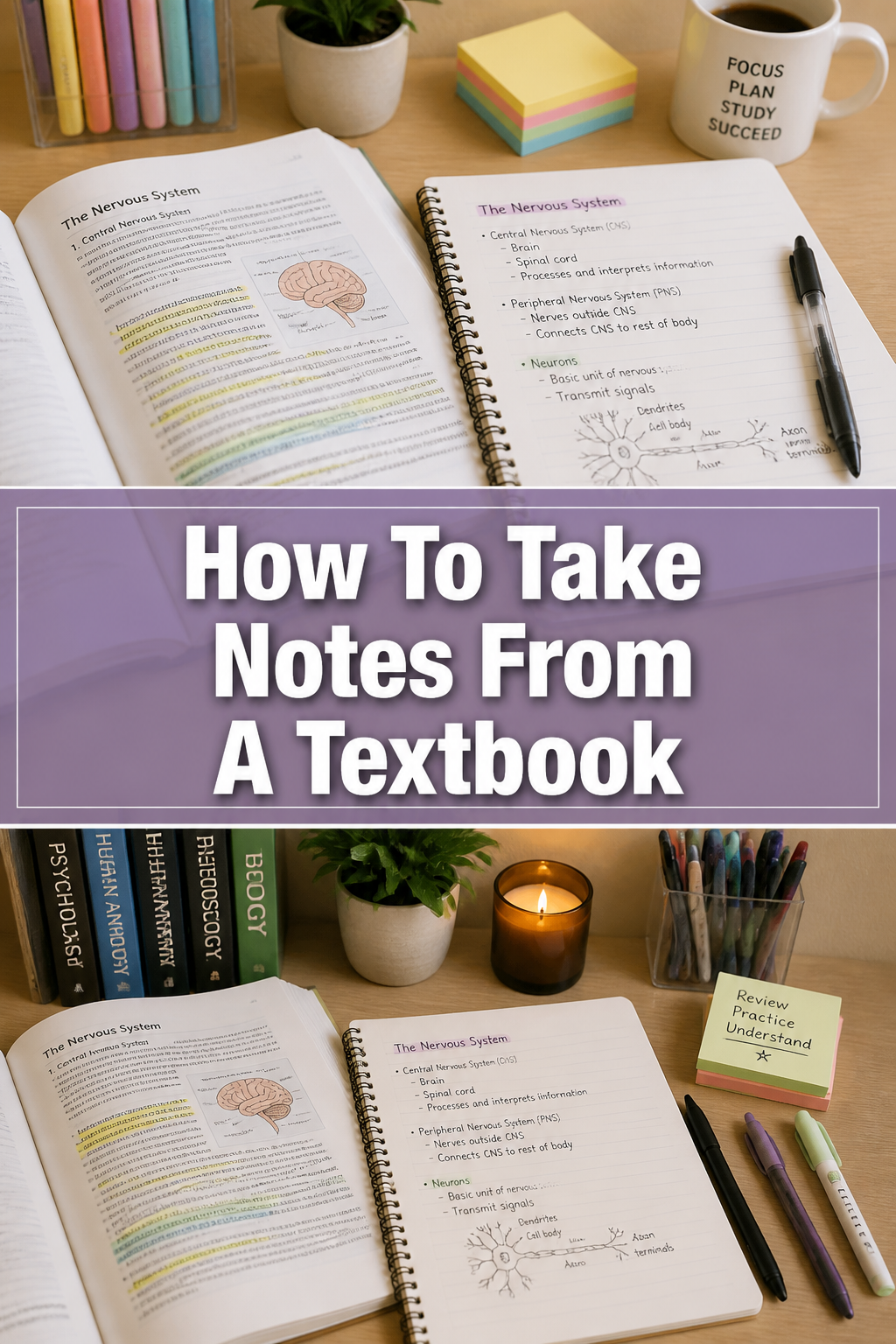
📚 How To Take Notes From A Textbook
Struggling to remember what you read in textbooks?
Many students highlight endlessly or just re-read chapters, only to find the information doesn’t stick.
I learned the hard way that effective note-taking transforms passive reading into active learning, making study sessions far more productive.
Quick Overview
This guide will equip you with practical strategies to extract key information from your textbooks efficiently. You will learn how to engage deeply with the material, create meaningful notes, and significantly improve your retention.
- Time needed: 30-60 minutes per chapter (initially, becomes faster)
- Difficulty: Beginner
- What you’ll need: Your textbook, pen/pencil, notebook or digital note-taking app, highlighters (optional)
Step-by-Step Instructions
Step 1: Prepare Your Workspace and Mindset
Before you even open your textbook, set yourself up for success. A tidy environment helps maintain focus, reducing distractions that pull your attention away from the material.
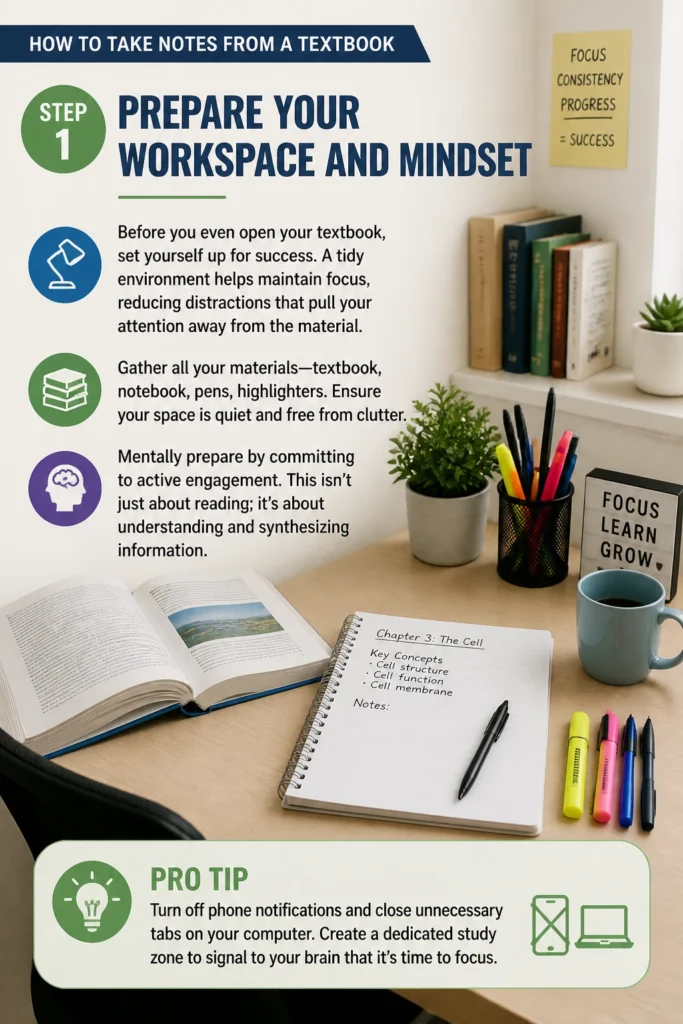
Gather all your materials: textbook, notebook, pens, highlighters. Ensure your space is quiet and free from clutter.
Mentally prepare by committing to active engagement. This isn’t just about reading; it’s about understanding and synthesizing information.
Pro Tip: Turn off phone notifications and close unnecessary tabs on your computer. Create a dedicated “study zone” to signal to your brain that it’s time to focus.
Step 2: Skim the Chapter for the Big Picture
Don’t dive straight into reading. First, get a bird’s-eye view of the chapter’s content. This pre-reading step helps your brain create a mental framework.
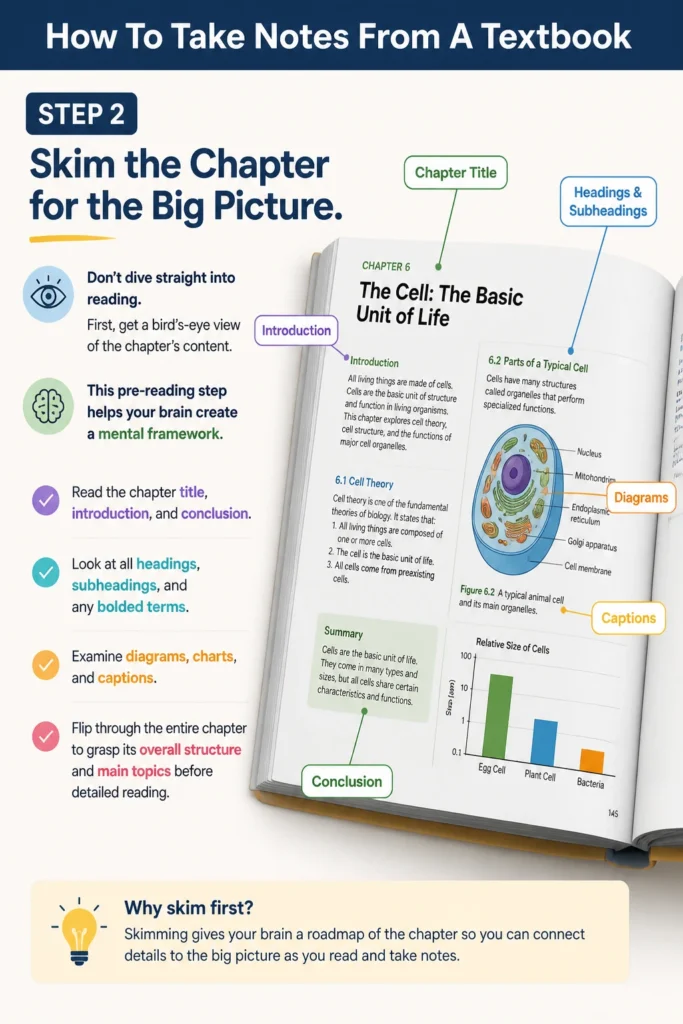
Read the chapter title, introduction, and conclusion. Look at all headings, subheadings, and any bolded terms.
Examine diagrams, charts, and captions. Flip through the entire chapter to grasp its overall structure and main topics before detailed reading.
Step 3: Identify Your Purpose and Formulate Questions
Knowing why you’re reading helps direct your note-taking. Are you studying for a test, preparing for a discussion, or trying to understand a specific concept?
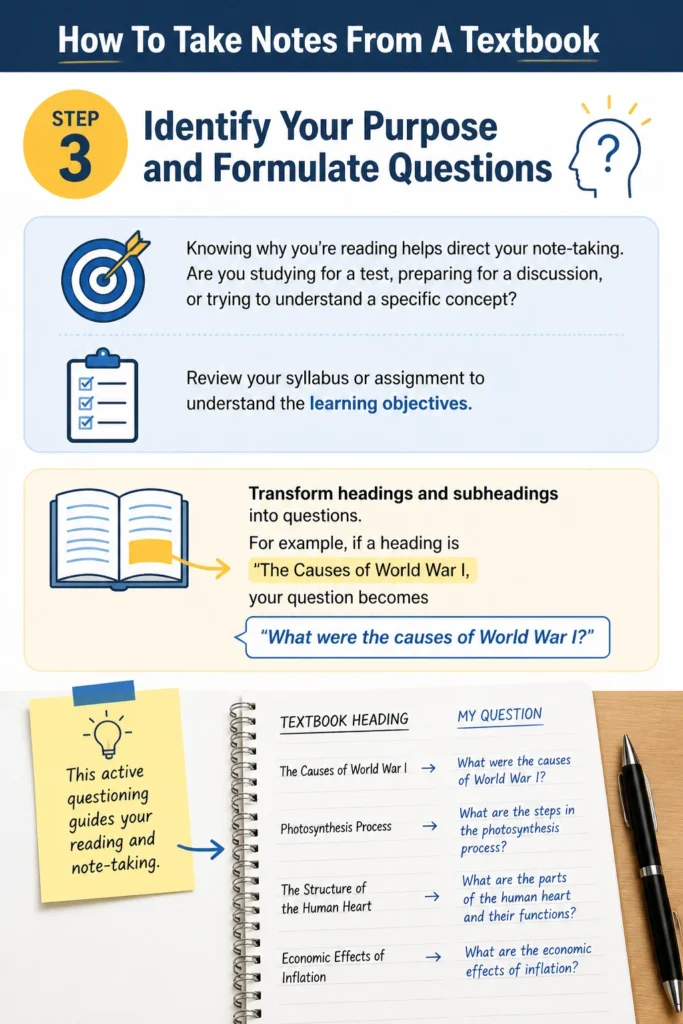
Review your syllabus or assignment to understand the learning objectives. Transform headings and subheadings into questions.
For example, if a heading is “The Causes of World War I,” your question becomes “What were the causes of World War I?” This active questioning guides your reading and note-taking.
Step 4: Read Actively and Highlight Selectively
Now, begin reading the chapter section by section. As you read, actively search for answers to the questions you formulated in the previous step.
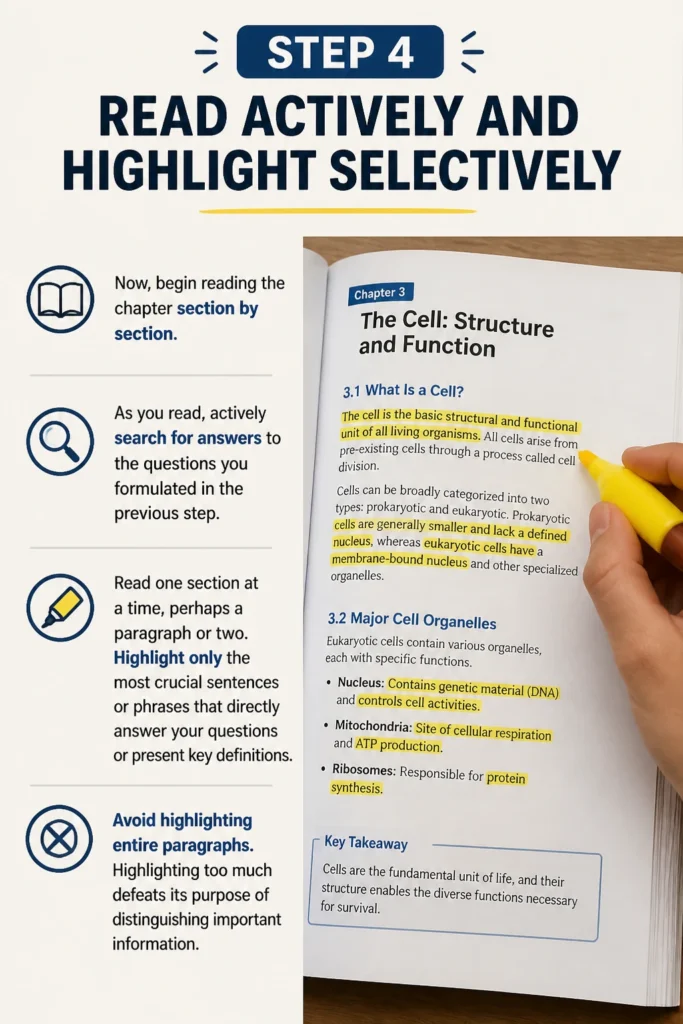
Read one section at a time, perhaps a paragraph or two. Highlight only the most crucial sentences or phrases that directly answer your questions or present key definitions.
Avoid highlighting entire paragraphs. Highlighting too much defeats its purpose of distinguishing important information.
Step 5: Summarize in Your Own Words (Cornell Method or Similar)
This is where the real learning happens. After reading a section and highlighting, put the textbook aside and summarize what you’ve just read in your own words.

Write main ideas, definitions, and answers to your questions. Use bullet points, short sentences, or concept maps.
Consider using the Cornell Note-Taking Method: divide your page into three sections—main notes, cues, and summary. In the main notes section, write your summaries and key points.
Pro Tip: The act of translating information into your own language forces deeper processing and understanding, making it far more memorable than simply copying text.
Step 6: Add Cues and Keywords
Once you’ve summarized a section, go back and add cues or keywords. These are short prompts that will help you recall the information later without re-reading everything.
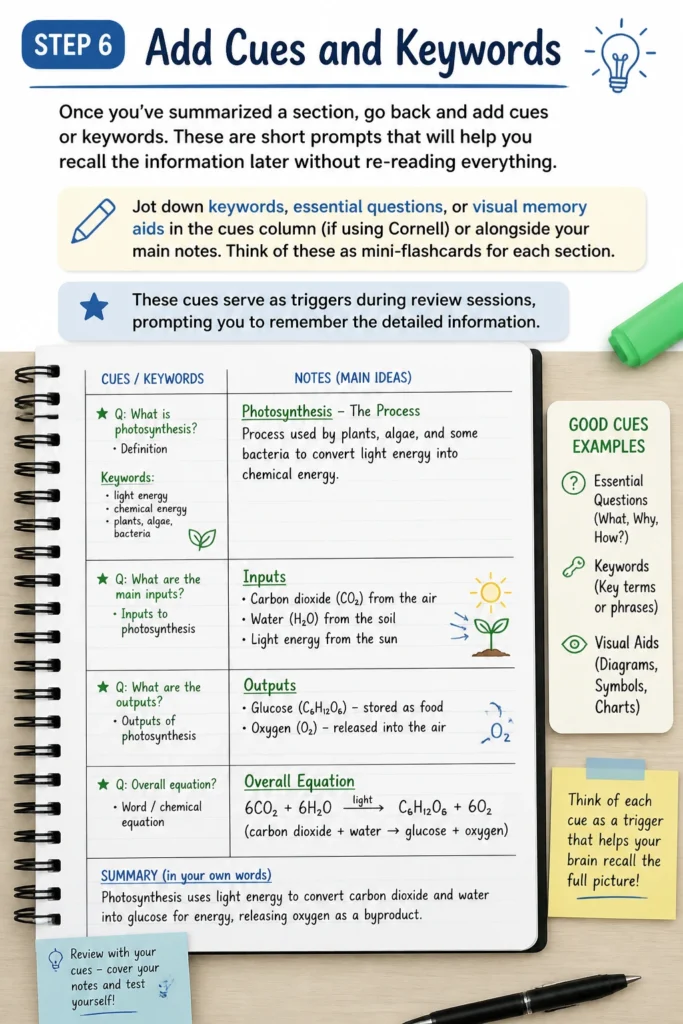
Jot down keywords, essential questions, or visual memory aids in the “cues” column (if using Cornell) or alongside your main notes. Think of these as mini-flashcards for each section.
These cues serve as triggers during review sessions, prompting you to remember the detailed information.
Step 7: Review and Consolidate Regularly
Note-taking isn’t a one-time event; it’s part of an ongoing learning cycle. Regular review prevents the “forgetting curve” from taking its toll.

Review your notes shortly after taking them, perhaps within 24 hours. Recite the information out loud using your cues to test your recall.
Write a brief summary of the entire chapter at the bottom of your notes page (if using Cornell). This reinforces the big picture and connects individual concepts.
Step 8: Connect and Organize Your Notes
As you progress through a course, your notes should form a cohesive body of knowledge. Look for connections between different chapters and topics.
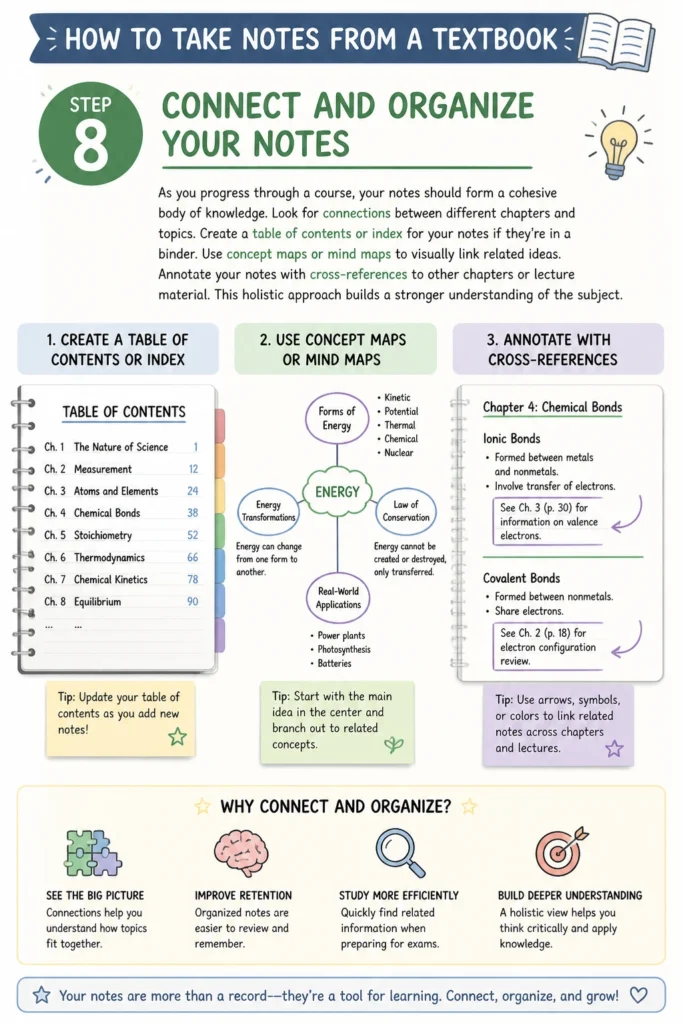
Create a table of contents or index for your notes if they’re in a binder. Use concept maps or mind maps to visually link related ideas.
Annotate your notes with cross-references to other chapters or lecture material. This holistic approach builds a stronger understanding of the subject.
Common Mistakes to Avoid
Passive Reading and Highlighting Everything
Many students fall into the trap of simply reading the text and highlighting large chunks of it. This creates an illusion of productivity without actual learning.
Highlighting without understanding doesn’t help retention. It makes it harder to find the truly important points later. Instead, engage actively by questioning the text and summarizing in your own words.
Copying Text Verbatim
Transcribing sentences directly from the textbook into your notes is a common mistake. This is essentially just copying, not learning.
When you copy, your brain isn’t processing the information deeply. It’s merely acting as a human photocopier. Always strive to rephrase concepts in your own language to ensure comprehension.
Taking Notes Only Once
Treating note-taking as a single task completed immediately after reading a chapter leads to poor retention. Information fades quickly if not revisited.
Effective note-taking is an ongoing process that includes regular review and consolidation. Plan to revisit your notes multiple times to solidify your understanding and memory.
Disorganized Notes
Having notes scattered across different notebooks, loose sheets, or digital files makes them ineffective for studying. Disorganization adds stress and wastes time.
Establish a consistent system for organizing your notes from the start. Use binders, folders, or dedicated digital notebooks to keep everything in one accessible place.
Troubleshooting
“I Don’t Know What’s Important to Note Down.”
This is a common struggle, especially with dense textbooks. The key is to shift your mindset from “what to copy” to “what to understand.”
Start by focusing on the questions you generated from headings. Look for definitions, core arguments, evidence, and conclusions. If the text explains a concept, ask yourself: “Can I explain this in my own words?” If not, that’s what you need to focus on in your notes.
“It Takes Too Long to Take Notes.”
Initially, good note-taking can feel time-consuming, but it saves time in the long run by reducing the need for endless re-reading. Efficiency comes with practice.
Try setting a timer for each section. Focus on concise summaries rather than exhaustive detail. Remember, the goal is to capture key concepts, not rewrite the book. As you practice, you’ll become faster at identifying important information and synthesizing it.
“My Notes Are Too Messy or Incomplete.”
Consistency and a clear system are crucial for effective notes. Messy notes are difficult to review, and incomplete notes miss vital information.
Adopt a structured method like Cornell notes or a mind-mapping technique. Use clear headings and bullet points. Don’t be afraid to leave space to add more details later, and make a habit of reviewing and tidying up your notes shortly after taking them.
Key Takeaways
- Preparation is paramount: Set up your environment and mentally prepare before you begin.
- Skim first, then question: Get the big picture and formulate guiding questions before deep reading.
- Summarize in your own words: This is the most effective way to process and retain information.
- Use cues for recall: Short keywords or questions help trigger your memory during review.
- Regular review is essential: Don’t just take notes; actively revisit and test yourself on them.
- Organize your knowledge: Connect ideas across chapters to build a comprehensive understanding.
Frequently Asked Questions
Should I take notes by hand or digitally?
Both methods have benefits. Handwriting can improve memory retention due to the physical act of writing and slower pace. Digital notes offer easy editing, searching, and organization. Choose the method that best suits your learning style and course requirements, or combine both.
How do I deal with very dense or complex textbooks?
Break down dense material into even smaller chunks. Focus on understanding one paragraph or even one sentence at a time before moving on. Don’t hesitate to look up unfamiliar terms immediately. Simplify complex ideas into analogies or diagrams in your notes.
Can I use highlighters? If so, how?
Yes, but use highlighters sparingly and strategically. Only highlight truly essential sentences or key terms that directly answer your pre-reading questions. Avoid highlighting entire paragraphs; this makes it harder to identify crucial information later.
What if my professor provides lecture notes or slides?
Integrate your textbook notes with lecture material. Use your textbook notes to fill in gaps or provide deeper context for concepts covered in lectures. Conversely, use lecture notes to highlight what your professor considers most important from the textbook.
Our Top Recommended Finds
- Dedicated Notebooks: Having a separate notebook for each subject keeps your notes organized and focused.
- Multi-color Pen Sets: Different colors can help categorize information, making your notes more visually appealing and easier to scan.
- Reusable Highlighters: For those who prefer digital notes, apps like Notion or OneNote offer excellent highlighting and organization features.
Transform Your Learning Today
Taking effective notes from a textbook is a skill that dramatically improves your academic performance and deepens your understanding.
It moves you beyond passive reading to active engagement, turning information into knowledge you truly own.
Start applying these strategies with your next reading assignment and experience the difference in your learning journey.