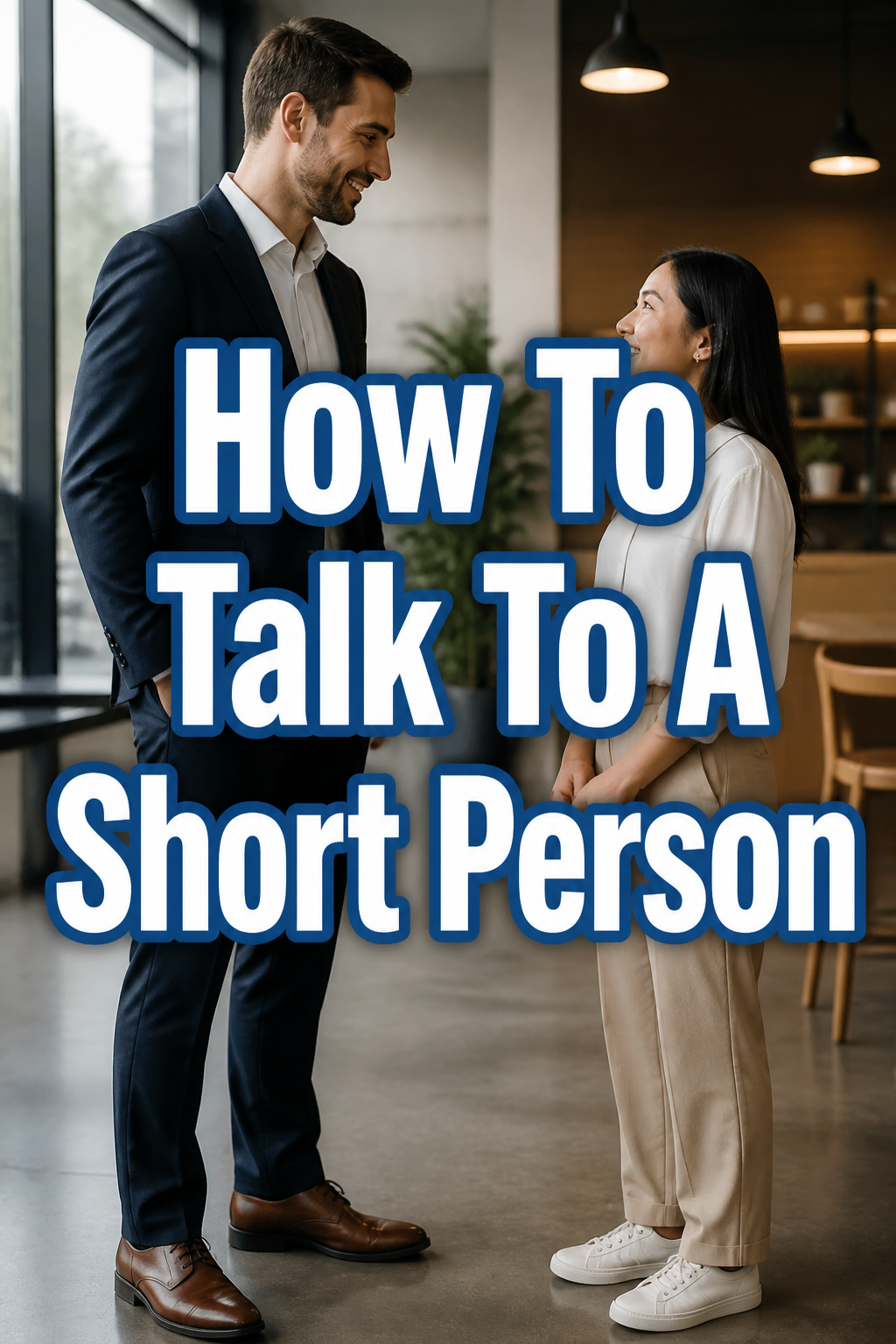
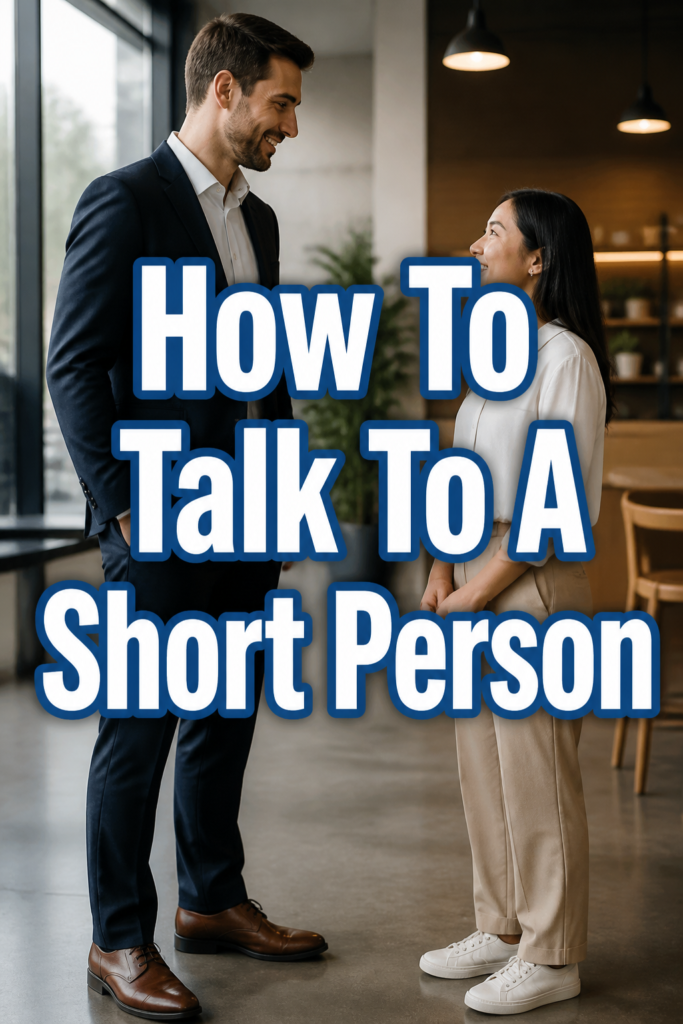
💡 How To Talk To A Short Person
Communicating effectively across different heights can sometimes feel like an awkward dance.
I’ve been on both sides of this equation, experiencing the subtle discomforts and the genuine triumphs of a good conversation.
This guide distills years of observation and personal experience into practical, respectful advice.
Quick Overview
This guide will equip you with simple, actionable strategies to make conversations with shorter individuals more comfortable and engaging for everyone involved.
- Time needed: 15-20 minutes to read and internalize
- Difficulty: Beginner
- What you’ll need: An open mind, a willingness to adapt, and a desire for better communication
Step-by-Step Instructions
Step 1: Mind Your Physical Space
The first step to comfortable communication is often about physical presence. Be aware of how your height might impact the shared space.
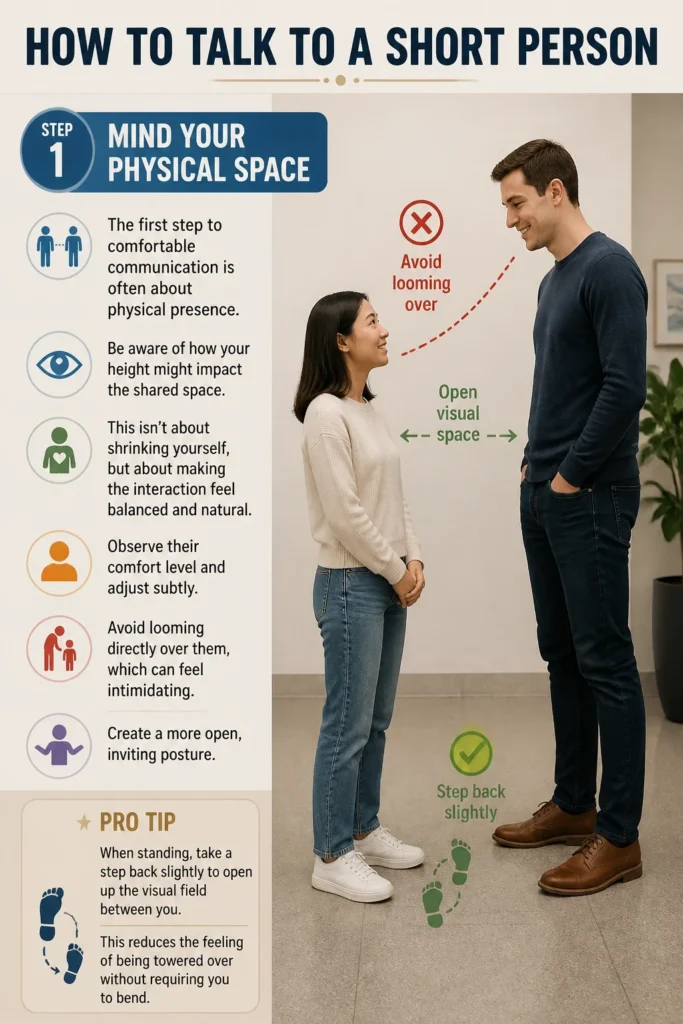
This isn’t about shrinking yourself, but about making the interaction feel balanced and natural.
- Observe their comfort level and adjust subtly.
- Avoid looming directly over them, which can feel intimidating.
- Create a more open, inviting posture.
Pro Tip: When standing, take a step back slightly to open up the visual field between you. This reduces the feeling of being “towered over” without requiring you to bend.
Step 2: Adjust Your Eye Level Thoughtfully
Direct eye contact is crucial for connection, but continuous upward gazing can be tiring for a shorter person. Thoughtful adjustment shows respect.
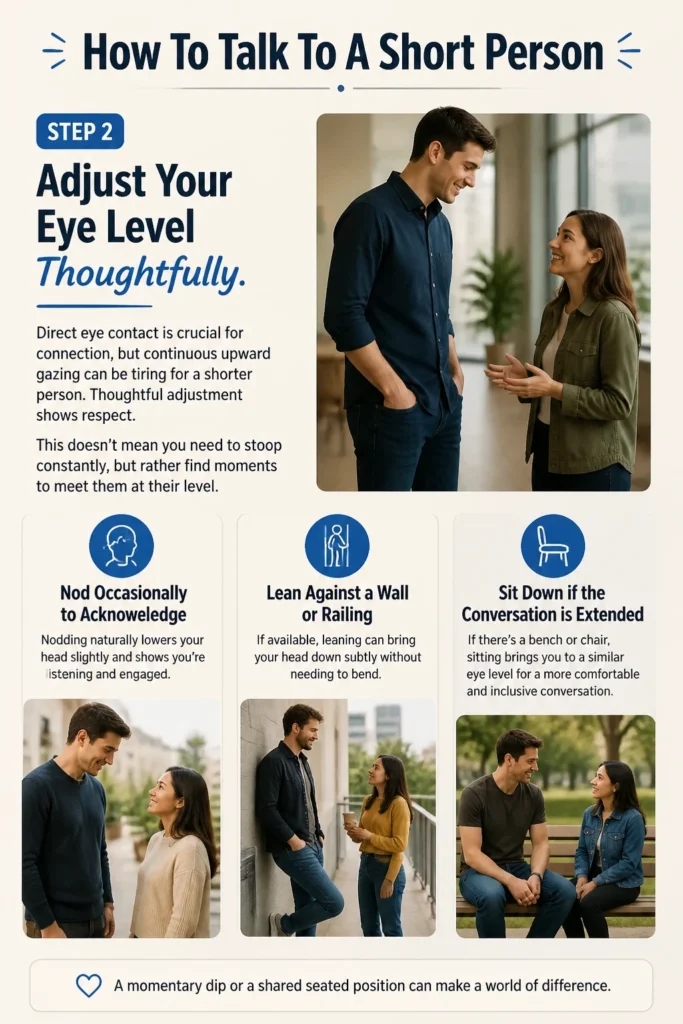
This doesn’t mean you need to stoop constantly, but rather find moments to meet them at their level.
- Nod occasionally to acknowledge, which naturally lowers your head slightly.
- Lean against a wall or railing if available, which can bring your head down subtly.
- Sit down if the conversation is extended and an opportunity arises, like a bench or chair.
A momentary dip or a shared seated position can make a world of difference.
Step 3: Pay Attention to Your Voice Projection
Height differences can sometimes affect how sound travels. Your voice needs to be clear without being overwhelming.
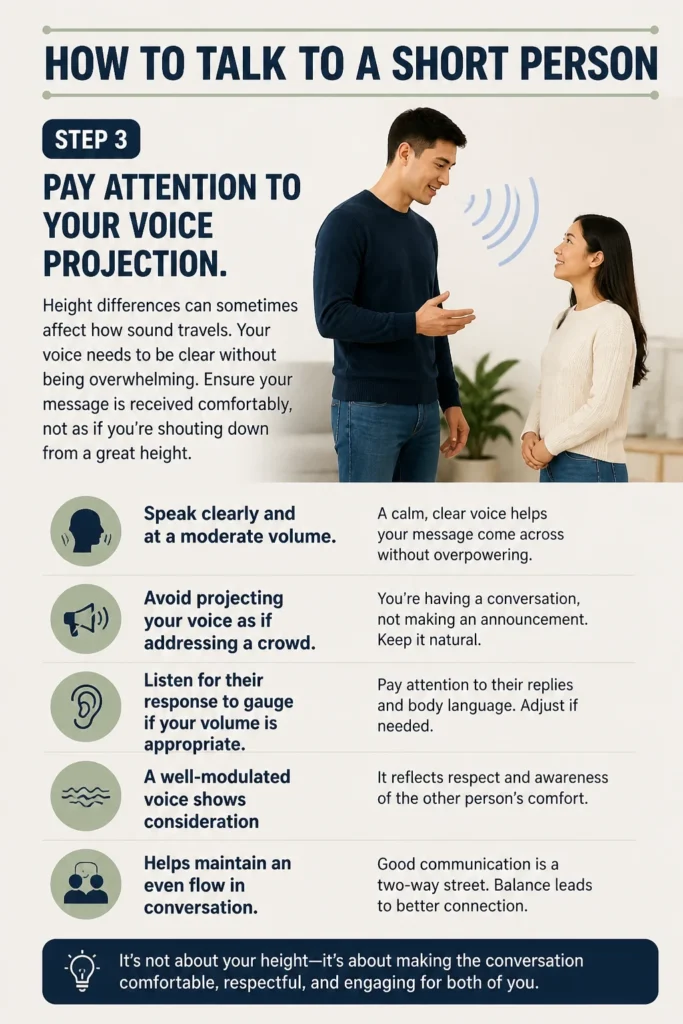
Ensure your message is received comfortably, not as if you’re shouting down from a great height.
- Speak clearly and at a moderate volume.
- Avoid projecting your voice as if addressing a crowd.
- Listen for their response to gauge if your volume is appropriate.
A well-modulated voice shows consideration and helps maintain an even flow in conversation.
Step 4: Choose the Right Environment
Sometimes, the setting itself can exacerbate height differences. Be mindful of where you initiate or continue conversations.
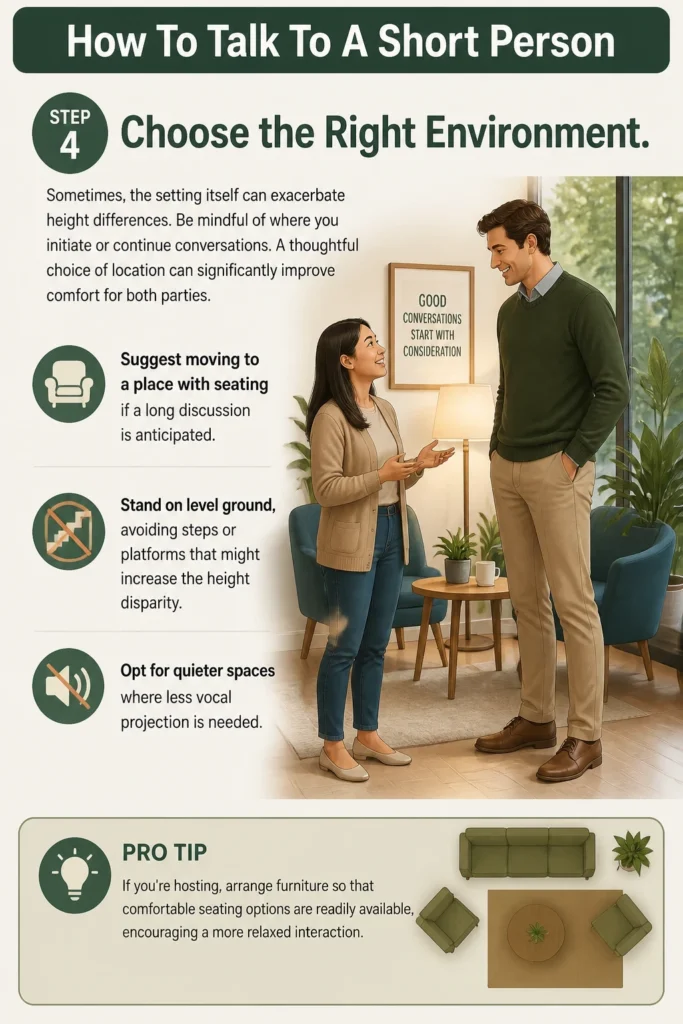
A thoughtful choice of location can significantly improve comfort for both parties.
- Suggest moving to a place with seating if a long discussion is anticipated.
- Stand on level ground, avoiding steps or platforms that might increase the height disparity.
- Opt for quieter spaces where less vocal projection is needed.
Pro Tip: If you’re hosting, arrange furniture so that comfortable seating options are readily available, encouraging a more relaxed interaction.
Step 5: Engage with Respectful Body Language
Your non-verbal cues speak volumes. Ensure your body language communicates openness and equality, not dominance.
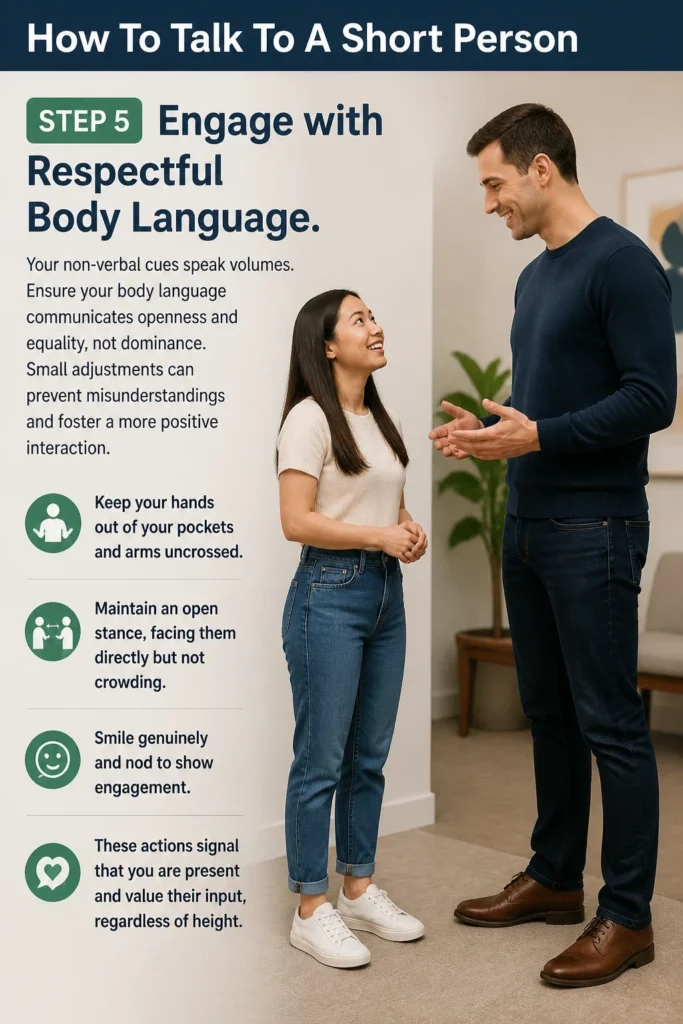
Small adjustments can prevent misunderstandings and foster a more positive interaction.
- Keep your hands out of your pockets and arms uncrossed.
- Maintain an open stance, facing them directly but not crowding.
- Smile genuinely and nod to show engagement.
These actions signal that you are present and value their input, regardless of height.
Step 6: Avoid Height-Related Jokes or Comments
While humor can build rapport, height-related jokes are often unwelcome and can cause discomfort. It’s best to steer clear of them entirely.
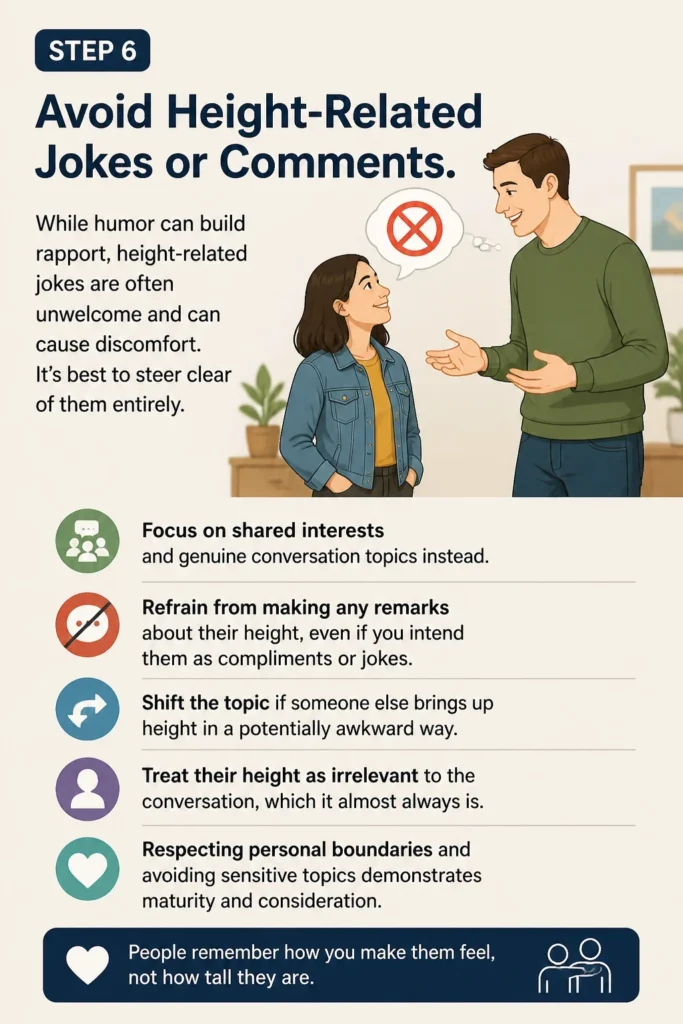
Focus on shared interests and genuine conversation topics instead.
- Refrain from making any remarks about their height, even if you intend them as compliments or jokes.
- Shift the topic if someone else brings up height in a potentially awkward way.
- Treat their height as irrelevant to the conversation, which it almost always is.
Respecting personal boundaries and avoiding sensitive topics demonstrates maturity and consideration.
Step 7: Prioritize Active Listening
Ultimately, effective communication is about listening and understanding. This transcends physical differences.
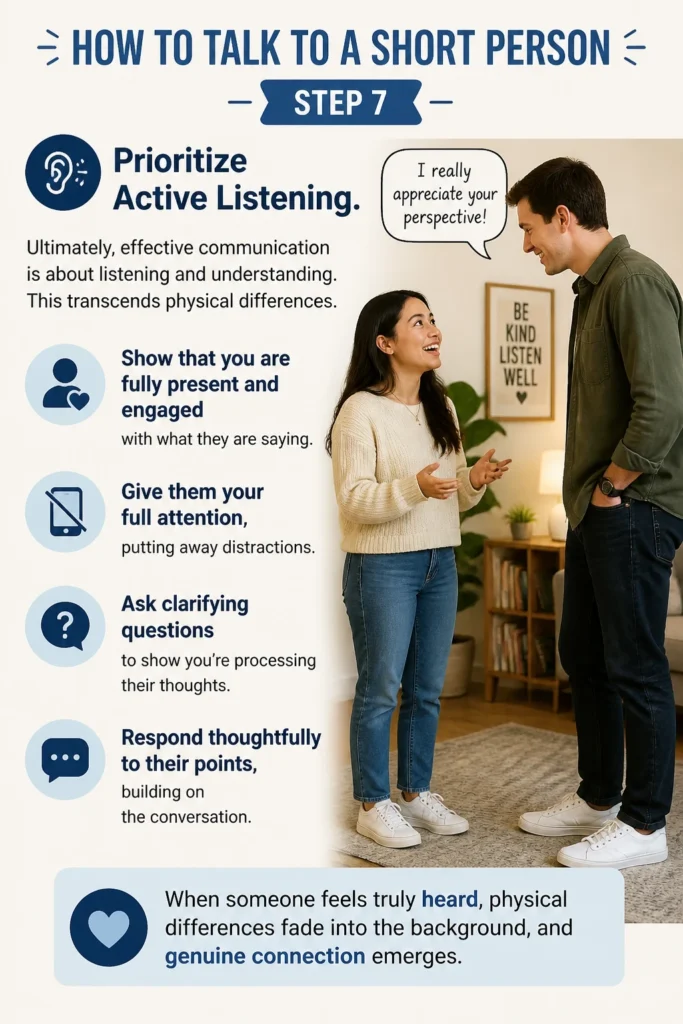
Show that you are fully present and engaged with what they are saying.
- Give them your full attention, putting away distractions.
- Ask clarifying questions to show you’re processing their thoughts.
- Respond thoughtfully to their points, building on the conversation.
When someone feels truly heard, physical differences fade into the background, and genuine connection emerges.
Step 8: Be Mindful of Reaching and Pointing
Unconsciously, taller individuals might reach over a shorter person or point past their head. This can feel dismissive or make them feel small.
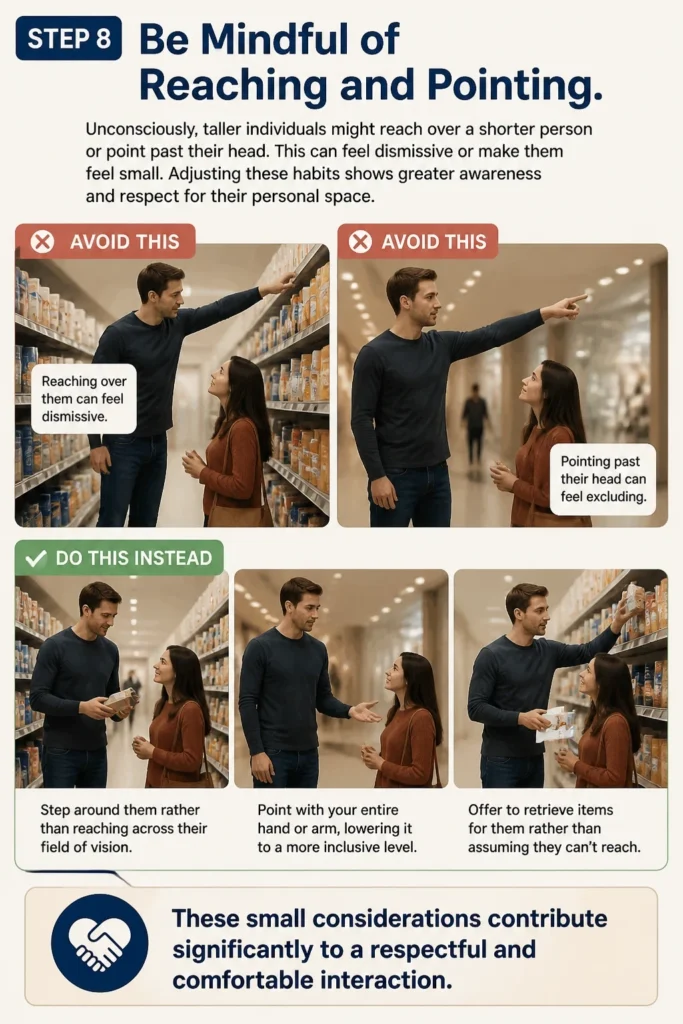
Adjusting these habits shows greater awareness and respect for their personal space.
- Step around them rather than reaching across their field of vision.
- Point with your entire hand or arm, lowering it to a more inclusive level.
- Offer to retrieve items for them rather than assuming they can’t reach.
These small considerations contribute significantly to a respectful and comfortable interaction.
Common Mistakes to Avoid
The “Head Pat” or “Hair Ruffle”
Treating an adult like a child by patting their head or ruffling their hair is highly disrespectful. It undermines their professionalism and autonomy.
Always treat adults as equals, regardless of their stature. Maintain appropriate personal boundaries and physical contact.
Talking Down (Figuratively and Literally)
Using a condescending tone or literally looking down at someone without adjusting your posture can make them feel inferior. It creates an immediate power imbalance.
Strive for level eye contact and an even tone. Engage as you would with anyone else, focusing on mutual respect.
Making Assumptions About Their Abilities
Assuming a shorter person cannot reach something, carry a heavy item, or handle a task because of their height is patronizing. It limits their perceived capabilities.
Always ask if they need assistance or allow them to offer help. Let them demonstrate their abilities before making any judgments.
Ignoring Their Presence in a Group
In group settings, it’s easy for taller individuals to inadvertently form a huddle that excludes shorter people from the conversation or sightline. This can make them feel overlooked.
Be mindful of group dynamics. Create space, ensure everyone is included in the visual and auditory circle, and actively invite their participation.
Troubleshooting
They Seem Uncomfortable or Defensive
If you notice signs of discomfort, such as averted gaze, crossed arms, or short answers, it might be due to a perceived height imbalance in the interaction.
Take a subtle step back, sit down if possible, or shift your body slightly to an open stance. Re-evaluate your eye level and ensure your tone is gentle. Sometimes, simply asking, “Is this a good spot to chat?” can open a dialogue.
You Keep Forgetting to Adjust
Old habits are hard to break, and you might find yourself reverting to old communication patterns. Forgetting to adjust your posture or eye level is common.
Practice conscious awareness. Before initiating a conversation, take a moment to assess the environment and your stance. Make a mental note to check in with your body language periodically during the interaction. It gets easier with practice.
The Conversation Feels Strained or Awkward
Sometimes, despite your best efforts, the flow of conversation feels unnatural. This could be due to unspoken height dynamics or other factors.
Shift focus entirely to the content of the discussion. Ask open-ended questions that encourage detailed responses. Emphasize active listening and thoughtful replies. A truly engaging conversation can transcend any initial physical awkwardness.
Key Takeaways
- Be aware of your physical presence and how it impacts the interaction.
- Adjust your eye level thoughtfully, especially during extended conversations.
- Communicate with a clear, moderate voice, avoiding over-projection.
- Choose comfortable environments that minimize height disparities.
- Maintain open and respectful body language at all times.
- Avoid all height-related jokes or comments to foster respect.
- Prioritize active listening to build genuine connection.
- Be mindful of reaching or pointing over their head.
Frequently Asked Questions
Is it okay to ask a shorter person if they want to sit down?
Yes, offering to sit down is generally a considerate gesture, especially for longer conversations. Frame it as “Would you prefer to sit?” or “There’s a bench over there if you’d like to sit.” This gives them the choice without making assumptions about their comfort.
Should I avoid looking down at all?
It’s natural for your gaze to follow the person you’re speaking to. The goal isn’t to never look down, but to avoid continuous, unbroken downward staring. Aim for a balanced gaze that includes moments of direct eye contact, even if it means a slight head tilt or adjustment on your part.
What if I’m also short? Do these tips still apply?
Absolutely. While the height difference might be less dramatic, the principles of respectful communication, mindful body language, and creating a comfortable environment apply to all interactions. Everyone benefits from considerate communication habits.
How do I handle it if someone else makes an inappropriate height joke?
You can gently shift the topic, or if you feel comfortable, address it directly but politely. A simple, “Let’s keep the conversation focused on [current topic]” or “I think we should move past that” can redirect the discussion without causing a major scene.
Our Top Recommended Finds
- Portable Folding Chair: Great for creating an instant, comfortable seating option in various settings.
- Noise-Canceling Headphones: Useful for minimizing distractions in loud environments, allowing for clearer communication without needing to raise voices.
- A Well-Designed Coffee Table Book: Provides a natural focal point for discussion when seated, encouraging shared engagement.
Building Bridges, Not Barriers
Effective communication is a skill that enriches every aspect of life. When we approach interactions with empathy and awareness, physical differences become minor details.
The true measure of a conversation lies in the connection forged, not the distance between eye levels.
Start practicing these simple adjustments today. You’ll find that fostering comfortable dialogue is not just about talking to a shorter person, but about becoming a more thoughtful and respected communicator overall.