💋 How To Describe A Kiss In Writing
Capturing a kiss on the page is one of writing’s most delicate and powerful challenges.
It’s more than just two sets of lips meeting; it’s an intimate moment laden with emotion, context, and unspoken desires.
Through years of writing and editing, I’ve seen how a well-described kiss can elevate a scene, making characters and their relationships feel truly alive.

Quick Overview
This guide will equip you with practical techniques to describe kisses in writing that resonate deeply with your readers. You’ll learn to move beyond generic descriptions and craft moments that are unique, sensory, and emotionally rich.
- Time needed: 45-60 minutes (to read and absorb, plus initial practice)
- Difficulty: Intermediate
- What you’ll need: A pen and paper, your imagination, a willingness to experiment with words, and perhaps a good thesaurus.
Step-by-Step Instructions
Step 1: Set the Emotional Stage
Before any physical contact, consider the emotional temperature of the scene. What led up to this kiss?
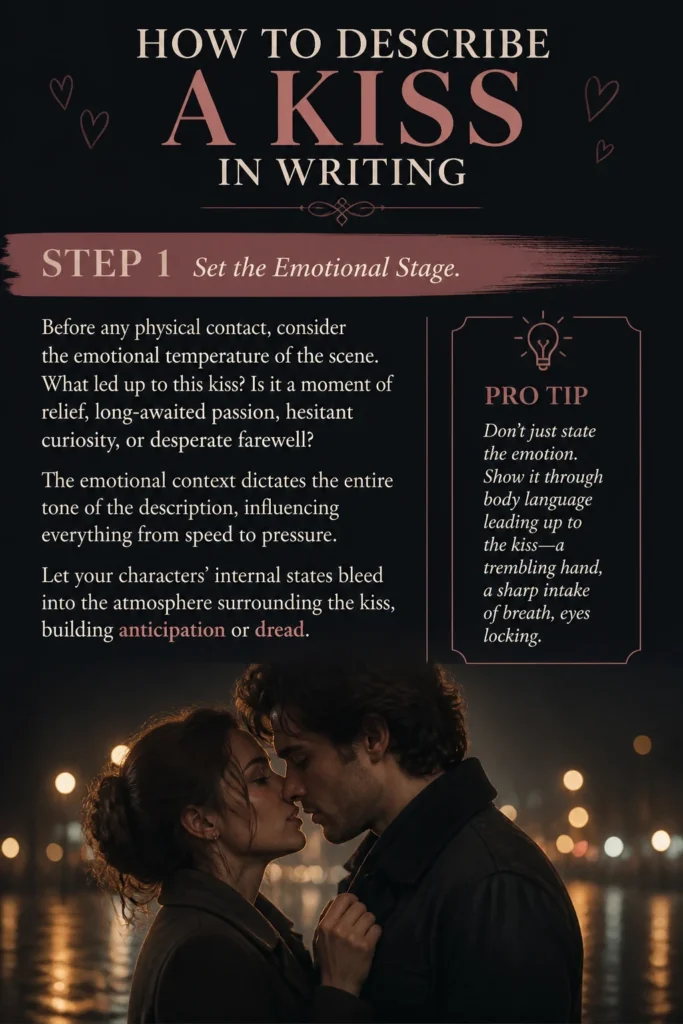
Is it a moment of relief, long-awaited passion, hesitant curiosity, or desperate farewell?
The emotional context dictates the entire tone of the description, influencing everything from speed to pressure.
Let your characters’ internal states bleed into the atmosphere surrounding the kiss, building anticipation or dread.
Pro Tip: Don’t just state the emotion. Show it through body language leading up to the kiss—a trembling hand, a sharp intake of breath, eyes locking.
Step 2: Engage All Five Senses (Selectively)
A truly immersive kiss description doesn’t just focus on touch. Think about what your characters see, hear, smell, and even taste.
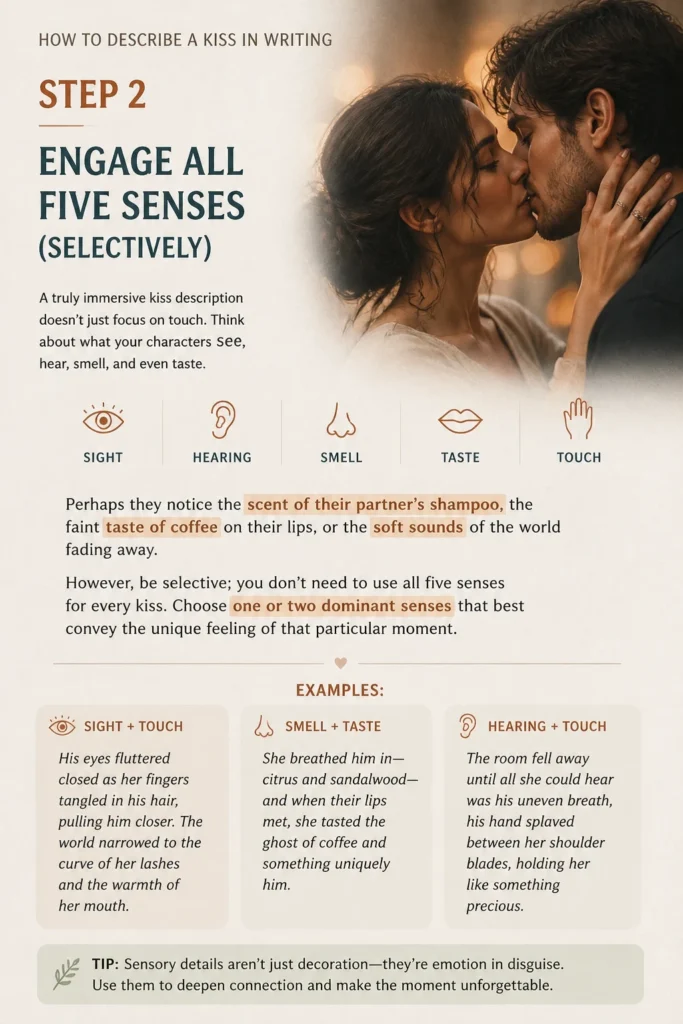
Perhaps they notice the scent of their partner’s shampoo, the faint taste of coffee on their lips, or the soft sounds of the world fading away.
However, be selective; you don’t need to use all five senses for every kiss. Choose one or two dominant senses that best convey the unique feeling of that particular moment.
Step 3: Focus on Body Language and Action
A kiss involves more than just lips. What are the characters’ hands doing? Are they tangled in hair, gripping a shoulder, resting gently on a cheek, or fisted at their sides?
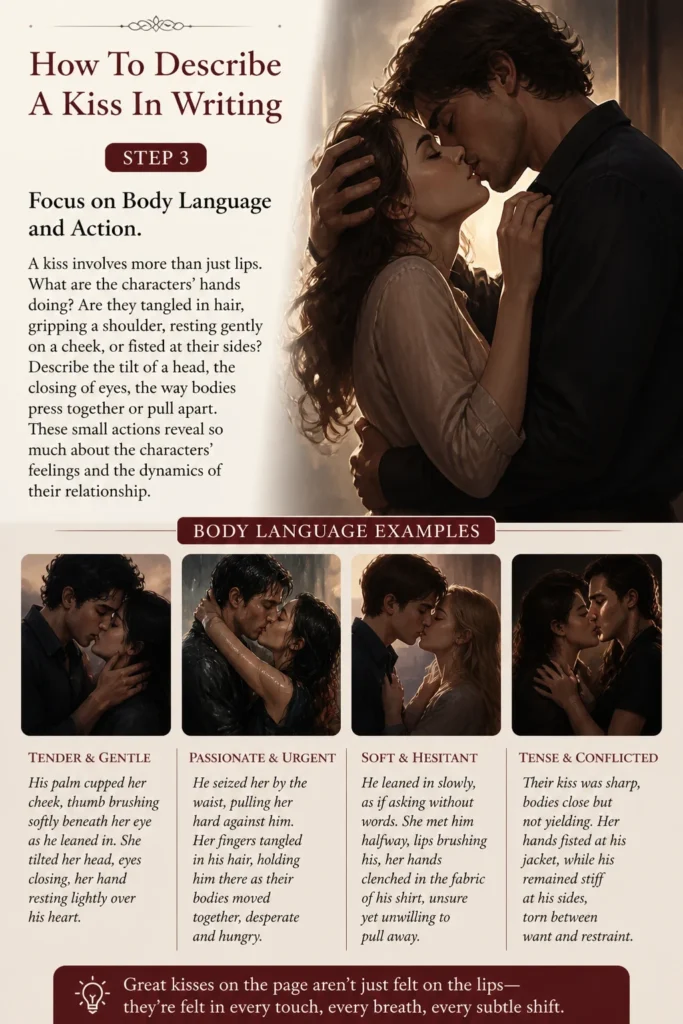
Describe the tilt of a head, the closing of eyes, the way bodies press together or pull apart.
These small actions reveal so much about the characters’ feelings and the dynamics of their relationship.
Step 4: Vary the Pace and Intensity
Not all kisses are the same. Some are slow and tender, others quick and urgent, some deep and consuming.
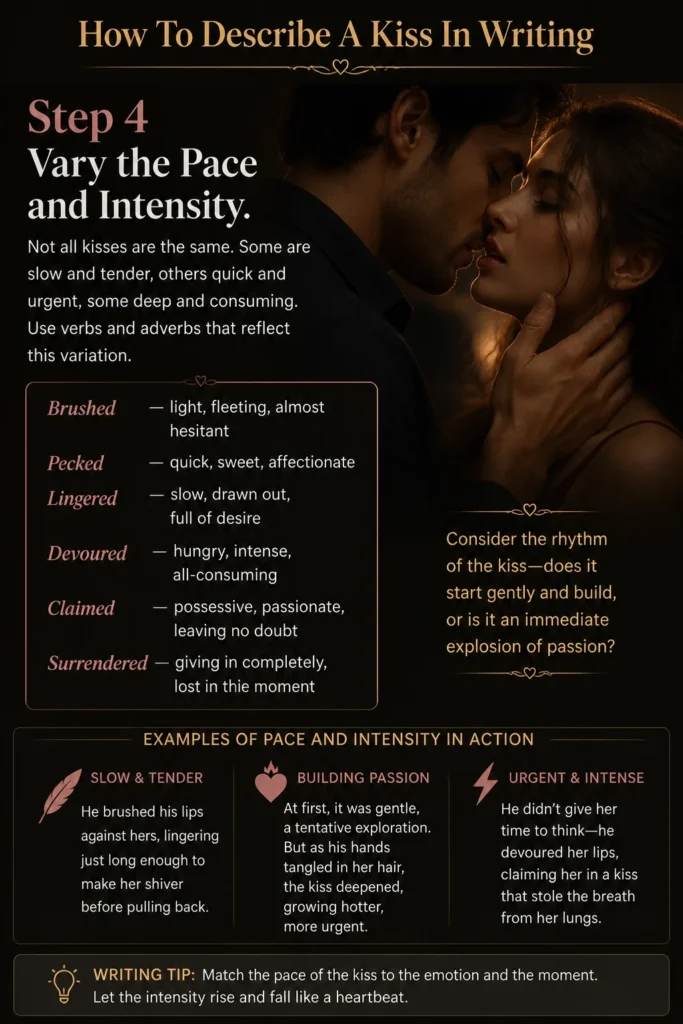
Use verbs and adverbs that reflect this variation. “Brushed,” “pecked,” “lingered,” “devoured,” “claimed,” “surrendered” all evoke different intensities.
Consider the rhythm of the kiss: does it start gently and build, or is it an immediate explosion of passion?
Step 5: Use Figurative Language Thoughtfully
Metaphors and similes can elevate a kiss description, making it unique and memorable. A kiss might be described as “a spark igniting a fire,” “a soft sigh,” or “a question finally answered.”
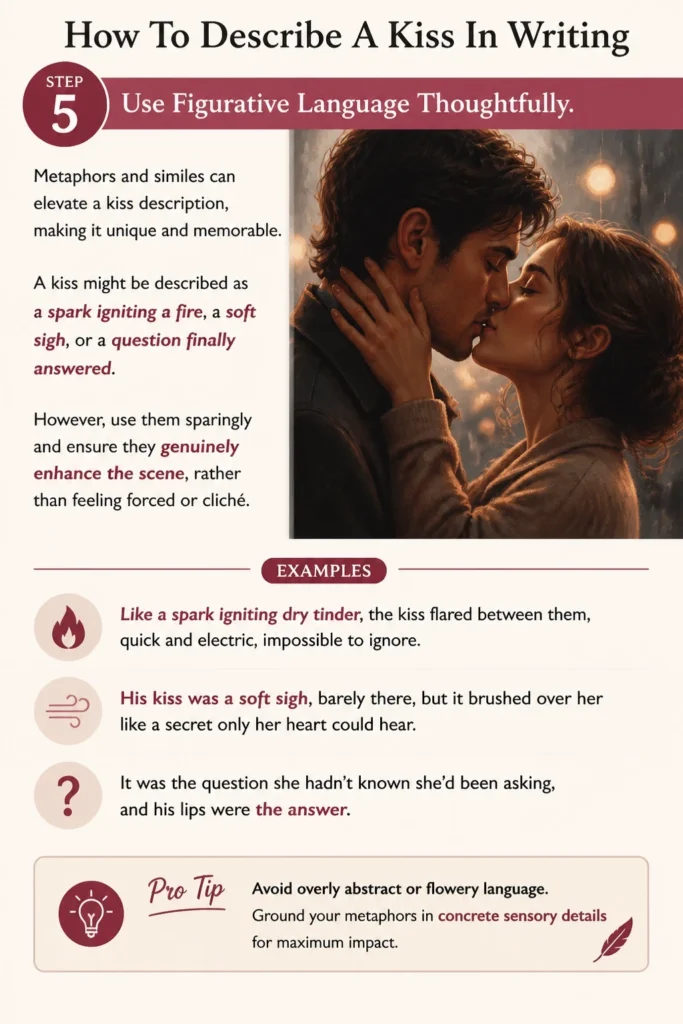
However, use them sparingly and ensure they genuinely enhance the scene, rather than feeling forced or cliché.
The best comparisons often draw from the specific context or character’s personality.
Pro Tip: Avoid overly abstract or flowery language. Ground your metaphors in concrete sensory details for maximum impact.
Step 6: Show Internal Reactions and Thoughts
Beyond the physical description, what is the character thinking and feeling during the kiss? Are they surprised, overwhelmed, relieved, or lost in the moment?
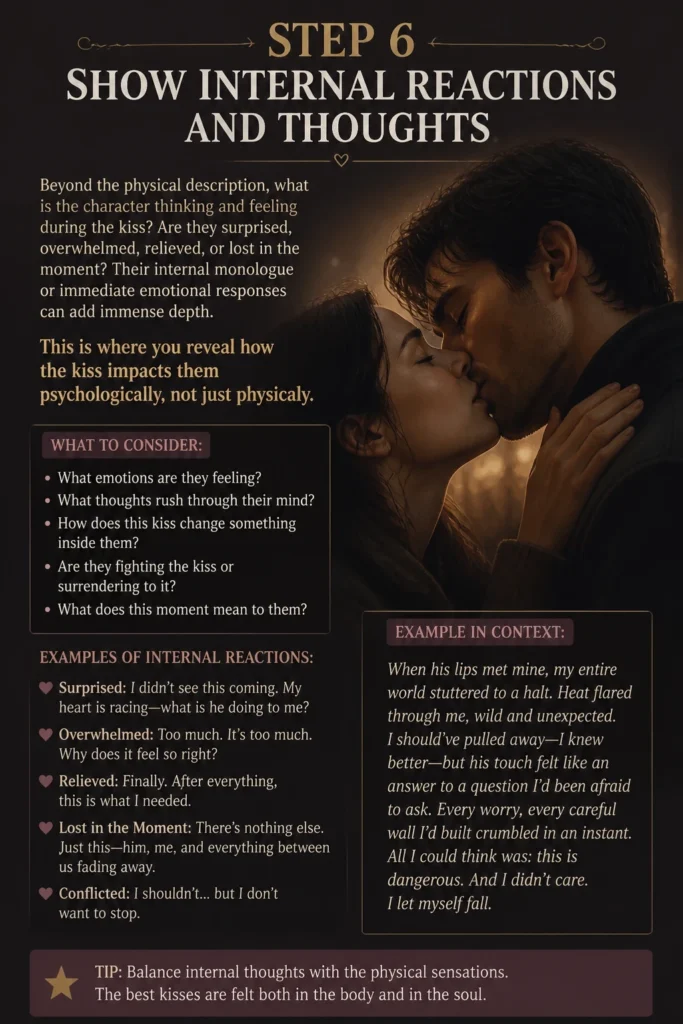
Their internal monologue or immediate emotional responses can add immense depth.
This is where you reveal how the kiss impacts them psychologically, not just physically.
Step 7: Describe the Aftermath and Lingering Effects
A kiss doesn’t end when the lips separate. What is the immediate aftermath?
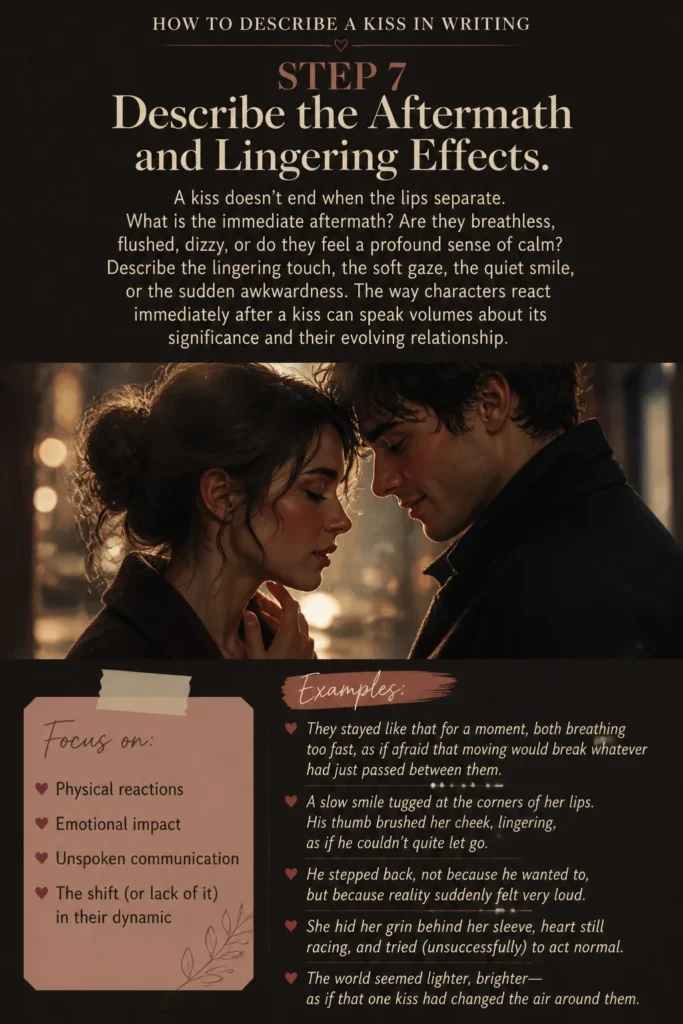
Are they breathless, flushed, dizzy, or do they feel a profound sense of calm?
Describe the lingering touch, the soft gaze, the quiet smile, or the sudden awkwardness.
The way characters react immediately after a kiss can speak volumes about its significance and their evolving relationship.
Step 8: Read Aloud and Refine
Once you’ve drafted your kiss scene, read it aloud. Does it flow naturally? Does it evoke the desired emotion?
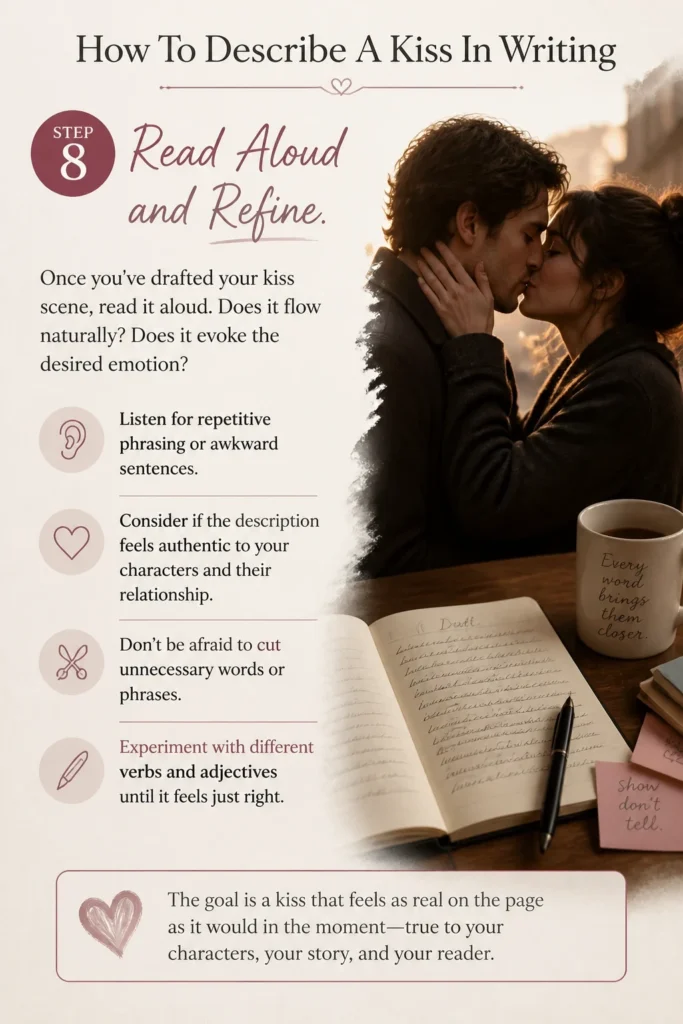
Listen for repetitive phrasing or awkward sentences. Consider if the description feels authentic to your characters and their relationship.
Don’t be afraid to cut unnecessary words or experiment with different verbs and adjectives until it feels just right.
Common Mistakes to Avoid
Being Too Vague or Generic
A common pitfall is writing “They kissed” or using general terms like “their lips met passionately.” These phrases tell the reader what happened but don’t show them anything specific.
The correct approach involves providing sensory details and specific actions. Instead of “They kissed,” try “His thumb brushed her jawline as his mouth found hers, a soft murmur escaping her throat.” This draws the reader into the experience.
Over-describing or Getting Clinical
While details are good, too much detail can become mechanical or even unromantic. Avoid breaking down the kiss into a clinical analysis of tongue movements or salivary glands.
Focus on the emotional impact and the most evocative physical sensations. The goal is to capture the feeling, not to provide a biological report. Less can often be more impactful if the chosen details are strong.
Ignoring Character Emotion and Context
A kiss without emotional context feels hollow. If the reader doesn’t understand why the characters are kissing or what it means to them, the scene loses its power.
Always tie the physical description back to the characters’ feelings, history, and the scene’s overall purpose. The kiss should serve the story and reveal something new about the characters or their relationship.
Repetitive Vocabulary
Using the same verbs or adjectives repeatedly (“He kissed her fiercely. She kissed him back fiercely.”) quickly becomes dull. It signals a lack of imagination and can pull the reader out of the moment.
Expand your vocabulary for describing touch, pressure, sound, and emotion. Utilize a thesaurus when stuck, but always choose words that fit the specific nuance you’re trying to convey, not just synonyms.
Troubleshooting
My kiss scenes feel flat and uninspired.
This often happens when the description lacks sensory details or emotional stakes. Go back to Step 2 and Step 6.
Think about one unique detail for each sense you want to include, and explore the character’s internal thoughts and feelings more deeply. What makes this kiss different from any other?
I keep using the same words to describe every kiss.
This is a sign to expand your descriptive toolkit. Try making a list of 20 different verbs and 20 different adjectives related to kissing, touch, and emotion before you even start writing the scene.
Force yourself to use words you wouldn’t normally pick. Read other authors’ kiss scenes for inspiration, noting their unique word choices.
It feels awkward or uncomfortable to write intimate scenes.
Many writers feel this way initially. Remember you are telling a story, not experiencing it yourself. Focus on the characters’ perspectives and emotions, not your own discomfort.
If it helps, write the scene in a detached way first, then go back and layer in the emotion and sensory details. Practice makes it feel more natural over time.
Key Takeaways
- Ground your kiss descriptions in the emotional context of the scene.
- Selectively engage senses beyond just touch to create a richer experience.
- Show, don’t just tell, the actions and body language surrounding the kiss.
- Vary the pace and intensity of kisses to reflect different moods and relationships.
- Use figurative language sparingly and thoughtfully to enhance, not distract.
- Reveal characters’ internal reactions to deepen the emotional impact.
- Describe the immediate aftermath to show the kiss’s lingering effects.
- Always refine by reading your descriptions aloud and seeking feedback.
Frequently Asked Questions
How long should a kiss description be?
The length of a kiss description should match its significance to the story. A casual peck might be a single sentence, while a pivotal, long-awaited kiss could span several paragraphs, detailing the build-up, the kiss itself, and the immediate aftermath. Let the emotional weight dictate the word count.
Is it okay to use clichés when describing a kiss?
While some clichés are hard to avoid, strive for originality. If you find yourself using a common phrase, challenge yourself to rephrase it in a fresh way or find a more unique metaphor that fits your characters and world. A fresh take on a familiar feeling is always more powerful.
Should I describe every kiss in detail?
Absolutely not. Not every kiss needs a detailed description. Reserve your most intricate descriptions for kisses that mark a significant turning point, reveal character, or carry strong emotional weight. Minor kisses can be brief mentions, focusing on their function in the plot rather than their physical details.
What if I haven’t experienced a kiss myself?
Personal experience can inform writing, but it’s not a prerequisite. Empathy, observation, and imagination are your strongest tools. Read widely, watch films, pay attention to how others describe intimacy, and then imagine yourself deeply in your characters’ shoes. Focus on the emotional truth of the moment.
Our Top Recommended Finds
- A Comprehensive Thesaurus (Physical Book): An invaluable tool for finding fresh verbs and adjectives to keep your descriptions dynamic and varied.
- A Dedicated Writing Journal: Perfect for free-writing kiss scenes, experimenting with different sensory details, or jotting down unique observations about human interaction.
- “The Emotion Thesaurus: A Writer’s Guide to Character Expression” by Becca Puglisi & Angela Ackerman: While not specific to kissing, this book helps you understand and describe the nuances of emotion, which is crucial for authentic kiss scenes.
Ready to Craft Unforgettable Kisses?
Describing a kiss in writing is an art form, a delicate dance between physical sensation and profound emotion.
It demands observation, empathy, and a willingness to truly explore the depths of human connection on the page.
Take these steps, experiment with words, and let your characters’ hearts guide your pen.
Start practicing today. Pick a scene, any scene, and try to write the most evocative kiss you can imagine, focusing on one new technique from this guide.