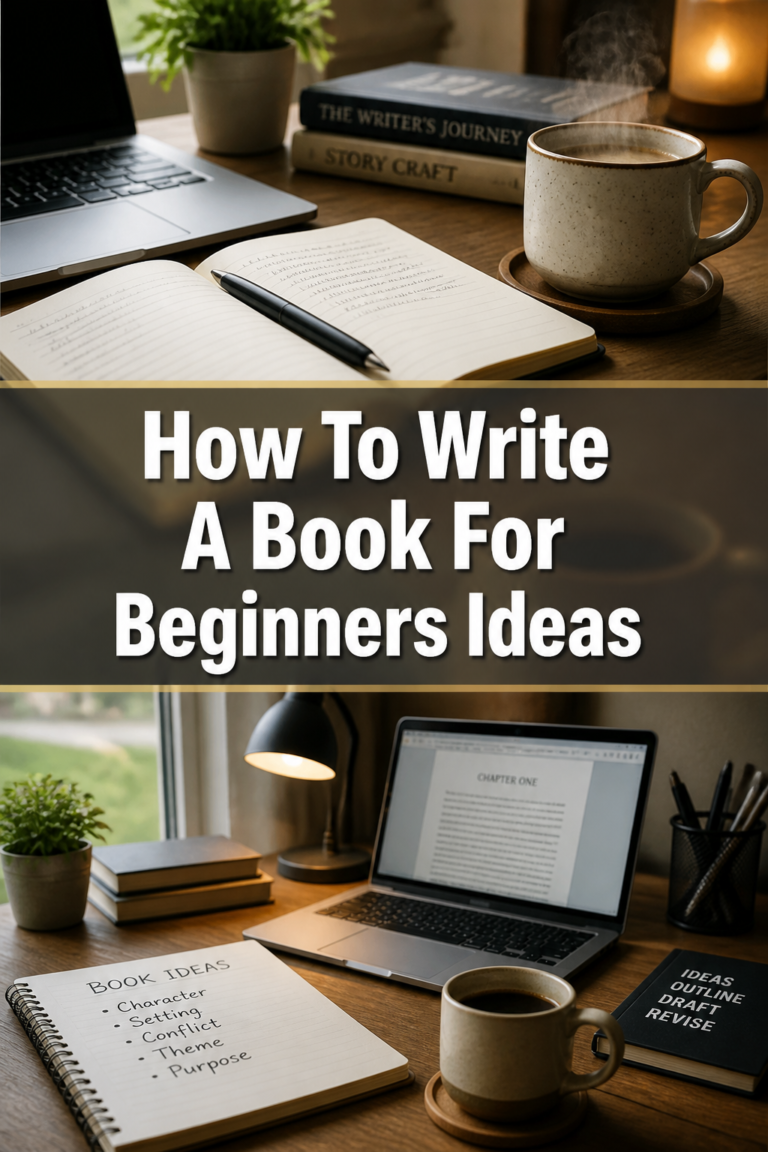
✍️ How To Start A Story Writing Tips
Every great story begins with a single idea, often just a flicker in your mind.
I remember staring at a blank page for hours, convinced I had nothing significant to say.
Learning a few foundational steps transformed that blankness into a world of possibilities, and I’m here to share those insights with you.

Quick Overview
This guide will equip you with practical strategies to move past the blank page and confidently begin your story.
You will learn how to generate ideas, develop core elements, and set yourself up for a successful writing journey.
- Time needed: Several focused hours for initial planning, ongoing for development.
- Difficulty: Beginner
- What you’ll need: A notebook, pen, computer, and your imagination.
Step-by-Step Instructions
Step 1: Find Your Spark (Idea Generation)
Look for inspiration everywhere. Ideas rarely arrive fully formed; they often emerge from observation or personal experience.
Jot down anything that catches your attention: a strange news headline, an interesting person you saw, a vivid dream, or a strong emotion.
Ask “What if?” questions about these snippets. What if that quiet person secretly ran a spy network? What if that dream was a prophecy?
Pro Tip: Carry a small notebook or use a note-taking app on your phone. Capture ideas the moment they appear, as they can fade quickly.
Step 2: Sketch Your Core Concept (Logline)
Condense your initial spark into a single, compelling sentence. This is often called a logline.
Identify your protagonist, their goal, the central conflict, and the stakes. For example: “A young wizard must defeat an evil sorcerer to save his magical school.”
Refine this sentence until it clearly communicates the essence of your story. It acts as a compass.
Step 3: Meet Your Characters (Protagonist and Antagonist)
Imagine the main person in your story, your protagonist. What do they want more than anything?
Consider their flaws, strengths, and background. What makes them unique and relatable?
Develop an antagonist who stands in their way. This character should have their own motivations and beliefs, creating genuine conflict.
Pro Tip: Give your characters secrets or hidden desires. These complexities make them feel real and drive the narrative.
Step 4: Build Your World (Setting)
Decide where your story takes place. Is it a real city, a fantastical land, or a dystopian future?
Describe the environment using all five senses. What does it look, sound, smell, feel, and even taste like?
Consider how the setting influences your characters and plot. Does it create challenges or offer opportunities?
Step 5: Map Your Journey (Basic Plot Points)
Outline a few key events. You don’t need a full outline yet, just a sense of direction.
Think about an inciting incident that kicks off the story, a major turning point, and a climax.
Connect these points logically. How does one event lead to the next, building tension?
Pro Tip: Don’t feel pressured to have every plot twist planned. Focus on the major beats; the details will emerge as you write.
Step 6: Discover Your Message (Theme)
Reflect on the deeper meaning of your story. What idea or truth are you exploring?
Consider universal concepts like love, loss, courage, or betrayal. How does your story comment on these?
Weave the theme subtly into the narrative through character actions and plot developments, rather than stating it directly.
Step 7: Outline Your Beginning (First Chapter Plan)
Plan the opening scene or chapter. What needs to happen to grab the reader’s attention?
Introduce your protagonist and their world effectively. Show, don’t just tell, who they are.
Establish the initial conflict or the mystery that will propel the story forward.
Pro Tip: Start as close to the action or inciting incident as possible. Avoid lengthy introductions or backstory dumps.
Step 8: Choose Your Voice (Point of View and Tone)
Select your narrative point of view. Will it be first person (“I”), third person limited (focused on one character), or third person omniscient (all-knowing)?
Determine the tone of your story. Is it serious, humorous, mysterious, or adventurous?
Maintain consistency in your chosen voice and tone throughout the narrative. This builds reader trust.
Step 9: Silence the Inner Critic (Mindset)
Acknowledge that perfectionism can be a significant barrier to starting. Your first draft is meant to be imperfect.
Give yourself permission to write badly. The goal is to get the story down, not to create a masterpiece immediately.
Focus on progress, not perfection. You can always revise and polish later.
Pro Tip: Set a timer for short writing sprints (e.g., 25 minutes). This tricks your brain into focusing and reduces overwhelm.
Step 10: Just Start Writing (The First Draft)
Open your document or notebook. Do not wait for the perfect moment or the perfect sentence.
Write the first sentence, then the next. Even if it feels clumsy, keep going.
Embrace the messiness of the first draft. It’s a journey of discovery, not a final product.
Common Mistakes to Avoid
Waiting for Perfection
Many aspiring writers get stuck before they even begin because they want their first sentence or first chapter to be flawless. This mindset creates immense pressure and often leads to procrastination.
Understand that writing is a process of iteration. The first draft is for getting ideas down, not for publishing. Allow yourself to make mistakes and fix them during revision.
Over-Planning Without Writing
While planning is crucial, some writers fall into the trap of endlessly outlining, researching, and character profiling without ever writing actual prose. They become experts in their story’s background but never tell the story.
Use planning as a tool to guide you, not to replace the act of writing. Set a clear point at which you transition from planning to drafting, even if your plan isn’t fully complete.
Ignoring Character Motivation
A common pitfall is creating characters who act without clear reasons or desires. If your characters’ actions don’t stem from their internal world, the plot can feel contrived or unearned.
Always ask “why” your character is doing something. Their motivations, whether conscious or subconscious, should drive their choices and propel the narrative forward in a believable way.
Skipping the “Why” (Theme)
Some stories focus solely on plot events, neglecting a deeper underlying message. While an exciting plot can entertain, a story that resonates often explores a significant theme or idea.
Consider what your story is truly about beyond the surface-level events. A strong theme adds depth, meaning, and emotional impact, making your story more memorable and profound.
Troubleshooting
Stuck on an Idea
If you have no idea where to start, or too many ideas that feel overwhelming, try a brainstorming technique. Write down everything that comes to mind for 10 minutes without judgment.
Look for connections between different ideas. Can two small ideas combine to form a larger one? Sometimes, focusing on a single intriguing image or emotion can be enough to begin.
Characters Feel Flat
If your characters lack depth, try writing a short backstory for them. Consider their greatest fear, their biggest secret, or a pivotal moment from their past.
Imagine them in a situation outside of your story’s plot. What would they do? What are their hobbies? Giving them a life beyond the immediate narrative can make them feel more real.
Plot Lacks Direction
If your story feels like it’s wandering, revisit your core concept or logline. Is the protagonist’s goal clear? Is the central conflict well-defined?
Try outlining three major plot points: the inciting incident, the midpoint, and the climax. Focusing on these tentpoles can help you connect the dots and give your narrative structure.
Key Takeaways
- Start with a Spark: Capture every idea, no matter how small, and ask “what if?”
- Define Your Core: Condense your story into a compelling logline to provide direction.
- Develop Characters and World: Create believable protagonists, antagonists, and a vivid setting.
- Map Key Events: Outline major plot points to give your story structure.
- Embrace Imperfection: Your first draft is for discovery, not for being flawless.
- Just Write: Overcome procrastination by simply starting, even if it feels difficult.
Frequently Asked Questions
How long should my story opening be?
There’s no fixed length, but aim to grab the reader’s attention quickly. Generally, the first chapter or first few pages should introduce your protagonist, hint at the central conflict, and establish the world.
Focus on engaging the reader rather than hitting a specific word count. Some stories begin with a bang, others with a quiet mystery.
Do I need an outline before I start?
Not necessarily a detailed one. Some writers prefer a loose outline (plotters), while others prefer to discover the story as they write (pantsers). This guide suggests a middle ground: sketch key elements to provide direction without stifling creativity.
Even a basic understanding of your characters, setting, and a few major plot points can prevent you from getting lost later on.
What if my idea isn’t original?
No idea is entirely new; what makes a story unique is your voice, perspective, and execution. Many great stories share similar tropes or premises.
Focus on bringing your personal touch, unique characters, and specific details to the familiar. Your individual spin is what truly makes it original.
Can I change things later?
Absolutely. Writing is a process of discovery and revision. Your first draft is a foundation, not a finished building. Characters might evolve, plot points might shift, and themes might become clearer as you write.
Embrace the flexibility. The ability to change things later is one of the most liberating aspects of the writing process.
Our Top Recommended Finds
- A Durable Notebook and Quality Pen: Perfect for capturing sudden ideas, brainstorming, and outlining away from screens.
- Writing Software (e.g., Scrivener, Google Docs, Microsoft Word): Essential tools for drafting, organizing chapters, and revising your manuscript digitally.
- A Comfortable Writing Chair: Investing in ergonomic support can make long writing sessions more enjoyable and sustainable.
Your Story Awaits: The Power of Starting
The journey of writing a story can feel daunting, especially at the very beginning.
However, by breaking it down into manageable steps, you transform an intimidating task into an exciting creative process.
Remember that the most important step is simply to begin. Your unique voice and perspective are valuable, and your story deserves to be told.
Take these tips, choose one idea that excites you, and put the first words down today. The world is ready for your narrative.