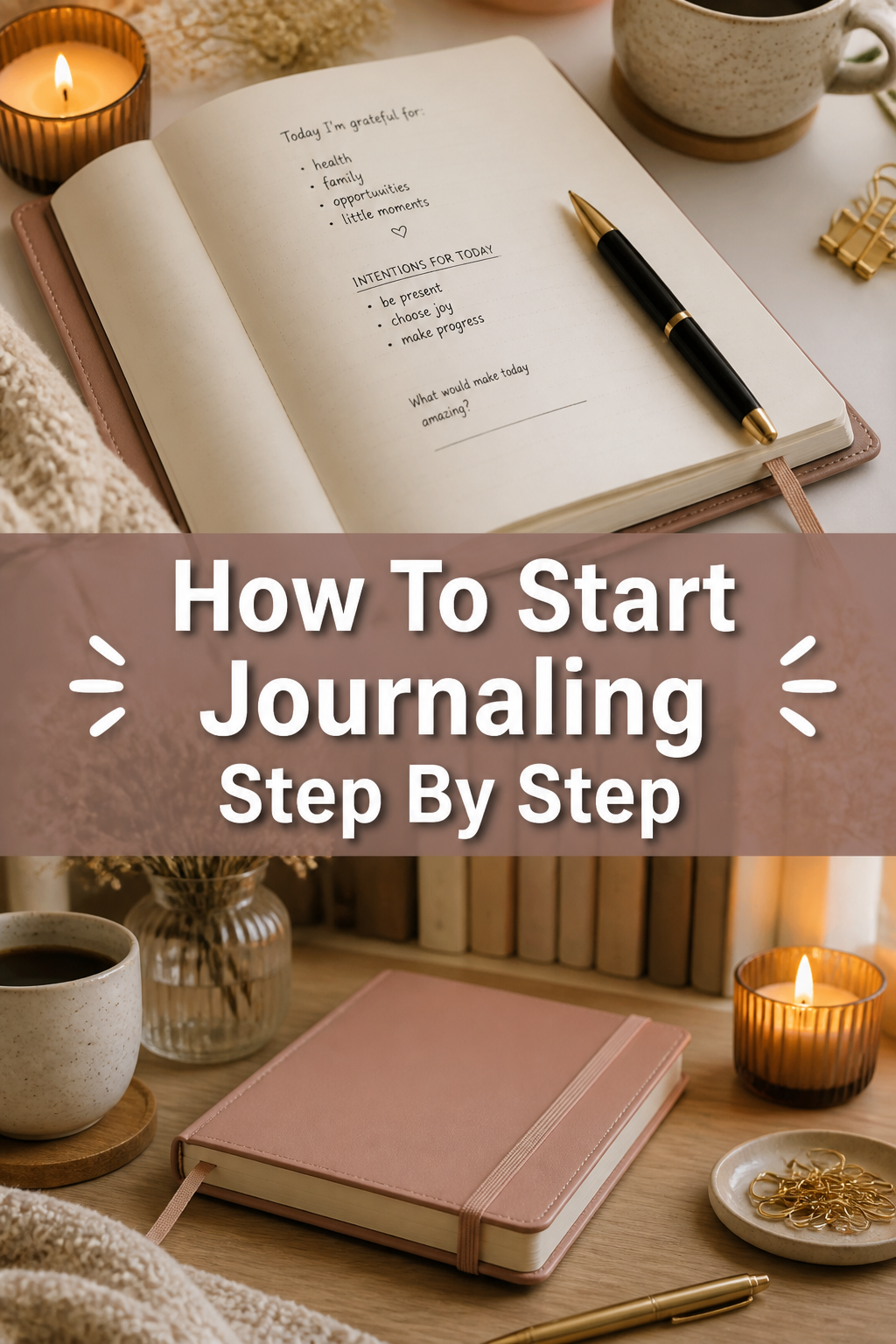
📝 How To Start Journaling Step By Step
Starting a journaling practice can feel like a big commitment, but it doesn’t have to be complicated.
Years ago, I picked up a pen and notebook on a whim, and it transformed how I process thoughts and feelings.
This guide shares that simple, effective path, breaking down the process so anyone can begin today.

Quick Overview
This guide will walk you through setting up a simple, sustainable journaling habit.
You’ll learn how to choose your tools, find your rhythm, and start writing without pressure.
- Time needed: 30 minutes to set up, 5-15 minutes daily
- Difficulty: Beginner
- What you’ll need: A pen, paper (or digital alternative), and a willingness to explore.
Step-by-Step Instructions
Step 1: Choose Your Journaling Tools
The first step is to decide what you’ll write on and with.
There’s no right or wrong answer here; it’s all about what feels comfortable and accessible to you.
Pick a notebook and a pen you enjoy using. A simple spiral-bound notebook works perfectly.
Some people prefer a specific type of pen, like a gel pen or a fine-liner, for a smoother writing experience.
Consider a digital option if you prefer typing. Apps like Evernote, Notion, or even a simple document on your computer can serve as a journal.
The key is to choose something you’ll actually use consistently.
Pro Tip: Don’t overthink this choice. The best journal is the one you have readily available. You can always upgrade or change your tools later.
Step 2: Find Your Journaling Space and Time
Creating a dedicated space and time can help establish your journaling routine.
This doesn’t mean you need a fancy desk or a silent room; just a consistent spot.
Identify a quiet corner in your home where you feel relaxed. This could be your bed, a comfy chair, or even a spot at your kitchen table.
Make sure this area is free from major distractions during your journaling time.
Select a specific time of day for your practice. Many people enjoy journaling first thing in the morning to set intentions or last thing at night to reflect.
Even just five to ten minutes can be incredibly beneficial to start.
Consistency in time and place helps build the habit.
Step 3: Set a Simple Intention
Before you even put pen to paper, think about why you want to journal.
Having a loose intention can guide your first entries without making it feel like a chore.
Ask yourself what you hope to gain. Are you looking to track your mood, process emotions, brainstorm ideas, or simply clear your head?
Your intention can be as simple as “I want to write down whatever comes to mind.”
Remember that your intention can evolve over time. It’s a starting point, not a rigid rule.
This initial thought process helps to reduce the blank page paralysis.
Step 4: Start Small and Simple
The biggest hurdle is often just getting started. Don’t aim for perfection or literary masterpieces.
Your journal is for you alone, so there’s no need to impress anyone.
Write a date at the top of the page. This simple act marks the beginning of your entry.
Begin with a simple prompt if you’re unsure what to write. Things like “How am I feeling right now?” or “What’s on my mind?” are excellent starting points.
You can also list things you’re grateful for or simply describe your day.
Focus on writing continuously for a set period, even if it’s just two minutes. Don’t worry about grammar, spelling, or coherence.
Pro Tip: Try a “brain dump.” Just write down everything that’s swirling in your head without judgment. This is a powerful way to clear mental clutter.
Step 5: Embrace Imperfection and Flow
Journaling is a practice of honest self-expression, not a performance.
Let go of the need for perfect sentences or profound insights every time.
Allow your thoughts to flow freely onto the page. If you get stuck, write “I don’t know what to write” until something else emerges.
This trick often helps break through writer’s block.
Resist the urge to edit or censor yourself. Your journal is a safe space for every thought, good or bad, logical or illogical.
The value comes from the act of expression itself.
Understand that some entries will feel insightful, while others might just be mundane observations. Both are valuable.
Step 6: Experiment with Different Journaling Styles
Once you’re comfortable with basic free-writing, explore other approaches.
There are many ways to journal, and you might find one that resonates more deeply with you.
Try bullet journaling for habit tracking or planning. This method uses symbols and short phrases.
Explore gratitude journaling by listing things you’re thankful for each day.
Consider stream-of-consciousness writing, where you write without stopping or lifting your pen for a set time.
Incorporate drawing or doodling if words don’t always capture what you want to express.
There’s no one-size-fits-all approach, so feel free to mix and match.
Step 7: Revisit Your Entries (Optionally)
Periodically looking back at what you’ve written can offer surprising insights.
This step is optional, especially when you’re just starting, but it adds another layer to the practice.
Flip through old entries every few weeks or months. Notice patterns in your thoughts, emotions, or challenges.
You might discover how far you’ve come or recurring themes that need attention.
Reflect on how your perspectives have changed. Seeing your growth documented can be incredibly motivating.
This reflection can also help you understand yourself better.
Step 8: Make It a Sustainable Habit
Consistency is more important than quantity or intensity when it comes to journaling.
Aim for a practice that you can realistically maintain over the long term.
Integrate journaling into an existing routine. For example, journal right after your morning coffee or before brushing your teeth at night.
This “habit stacking” makes it easier to remember.
Forgive yourself if you miss a day or several. Don’t let a missed session derail your entire practice.
Just pick up where you left off the next day.
Remind yourself of the benefits you’re gaining. This positive reinforcement helps keep you motivated.
Common Mistakes to Avoid
Aiming for Perfection
Many beginners feel pressure to write something profound or perfectly worded. This often leads to writer’s block and discouragement.
Your journal is a private space for raw thoughts, not a published manuscript. Let go of the need for perfection and just write what comes to mind.
Treating It Like a Chore
If journaling starts to feel like another item on your to-do list, you’re likely to abandon it. The goal is to make it an enjoyable, reflective practice.
Keep your sessions short initially, focus on topics that genuinely interest you, and remember it’s a gift to yourself, not an obligation.
Comparing Your Journal to Others’
With social media, it’s easy to see beautifully aesthetic journals or hear about others’ profound insights. Comparing your early efforts can be demotivating.
Your journaling journey is unique. Focus on your own growth and what feels right for you, rather than what others are doing.
Waiting for Inspiration
Some people wait for a moment of profound insight or strong emotion to journal. This can mean long stretches without writing.
Journaling is often about uncovering inspiration through the act of writing itself. Start even when you feel uninspired; often, the act of writing will spark a thought.
Troubleshooting
“I Don’t Know What to Write”
This is a very common feeling, especially when you’re just starting. It’s often a sign of overthinking.
Try simple prompts like “What’s on my mind right now?” or “How do I feel today?” You can also describe your surroundings, list recent events, or write about a dream you had.
“I Keep Missing Days”
Inconsistency is normal when building a new habit. Don’t beat yourself up about it. The goal is progress, not perfection.
Try to make your journaling time shorter and easier to fit in, even just 2-3 minutes. Link it to an existing habit, like drinking coffee or reading before bed. Keep your journal in an obvious, accessible place.
“My Thoughts Feel Repetitive”
It’s natural for certain thoughts or worries to resurface in your journal. This can actually be a good thing, as it shows what’s really on your mind.
If you feel stuck, try a different journaling style. Use a specific prompt like “What’s one thing I can do differently today?” or “What am I grateful for right now?” Sometimes, just acknowledging the repetition can be a breakthrough.
Key Takeaways
- Start simple: Don’t overcomplicate your tools or initial entries.
- Consistency over quantity: A few minutes daily is more effective than long, infrequent sessions.
- Embrace imperfection: Your journal is a safe space for raw thoughts, not a polished document.
- Experiment and adapt: Try different styles and prompts to find what works best for you.
- Forgive missed days: Don’t let a lapse derail your entire practice; just pick it up again.
- Reflect for insights: Periodically reviewing old entries can offer valuable self-understanding.
Frequently Asked Questions
How long should a journaling session be?
There’s no fixed rule. For beginners, 5-10 minutes is an excellent starting point. As you get more comfortable, you might naturally extend it to 15-20 minutes or more. The most important thing is to find a duration that feels sustainable and doesn’t become a burden.
Should I reread my journal entries?
Rereading is entirely optional. Some people find it incredibly insightful for tracking progress, identifying patterns, or appreciating their journey. Others prefer to keep their journal as a purely present-moment practice. If you do reread, approach it with curiosity and without judgment.
What if I run out of things to write about?
This happens to everyone. When you feel stuck, try using journaling prompts. You can search for “journaling prompts for beginners” online. Alternatively, write about your current environment, your immediate feelings, a recent conversation, or something you learned today. Even writing “I don’t know what to write” for a few lines can sometimes break the block.
Is it better to handwrite or type my journal?
Both methods have their benefits. Handwriting can be more meditative and has been linked to better memory retention and emotional processing. Typing can be faster, more convenient for some, and allows for easy searching. Choose whichever method feels most natural and accessible to you, as consistency is key.
Our Top Recommended Finds
- Simple Lined Notebook: A basic, spiral-bound notebook (like a Moleskine or Leuchtturm1917 for a step up) is perfect.
- Comfortable Gel Pen: A smooth-writing gel pen (like a Pilot G2 or Uni-ball Signo) can make the physical act of writing more enjoyable.
- Digital Journaling App: Apps like Day One or Journey offer features for tagging, photos, and easy searching if you prefer a digital approach.
Embrace Your Inner Narrator
Starting a journaling practice is a powerful step towards greater self-awareness and personal growth.
It’s a journey of discovery, not a race to a destination.
With these simple steps, you have everything you need to begin connecting with your thoughts and feelings in a meaningful way.
Don’t wait for the perfect moment or the perfect words. Grab your chosen tools and start writing today.