📖 How To Start A Bible Journal Notebook
Embarking on a Bible journaling journey can be a deeply enriching experience.
I remember feeling intimidated by all the beautiful journals online, wondering if I could ever create something meaningful myself.
This guide will walk you through each practical step, making the process accessible and enjoyable for everyone.
Quick Overview
Starting your Bible journal notebook is a simple, yet profound, way to deepen your faith. You’ll create a personal space for reflection, prayer, and scripture engagement.
- Time needed: 30-60 minutes for initial setup, 15-30 minutes per journaling session
- Difficulty: Beginner
- What you’ll need: A notebook, your Bible, pens, and an open heart
Step-by-Step Instructions
Step 1: Gather Your Essential Supplies
Before you begin, collect a few basic items. You don’t need anything fancy or expensive to start. The most important thing is to have materials you feel comfortable using.
Your Bible is, of course, the central piece. Choose the translation you understand best.
Next, select a notebook. This could be a simple spiral notebook, a composition book, or a dedicated journal. Pick one that appeals to you and feels inviting.
Finally, grab some pens. A few different colors can be nice, but black or blue is perfectly fine.
Pro Tip: Don’t wait to buy the “perfect” journal or pens. Use what you have on hand to begin. The goal is to start, not to acquire a perfect collection of supplies.
Step 2: Choose Your Starting Point in Scripture
Decide where you want to begin your journaling. There are many ways to approach this.
You might choose a book of the Bible you’ve always wanted to explore. Perhaps a specific verse or a devotional reading has recently spoken to you.
Consider starting with a Psalm, a proverb, or a gospel story. These are often great places for new journalers.
You could also follow a specific Bible reading plan. Many apps and websites offer these for free.
Step 3: Read and Reflect with Prayer
Before you put pen to paper, spend time engaging with the scripture. Begin with a short prayer, asking God to open your heart and mind.
Read the chosen passage slowly, perhaps several times. Pay attention to words or phrases that stand out to you.
Consider the context of the passage. Who was it written to? What was happening at the time?
Think about what the passage reveals about God’s character. How does it connect to your own life?
Step 4: Engage with the Text Actively
As you read, interact directly with your Bible if you feel comfortable. You can highlight key verses or underline important phrases.
Make small notes in the margins of your Bible. Jot down questions, insights, or cross-references.
If you prefer not to write in your Bible, use your notebook for these initial thoughts. This is where you start building a bridge between the text and your personal reflection.
This active engagement helps you slow down and truly absorb the message. It moves beyond passive reading.
Step 5: Respond in Your Notebook Through Writing
Now, it’s time to transfer your reflections into your journal. There’s no right or wrong way to do this.
You might start by simply rewriting the verse or passage that resonated most with you. This act of writing helps engrain it in your memory.
Write down your immediate thoughts and feelings about the scripture. What did you learn? How did it challenge you?
Consider writing a prayer based on the passage. Express gratitude, confess struggles, or ask for guidance related to what you’ve read.
Think about how this scripture applies to your life today. What action can you take? What truth can you embrace?
Step 6: Explore Creative Expression (Optional)
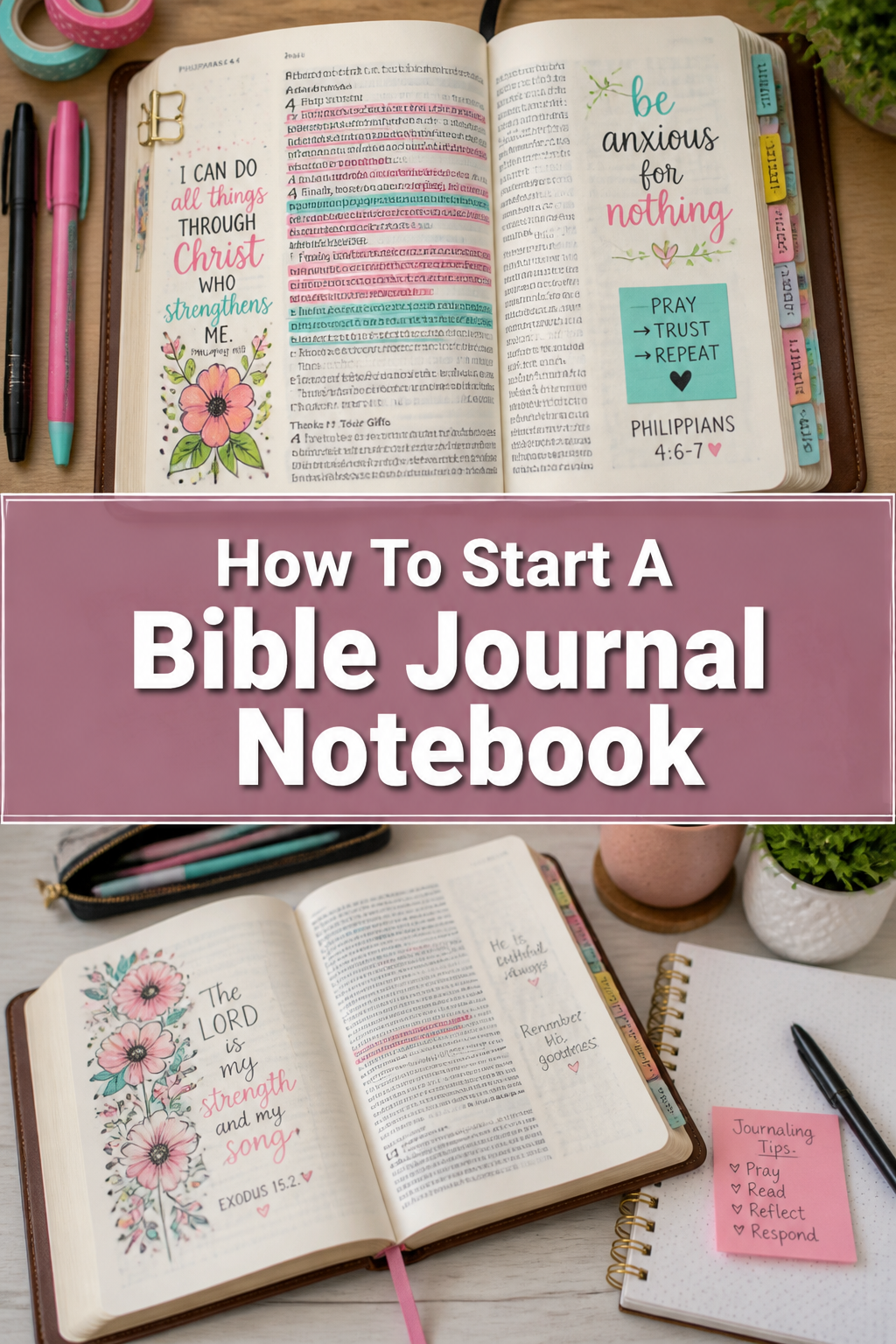
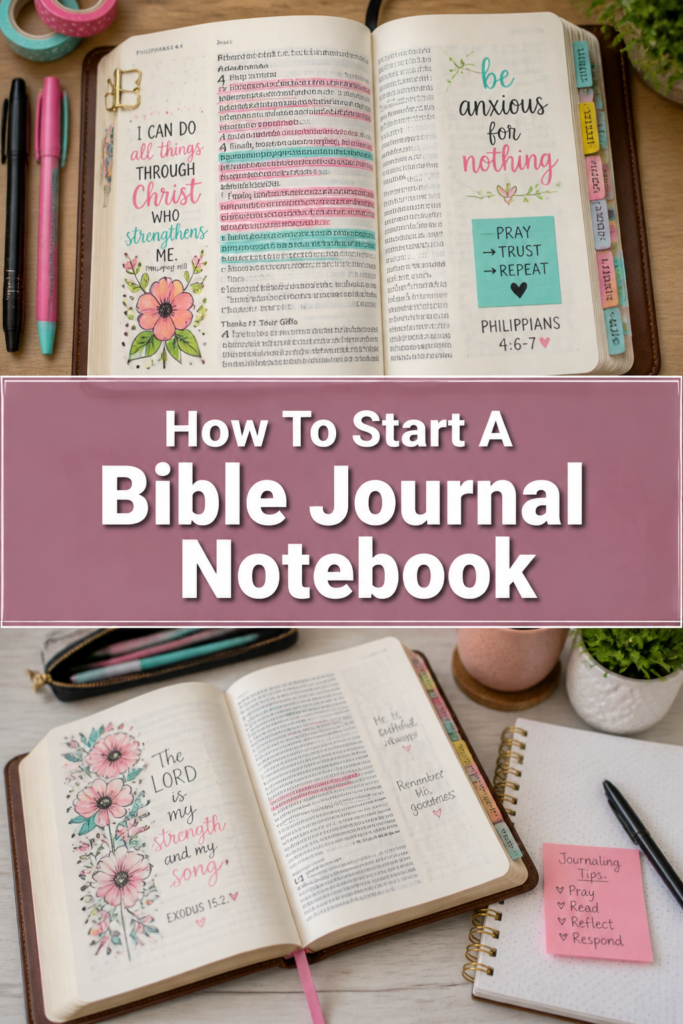
Bible journaling isn’t just about words; it can also be a creative outlet. If you enjoy art, feel free to incorporate it.
You might doodle illustrations inspired by the passage. Simple drawings can enhance your understanding and memory.
Use different colored pens, markers, or even watercolors to add visual interest. Washi tape or stickers can also be fun additions.
Remember, creativity is a tool for worship and reflection, not a performance. If you’re not artistic, don’t feel pressured to include this step.
Step 7: Date Your Entry and Review
Always date your journal entries. This creates a timeline of your spiritual journey and makes it easy to look back.
Before closing your journal, take a moment to reread what you’ve written. Does it accurately reflect your thoughts and prayers?
This brief review helps solidify the insights you’ve gained. It also serves as a gentle closing to your journaling session.
Looking back at past entries can be incredibly encouraging. You’ll see how God has worked in your life over time.
Step 8: Establish a Consistent Journaling Rhythm
Consistency is key to making Bible journaling a meaningful practice. Try to set aside a specific time each day or week.
It doesn’t have to be long; even 10-15 minutes can make a difference. The important thing is to show up regularly.
Find a quiet space where you won’t be easily distracted. This dedicated time and place can signal to your mind that it’s time for reflection.
Don’t be discouraged if you miss a day or a session. Simply pick up where you left off and continue your journey.
Common Mistakes to Avoid
Perfectionism Paralysis
Many people hesitate to start Bible journaling because they fear their entries won’t look “good enough.” They see beautiful, artistic journals online and feel intimidated. This striving for perfection can prevent you from ever beginning.
Remember, your journal is a personal conversation with God, not an art exhibit. Focus on authenticity and honest reflection. Imperfections are part of the process and make your journal uniquely yours.
Overthinking the Process
It’s easy to get caught up in trying to follow too many rules or techniques. You might spend more time researching how to journal than actually journaling. This overthinking can drain the joy and spontaneity from the practice.
Keep it simple, especially when you’re starting. Follow the basic steps outlined here and allow your personal style to emerge naturally. The goal is connection, not complexity.
Inconsistency and Giving Up Too Soon
Like any spiritual discipline, Bible journaling requires consistency to yield fruit. Many people start with enthusiasm but quickly drop off when life gets busy or inspiration wanes. This leads to an abandoned journal and missed opportunities for growth.
Recognize that some days will be harder than others. Commit to showing up even when you don’t feel like it. Small, consistent efforts build into a powerful habit over time.
Focusing on Quantity Over Quality
Sometimes, there’s a temptation to rush through passages or fill pages quickly, thinking more entries equal more spiritual growth. This can turn journaling into a checklist activity rather than a heartfelt interaction with scripture. You might skim texts or write superficial reflections.
Prioritize deep engagement with one or two verses over a quick overview of an entire chapter. Quality reflection, even if brief, is far more impactful than voluminous, rushed writing. Allow yourself time to truly absorb and respond.
Troubleshooting
“I don’t know what to write.”
It’s common to face a blank page and feel stuck. This often happens when we try to force profound insights or eloquent prose. The pressure to “perform” can stifle genuine expression.
Try starting with a simple question: “What did this passage say to me today?” Or, “How does this make me feel?” You can also just rewrite the verse and then free-associate any words or images that come to mind. Don’t censor your initial thoughts; just get something down.
“My handwriting/art isn’t good enough.”
Many people shy away from journaling because they feel self-conscious about their handwriting or lack artistic skill. They believe their journal needs to be visually appealing to be valuable. This can be a major barrier to starting or continuing.
Your journal is for you and God, not for public display. Focus on legibility, not calligraphy. If you want to add art, simple stick figures or abstract shapes are perfectly fine. The content of your heart matters far more than the aesthetics of your page.
“I’m feeling overwhelmed by all the options.”
The world of Bible journaling can seem vast, with endless styles, supplies, and techniques. Seeing others’ elaborate journals might make you feel like you need to do it all, leading to decision paralysis and overwhelm. This can prevent you from ever taking the first step.
Simplify your approach. Start with the absolute basics: a Bible, a notebook, and a pen. Ignore the fancy supplies and intricate layouts for now. Focus on the core practice of reading, reflecting, and responding. You can explore more options later if you feel drawn to them.
Key Takeaways
- Start simply with basic supplies; perfection is not the goal.
- Choose a scripture passage that genuinely resonates with you.
- Engage deeply with the text through prayer and active reading.
- Respond authentically in your notebook with thoughts, prayers, and applications.
- Consistency is more important than quantity or artistic skill.
- Your Bible journal is a personal space for spiritual growth, not a performance.
Frequently Asked Questions
What kind of notebook is best for Bible journaling?
The “best” notebook is one you will actually use. Many people prefer a simple spiral notebook, a composition book, or a dotted grid journal. A journal with thicker pages can prevent ink bleed-through, but it’s not essential for starting.
How often should I journal?
The ideal frequency is whatever you can realistically commit to. Many people aim for daily, even if it’s just 10-15 minutes. Others prefer a few times a week. Consistency matters more than daily adherence.
Can I use my regular Bible, or do I need a special one?
You can absolutely use your regular Bible. A separate journal is often preferred as it allows for more space and freedom of expression without altering your Bible. Journaling Bibles, with wide margins, are an option, but not a necessity.
Is there a “right” way to do it?
There is no single “right” way to Bible journal. It’s a deeply personal practice. The best way is the one that helps you connect with God’s Word most effectively. Experiment and find what works for you.
Our Top Recommended Finds
- Dotted Grid Journal: Offers flexibility for writing, drawing, and organizing without restrictive lines.
- Fine-Tip Archival Pens: Provide smooth writing, resist smudging, and won’t bleed through most pages.
- Highlighter Set (Gel or Pastel): Gel highlighters are less likely to bleed through thin Bible pages, while pastel colors are gentle on the eyes.
Embrace Your Journey of Reflection
Starting a Bible journal notebook is a beautiful invitation to slow down and truly listen. It’s an opportunity to nurture your spirit and deepen your walk of faith. Each page you fill becomes a testament to your personal growth and God’s faithfulness.
Don’t let hesitation hold you back any longer. Gather your simple supplies today and open your Bible. Begin this rewarding practice and discover the profound insights waiting for you. Your unique spiritual journey starts with that very first entry.