✍️ How To Write A Novel Step By Step
Writing a novel can feel like an impossible task, a mountain too high to climb.
I remember staring at a blank page, overwhelmed by the sheer scale of the project.
But with a clear roadmap, the journey becomes manageable, even enjoyable, and this guide provides just that, drawn from years of navigating these very paths.
Quick Overview
This guide will walk you through the entire novel-writing process, from a glimmer of an idea to a finished manuscript ready for the world.
You’ll learn how to develop compelling characters, craft intricate plots, and refine your prose, transforming your vision into a complete story.
- Time needed: 6-18 months (depending on daily commitment)
- Difficulty: Intermediate
- What you’ll need: A computer or notebook, word processing software, and a dedicated mindset
Step-by-Step Instructions
Step 1: Discover Your Core Idea
Every novel begins with a spark. This initial concept will be the foundation of your entire story.
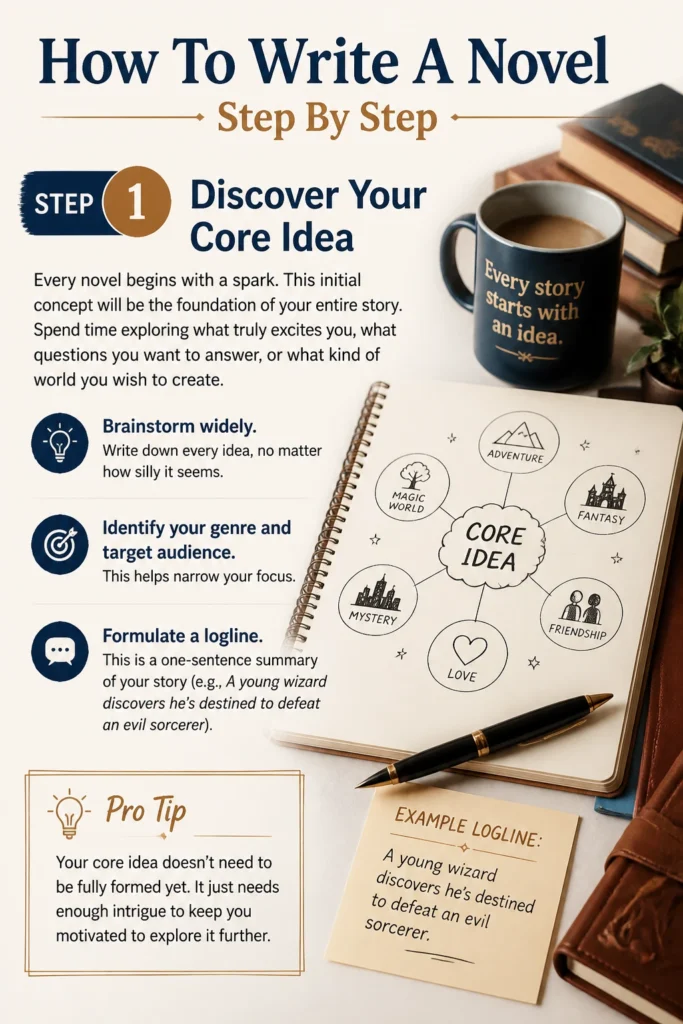
Spend time exploring what truly excites you, what questions you want to answer, or what kind of world you wish to create.
- Brainstorm widely. Write down every idea, no matter how silly it seems.
- Identify your genre and target audience. This helps narrow your focus.
- Formulate a logline. This is a one-sentence summary of your story (e.g., “A young wizard discovers he’s destined to defeat an evil sorcerer”).
Pro Tip: Your core idea doesn’t need to be fully formed yet. It just needs enough intrigue to keep you motivated to explore it further.
Step 2: Develop Your Characters
Characters are the heart of any novel. Readers connect with compelling personalities, their struggles, and their triumphs.
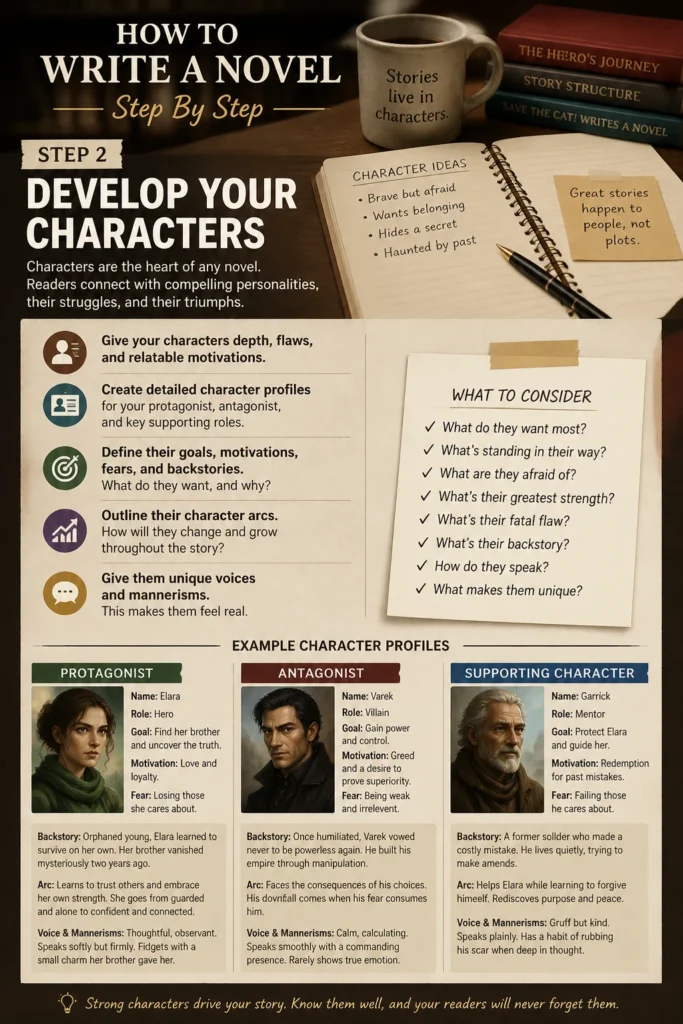
Give your characters depth, flaws, and relatable motivations.
- Create detailed character profiles for your protagonist, antagonist, and key supporting roles.
- Define their goals, motivations, fears, and backstories. What do they want, and why?
- Outline their character arcs. How will they change and grow throughout the story?
- Give them unique voices and mannerisms. This makes them feel real.
Step 3: Outline Your Plot
A strong plot provides structure and direction for your narrative. It ensures your story has a beginning, middle, and end, with rising tension.
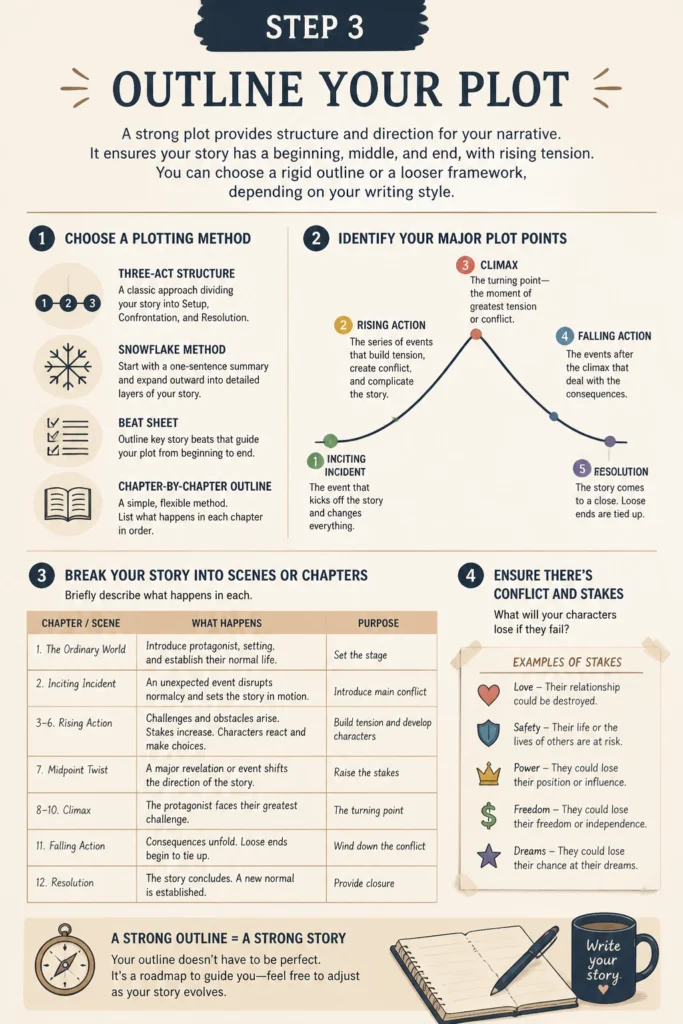
You can choose a rigid outline or a looser framework, depending on your writing style.
- Choose a plotting method: Three-act structure, snowflake method, beat sheet, or a simple chapter-by-chapter outline.
- Identify your major plot points: the inciting incident, rising action, climax, falling action, and resolution.
- Break your story into scenes or chapters. Briefly describe what happens in each.
- Ensure there’s conflict and stakes. What will your characters lose if they fail?
Step 4: Build Your World
Whether your novel is set in a fantastical realm or a contemporary city, the world your characters inhabit needs to feel real and consistent.
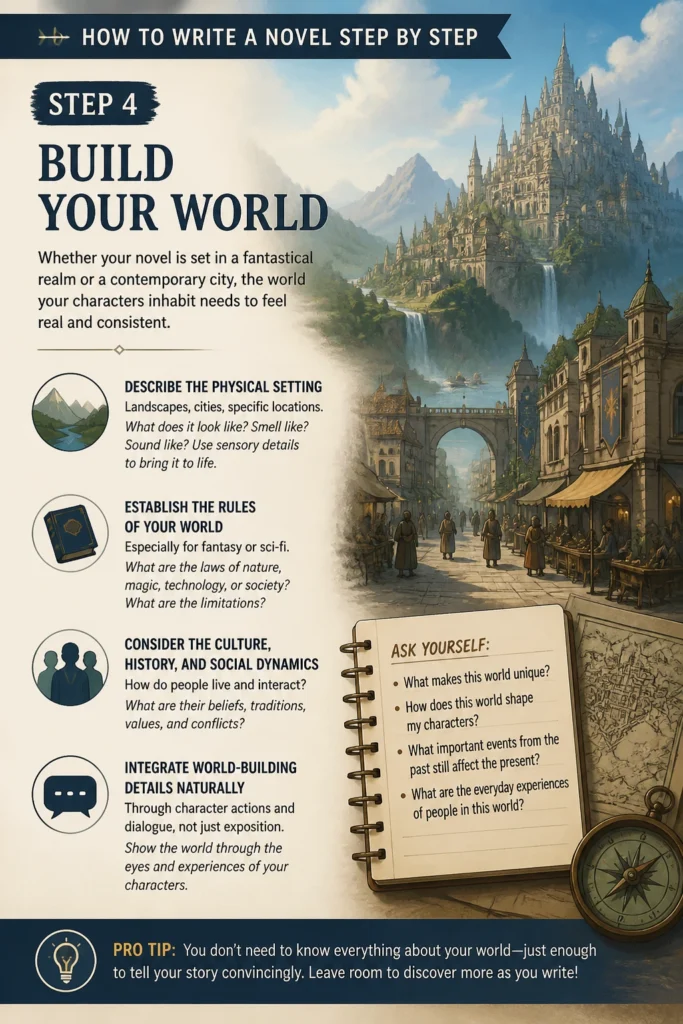
Establish its rules, atmosphere, and history.
- Describe the physical setting: landscapes, cities, specific locations.
- Establish the rules of your world, especially for fantasy or sci-fi. What are the limitations?
- Consider the culture, history, and social dynamics. How do people live and interact?
- Integrate world-building details naturally, through character actions and dialogue, not just exposition.
Step 5: Write Your First Draft
This is where the magic happens: getting the story down on paper. The goal here is completion, not perfection.
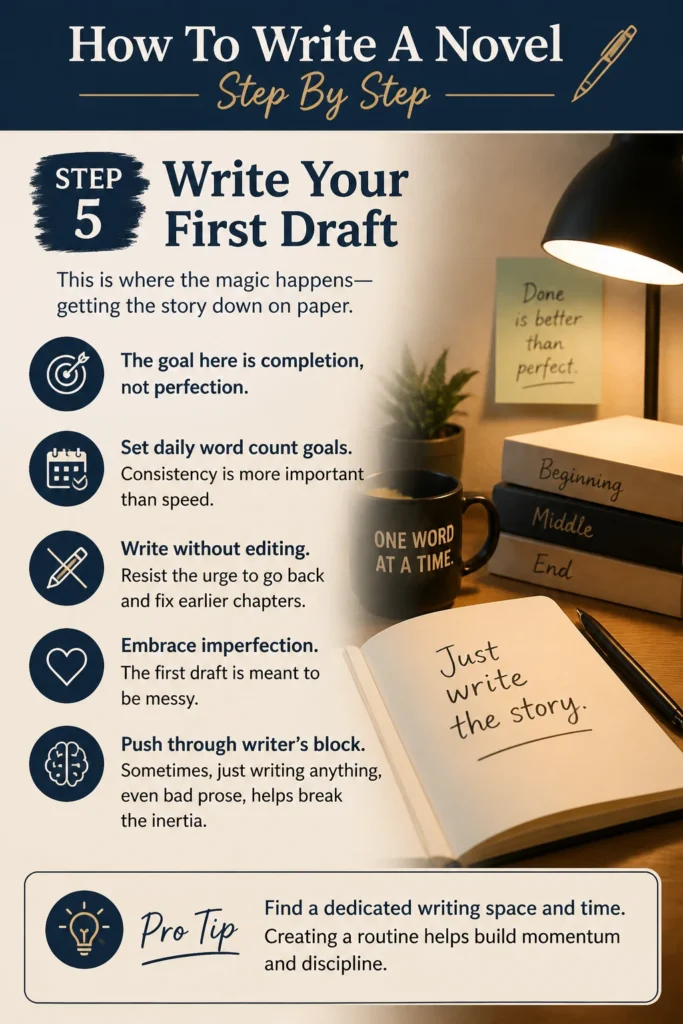
Silence your inner critic and focus on telling the story from beginning to end.
- Set daily word count goals. Consistency is more important than speed.
- Write without editing. Resist the urge to go back and fix earlier chapters.
- Embrace imperfection. The first draft is meant to be messy.
- Push through writer’s block. Sometimes, just writing anything, even bad prose, helps break the inertia.
Pro Tip: Find a dedicated writing space and time. Creating a routine helps build momentum and discipline.
Step 6: Revise and Refine
Once the first draft is complete, step away from it for a few weeks. This fresh perspective is invaluable for revision.
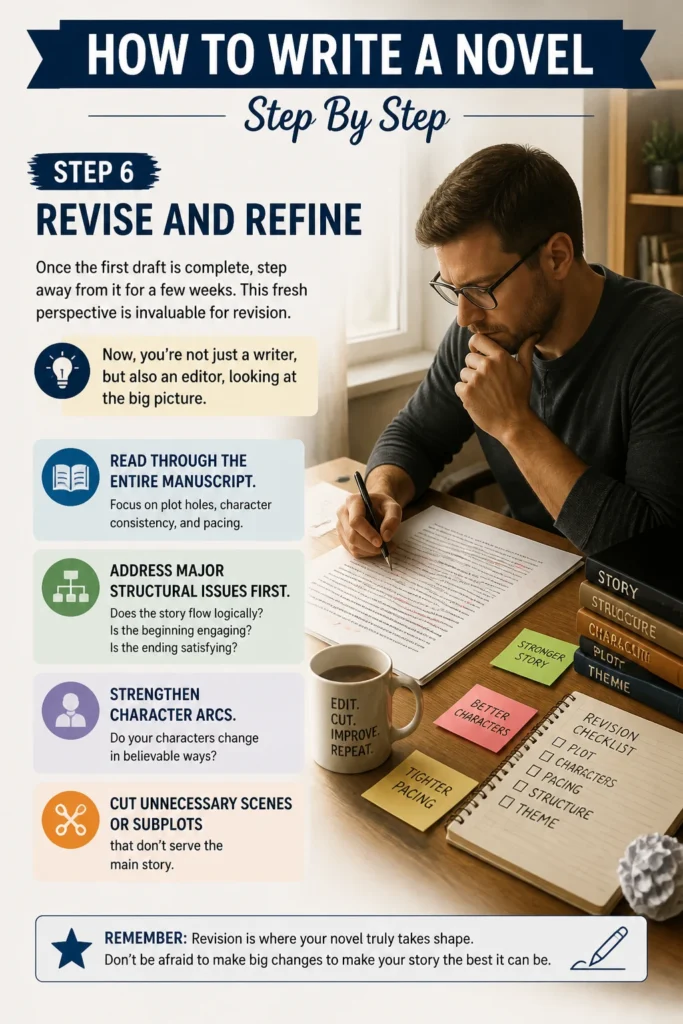
Now, you’re not just a writer, but also an editor, looking at the big picture.
- Read through the entire manuscript. Focus on plot holes, character consistency, and pacing.
- Address major structural issues first. Does the story flow logically? Is the beginning engaging? Is the ending satisfying?
- Strengthen character arcs. Do your characters change in believable ways?
- Cut unnecessary scenes or subplots that don’t serve the main story.
Step 7: Seek Feedback
Other eyes can spot issues you’ve become blind to. Beta readers and critique partners offer fresh perspectives and constructive criticism.
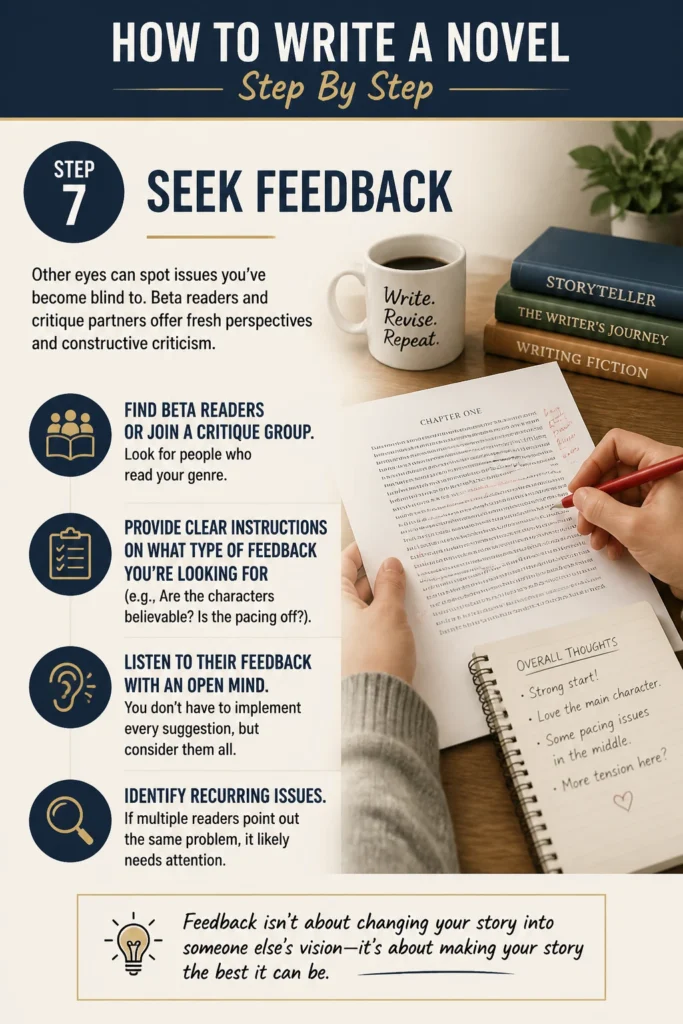
Choose readers who understand your genre and can provide honest, helpful feedback.
- Find beta readers or join a critique group. Look for people who read your genre.
- Provide clear instructions on what type of feedback you’re looking for (e.g., “Are the characters believable? Is the pacing off?”).
- Listen to their feedback with an open mind. You don’t have to implement every suggestion, but consider them all.
- Identify recurring issues. If multiple readers point out the same problem, it likely needs attention.
Step 8: Edit and Polish
This stage focuses on the finer details of your writing. It’s about making every sentence shine.
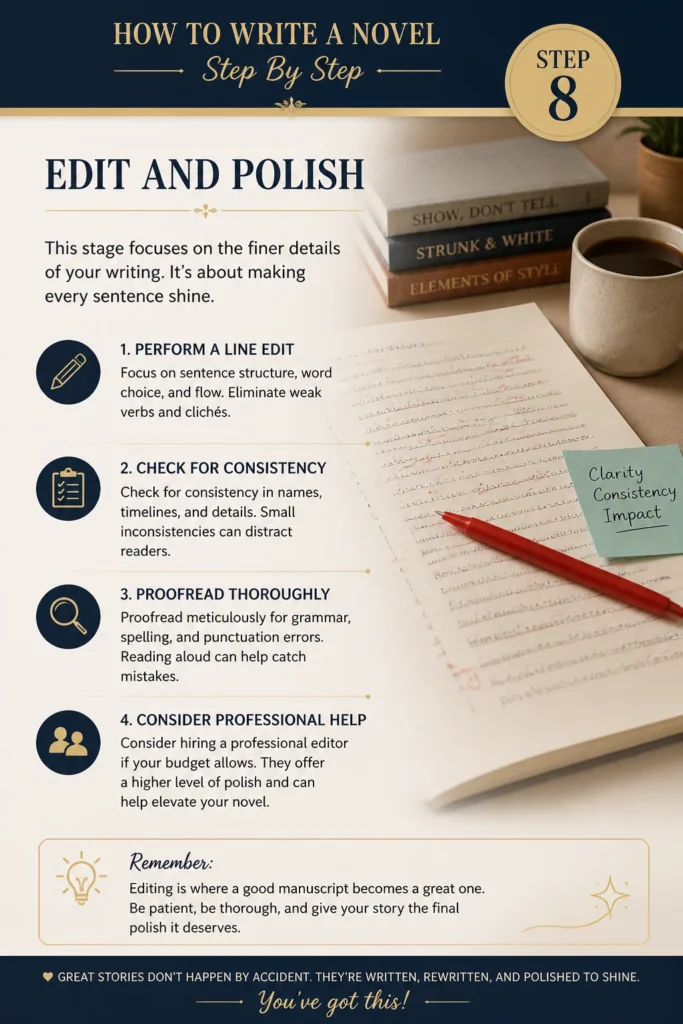
This includes line editing for clarity and style, and proofreading for grammar and spelling.
- Perform a line edit. Focus on sentence structure, word choice, and flow. Eliminate weak verbs and clichés.
- Check for consistency in names, timelines, and details.
- Proofread meticulously for grammar, spelling, and punctuation errors. Reading aloud can help catch mistakes.
- Consider hiring a professional editor if your budget allows. They offer a higher level of polish.
Step 9: Consider Publication
With a polished manuscript in hand, you’re ready to explore how to bring your story to readers.
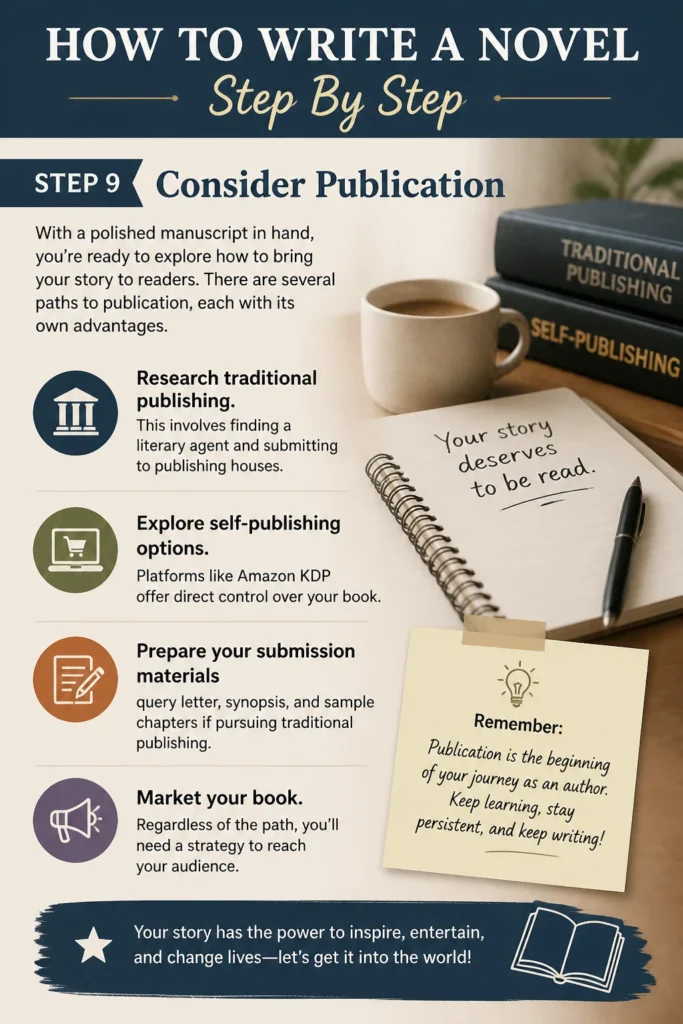
There are several paths to publication, each with its own advantages.
- Research traditional publishing. This involves finding a literary agent and submitting to publishing houses.
- Explore self-publishing options. Platforms like Amazon KDP offer direct control over your book.
- Prepare your submission materials: query letter, synopsis, and sample chapters if pursuing traditional publishing.
- Market your book. Regardless of the path, you’ll need a strategy to reach your audience.
Common Mistakes to Avoid
Starting Without a Plan
Many aspiring novelists jump straight into writing without any idea of where the story is going. While “pantsting” works for some, it often leads to stalled projects, plot holes, and significant rewrites.
Even a loose outline provides direction, helping you maintain momentum and avoid getting lost in the middle of your narrative.
Over-editing the First Draft
It’s tempting to perfect every sentence as you write it. However, this slows down progress immensely and can kill your creative flow. The goal of the first draft is to get the story down.
Save the meticulous editing for later stages; focus on completing the narrative first, then refine it.
Ignoring Feedback
Receiving criticism can be tough, but dismissing all feedback is a common pitfall. While not every suggestion will fit your vision, recurring comments usually highlight genuine issues.
Approach feedback with an open mind, consider its validity, and use it to strengthen your story, not just defend your choices.
Giving Up Too Soon
Writing a novel is a marathon, not a sprint. There will be days of doubt, frustration, and feeling like your story isn’t good enough. Many aspiring writers quit when they hit these roadblocks.
Persistence is key. Remind yourself why you started, take breaks when needed, and remember that every finished novel went through difficult stages.
Troubleshooting
Writer’s Block
Feeling stuck and unable to write is a universal experience for authors. It can feel like your creative well has run dry.
Try switching up your routine, writing in a different location, or working on a different scene or character sketch. Sometimes, just writing anything, even unrelated thoughts, can kickstart your brain. Take a walk or engage in a creative activity unrelated to writing.
Lack of Motivation
The initial excitement for your novel can wane over time, especially during the long, arduous middle sections. It’s hard to keep pushing when the finish line feels so far away.
Reconnect with your original passion for the story. Reread your favorite parts, revisit your character profiles, or talk about your novel with an enthusiastic friend. Break down your goals into smaller, more achievable chunks to build momentum.
Plot Holes or Inconsistencies
As your story grows, it’s easy for details to slip, leading to inconsistencies or plot holes that confuse readers. This often becomes apparent during revision or feedback stages.
Create a story bible or wiki to track character details, timelines, and world-building facts. When you spot an inconsistency, backtrack to its origin and adjust accordingly. Don’t be afraid to make larger changes if a plot hole is fundamental.
Key Takeaways
- Start with a strong, compelling idea that truly excites you.
- Develop rich, complex characters readers will care about.
- Outline your plot to provide structure and direction, even if it’s a loose one.
- Prioritize completing the first draft over perfection.
- Embrace revision as an essential part of the writing process.
- Seek and consider feedback from trusted sources.
Frequently Asked Questions
How long should a novel be?
Novel length varies greatly by genre. Most debut novels fall between 50,000 and 100,000 words. Fantasy and science fiction often run longer, while romance or mystery might be shorter. Focus on telling your story effectively rather than hitting an arbitrary word count.
Do I need an agent to get published?
For traditional publishing, a literary agent is almost always necessary. They act as your representative, submitting your manuscript to publishing houses and negotiating contracts. If you plan to self-publish, an agent isn’t required.
What if my story isn’t original enough?
No story is entirely new; what makes it unique is your voice, perspective, and execution. Focus on bringing your personal touch to familiar tropes or ideas. Your individual take on a story is what truly sets it apart.
How do I stay motivated during the writing process?
Set realistic goals, celebrate small victories, and find a writing community for support. Remember why you started and allow yourself breaks when you feel overwhelmed. Consistency, even in small amounts, builds momentum.
Our Top Recommended Finds
- Noise-Canceling Headphones: Essential for focusing in busy environments, helping you immerse yourself in your story world.
- A Comfortable Desk Chair: You’ll be spending many hours writing, so good ergonomics are crucial for your health and comfort.
- Dedicated Writing Notebooks and Pens: For brainstorming, outlining, or jotting down ideas when away from your computer.
Your Story Awaits
The journey of writing a novel is transformative, challenging, and incredibly rewarding. You hold the power to bring new worlds and characters to life, to share your unique vision with others.
Don’t let the magnitude of the task deter you. Break it down, take one step at a time, and trust in your ability to tell a compelling story.
Start today. Even a single sentence is progress towards your finished novel.