💡 How To Start A Book Writing Ideas
Finding that initial spark for a book can feel like searching for a needle in a haystack. I remember staring at a blank page for hours, convinced all the good stories were already taken.
But then I realized something fundamental: ideas aren’t found, they’re cultivated. This guide shares the practical strategies I’ve used to consistently generate compelling book concepts. It’s about building a system, not just waiting for inspiration.

Quick Overview
This guide will equip you with actionable techniques to systematically generate and capture book writing ideas. You’ll move from feeling stuck to having a wellspring of potential stories.
- Time needed: 1-2 hours for initial setup and exploration, then 15-30 minutes daily/weekly for ongoing idea generation.
- Difficulty: Beginner
- What you’ll need: A notebook and pen, a computer or tablet, internet access, and an open, curious mind.
Step-by-Step Instructions
Step 1: Cultivate Your Curiosity
Observe the world around you with a detective’s eye. Pay close attention to details, conversations, and unusual occurrences. Every person you meet, every place you visit, holds potential story elements.
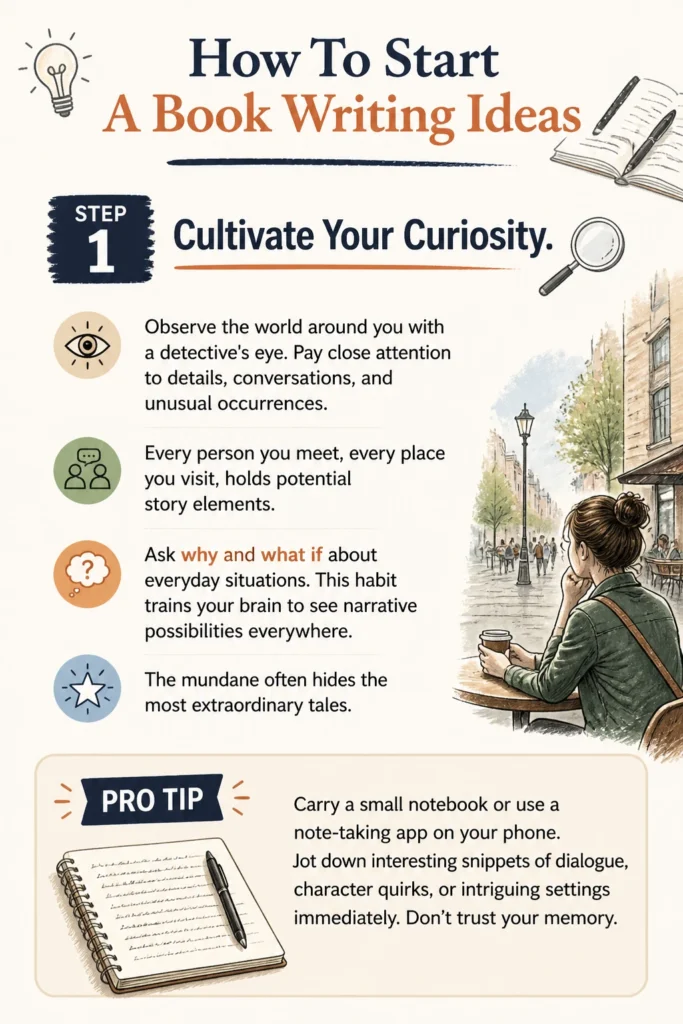
Ask “why” and “what if” about everyday situations. This habit trains your brain to see narrative possibilities everywhere. The mundane often hides the most extraordinary tales.
Pro Tip: Carry a small notebook or use a note-taking app on your phone. Jot down interesting snippets of dialogue, character quirks, or intriguing settings immediately. Don’t trust your memory.
Step 2: Mind Map Your Passions and Expertise
List everything you’re genuinely interested in, passionate about, or have unique expertise in. Think about your hobbies, your job, subjects you love to read about, and life experiences. These are fertile grounds for authentic stories.
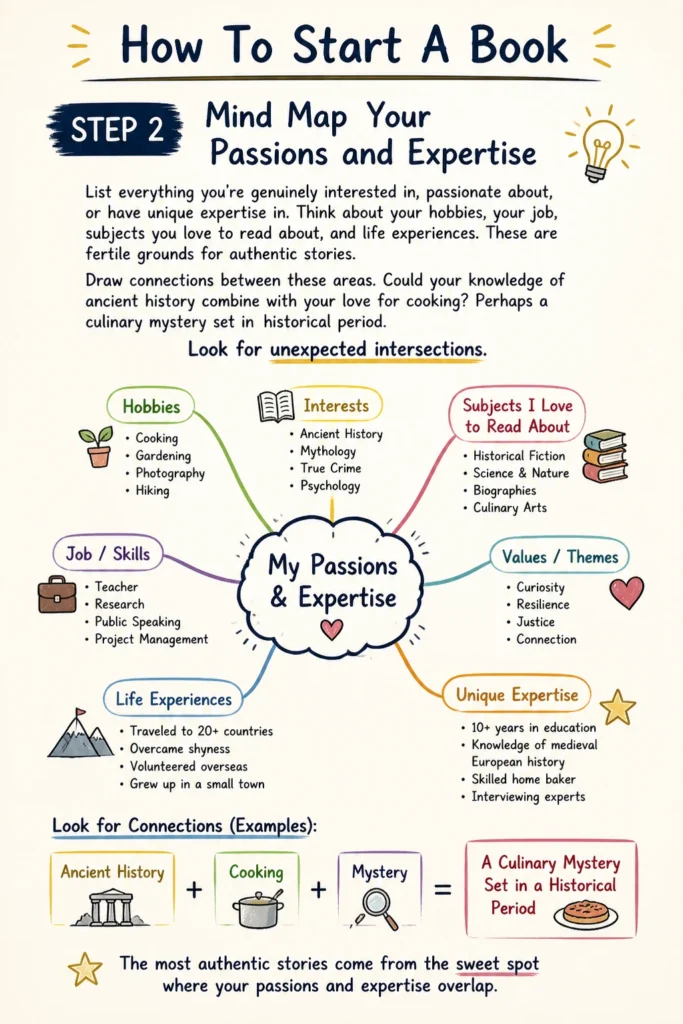
Draw connections between these areas. Could your knowledge of ancient history combine with your love for cooking? Perhaps a culinary mystery set in a historical period. Look for unexpected intersections.
Step 3: Dive Into Daily Life Observations
Analyze everyday interactions for conflict, character, and setting. A heated debate at a coffee shop, a strange item left on a park bench, or a peculiar habit of a neighbor can all be story starters. What are people hiding? What are their motivations?
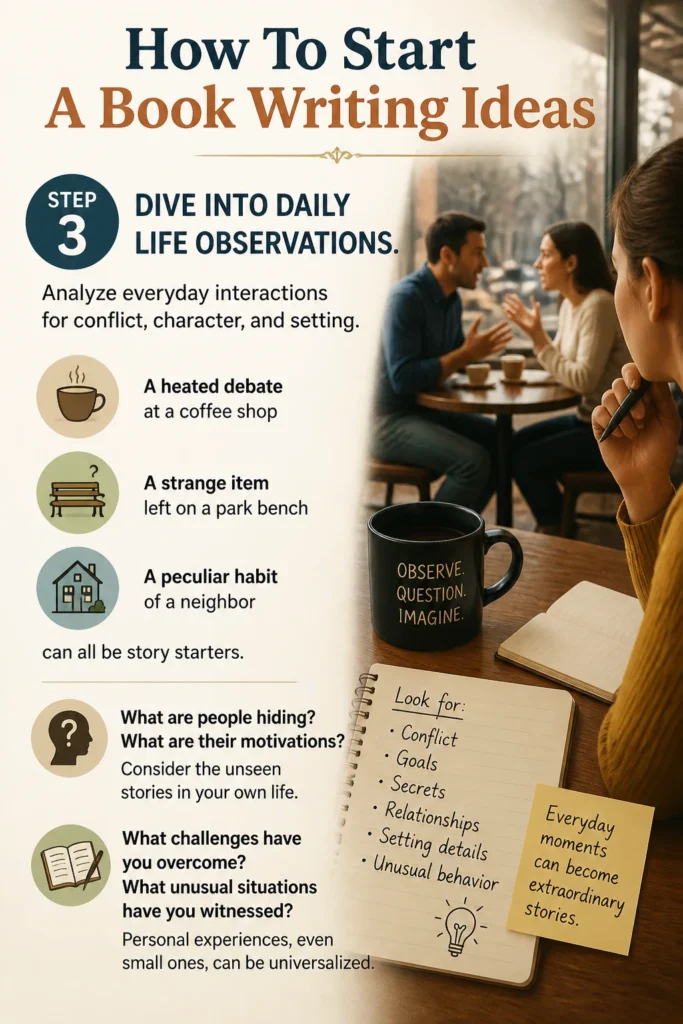
Consider the “unseen” stories in your own life. What challenges have you overcome? What unusual situations have you witnessed? Personal experiences, even small ones, can be universalized.
Step 4: Explore “What If” Scenarios
Take a common situation and twist it with a “what if” question. What if gravity stopped working for an hour every day? What if animals could talk, but only to one specific person?
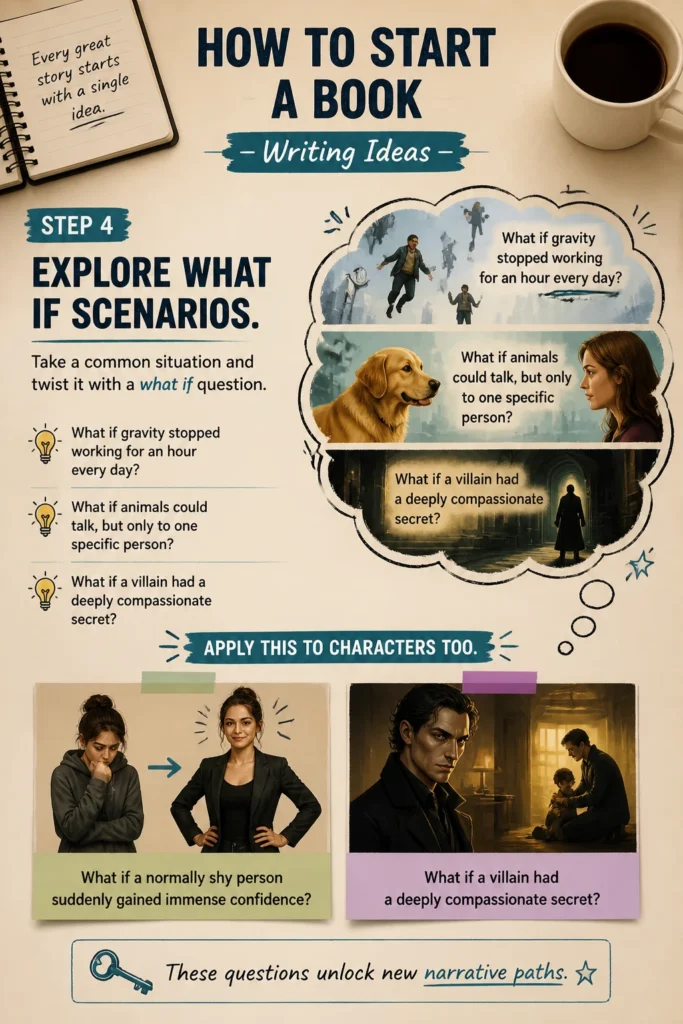
Apply this to characters too. What if a normally shy person suddenly gained immense confidence? What if a villain had a deeply compassionate secret? These questions unlock new narrative paths.
Step 5: Consume Diverse Media Actively
Engage with books, movies, documentaries, podcasts, and art from various genres. Don’t just consume passively; analyze what draws you in, what makes you think, or what leaves you wanting more.
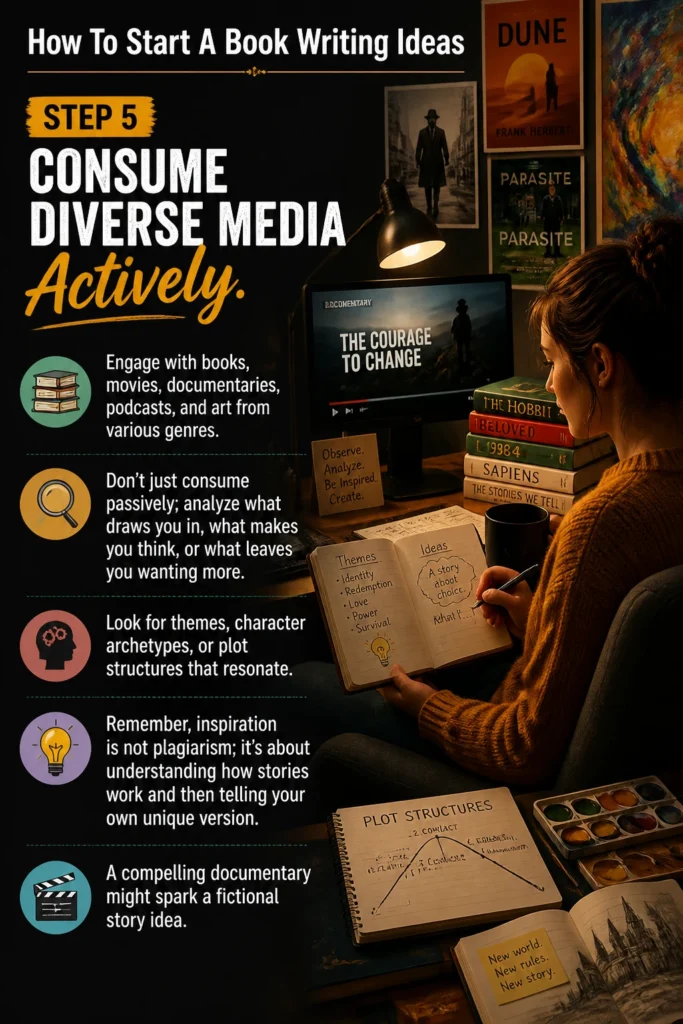
Look for themes, character archetypes, or plot structures that resonate. Remember, inspiration is not plagiarism; it’s about understanding how stories work and then telling your own unique version. A compelling documentary might spark a fictional story idea.
Step 6: Journal Freely and Consistently
Dedicate time each day to freewriting. Don’t censor yourself; just write whatever comes to mind. This practice helps clear mental blocks and allows subconscious ideas to surface.
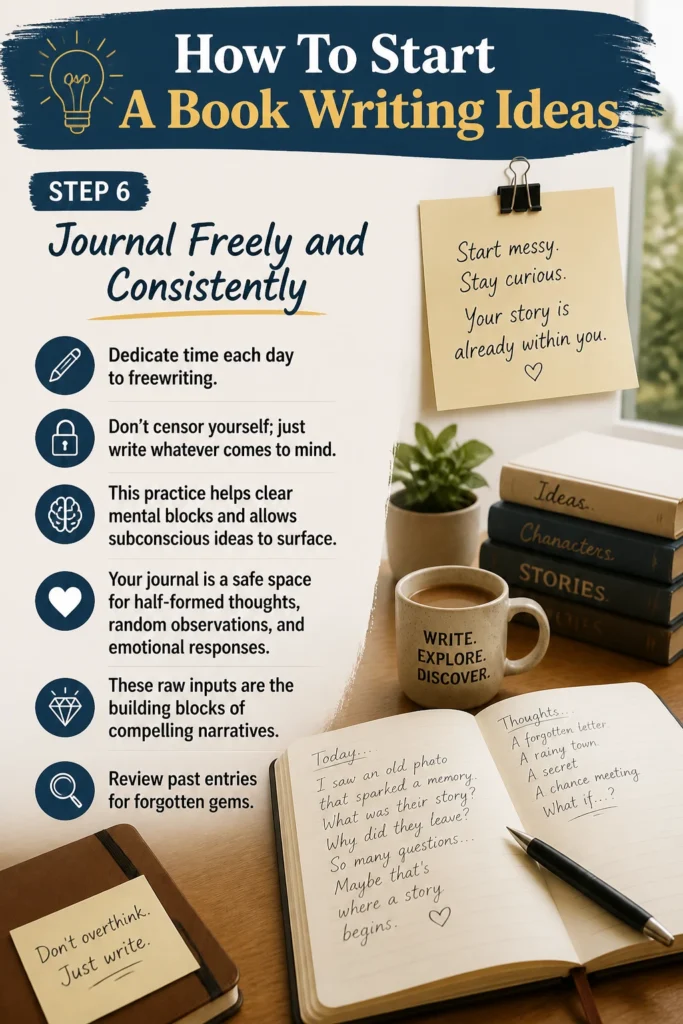
Your journal is a safe space for half-formed thoughts, random observations, and emotional responses. These raw inputs are the building blocks of compelling narratives. Review past entries for forgotten gems.
Step 7: Interview Yourself for Story Potential
Ask yourself a series of probing questions about potential story elements. Who is your main character? What do they want? What stands in their way? What is the setting like?
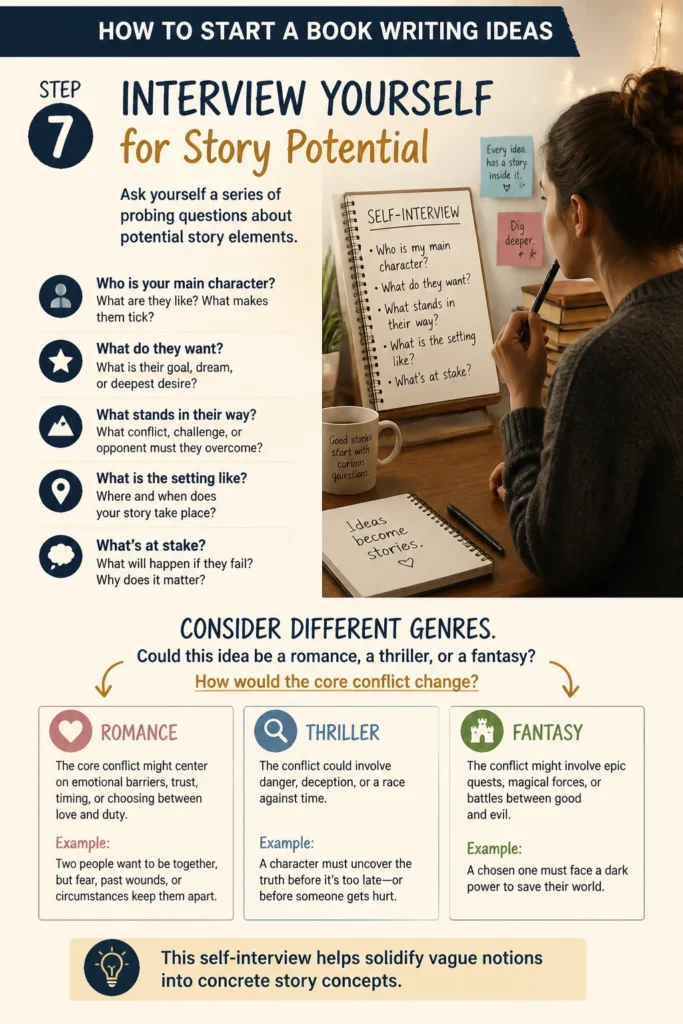
Consider different genres. Could this idea be a romance, a thriller, or a fantasy? How would the core conflict change? This self-interview helps solidify vague notions into concrete story concepts.
Step 8: Connect Unrelated Concepts
Take two or three completely disparate concepts and force them together. Imagine a librarian who is also a secret agent, or a sentient toaster trying to save the world. The friction between these elements often creates compelling new ideas.
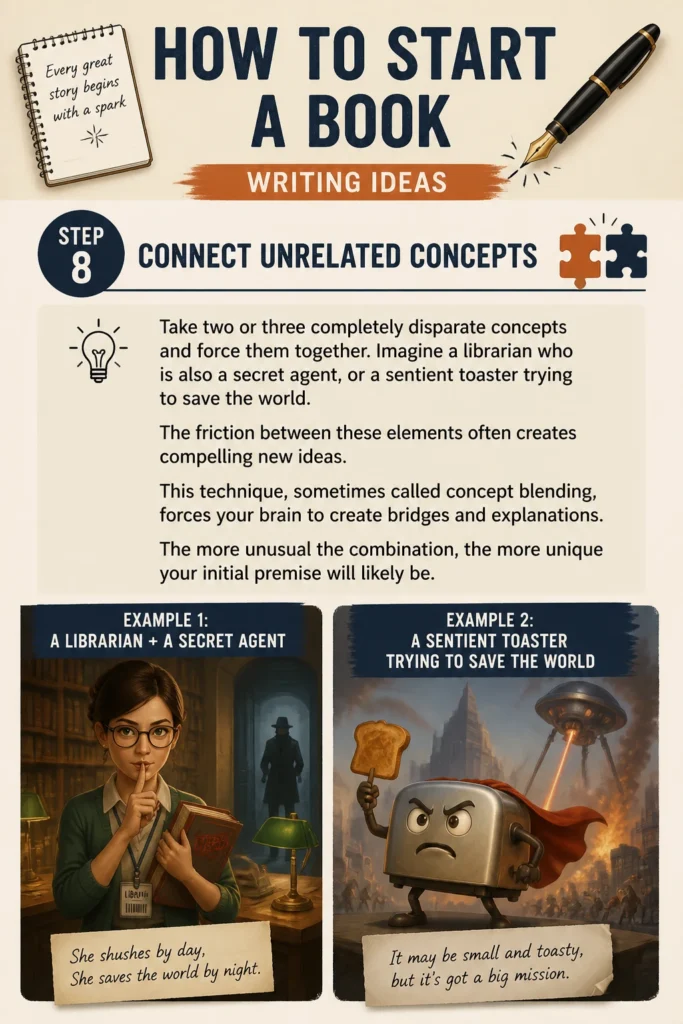
This technique, sometimes called “concept blending,” forces your brain to create bridges and explanations. The more unusual the combination, the more unique your initial premise will likely be.
Step 9: Research and Explore Gaps
Dive into topics that pique your interest through research. Read non-fiction books, academic papers, or historical accounts. Look for untold stories, historical mysteries, or underrepresented perspectives.
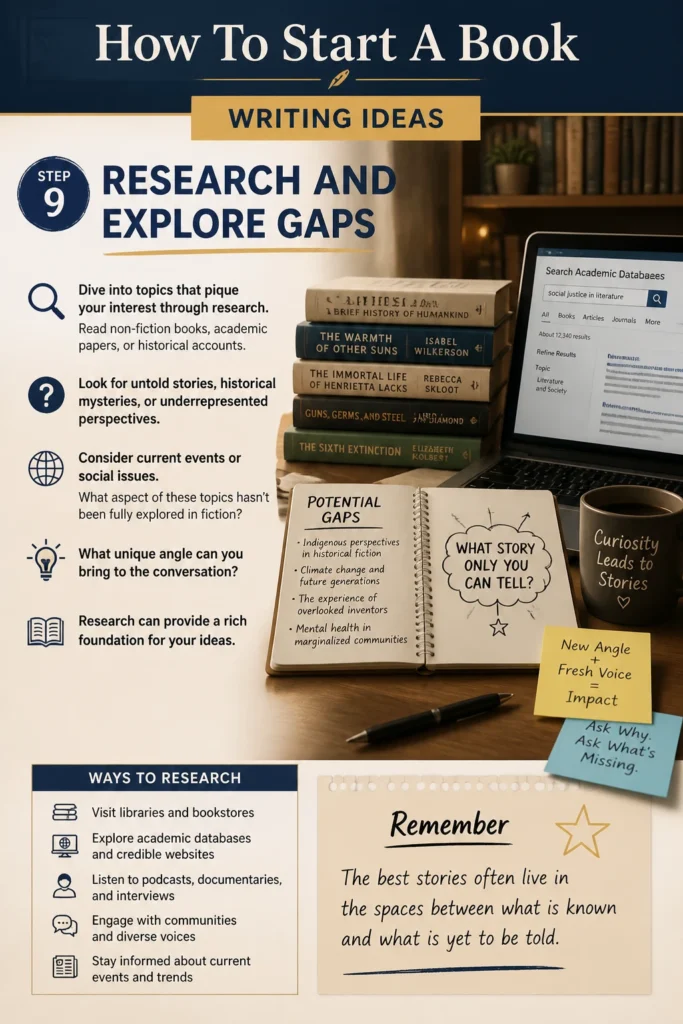
Consider current events or social issues. What aspect of these topics hasn’t been fully explored in fiction? What unique angle can you bring to the conversation? Research can provide a rich foundation for your ideas.
Common Mistakes to Avoid
Waiting for the “Perfect” Idea
Many aspiring writers fall into the trap of believing there’s one perfect, fully-formed idea waiting to be discovered. This mindset leads to paralysis. The truth is, ideas are rarely perfect at the start; they evolve and strengthen through development. Instead of waiting, start with any intriguing spark and allow it to grow. The act of writing itself often clarifies and refines the initial concept.
Dismissing Small Ideas
It’s easy to overlook a fleeting thought or a simple observation, thinking it’s too insignificant for a book. However, some of the most profound stories began with a small, seemingly minor detail. A single image, a line of dialogue, or a character’s unusual habit can be the seed for an entire novel. Give every idea, no matter how small, the chance to be explored and expanded upon.
Focusing Only on Originality
The pressure to be completely original can be stifling. No story is truly “new” in every single element; narratives often draw from archetypes and universal themes. Instead of striving for absolute originality, focus on bringing your unique voice, perspective, and experiences to a familiar concept. Your personal twist is what makes a story fresh and engaging, not necessarily an unheard-of premise.
Not Documenting Ideas
A brilliant idea can vanish as quickly as it appears if not captured. Relying on memory is a common mistake that leads to lost potential. Always have a system for documenting your ideas immediately, whether it’s a dedicated notebook, a digital note-taking app, or a voice recorder. Consistent documentation ensures no spark is forgotten and provides a rich archive to draw from later.
Troubleshooting
“My Ideas Feel Generic”
If your ideas seem uninspired, try adding a personal twist or a unique constraint. What specific detail from your own life or interests can you weave into the concept? You can also combine two seemingly unrelated generic ideas to create something fresh. For example, a generic detective story becomes more unique when set on a space station, or if the detective is an elderly librarian.
“I Have Too Many Ideas, Can’t Choose”
This is a good problem to have! To choose, try a quick “pitch test.” Can you describe each idea in one compelling sentence? Then, consider which idea excites you the most right now, which one feels most urgent, or which one you have enough knowledge to start. You can also outline a few of your top ideas very briefly to see which one has the most immediate potential for development.
“I Feel Stuck and Uninspired”
Sometimes, the best way to find ideas is to step away from actively looking. Take a walk, visit a museum, listen to new music, or try a completely unrelated hobby. Engaging different parts of your brain or experiencing new stimuli can often dislodge creative blocks. Return to your idea generation exercises with a fresh perspective after a short break.
Key Takeaways
- Ideas are not scarce; they are abundant when you know how to look.
- Consistently observe the world with curiosity and a questioning mind.
- Document every idea, no matter how small, to build a rich archive.
- Combine disparate concepts and ask “what if” to generate unique premises.
- Don’t wait for perfection; start with an intriguing spark and develop it.
- Your personal experiences and unique perspective are invaluable idea sources.
Frequently Asked Questions
How do I know if an idea is “good enough”?
An idea is “good enough” if it excites you and makes you want to explore it further. There’s no objective measure of “good enough” at the initial stage. If it sparks curiosity, raises questions in your mind, or feels like it has emotional depth, it’s worth pursuing. Trust your gut feeling about what resonates with you.
Should I tell people about my ideas?
Sharing ideas can be a double-edged sword. Some find it motivating to discuss their ideas and get early feedback. Others prefer to keep their ideas private during the nascent stages to avoid external criticism or the feeling that the idea is “used up” before they’ve even started. Do what feels right for your creative process. If you share, choose trusted individuals.
What if someone else writes my idea?
It’s highly unlikely that someone else will write your exact story, even if they have a similar premise. Your unique voice, experiences, and perspective will make your version distinct. Focus on developing your idea with your personal stamp. The execution of an idea is far more important than the idea itself.
How do I develop a small idea into a full book?
Once you have a small idea, start asking more “what if” questions to expand it. Who are the characters involved? What is the central conflict? What are the stakes? Begin outlining the plot, exploring different scenarios, and researching any necessary details. A small idea grows into a book through consistent questioning and detailed development.
Our Top Recommended Finds
- Moleskine Classic Notebook: A durable, high-quality notebook that feels great to write in and encourages daily idea capture.
- Evernote or Notion: Digital note-taking apps that allow you to capture text, images, and voice notes, and organize them effectively across devices.
- A Diverse Magazine Subscription (e.g., Smithsonian, National Geographic): These publications often spark ideas through their deep dives into various cultures, histories, and scientific discoveries.
Your Story Awaits: From Spark to Manuscript
Starting a book writing idea is less about a sudden flash of genius and more about consistent, curious effort. You now have a toolkit to actively seek out, capture, and nurture those initial sparks. Don’t let the blank page intimidate you.
Every great story begins with a single thought, a question, or an observation. Begin today by applying just one of these techniques. What hidden story will you uncover first? The world is full of potential narratives, and your unique perspective is ready to bring one to life.