📖 How To Read The Bible In A Year
The idea of reading the entire Bible can feel overwhelming. It’s a massive collection of books, stories, poetry, and wisdom.
Many people start with great intentions but quickly get lost or discouraged. I know I did, several times.
But with the right approach and a little perseverance, this transformative goal is absolutely achievable for anyone. This guide will show you how.
Quick Overview
Embarking on a year-long Bible reading journey is a profound commitment that yields incredible spiritual growth. You will systematically navigate through all 66 books, gaining a comprehensive understanding of God’s unfolding story. This journey will deepen your faith and provide invaluable insights into life and purpose.
- Time needed: 15-30 minutes daily (on average)
- Difficulty: Beginner-Friendly (with consistent effort)
- What you’ll need: A Bible, a reading plan, a journal, a pen, and an open heart
Step-by-Step Instructions
Step 1: Choose Your Bible Translation
The first practical step is to select a Bible translation that resonates with you. Different versions offer varying levels of readability and accuracy from the original texts. Consider what will help you engage best.
Popular easy-to-read translations include the New Living Translation (NLT) or the Christian Standard Bible (CSB). For a balance of readability and accuracy, the New International Version (NIV) or English Standard Version (ESV) are excellent choices. If you prefer a more literal word-for-word translation, the New American Standard Bible (NASB) is highly regarded.
You might even consider a “reader’s Bible” which removes chapter and verse numbers for a more natural flow.
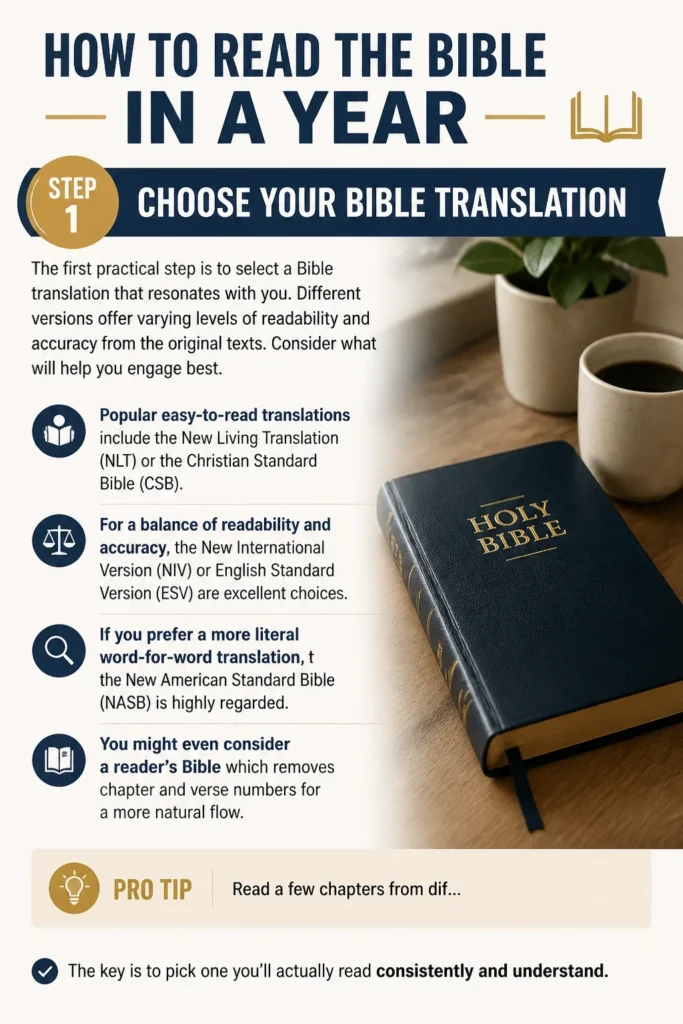
The key is to pick one you’ll actually read consistently and understand.
Pro Tip: Read a few chapters from different translations online before committing. See which one feels most natural and engaging to your personal reading style. Many Bible apps offer multiple versions.
Step 2: Select a Reading Plan
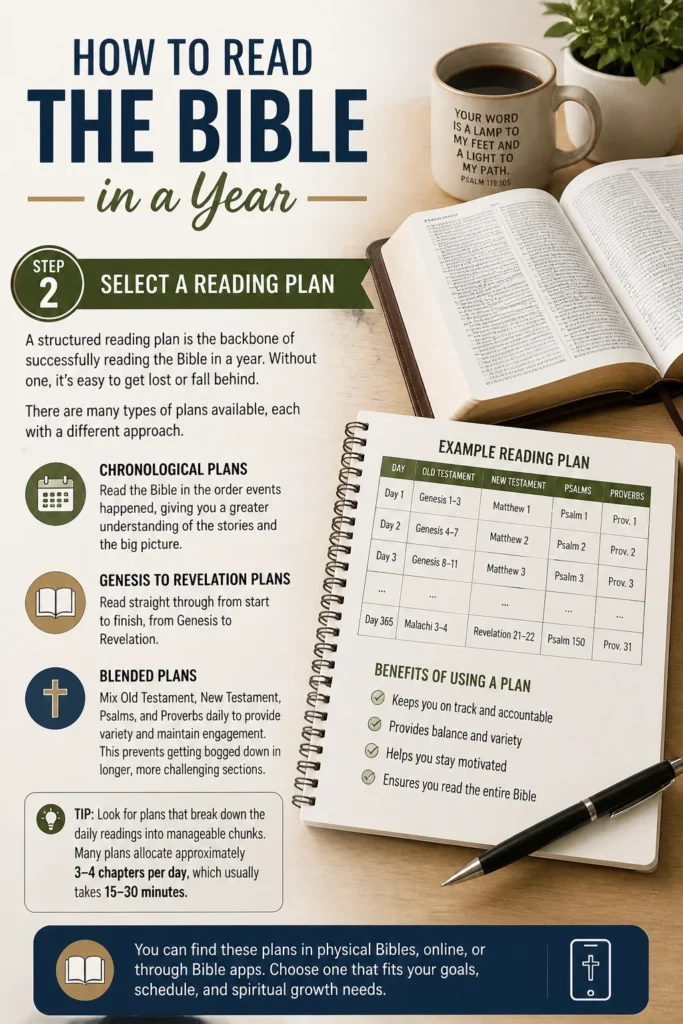
A structured reading plan is the backbone of successfully reading the Bible in a year. Without one, it’s easy to get lost or fall behind. There are many types of plans available, each with a different approach.
Some plans read chronologically, following the historical order of events. Others are designed to read through the entire Bible from Genesis to Revelation. Many popular plans mix Old Testament, New Testament, Psalms, and Proverbs daily to provide variety and maintain engagement. This prevents getting bogged down in longer, more challenging sections.
Look for plans that break down the daily readings into manageable chunks. Many plans allocate approximately 3-4 chapters per day, which usually takes 15-30 minutes. You can find these plans in physical Bibles, online, or through Bible apps. Print it out or save it digitally to track your progress.
The goal is to find a plan that you can realistically stick to every day.
Step 3: Set Your Daily Schedule
Consistency is paramount when committing to reading the Bible daily. Establish a specific time each day for your reading, treating it like any other important appointment. This could be first thing in the morning, during your lunch break, or before bed.
Choose a time when you are least likely to be interrupted and can focus. Make this time sacred and protect it from other demands. Even just 15-20 minutes consistently makes a huge difference over a year.
If your schedule varies, identify a few flexible windows you can use. The exact time is less important than making it a non-negotiable part of your day.
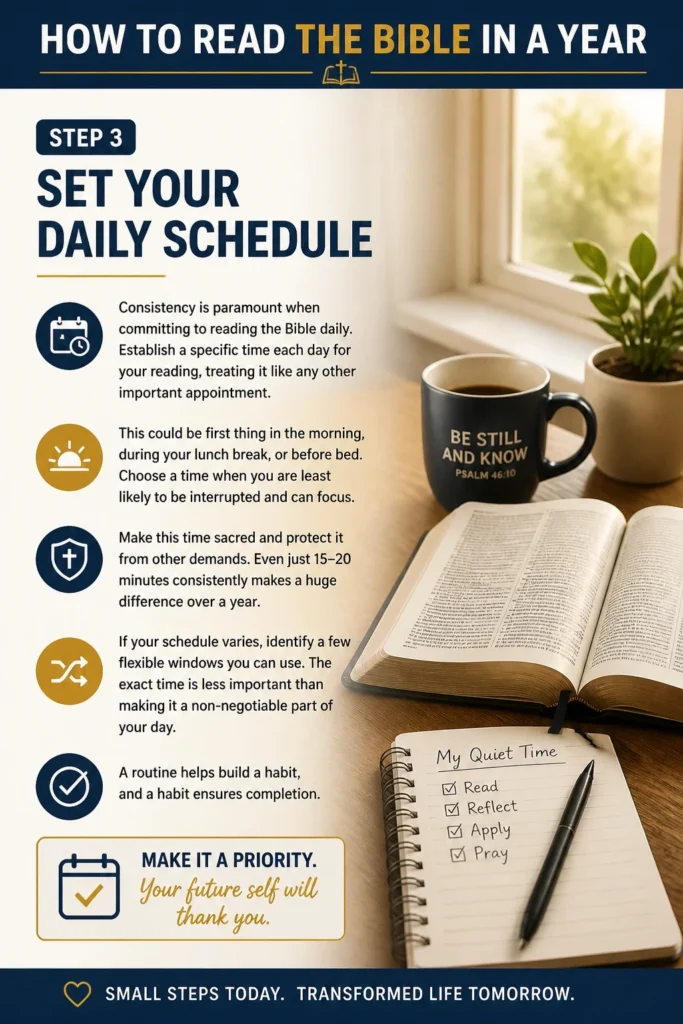
A routine helps build a habit, and a habit ensures completion.
Step 4: Gather Your Tools and Create Your Space
Before you begin, ensure you have everything you need readily accessible. This includes your chosen Bible translation, your reading plan, a journal, and a pen. Having a dedicated space for your reading can also be incredibly helpful.
Find a quiet, comfortable spot where you can minimize distractions. This might be a specific chair, a corner of your home, or even a local park bench. The environment should invite focus and reflection.
Consider having a cup of coffee or tea nearby to make the experience more enjoyable and settled.
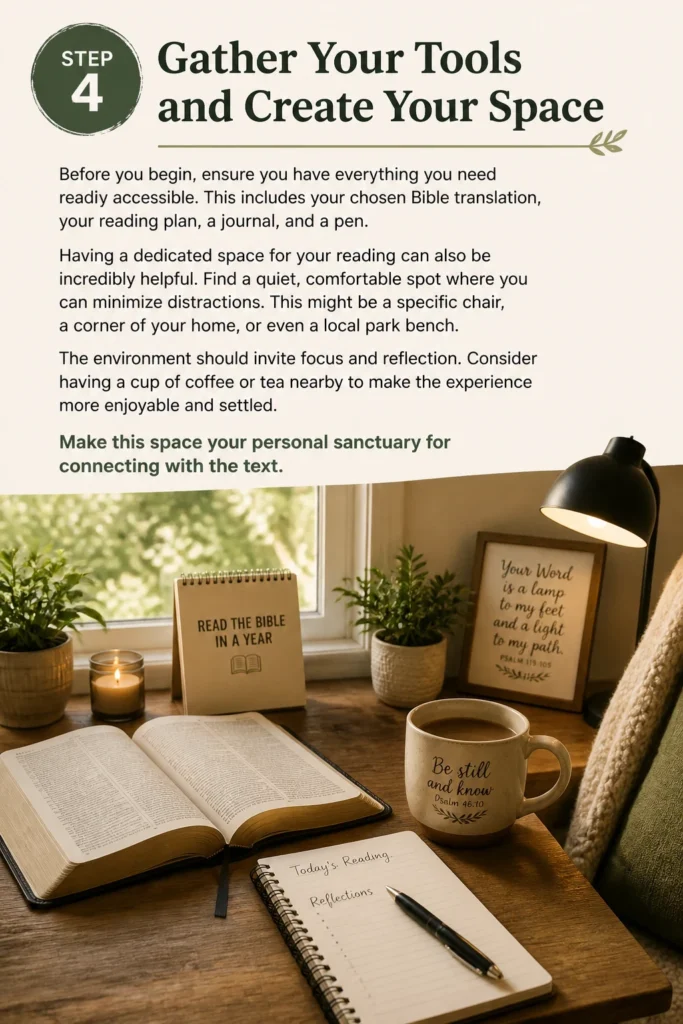
Make this space your personal sanctuary for connecting with the text.
Step 5: Engage with the Text Actively
Reading the Bible isn’t just about passively consuming words; it’s about active engagement. Don’t just rush through the chapters to check them off your list. Take time to truly absorb what you are reading.
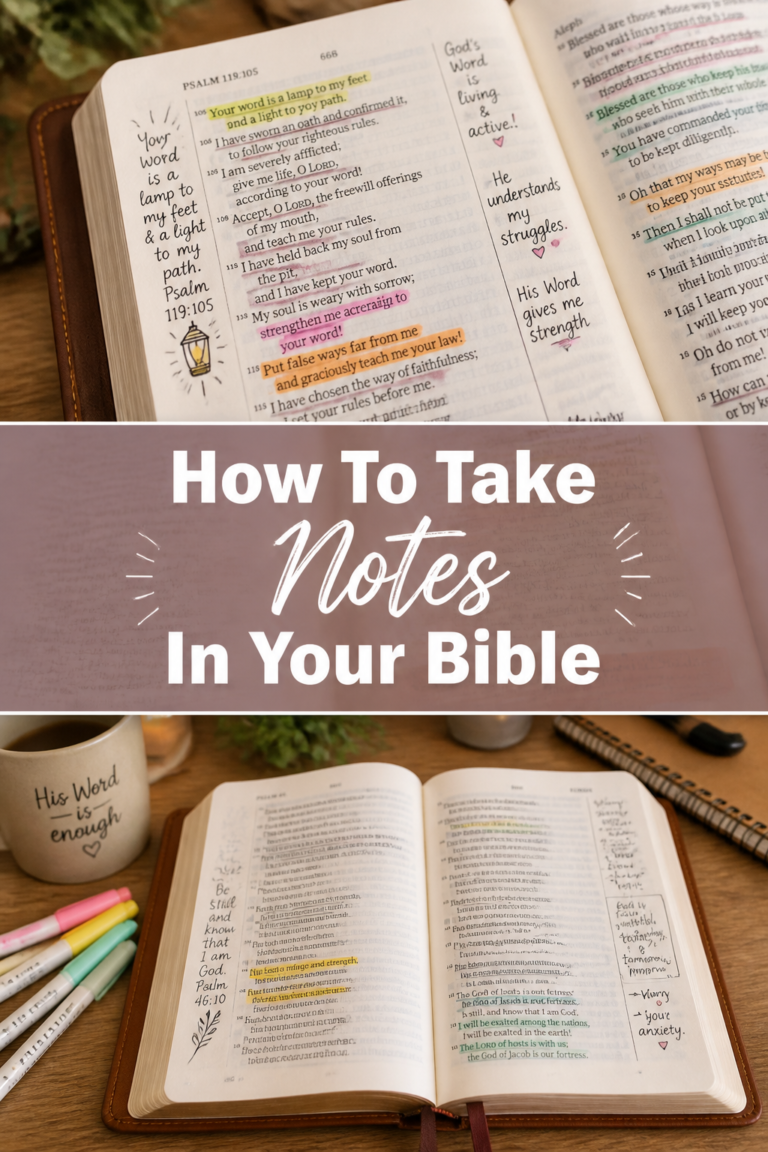
As you read, underline verses that stand out to you. Highlight key themes or repeated phrases. Write notes in the margins of your Bible or in your journal about questions that arise, insights you gain, or ways the text applies to your life. Pray before you begin, asking for understanding and wisdom.
Consider using the S.O.A.P. method: Scripture (write it out), Observation (what do you see?), Application (how does it apply?), Prayer (pray about it).
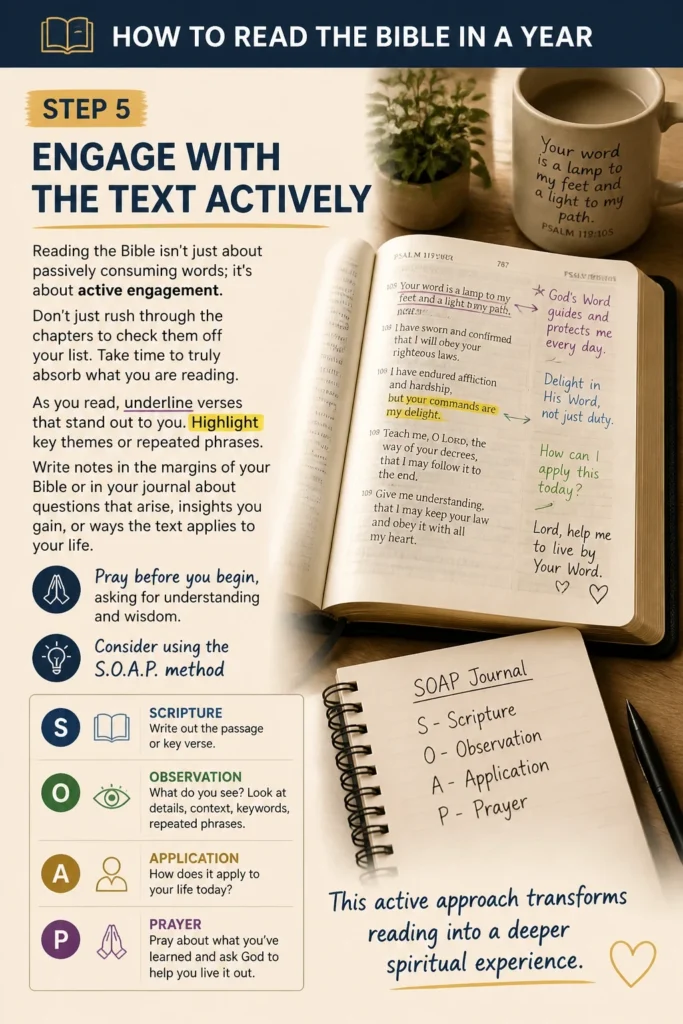
This active approach transforms reading into a deeper spiritual experience.
Step 6: Embrace Flexibility and Forgiveness
Life happens, and you will inevitably miss a day or two of reading. Do not let this derail your entire plan. The biggest mistake is to give up because you fell behind.
Instead, forgive yourself and simply pick up where you left off the next day. Don’t try to catch up on all the missed readings at once, as this can feel overwhelming. Most plans have built-in catch-up days or allow for some flexibility.
Focus on consistency going forward rather than perfection in the past.
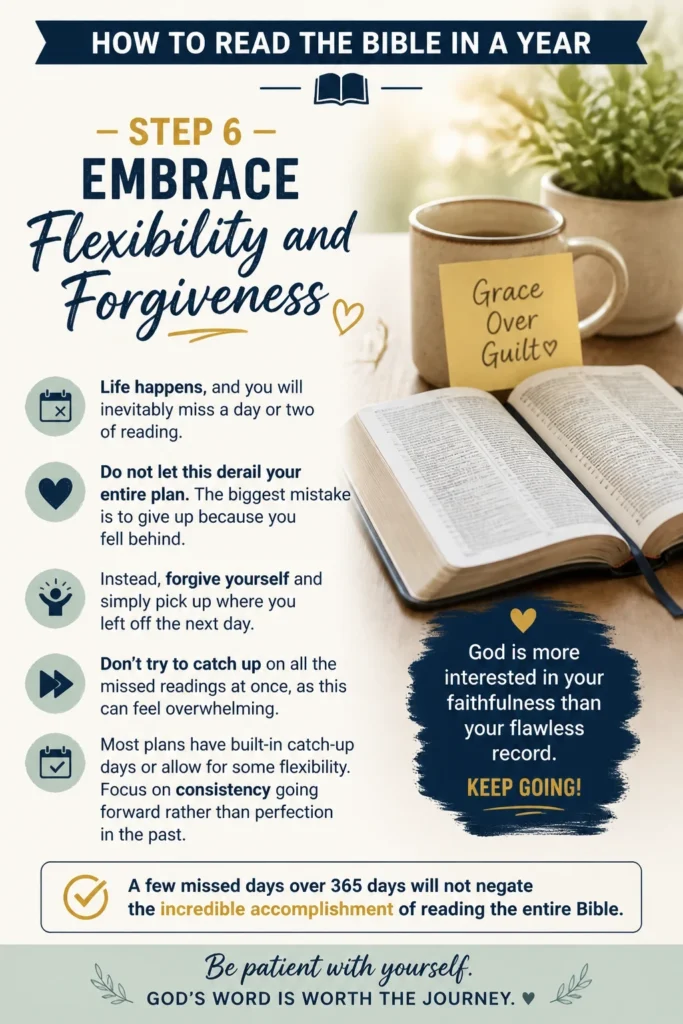
A few missed days over 365 days will not negate the incredible accomplishment of reading the entire Bible.
Step 7: Find Community and Accountability
While Bible reading is a personal journey, it doesn’t have to be a solitary one. Sharing your experience with others can provide encouragement, accountability, and deeper insights. Find a friend, family member, or small group who is also reading the Bible or interested in starting.
Discuss what you are reading, share your thoughts, and ask questions. This external motivation can be incredibly powerful when your internal motivation wanes. You might even join an online community or forum dedicated to Bible reading.
Having someone to share your struggles and triumphs with makes the journey richer and more sustainable.
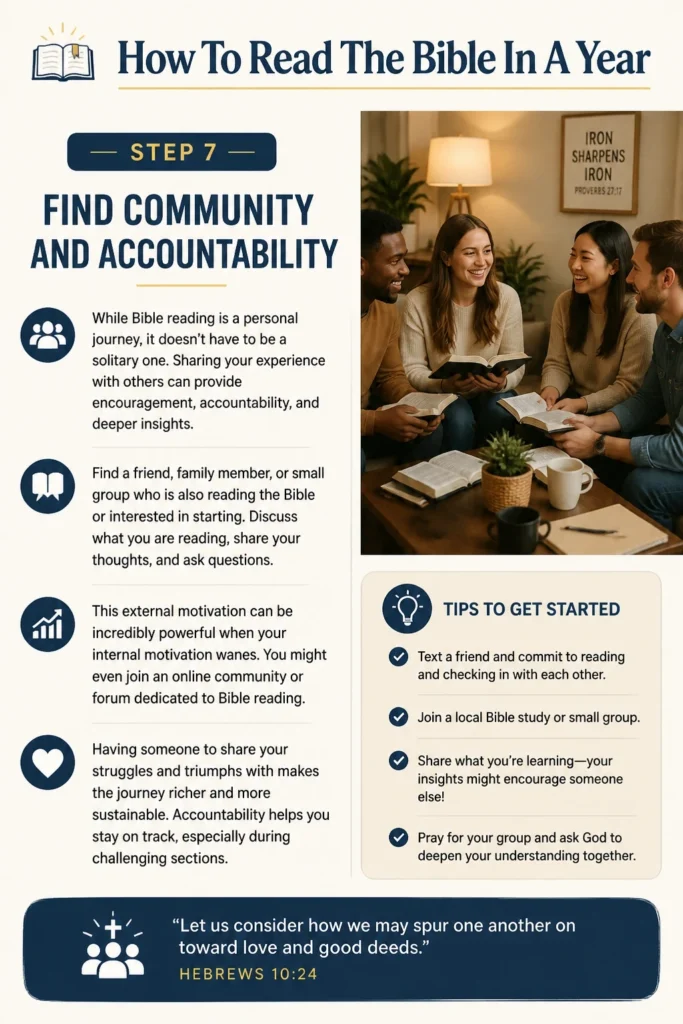
Accountability helps you stay on track, especially during challenging sections.
Common Mistakes to Avoid
Trying to Understand Everything
Many people get bogged down by trying to perfectly understand every verse, historical context, or theological nuance on their first read-through. The Bible is a vast, ancient text, and complete understanding takes years of study. Your first year is about exposure.
Instead, focus on grasping the main narrative and key themes. Accept that some parts will be confusing, and that’s okay. Mark those sections and revisit them later, perhaps with a study Bible or commentary. The goal is to finish the entire text, building a foundational familiarity.
Getting Behind and Giving Up
The most common reason people fail to read the Bible in a year is falling behind on their daily readings and then feeling too overwhelmed to continue. They might think, “I missed three days, now I have to read twelve chapters today!” This quickly leads to burnout.
Do not try to catch up on every single missed day. If you miss a day, simply pick up on the current day’s reading from your plan. Over the course of a year, skipping a few readings here and there will not significantly impact your overall progress or understanding. Consistency moving forward is more important than perfect adherence to a schedule.
Reading Without Reflection or Prayer
Approaching the Bible solely as a historical or literary text misses its primary purpose. It’s meant to be a living word that speaks to your heart and life. Reading without prayer or time for reflection often leaves people feeling dry or unimpacted.
Before you read, pause and ask God to open your mind and heart to His word. After reading, take a few moments to reflect on what you’ve read. How does it apply to you? What is God saying? Journaling can be a powerful tool for this reflection. This turns mere reading into a spiritual encounter.
Troubleshooting
I’m Falling Behind on My Plan
It’s a very common experience to miss days. Do not let this discourage you from continuing. The best approach is not to try and “catch up” on all the missed readings, which can feel daunting and lead to giving up entirely.
Instead, simply pick up your reading plan on the current day. You might miss a few chapters or even a few books, but you will still have read the vast majority of the Bible in a year. Consistency from today forward is more valuable than perfect adherence to the past schedule.
The Reading Feels Dry or Confusing
There will be sections of the Bible that are harder to read, such as long genealogies, detailed laws, or complex prophetic visions. When you encounter these, remember that not every passage will resonate deeply every day. It’s part of the journey.
Try reading a different translation for that section, or look up a brief summary online to get the main idea. Don’t dwell too long on parts that are overly confusing; move forward with the plan. Remember to pray for understanding and ask the Holy Spirit to illuminate the text for you.
I’m Losing Motivation to Continue
Motivation naturally ebbs and flows throughout any long-term project. When you feel your motivation slipping, remind yourself of your original purpose for starting this journey. Think about the spiritual growth and understanding you’ve already gained.
Reconnect with your accountability partner or group. Read a devotional that encourages perseverance. Take a day off from your plan if needed, but commit to returning the next day. Sometimes, simply reading a beloved Psalm or New Testament passage can rekindle your desire.
Key Takeaways
- Choose a Bible translation you understand and enjoy reading.
- Select a structured reading plan to guide your daily progress.
- Establish a consistent daily schedule and protect your reading time.
- Engage actively with the text through prayer, highlighting, and journaling.
- Embrace flexibility; if you miss a day, simply pick up on the current day’s reading.
- Seek community for encouragement and accountability on your journey.
Frequently Asked Questions
What if I miss a day or a week of reading?
Don’t panic and don’t give up! The most important thing is to simply resume your reading plan on the current day. Trying to catch up on a large backlog often leads to feeling overwhelmed and abandoning the plan altogether. Consistency moving forward is more beneficial than perfect adherence to a past schedule.
Which Bible translation is best for a beginner?
For beginners, translations like the New Living Translation (NLT), Christian Standard Bible (CSB), or New International Version (NIV) are often recommended. They balance accuracy with readability, making the text more accessible. The best translation is ultimately the one you will consistently read and understand.
Can I start reading the Bible in a year at any time, or only on January 1st?
You can absolutely start reading the Bible in a year at any time! While many plans are designed to begin on January 1st, simply adjust the start date. If you begin in March, your year will conclude the following March. The spiritual benefits are the same regardless of your start date.
Is a physical Bible better than a Bible app?
Both physical Bibles and Bible apps have their advantages. A physical Bible allows for highlighting and margin notes, reducing screen time, and minimizing digital distractions. A Bible app offers convenience, multiple translations, and often integrated reading plans and commentaries. Choose what works best for your personal preference and lifestyle.
Our Top Recommended Finds
- NIV Study Bible: Offers helpful notes, maps, and articles alongside the text to aid understanding, especially in challenging passages.
- The Bible in One Year App (e.g., YouVersion): Provides daily readings, various plans, and easy access to multiple translations on your phone or tablet.
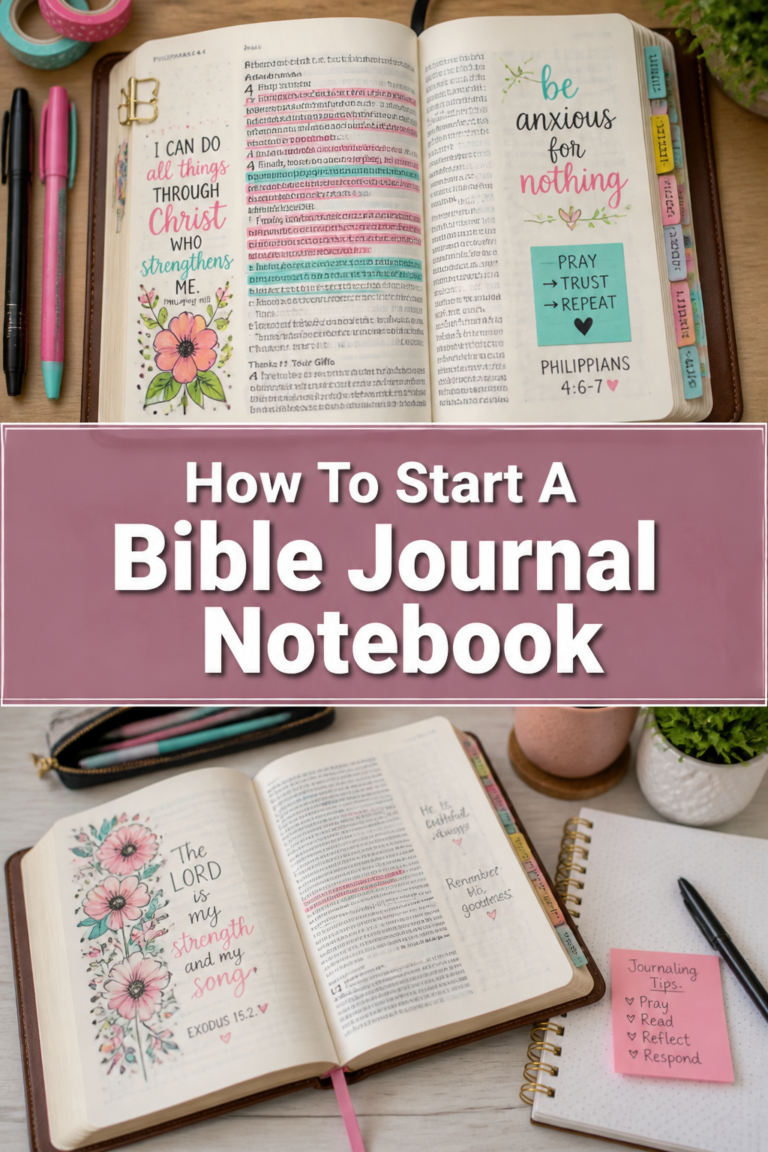
- Dedicated Bible Journal: A blank or guided journal provides space to write down reflections, prayers, and insights gained from your daily reading.
Embrace Your Transformative Year
Reading the Bible in a year is more than just completing a task; it’s an immersive journey into faith, history, and personal growth. It will challenge you, inspire you, and deepen your understanding of the divine narrative.
You now have the practical steps and encouragement to begin this incredible adventure. Don’t wait for the perfect moment or a new year.
Start today, one chapter at a time, and watch how your life and understanding transform. Your year of discovery awaits.