📖 How To Start Reading The Bible For Teens
I remember sitting on my bedroom floor at fourteen, staring at a thick black book with tiny gold-edged pages that felt like a foreign language.
It felt more like a school textbook than a guide to life, and I honestly had no idea where to even open the cover.
This guide is the resource I wish I had back then to make the process feel less like a chore and more like a conversation.

Quick Overview
By the end of this guide, you will have a clear plan to navigate the Bible without feeling overwhelmed or bored.
- Time needed: 10-15 minutes per day
- Difficulty: Beginner
- What you’ll need: A Bible (physical or app), a notebook, and a quiet spot
Step-by-Step Instructions
Step 1: Pick a Translation You Actually Understand
The Bible was not originally written in English, so scholars have translated it in different ways over the years.
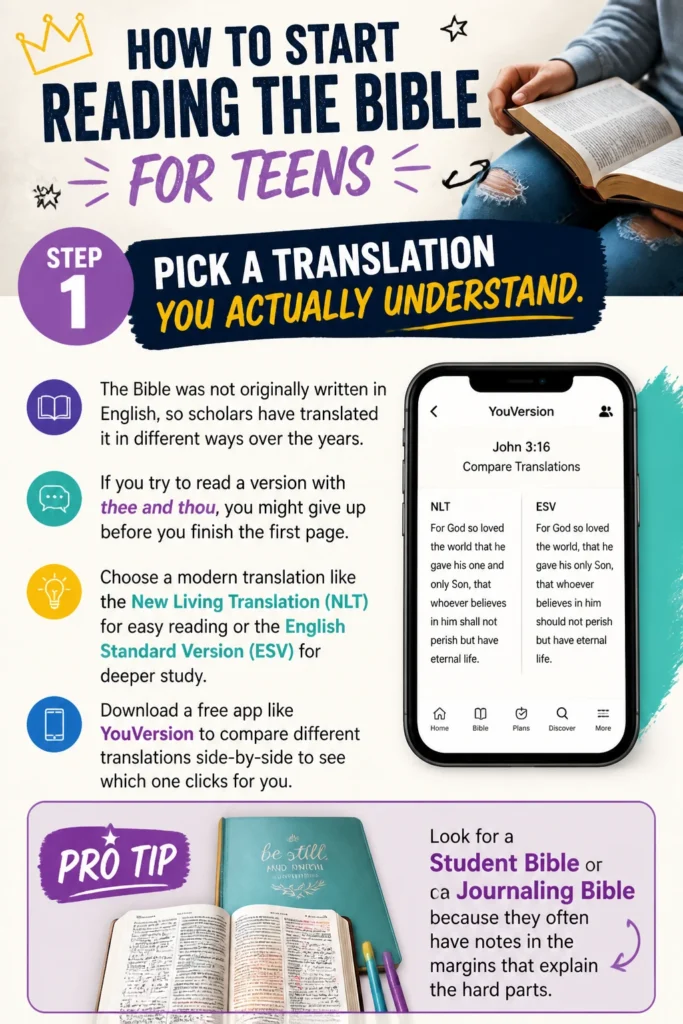
If you try to read a version with “thee” and “thou,” you might give up before you finish the first page.
Choose a modern translation like the New Living Translation (NLT) for easy reading or the English Standard Version (ESV) for deeper study.
Download a free app like YouVersion to compare different translations side-by-side to see which one clicks for you.
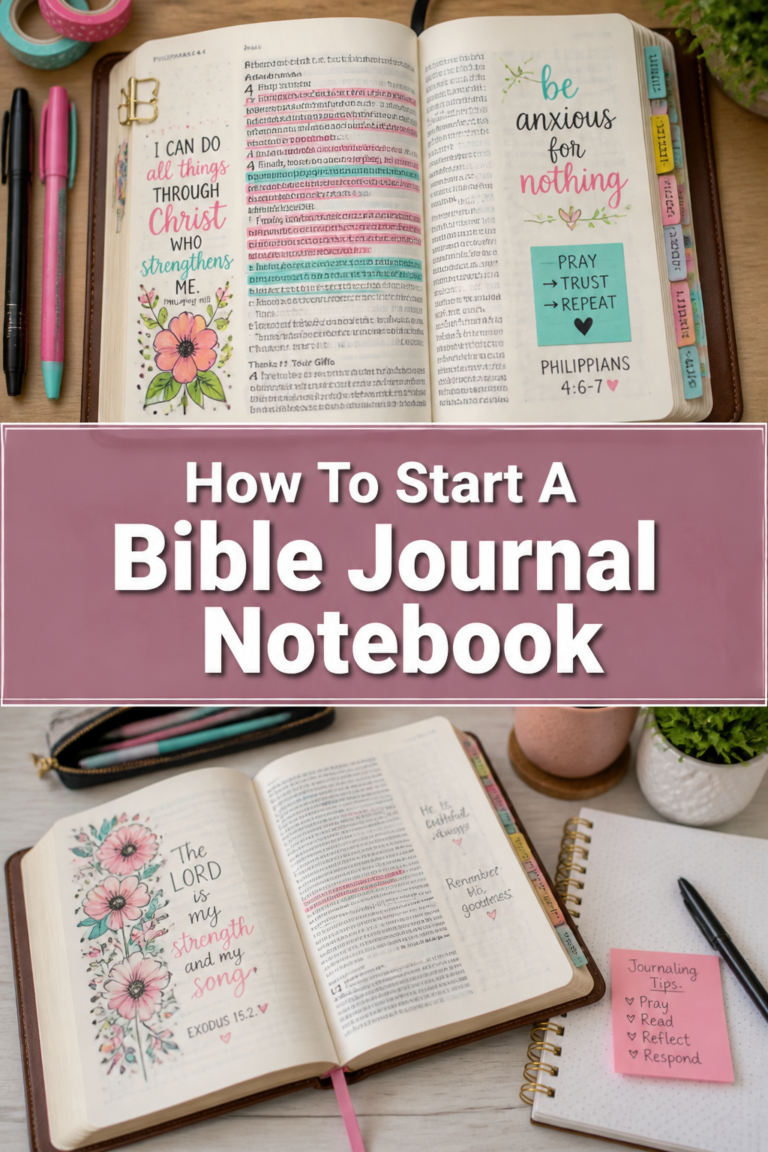
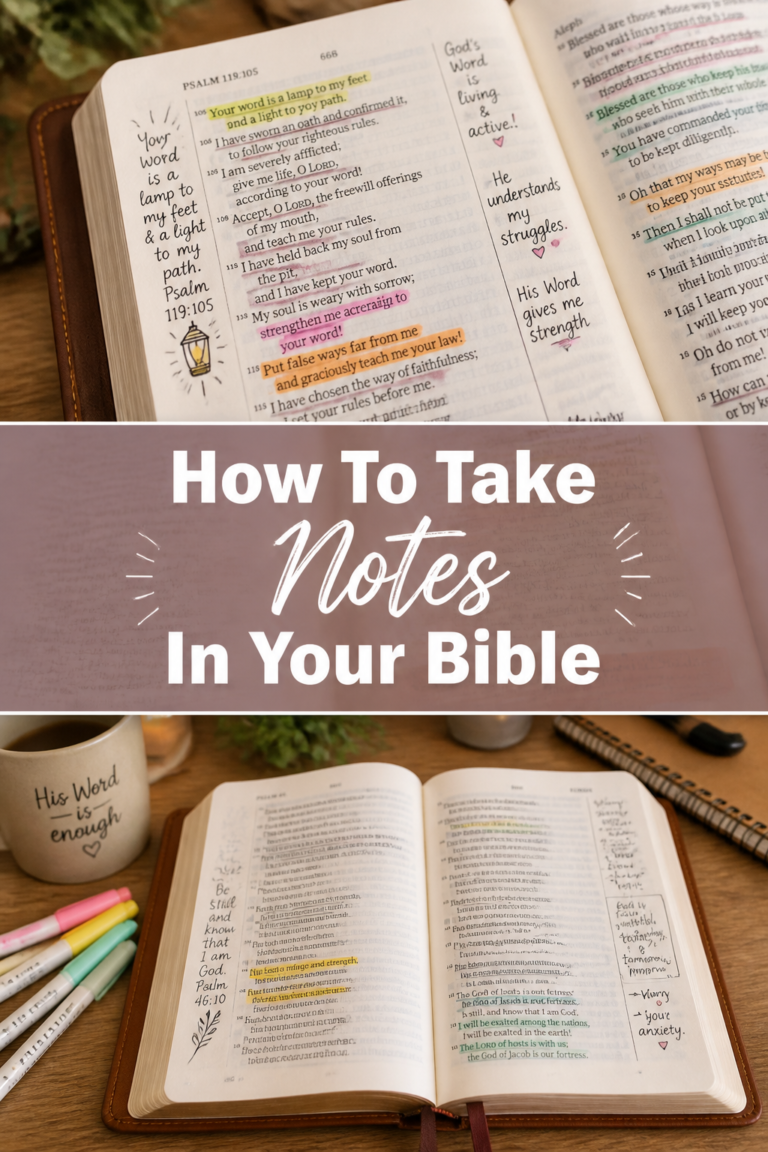
Pro Tip: Look for a “Student Bible” or a “Journaling Bible” because they often have notes in the margins that explain the hard parts.
Step 2: Start in the New Testament
Many people think they have to start on page one, but the book of Genesis is followed by some very long, confusing laws in Leviticus.
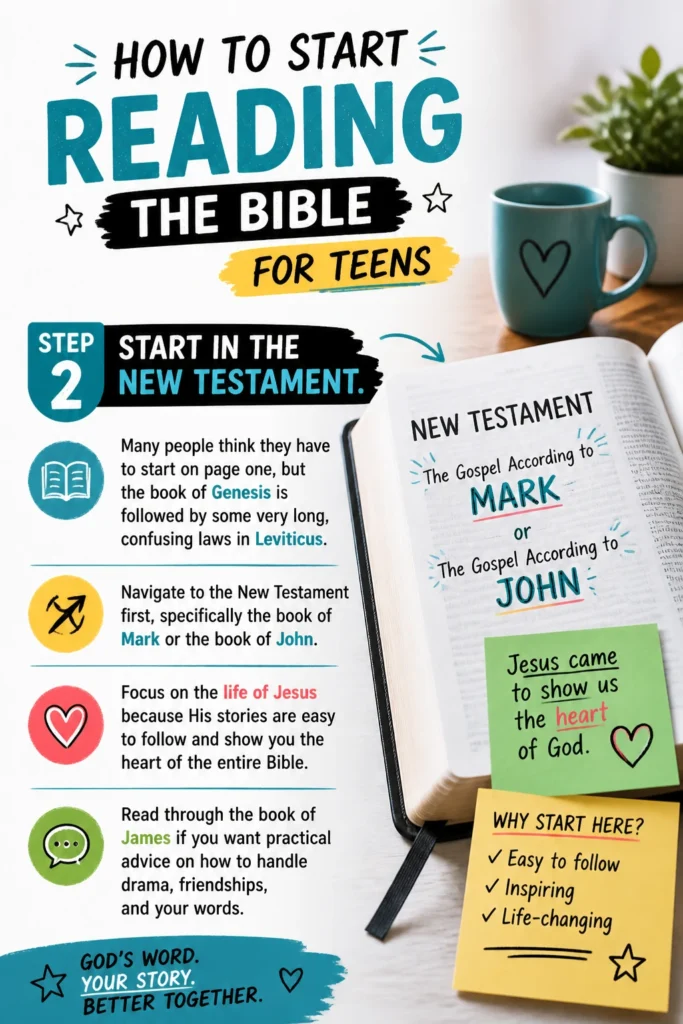
Navigate to the New Testament first, specifically the book of Mark or the book of John.
Focus on the life of Jesus because His stories are easy to follow and show you the heart of the entire Bible.
Read through the book of James if you want practical advice on how to handle drama, friendships, and your words.
Step 3: Create a Comfortable Ritual
If you try to read while you are half-asleep or distracted by your phone notifications, you won’t remember anything.
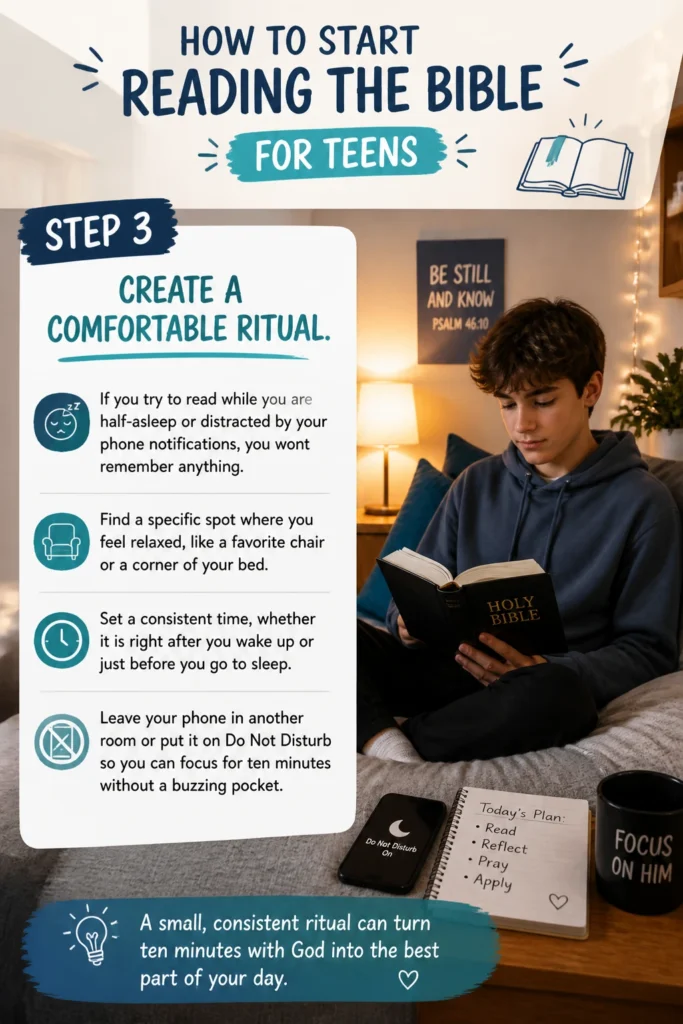
Find a specific spot where you feel relaxed, like a favorite chair or a corner of your bed.
Set a consistent time, whether it is right after you wake up or just before you go to sleep.
Leave your phone in another room or put it on “Do Not Disturb” so you can focus for ten minutes without a buzzing pocket.
Step 4: Use the S.O.A.P. Method
Don’t just scan the words with your eyes; you need a system to help you process what you are reading.
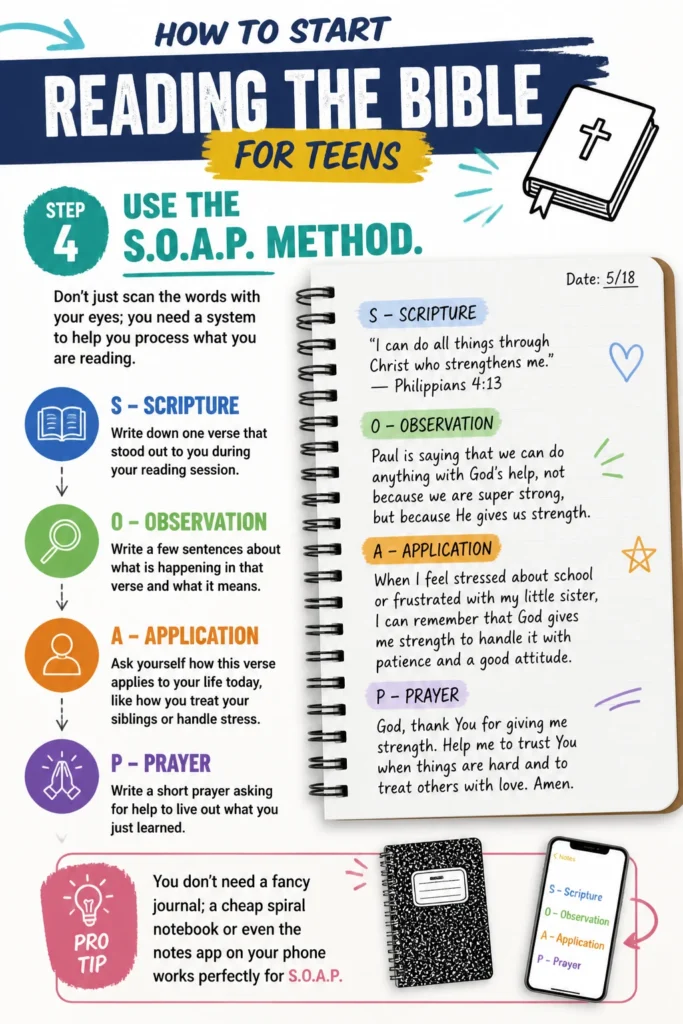
Scripture: Write down one verse that stood out to you during your reading session.
Observation: Write a few sentences about what is happening in that verse and what it means.
Application: Ask yourself how this verse applies to your life today, like how you treat your siblings or handle stress.
Prayer: Write a short prayer asking for help to live out what you just learned.
Pro Tip: You don’t need a fancy journal; a cheap spiral notebook or even the notes app on your phone works perfectly for S.O.A.P.
Step 5: Set a Low Bar for Time
Consistency is much more important than intensity when you are just starting out.
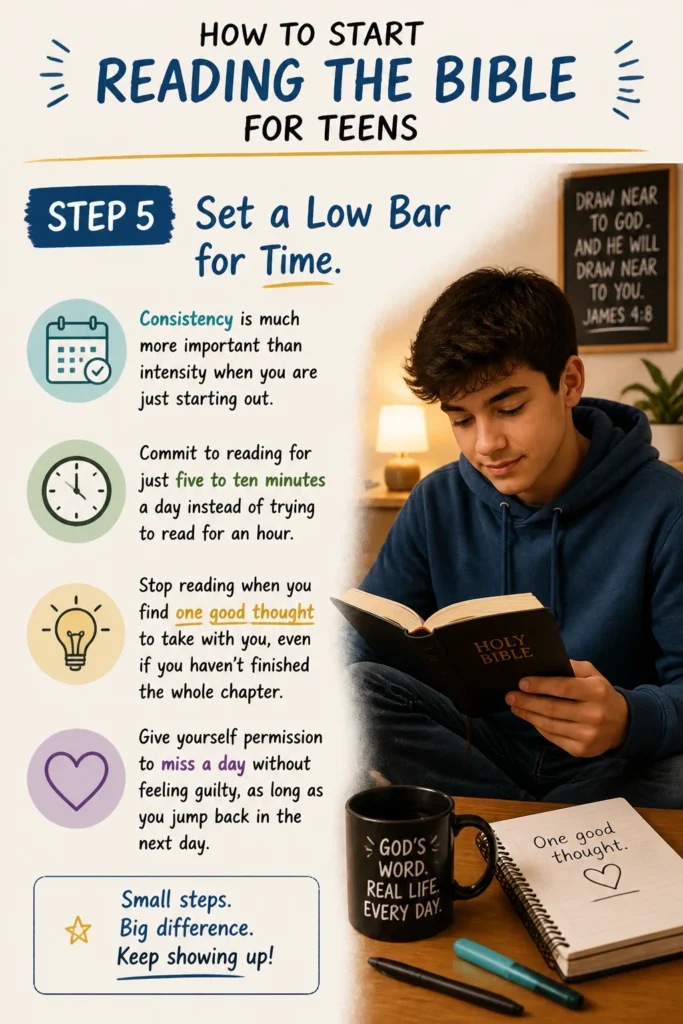
Commit to reading for just five to ten minutes a day instead of trying to read for an hour.
Stop reading when you find one good thought to take with you, even if you haven’t finished the whole chapter.
Give yourself permission to miss a day without feeling guilty, as long as you jump back in the next day.
Step 6: Use a Reading Plan
Staring at a table of contents can be intimidating, so let someone else pick the chapters for you.
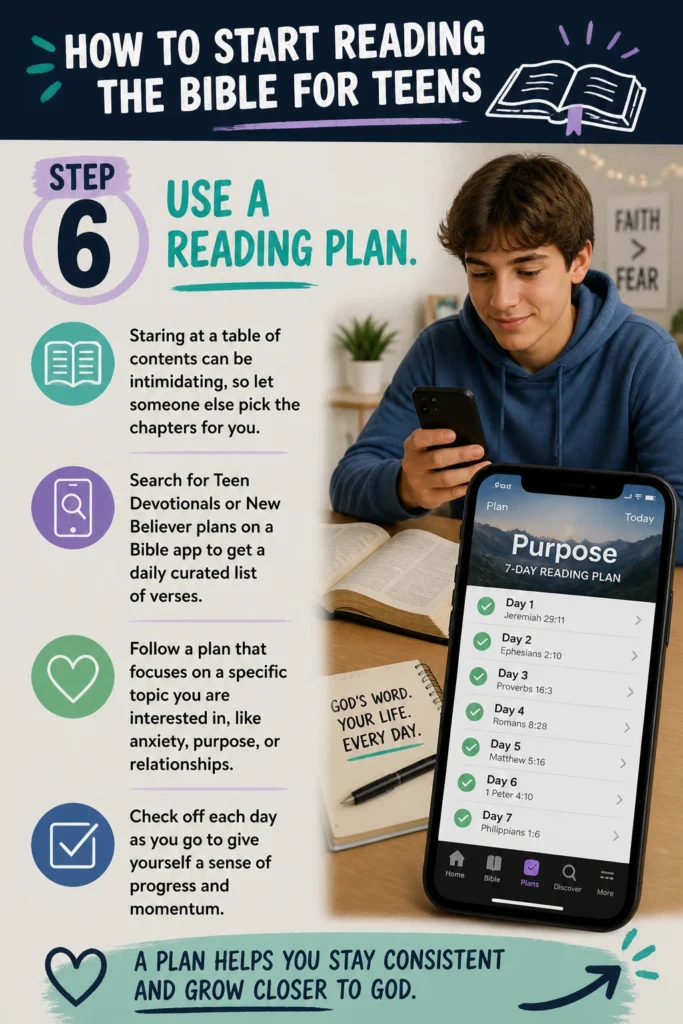
Search for “Teen Devotionals” or “New Believer” plans on a Bible app to get a daily curated list of verses.
Follow a plan that focuses on a specific topic you are interested in, like anxiety, purpose, or relationships.
Check off each day as you go to give yourself a sense of progress and momentum.
Step 7: Talk to Someone About It
The Bible was meant to be discussed in a community, not just read in total isolation.
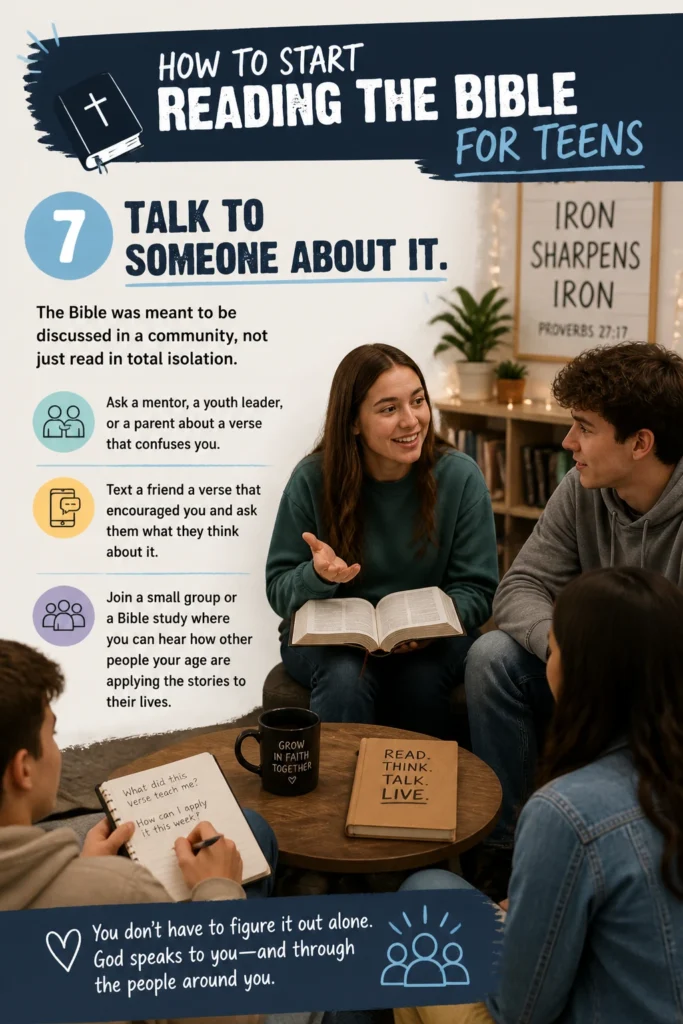
Ask a mentor, a youth leader, or a parent about a verse that confuses you.
Text a friend a verse that encouraged you and ask them what they think about it.
Join a small group or a Bible study where you can hear how other people your age are applying the stories to their lives.
Common Mistakes to Avoid
The “Start at the Beginning” Trap
Most people treat the Bible like a novel and start at Genesis 1:1.
While the beginning is great, you will likely hit a wall when you get to the detailed building instructions for the ancient tabernacle.
It is much better to start with the stories of Jesus and then go back to the Old Testament once you have a foundation.
Reading for “Points”
It is easy to turn Bible reading into a chore that you just want to check off your to-do list.
If you are just rushing through the words to say you did it, you aren’t actually getting anything out of the experience.
Slow down and focus on quality over quantity, even if that means reading only three verses.
Ignoring the Context
Taking one random verse and trying to make it mean whatever you want can lead to a lot of confusion.
Always look at the verses before and after the one you are reading to see who is talking and why.
Understanding the “big picture” helps the individual verses make a lot more sense in your daily life.
Troubleshooting
I Find the Bible Boring
If you feel bored, you might be reading a section that isn’t meant for beginners, or you might be using a translation that is too dry.
Switch to a more “action-heavy” book like Acts, which reads like an adventure story about the early church.
You can also try listening to an audio Bible while you walk or clean your room to change the pace.
I Don’t Understand the Words
The Bible uses some “churchy” words like justification, sanctification, and tabernacle that aren’t used in normal conversation.
Use a Google search or a Bible dictionary to look up words that you don’t recognize.
Don’t feel bad about it; even people who have gone to church for fifty years still have to look things up.
I Keep Forgetting to Read
Life gets busy with sports, homework, and hanging out with friends, so reading often falls to the bottom of the list.
Set an alarm on your phone with a label like “Check the Word” to remind you at a time when you are usually free.
Pair your reading with a habit you already have, like reading while you eat breakfast or right after you brush your teeth.
Key Takeaways
- Start with a modern translation like the NLT or NIV to make the text easy to read.
- Begin your journey in the New Testament, specifically the books of Mark or John.
- Use the S.O.A.P. method to write down what you learn and how to apply it.
- Keep your sessions short (10 minutes) to build a consistent habit without burning out.
- Avoid the frustration of getting stuck in the Old Testament by using a guided reading plan.
- Share what you are learning with a friend or mentor to stay motivated and clear up confusion.
Frequently Asked Questions
Is it okay to read the Bible on my phone?
Yes, reading on your phone is a great way to stay consistent since your phone is always with you.
Just be careful to turn off your notifications so you don’t end up scrolling through social media halfway through a chapter.
What if I disagree with something I read?
It is completely normal to have questions or feel uncomfortable with certain parts of the Bible.
Instead of closing the book, write down your questions and talk them over with someone you trust who has studied the Bible longer than you.
Do I have to read the Bible every single day?
There is no “rule” that says you have to read every day, but doing it daily helps you grow faster.
Think of it like practice for a sport; the more you show up, the more natural and helpful it becomes.
What is the best book of the Bible for a teen?
The book of Proverbs is excellent because it contains 31 short chapters filled with “life hacks” for wisdom.
The book of Philippians is also great because it focuses on finding joy and peace even when things are going wrong.
Our Top Recommended Finds
- The Jesus Bible (NIV): This Bible includes extra articles that show how every story in the Bible points back to Jesus.
- Hosanna Revival Journaling Bibles: These have beautiful covers and wide margins specifically designed for you to draw or write notes as you read.
- The Bible App (YouVersion): A free tool that gives you access to hundreds of translations and reading plans tailored for teenagers.
Leveling Up Your Faith Journey
Starting a new habit is always the hardest part, but you have already taken the first step by learning how to do it right.
Don’t worry about being perfect or understanding every single mystery hidden in the pages right away.
The goal is simply to get to know God a little bit better today than you did yesterday.
Pick up your Bible today, find the book of Mark, and just read the first ten verses to see what happens.