✍️ How To Write A Book For Beginners Ideas
Thinking about writing a book can feel like staring up at a mountain. It seems huge, complex, and maybe even impossible.
I remember feeling that exact way, with a head full of stories but no idea how to get them onto the page. This guide is built from that experience, offering clear steps to turn your ideas into a finished manuscript.
You absolutely have a story worth telling, and this guide will show you how to begin that exciting journey.
Quick Overview
This guide will equip you with the foundational steps to move from a vague book idea to a structured plan, ready for you to start writing your first draft.
- Time needed: 3-6 months (for a first draft, depending on daily commitment)
- Difficulty: Beginner
- What you’ll need: A computer or notebook, internet access, dedicated time, and a spark of imagination.
Step-by-Step Instructions
Step 1: Discover Your Core Idea
Every book begins with an idea, a tiny spark that captures your interest. Don’t overthink this initially; just let your mind wander.
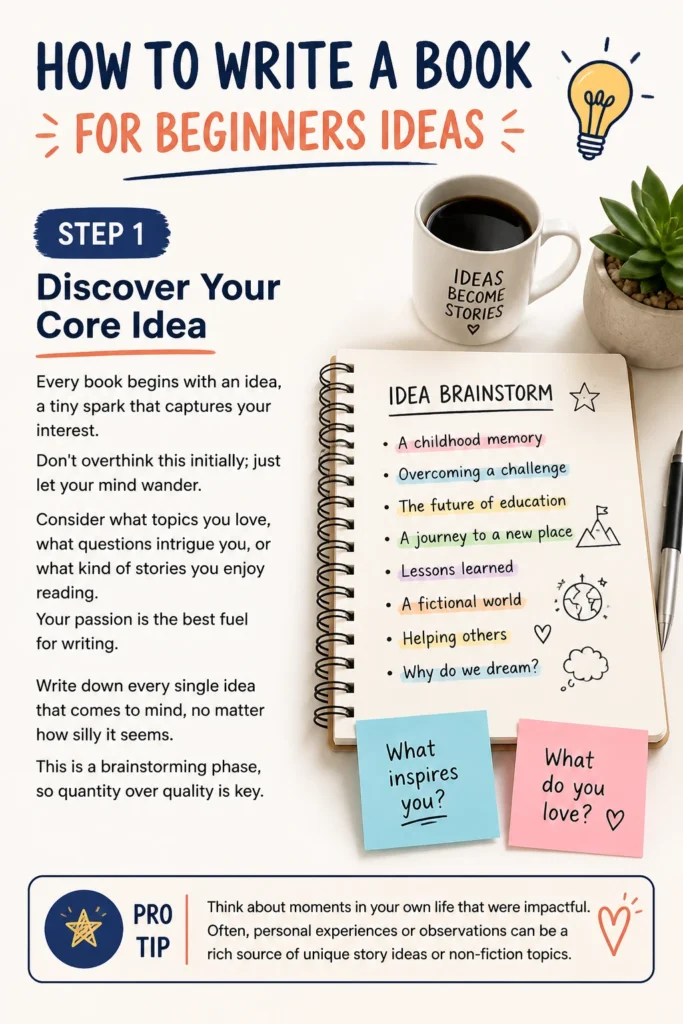
Consider what topics you love, what questions intrigue you, or what kind of stories you enjoy reading. Your passion is the best fuel for writing.
Write down every single idea that comes to mind, no matter how silly it seems. This is a brainstorming phase, so quantity over quality is key.
Pro Tip: Think about moments in your own life that were impactful. Often, personal experiences or observations can be a rich source of unique story ideas or non-fiction topics.
Step 2: Define Your Book’s Heart
Once you have a list of ideas, pick the one that excites you most. Now, try to articulate it simply.
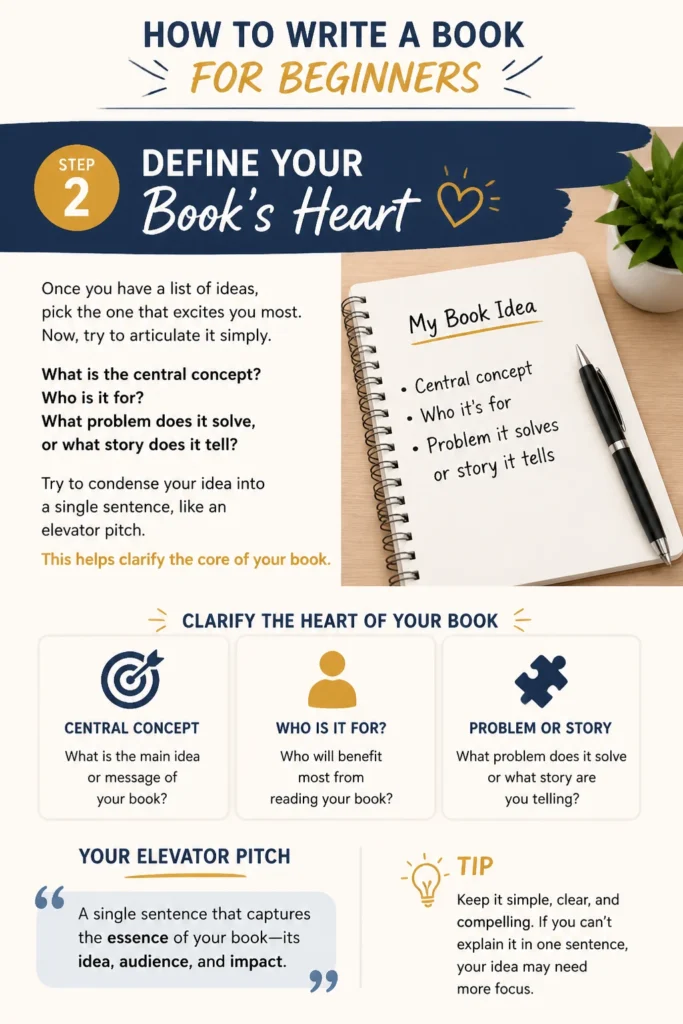
What is the central concept? Who is it for? What problem does it solve, or what story does it tell?
Try to condense your idea into a single sentence, like an “elevator pitch.” This helps clarify the core of your book.
Step 3: Understand Your Audience and Genre
Knowing who you’re writing for shapes every decision you make. Are you writing for young adults, fantasy fans, or business professionals?
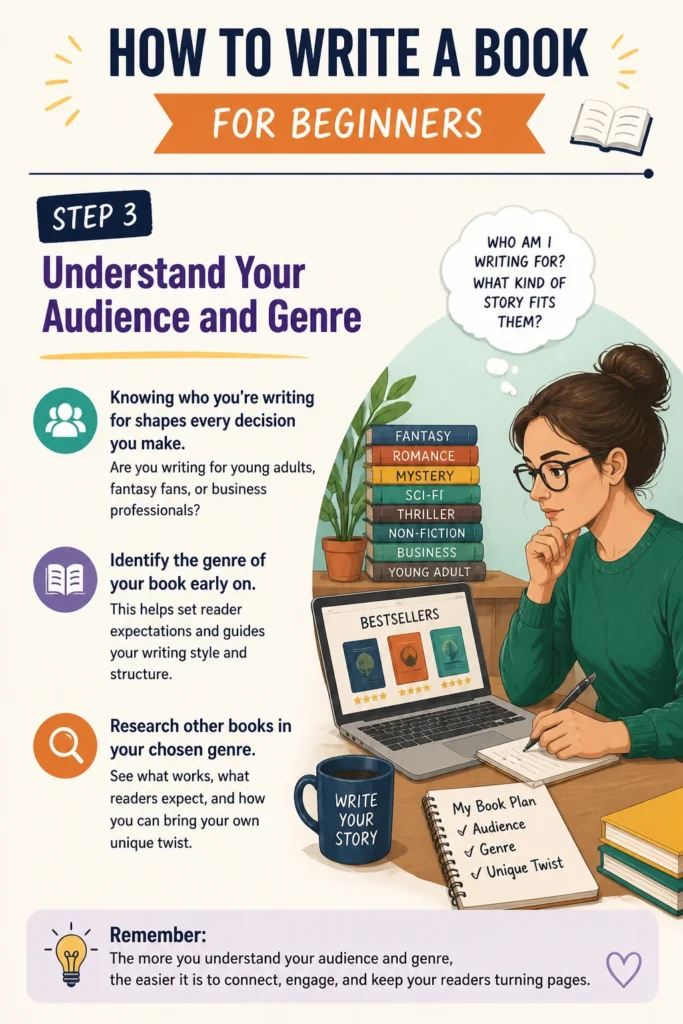
Identify the genre of your book early on. This helps set reader expectations and guides your writing style and structure.
Research other books in your chosen genre. See what works, what readers expect, and how you can bring your own unique twist.
Step 4: Sketch Out Your Structure (Outline)
Even for beginners, a basic outline is incredibly helpful. It’s your book’s roadmap, preventing you from getting lost.
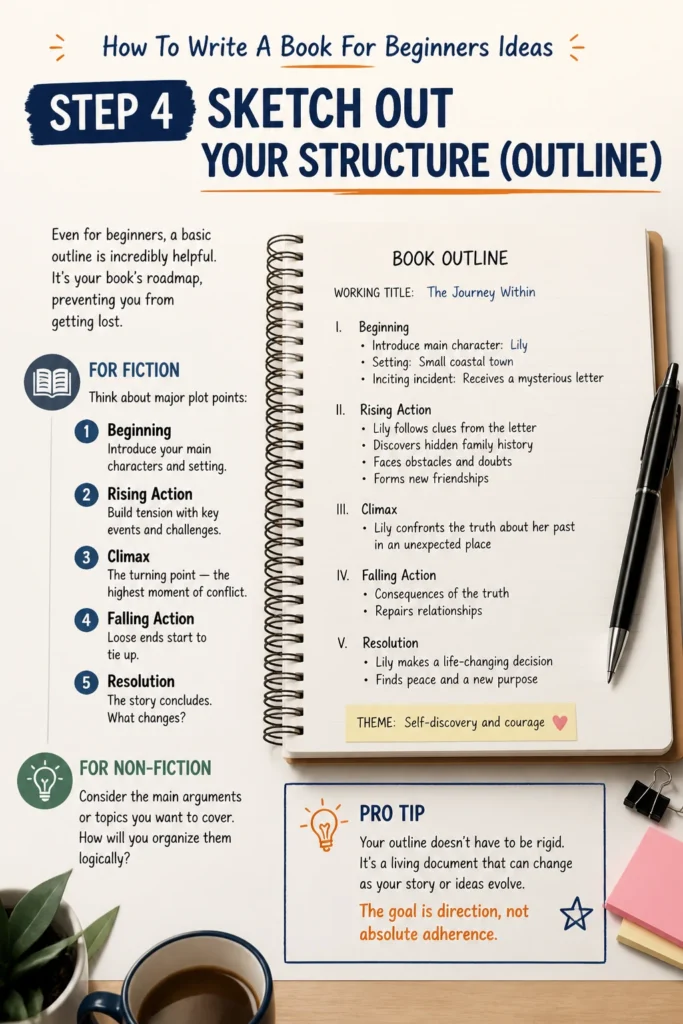
For fiction, think about major plot points: the beginning, rising action, climax, falling action, and resolution. What are the key events?
For non-fiction, consider the main arguments or topics you want to cover. How will you organize them logically?
Pro Tip: Your outline doesn’t have to be rigid. It’s a living document that can change as your story or ideas evolve. The goal is direction, not absolute adherence.
Step 5: Develop Your Characters or Key Concepts
If you’re writing fiction, your characters are the heart of your story. Give them distinct personalities, motivations, and flaws.

Think about what they want, what stands in their way, and how they will change. Even minor characters can add depth.
For non-fiction, define your key concepts or arguments clearly. What evidence or examples will you use to support them?
Step 6: Build Your World (or Context)
Every story, whether fiction or non-fiction, exists within a world or context. Describe this setting vividly.
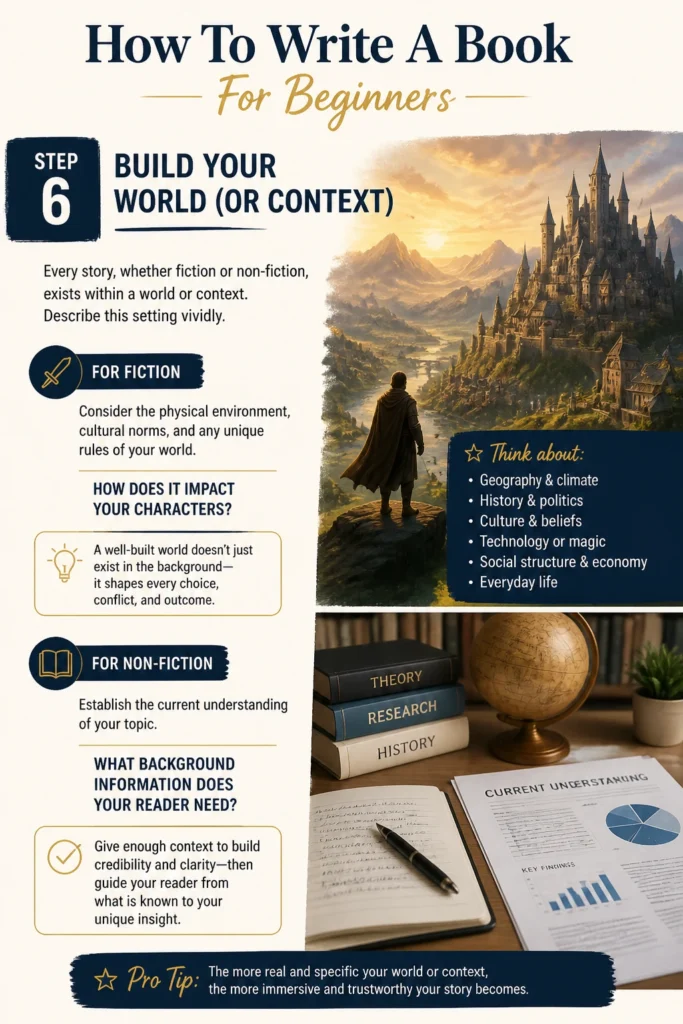
For fiction, consider the physical environment, cultural norms, and any unique rules of your world. How does it impact your characters?
For non-fiction, establish the current understanding of your topic. What background information does your reader need?
Step 7: Start Writing Your First Draft
This is where many beginners get stuck. The most important thing is to simply start writing. Don’t aim for perfection.
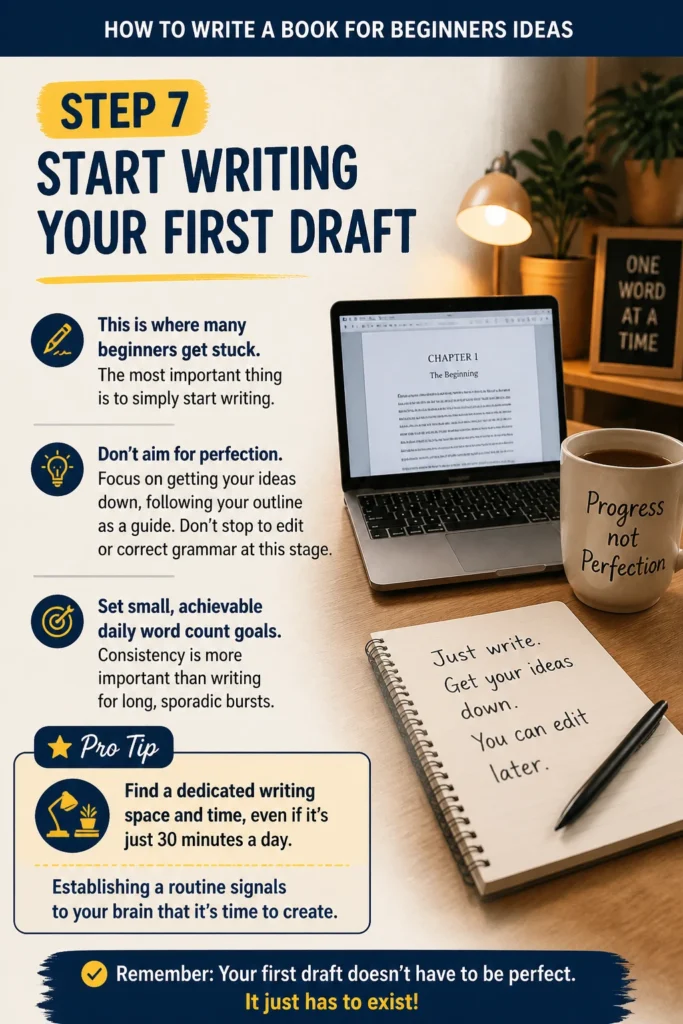
Focus on getting your ideas down, following your outline as a guide. Don’t stop to edit or correct grammar at this stage.
Set small, achievable daily word count goals. Consistency is more important than writing for long, sporadic bursts.
Pro Tip: Find a dedicated writing space and time, even if it’s just 30 minutes a day. Establishing a routine signals to your brain that it’s time to create.
Step 8: Embrace the Messy Middle
Every writer experiences moments of doubt or feeling stuck. This is perfectly normal and part of the process.
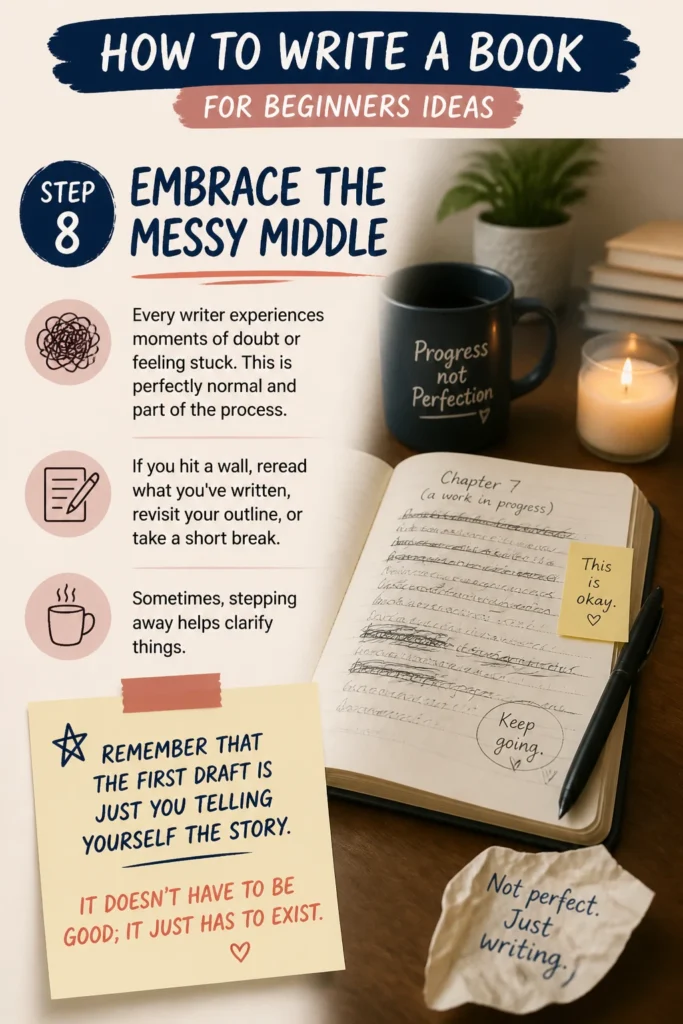
If you hit a wall, reread what you’ve written, revisit your outline, or take a short break. Sometimes, stepping away helps clarify things.
Remember that the first draft is just you telling yourself the story. It doesn’t have to be good; it just has to exist.
Step 9: Complete Your Draft
Push through to the end of your first draft. Reaching “The End” is a massive accomplishment and a crucial step.

Even if the ending feels rushed or imperfect, having a complete manuscript gives you something tangible to work with.
Celebrate this milestone. You’ve done what many only dream of doing.
Step 10: Step Away, Then Review
Once your first draft is complete, take a break from it. A few days, a week, or even a month can give you fresh eyes.

When you return, read through your entire manuscript. Don’t edit heavily yet, just get a sense of the flow, pacing, and overall story or argument.
Make notes about what works well and what needs significant revision. This global review comes before detailed editing.
Common Mistakes to Avoid
Waiting for Inspiration to Strike
Many aspiring writers believe they need to wait for a perfect burst of inspiration to begin. Writing is a discipline, not just a muse.
Relying solely on inspiration often leads to procrastination and never starting. Treat writing like any other task and show up regularly.
Consistency builds momentum, and often, inspiration arrives once you’ve already started working.
Over-Editing During the First Draft
Trying to perfect every sentence as you write slows you down and can kill your creative flow. The goal of the first draft is completion.
Resist the urge to go back and fix typos or rephrase paragraphs. Just get the story or information down from beginning to end.
There will be plenty of time for editing later. Separate the “creator” part of your brain from the “editor” part.
Ignoring an Outline Entirely
While some writers prefer to “pants” (write by the seat of their pants) their first draft, a complete lack of structure can lead to getting lost, plot holes, or rambling.
Even a simple outline provides a framework, helping you maintain focus and ensure your story or argument progresses logically.
You don’t need a detailed, chapter-by-chapter plan, but knowing your major turning points is very beneficial.
Giving Up Too Early
The writing process is long and challenging, filled with moments of doubt and frustration. Many beginners quit when they hit these inevitable roadblocks.
Understand that difficulty is part of the journey for every writer. Push through these moments by reminding yourself of your original motivation.
Persistence is the most valuable trait a writer can possess. Keep going, even when it’s tough.
Troubleshooting
Writer’s Block
If you find yourself stuck and unable to write, it’s a common hurdle. Don’t force yourself to stare at a blank page.
Try a different activity like going for a walk, reading, or listening to music. Sometimes, stepping away helps your subconscious work things out.
You can also try freewriting on a completely unrelated topic for 10 minutes, or skip ahead in your outline to a scene you’re excited to write.
Lack of Motivation
Motivation naturally ebbs and flows throughout a long project. Reconnect with why you started writing this book in the first place.
Reread your favorite passages, look at your outline, or talk about your book with a supportive friend. Remind yourself of the story’s heart.
Set small, achievable goals, like writing just one paragraph or outlining the next scene. Small wins can rebuild momentum.
Feeling Overwhelmed by the Scope
A book can feel like an enormous undertaking, especially for a beginner. Break the project down into much smaller, manageable chunks.
Instead of “write a book,” think “write a chapter,” then “write a scene,” then “write a paragraph.” Focus only on the task immediately in front of you.
Celebrate each small step you complete. This helps reduce the feeling of being overwhelmed and builds confidence.
Key Takeaways
- Your journey begins with a single, clear idea that genuinely excites you.
- An outline acts as your essential roadmap, guiding your writing process and preventing detours.
- Prioritize completing your first draft without editing, focusing solely on getting your story or ideas down.
- Consistency in your writing routine is more impactful than sporadic, lengthy sessions.
- Embrace the challenges and setbacks; they are a normal part of the creative process.
- Believe in your unique voice and the story you have to share with the world.
Frequently Asked Questions
How long should my book be?
Book length varies greatly by genre. A typical novel might be 60,000 to 100,000 words, while non-fiction can range from 40,000 to over 100,000 words. Don’t focus on word count during your first draft; concentrate on telling the complete story or covering your topic thoroughly. You can adjust length later.
Do I need an agent right away?
No, you do not need an agent to start writing. An agent typically comes into play when you are ready to seek traditional publishing, which happens after your manuscript is complete and polished. For now, focus entirely on the writing itself.
Can I write multiple books at once?
While some experienced authors juggle multiple projects, for beginners, it’s generally best to focus on one book at a time. Dividing your attention can slow down progress on all fronts and make it harder to maintain momentum on any single project. Finish one before starting another.
What if my idea isn’t original?
Very few ideas are entirely new. What makes a book original is your unique voice, perspective, and how you tell the story or present the information. Don’t let perceived lack of originality stop you; focus on bringing your personal touch to the concept.
Our Top Recommended Finds
- Quality Notebooks and Pens: Perfect for brainstorming, outlining, or freewriting away from screens.
- Ergonomic Keyboard and Mouse: Essential for comfort during long writing sessions, helping prevent strain.
- A Good Thesaurus and Dictionary (online or physical): Invaluable tools for finding the perfect word and clarifying meanings.
Your Story Awaits
The dream of writing a book is within your grasp. It starts not with a grand gesture, but with a single step, a single idea, and a commitment to your story.
This guide has provided you with a clear path forward, breaking down the intimidating process into manageable actions. You have everything you need to begin.
Don’t wait for the perfect moment. That moment is now. Take your first step today and watch your book take shape.