✍️ How To Write A Book Step By Step
The dream of writing a book lives within many of us.
It’s a significant undertaking, often feeling like a daunting mountain to climb.
Having navigated the journey of writing my own books, I understand the challenges and the immense satisfaction of holding your finished work.
This guide breaks down that mountain into manageable steps, offering a practical path forward.
Quick Overview
This guide will equip you with a clear roadmap to take your book idea from conception to a completed manuscript.
You’ll learn how to structure your thoughts, maintain momentum, and refine your writing.
- Time needed: 6-18 months (highly variable based on daily commitment and book length)
- Difficulty: Intermediate
- What you’ll need: A computer, writing software (e.g., Word, Scrivener), internet access, a quiet workspace, and unwavering dedication.
Step-by-Step Instructions
Step 1: Conceive Your Idea and Define Your Vision
Every great book begins with a compelling idea. This initial stage is about exploring what story you want to tell or what knowledge you want to share.
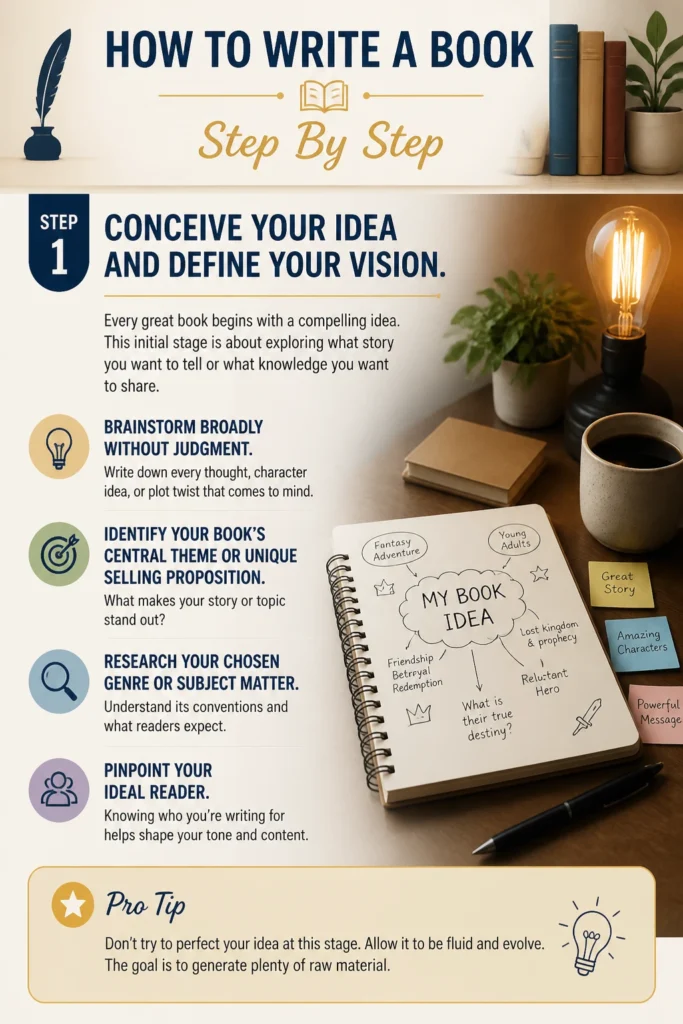
Consider your genre, your target audience, and the core message you wish to convey.
- Brainstorm broadly without judgment. Write down every thought, character idea, or plot twist that comes to mind.
- Identify your book’s central theme or unique selling proposition. What makes your story or topic stand out?
- Research your chosen genre or subject matter. Understand its conventions and what readers expect.
- Pinpoint your ideal reader. Knowing who you’re writing for helps shape your tone and content.
Pro Tip: Don’t try to perfect your idea at this stage. Allow it to be fluid and evolve. The goal is to generate plenty of raw material.
Step 2: Outline Your Story or Content
An outline acts as your book’s blueprint, providing structure and direction.
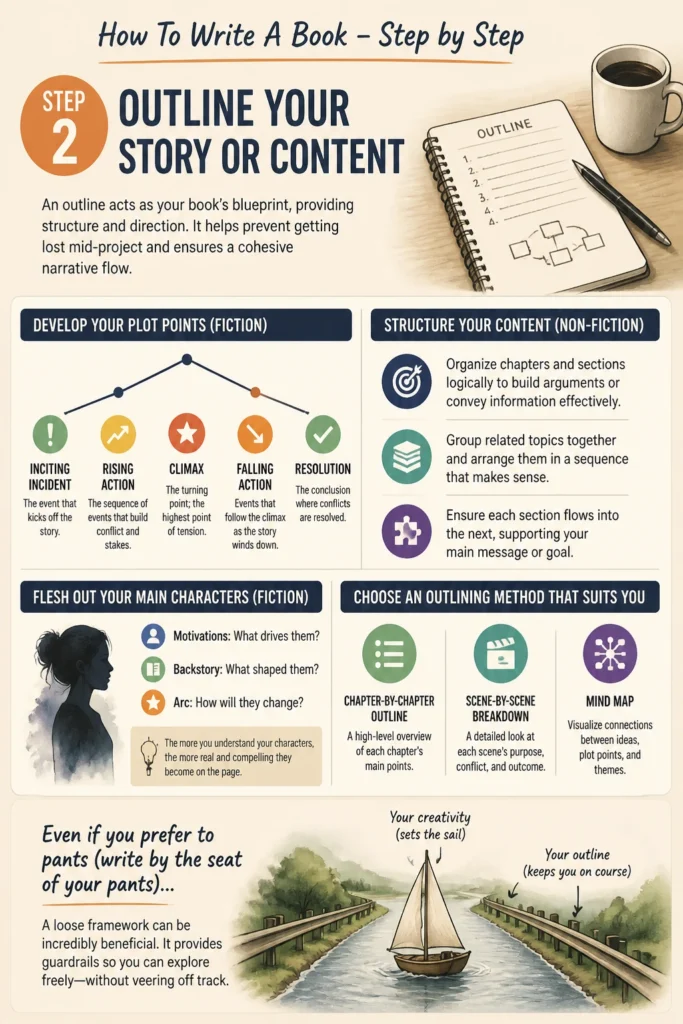
It helps prevent getting lost mid-project and ensures a cohesive narrative flow.
- Choose an outlining method that suits you. This could be a simple chapter-by-chapter list, a detailed scene-by-scene breakdown, or even a mind map.
- Develop your plot points for fiction. Identify the inciting incident, rising action, climax, falling action, and resolution.
- Structure your non-fiction content logically. Organize chapters and sections to build arguments or convey information effectively.
- Flesh out your main characters if writing fiction. Understand their motivations, backstories, and arcs.
Even if you prefer to “pants” (write by the seat of your pants), a loose framework can be incredibly beneficial.
It provides guardrails without stifling creativity.
Step 3: Draft Your Manuscript
This is where you commit words to the page. The primary goal of the first draft is simply to get the entire story or content down.
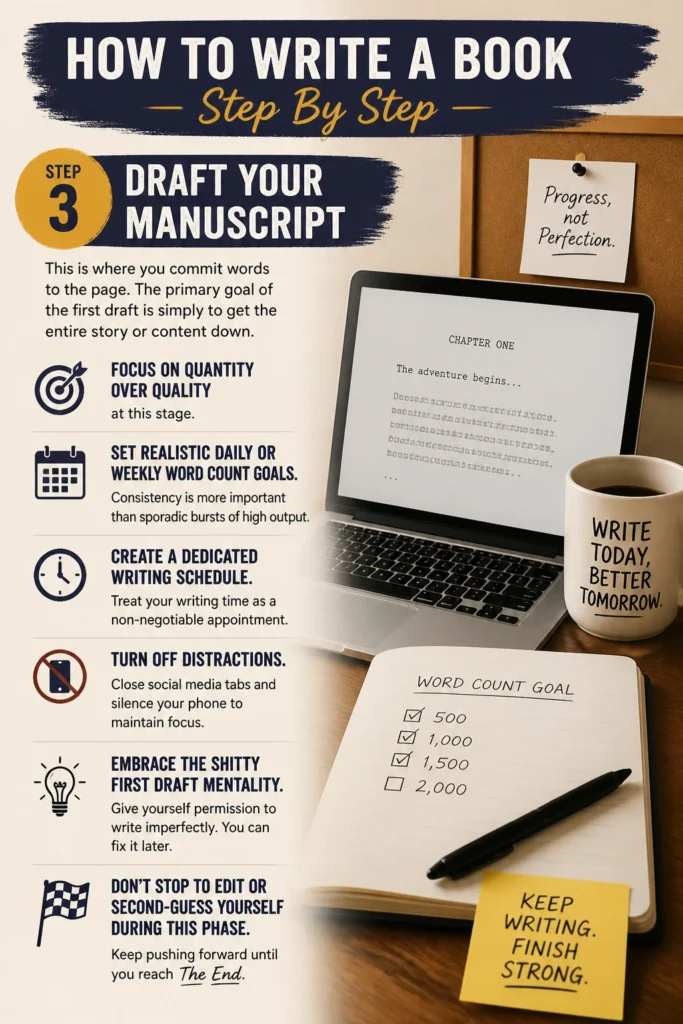
Focus on quantity over quality at this stage.
- Set realistic daily or weekly word count goals. Consistency is more important than sporadic bursts of high output.
- Create a dedicated writing schedule. Treat your writing time as a non-negotiable appointment.
- Turn off distractions. Close social media tabs and silence your phone to maintain focus.
- Embrace the “shitty first draft” mentality. Give yourself permission to write imperfectly. You can fix it later.
Don’t stop to edit or second-guess yourself during this phase.
Keep pushing forward until you reach “The End.”
Step 4: Take a Break and Reread
Once your first draft is complete, step away from it. This break is crucial for gaining fresh perspective.
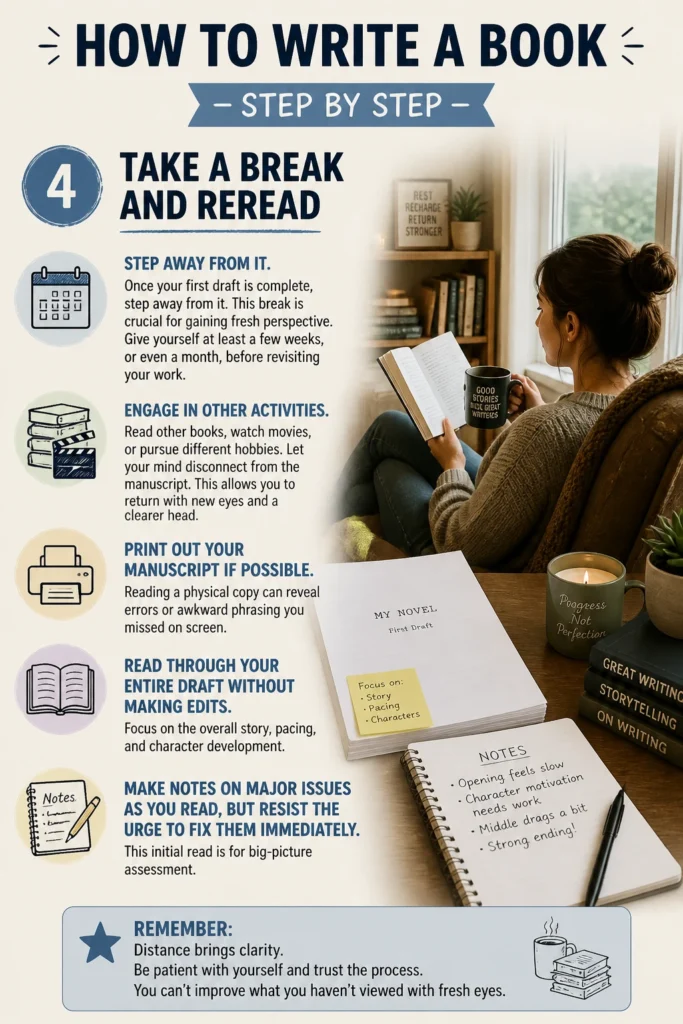
Give yourself at least a few weeks, or even a month, before revisiting your work.
- Engage in other activities. Read other books, watch movies, or pursue different hobbies.
- Let your mind disconnect from the manuscript. This allows you to return with new eyes and a clearer head.
- Print out your manuscript if possible. Reading a physical copy can reveal errors or awkward phrasing you missed on screen.
- Read through your entire draft without making edits. Focus on the overall story, pacing, and character development.
Make notes on major issues as you read, but resist the urge to fix them immediately.
This initial read is for big-picture assessment.
Step 5: Revise and Refine
Now comes the heavy lifting of revision. This stage involves making significant changes to improve the overall structure and impact of your book.
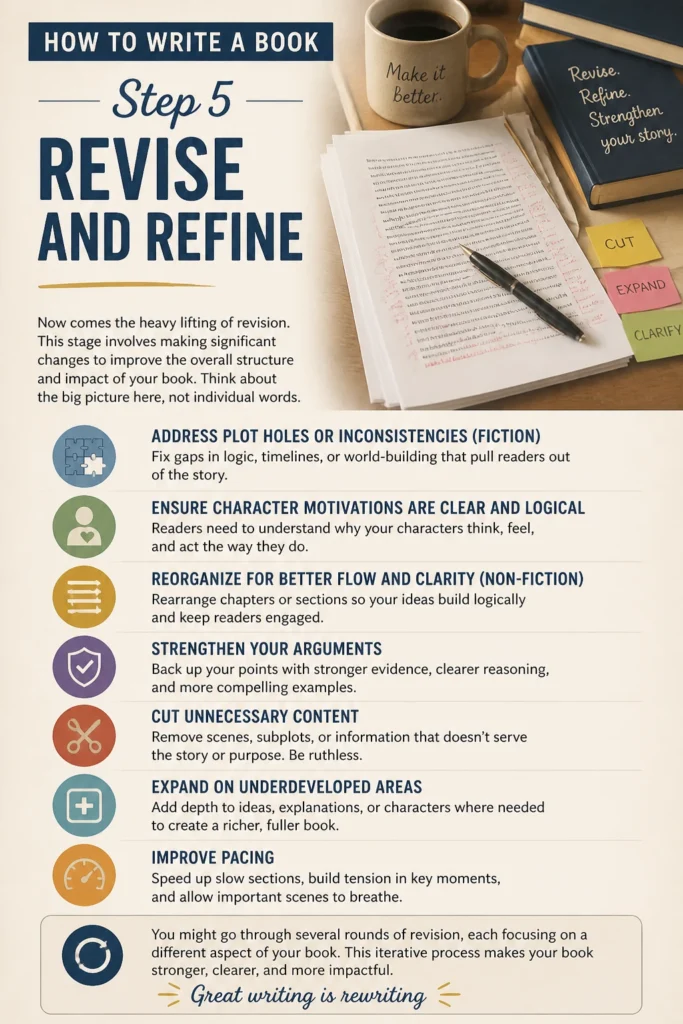
Think about the big picture here, not individual words.
- Address major plot holes or inconsistencies in fiction. Ensure character motivations are clear and logical.
- Reorganize chapters or sections in non-fiction for better flow and clarity. Strengthen your arguments.
- Cut unnecessary scenes, subplots, or information that doesn’t serve the story or purpose. Be ruthless.
- Expand on underdeveloped ideas or characters. Add depth where needed.
- Improve pacing. Speed up slow sections and allow important moments to breathe.
You might go through several rounds of revision, each focusing on a different aspect of your book.
This iterative process makes your book stronger.
Step 6: Edit for Line-Level Detail
After you’re satisfied with the structural integrity of your book, it’s time to zoom in on the language itself.
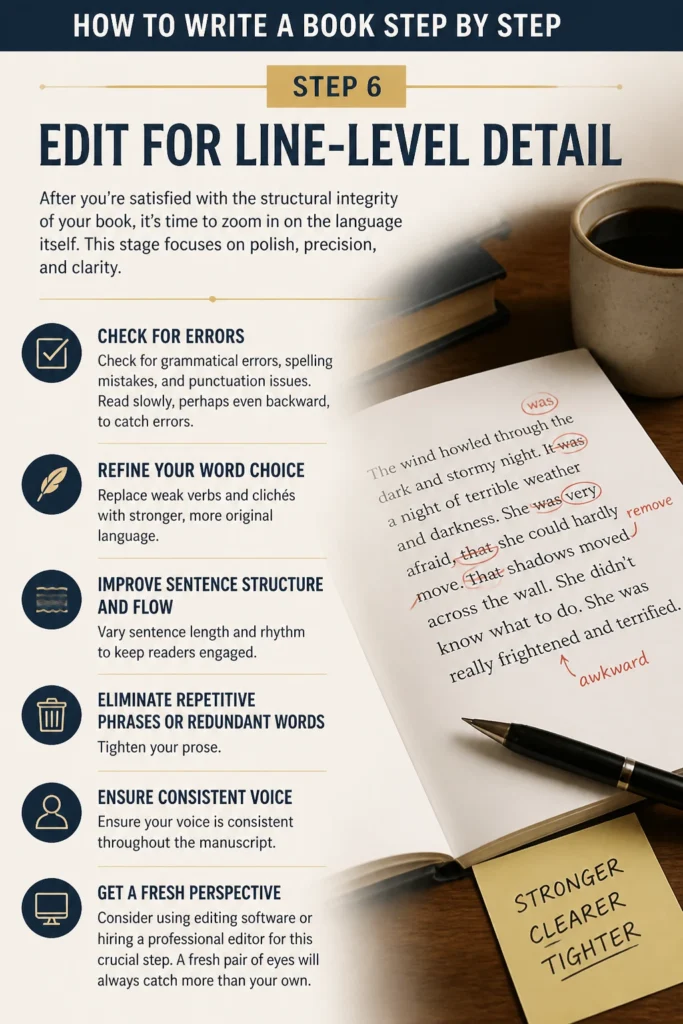
This stage focuses on polish, precision, and clarity.
- Check for grammatical errors, spelling mistakes, and punctuation issues. Read slowly, perhaps even backward, to catch errors.
- Refine your word choice. Replace weak verbs and clichés with stronger, more original language.
- Improve sentence structure and flow. Vary sentence length and rhythm to keep readers engaged.
- Eliminate repetitive phrases or redundant words. Tighten your prose.
- Ensure your voice is consistent throughout the manuscript.
Consider using editing software or hiring a professional editor for this crucial step.
A fresh pair of eyes will always catch more than your own.
Step 7: Get Feedback
Before considering publication, it’s invaluable to get external opinions on your manuscript.
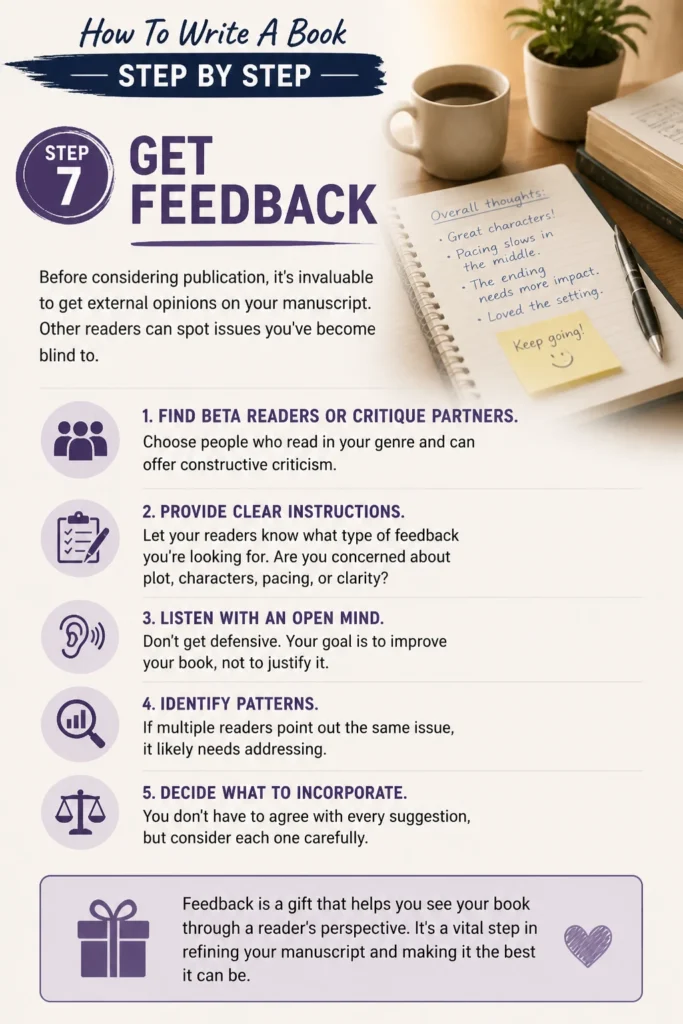
Other readers can spot issues you’ve become blind to.
- Find beta readers or critique partners. Choose people who read in your genre and can offer constructive criticism.
- Provide clear instructions on what type of feedback you’re looking for. Are you concerned about plot, characters, pacing, or clarity?
- Listen to their feedback with an open mind. Don’t get defensive.
- Identify patterns in the feedback. If multiple readers point out the same issue, it likely needs addressing.
- Decide which feedback to incorporate. You don’t have to agree with every suggestion, but consider each one carefully.
Feedback is a gift that helps you see your book through a reader’s perspective.
It’s a vital step in refining your work.
Step 8: Prepare for Publication
With a polished manuscript in hand, you’re ready to think about how your book will reach readers.
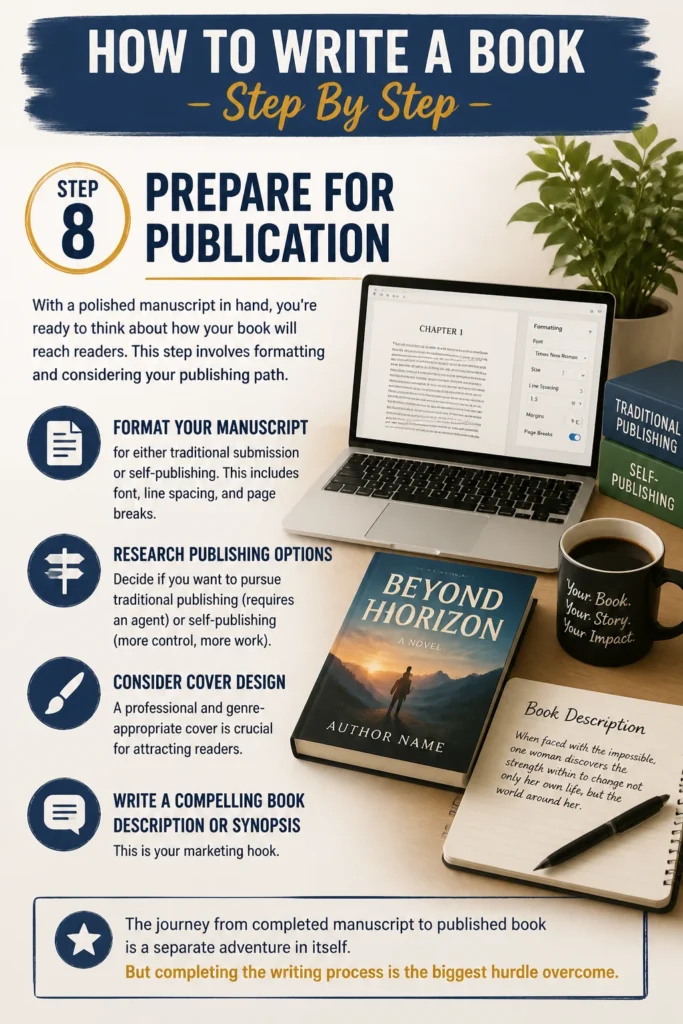
This step involves formatting and considering your publishing path.
- Format your manuscript for either traditional submission or self-publishing. This includes font, line spacing, and page breaks.
- Research publishing options. Decide if you want to pursue traditional publishing (requires an agent) or self-publishing (more control, more work).
- Consider cover design. A professional and genre-appropriate cover is crucial for attracting readers.
- Write a compelling book description or synopsis. This is your marketing hook.
The journey from completed manuscript to published book is a separate adventure in itself.
But completing the writing process is the biggest hurdle overcome.
Common Mistakes to Avoid
Waiting for Inspiration
Many aspiring authors believe they need to wait for a burst of inspiration to write. This often leads to procrastination and an unfinished manuscript.
Writing is a discipline, much like any other skill. It requires showing up consistently, even when you don’t feel like it.
Cultivate a regular writing habit, and inspiration will often follow the act of writing, not precede it.
Skipping the Outline
While some writers can successfully “pants” a novel, many find themselves lost or stuck without a plan. Skipping the outlining phase can lead to plot holes, inconsistent character arcs, and a meandering narrative.
An outline provides a framework that saves time in the long run. It ensures your story has a beginning, middle, and end, and that your arguments in non-fiction flow logically.
Editing While Drafting
Trying to perfect every sentence as you write your first draft can be a major roadblock. This approach often slows down progress to a crawl and can lead to burnout.
The first draft is about capturing the story or information. Editing is a separate process. Allow yourself to write imperfectly in the initial stages, knowing you’ll refine it later.
Ignoring Feedback
It’s natural to feel protective of your work, but dismissing constructive criticism can prevent your book from reaching its full potential. Your perspective is limited, and external readers offer fresh insights.
Seek out honest feedback from trusted sources. Listen carefully, identify recurring themes, and be willing to make changes that improve the reader’s experience.
Troubleshooting
Writer’s Block
Writer’s block is a common hurdle where words simply won’t come. It can feel like an impenetrable wall.
Try changing your writing environment, taking a walk, or engaging in freewriting on an unrelated topic. Sometimes, stepping away and returning with a fresh mind is all it takes to restart your flow.
Lack of Motivation
The long process of writing a book can lead to dips in motivation. It’s easy to feel overwhelmed by the sheer scale of the project.
Break your goals into smaller, more manageable chunks. Celebrate small victories, like finishing a chapter or hitting a word count milestone. Remind yourself why you started writing this book in the first place.
Feeling Overwhelmed by the Task
Looking at the entire book as one massive project can be paralyzing. The scope feels too large to tackle.
Focus only on the current step you’re on. If you’re drafting, just focus on writing the next sentence, then the next paragraph. Don’t think about editing or publishing until those steps arrive. One step at a time makes the journey manageable.
Key Takeaways
- Writing a book is an iterative process involving distinct stages from conception to refinement.
- Consistency and discipline are more impactful than waiting for sudden bursts of inspiration.
- Outlining provides a crucial framework, even for discovery writers, ensuring coherence.
- The first draft is for getting the story down; editing comes later and is a separate skill.
- External feedback is invaluable for identifying blind spots and improving your manuscript.
- Perseverance through challenges like writer’s block is essential for reaching the finish line.
Frequently Asked Questions
How long does it really take to write a book?
The timeline varies wildly depending on your writing speed, the book’s length, and your daily commitment. A realistic estimate for a first-time author might be 6-18 months for the drafting and revision phases. Some write faster, others take years.
Do I need an agent to get published?
If you aim for traditional publishing with a major publisher, yes, you almost certainly need a literary agent. They act as your representative. If you plan to self-publish, an agent is not necessary.
What’s the best software for writing a book?
There isn’t one “best” software; it depends on your preferences. Microsoft Word is widely used. Scrivener is popular for its organizational features, allowing you to easily manage chapters and research. Google Docs offers cloud-based collaboration. Choose what feels comfortable for you.
How do I stay motivated throughout the entire process?
Break your project into smaller goals, like daily word counts or chapter completions, and reward yourself for hitting them. Join a writing community for accountability and support. Remember your “why”—the reason you wanted to write this book in the first place—to rekindle your passion when motivation wanes.
Our Top Recommended Finds
- Noise-Canceling Headphones: Essential for creating a focused environment, especially in shared spaces or noisy homes.
- Ergonomic Keyboard and Mouse: Investing in comfortable peripherals can prevent strain during long writing sessions.
- A Dedicated Writing Journal: Perfect for brainstorming, jotting down ideas, or freewriting away from the screen.
Your Story Awaits: Begin the Journey Today
Writing a book is a profound and rewarding endeavor. It’s a journey that demands patience, persistence, and a belief in your own voice.
You now have a clear, actionable guide to navigate the process.
Don’t let the magnitude of the task deter you. Break it down, commit to the steps, and allow your story to unfold.
The world is ready to hear what you have to say. Take the first step today.