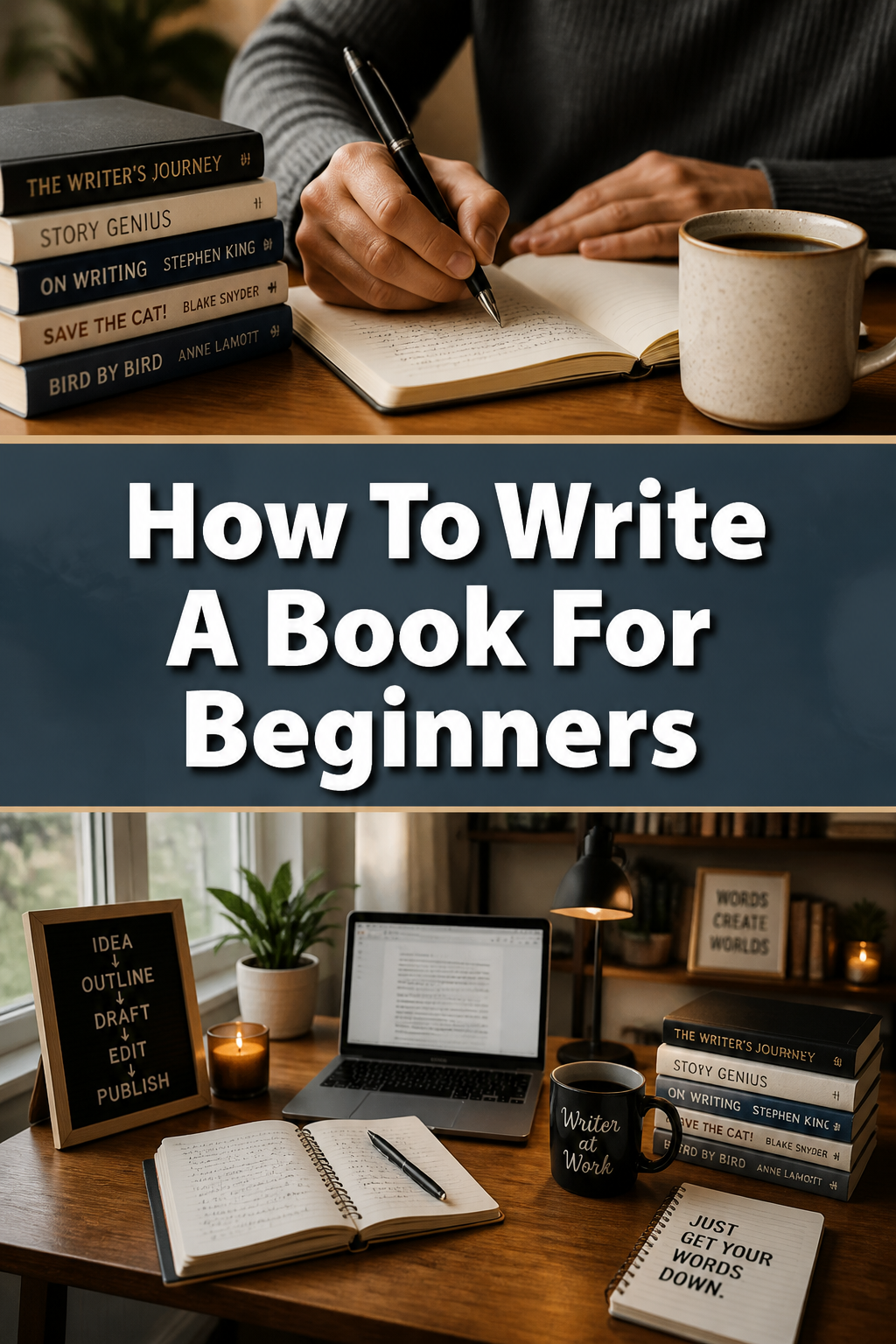
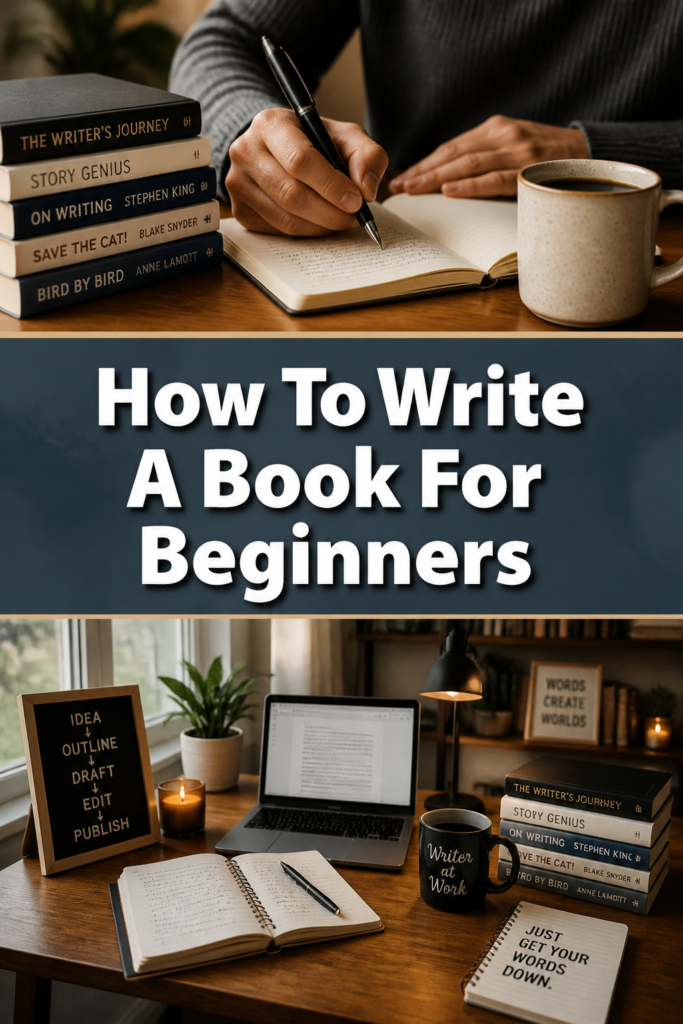
✍️ How To Write A Book For Beginners
Have you ever dreamed of seeing your name on a book cover? Many aspiring writers feel overwhelmed by the sheer scale of such a project. This guide will break down the process into manageable, actionable steps.
I’ve navigated the journey from a blank page to a finished manuscript myself, and I understand the challenges beginners face. Let me show you how to turn your book idea into a reality.
Quick Overview
Writing a book is a marathon, not a sprint, but entirely achievable with the right approach. You’ll learn to plan, write, and refine your manuscript, transforming an abstract idea into a tangible work.
- Time needed: 6-12 months (for a first draft and initial edits, depending on commitment)
- Difficulty: Beginner
- What you’ll need: A computer or notebook, a dedicated writing space, an open mind, and perseverance.
Step-by-Step Instructions
Step 1: Discover Your Idea and Niche
Every book starts with an idea. What topic excites you? What story demands to be told?
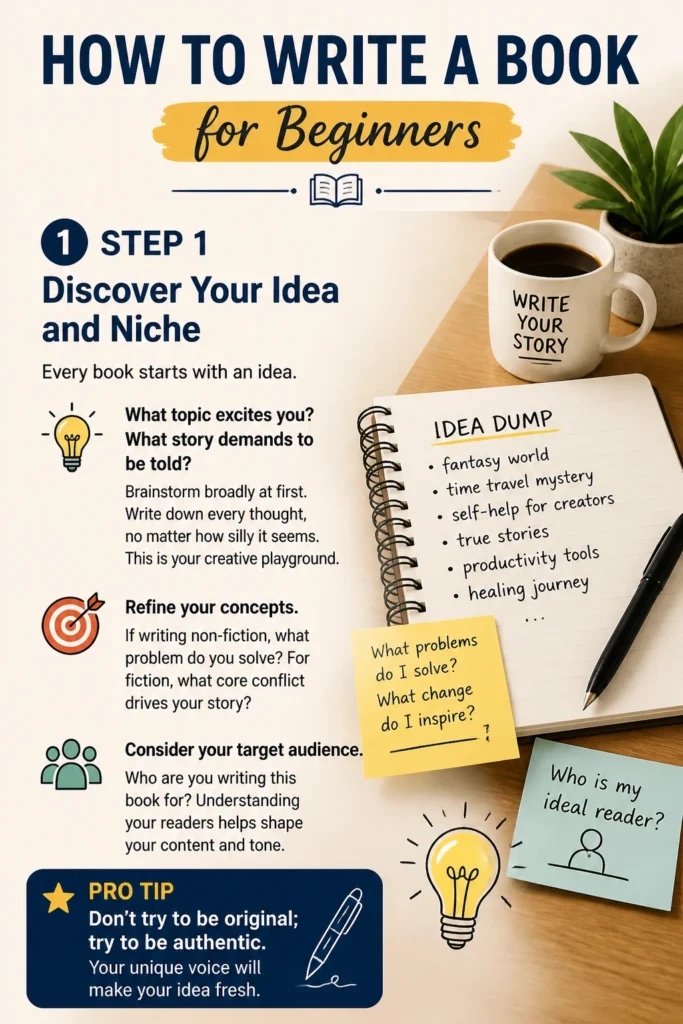
Brainstorm broadly at first. Write down every thought, no matter how silly it seems. This is your creative playground.
Refine your concepts. If writing non-fiction, what problem do you solve? For fiction, what core conflict drives your story?
Consider your target audience. Who are you writing this book for? Understanding your readers helps shape your content and tone.
Pro Tip: Don’t try to be original; try to be authentic. Your unique voice will make your idea fresh.
Step 2: Outline Your Story or Non-Fiction Structure
An outline is your book’s blueprint. It provides direction and prevents you from getting lost.
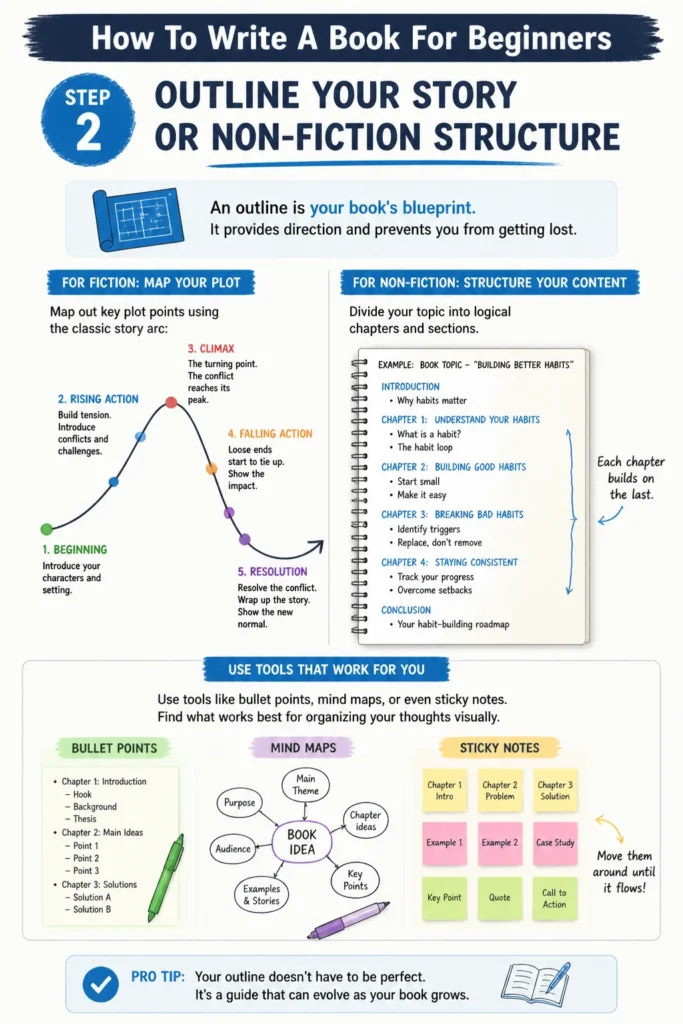
Map out key plot points for fiction. Think about the beginning, rising action, climax, falling action, and resolution.
Structure your non-fiction content. Divide your topic into logical chapters and sections. Each chapter should build on the last.
Use tools like bullet points, mind maps, or even sticky notes. Find what works best for organizing your thoughts visually.
Step 3: Develop Your Characters and World (or Core Concepts)
Rich characters and a believable world draw readers in. For non-fiction, strong concepts are equally vital.
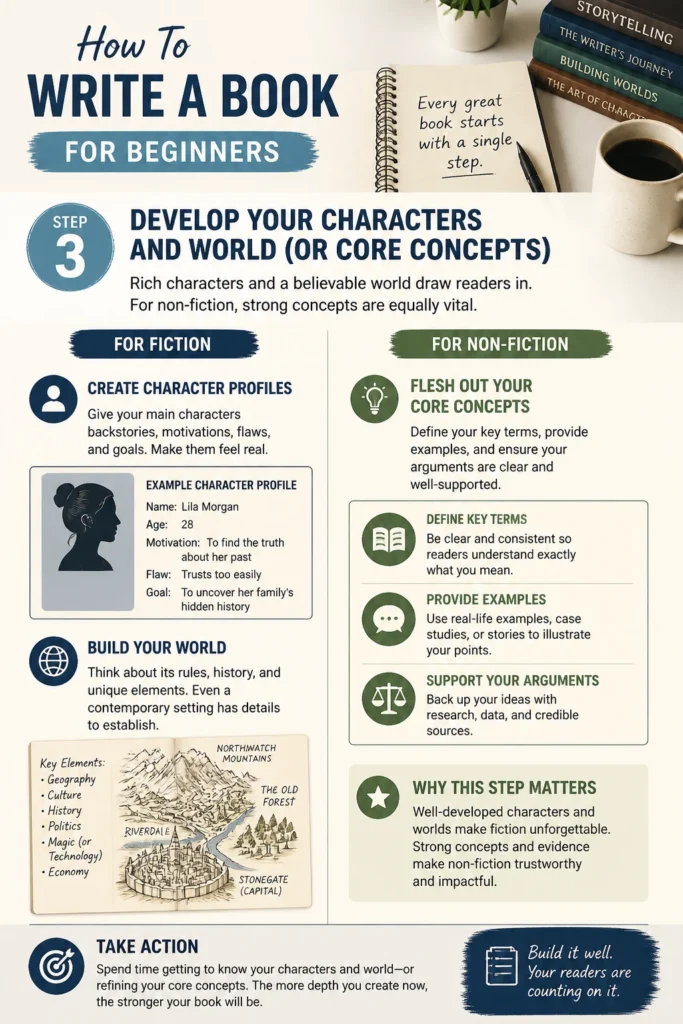
Create character profiles for fiction. Give your main characters backstories, motivations, flaws, and goals. Make them feel real.
Build your world for fiction. Think about its rules, history, and unique elements. Even a contemporary setting has details to establish.
Flesh out your core concepts for non-fiction. Define your key terms, provide examples, and ensure your arguments are clear and well-supported.
Step 4: Create a Writing Routine and Environment
Consistency is more important than long, sporadic bursts of writing. Establish habits that support your goal.
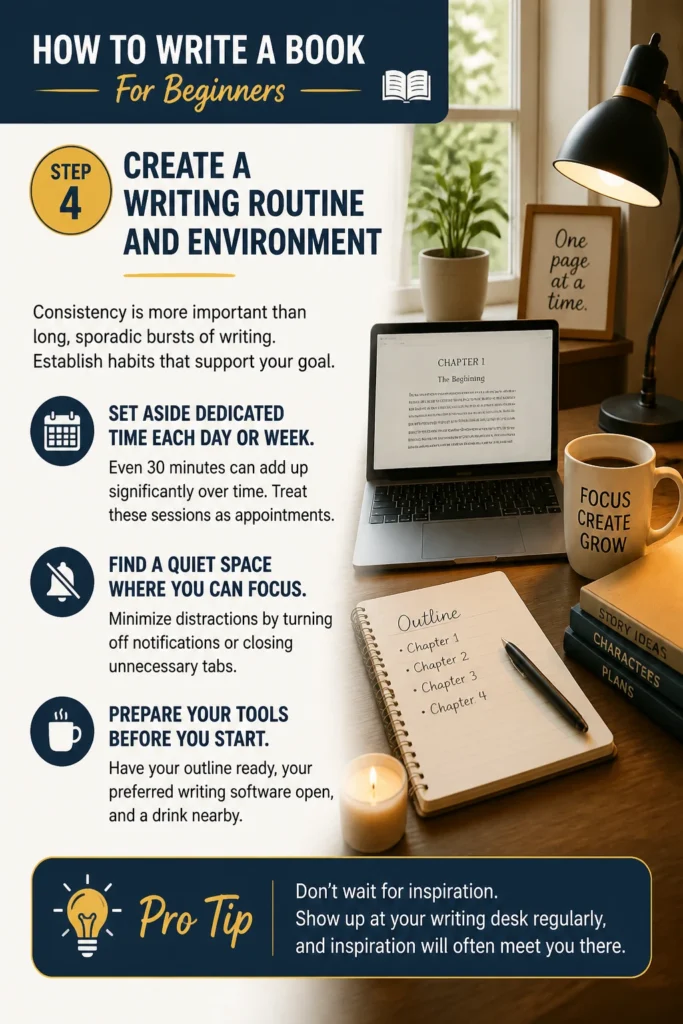
Set aside dedicated time each day or week. Even 30 minutes can add up significantly over time. Treat these sessions as appointments.
Find a quiet space where you can focus. Minimize distractions by turning off notifications or closing unnecessary tabs.
Prepare your tools before you start. Have your outline ready, your preferred writing software open, and a drink nearby.
Pro Tip: Don’t wait for inspiration. Show up at your writing desk regularly, and inspiration will often meet you there.
Step 5: Write Your First Draft (Don’t Edit Yet!)
This is where you get the words onto the page. The goal is completion, not perfection.
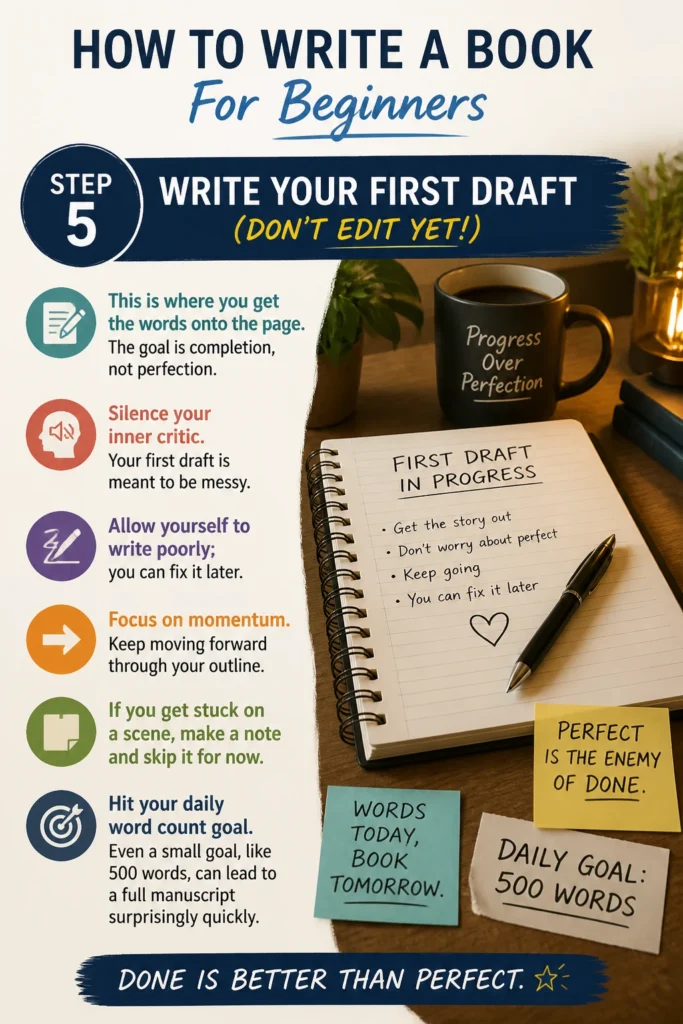
Silence your inner critic. Your first draft is meant to be messy. Allow yourself to write poorly; you can fix it later.
Focus on momentum. Keep moving forward through your outline. If you get stuck on a scene, make a note and skip it for now.
Hit your daily word count goal. Even a small goal, like 500 words, can lead to a full manuscript surprisingly quickly.
Step 6: Take a Break, Then Self-Edit
After finishing your first draft, step away from it. This fresh perspective is crucial for effective editing.
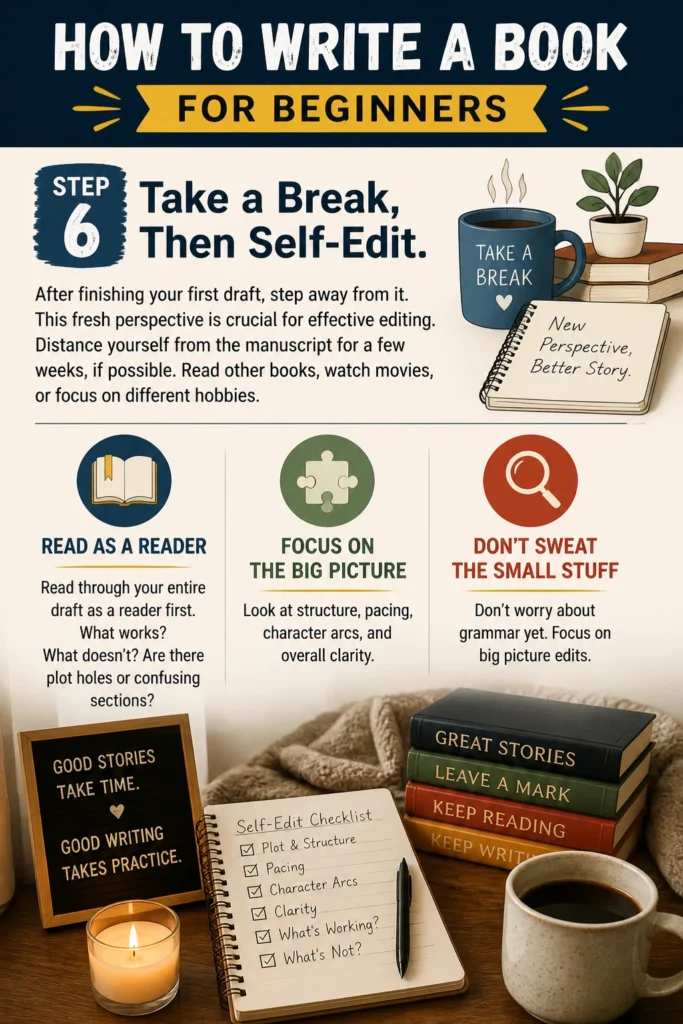
Distance yourself from the manuscript for a few weeks, if possible. Read other books, watch movies, or focus on different hobbies.
Read through your entire draft as a reader first. What works? What doesn’t? Are there plot holes or confusing sections?
Focus on big picture edits. Look at structure, pacing, character arcs, and overall clarity. Don’t worry about grammar yet.
Step 7: Seek Feedback from Trusted Readers
Other eyes will spot things you’ve missed. Constructive criticism is invaluable for improving your work.
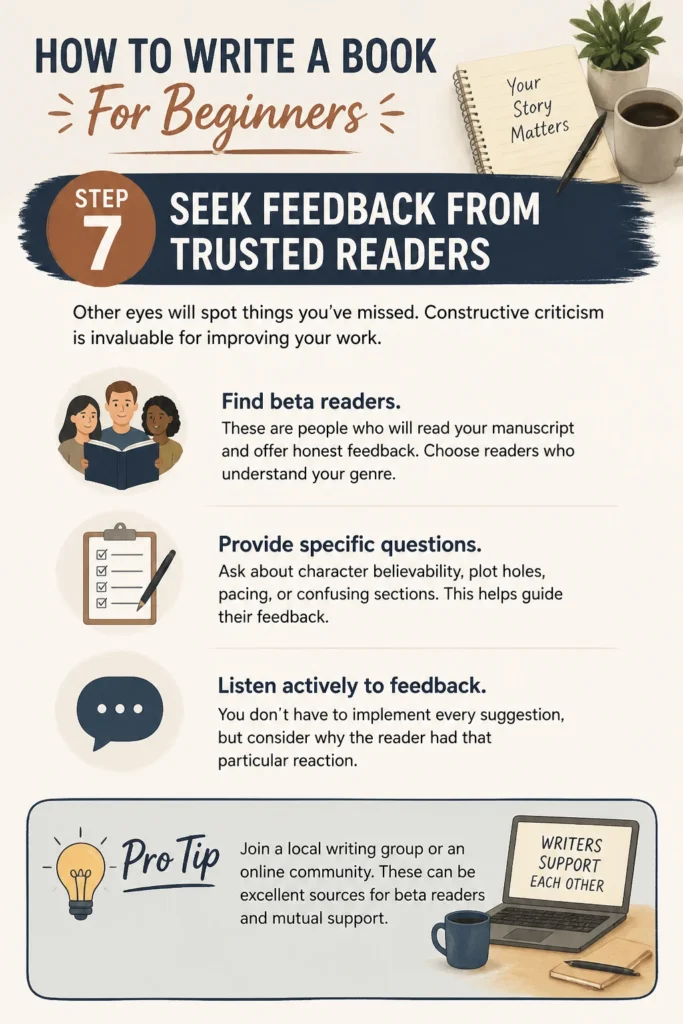
Find beta readers. These are people who will read your manuscript and offer honest feedback. Choose readers who understand your genre.
Provide specific questions. Ask about character believability, plot holes, pacing, or confusing sections. This helps guide their feedback.
Listen actively to feedback. You don’t have to implement every suggestion, but consider why the reader had that particular reaction.
Pro Tip: Join a local writing group or an online community. These can be excellent sources for beta readers and mutual support.
Step 8: Refine and Polish Your Manuscript
This stage involves detailed improvements, making your writing shine.
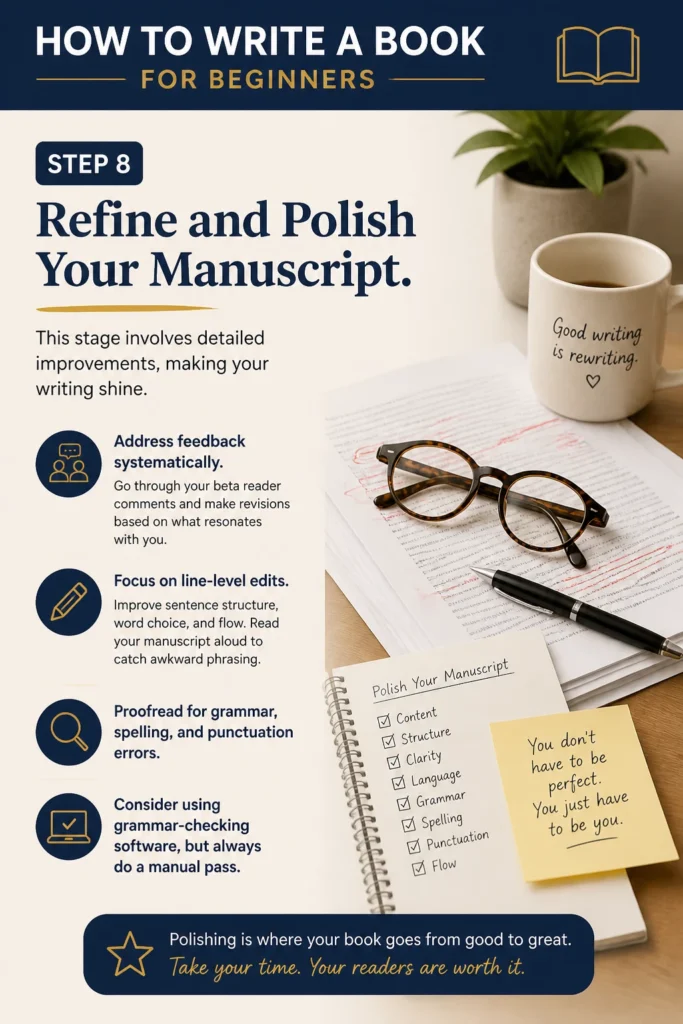
Address feedback systematically. Go through your beta reader comments and make revisions based on what resonates with you.
Focus on line-level edits. Improve sentence structure, word choice, and flow. Read your manuscript aloud to catch awkward phrasing.
Proofread for grammar, spelling, and punctuation errors. Consider using grammar-checking software, but always do a manual pass.
Step 9: Explore Publishing Options
Once your manuscript is polished, you have choices for sharing your story with the world.
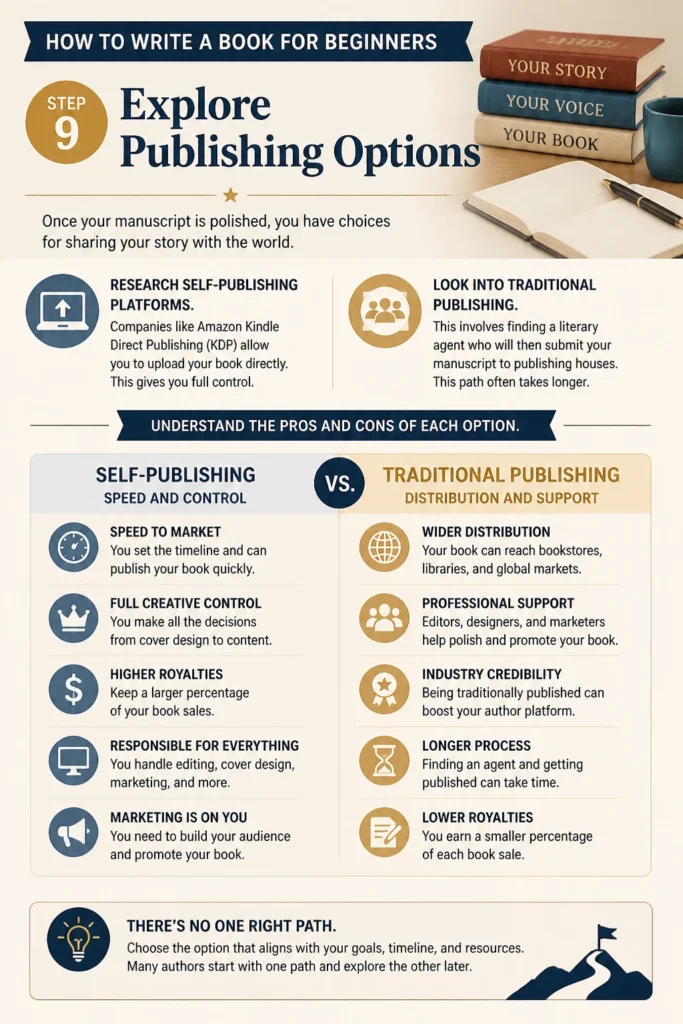
Research self-publishing platforms. Companies like Amazon Kindle Direct Publishing (KDP) allow you to upload your book directly. This gives you full control.
Look into traditional publishing. This involves finding a literary agent who will then submit your manuscript to publishing houses. This path often takes longer.
Understand the pros and cons of each option. Self-publishing offers speed and control, while traditional publishing offers wider distribution and professional support.
Common Mistakes to Avoid
Starting Before Outlining
Many beginners jump straight into writing without a plan. This often leads to getting stuck, losing direction, or having to rewrite large sections. An outline acts as a roadmap, guiding you through the entire process and saving you considerable time and frustration later on.
Editing While Drafting
Trying to perfect every sentence as you write your first draft is a recipe for writer’s block. It slows down your progress and can kill your creative flow. Focus solely on getting the story or information down during the first draft phase; save editing for later, dedicated stages.
Giving Up Too Soon
Writing a book is a long and challenging endeavor. There will be days when you feel discouraged or doubt your abilities. Many aspiring authors quit when they hit a difficult patch. Persistence is key; understand that setbacks are normal and push through them.
Ignoring Feedback
It’s natural to feel protective of your work, but dismissing constructive criticism hinders your growth. Feedback from beta readers or editors highlights areas for improvement that you, as the author, might be too close to see. Be open to suggestions, even if you don’t implement every single one.
Troubleshooting
Writer’s Block
If words aren’t flowing, try a change of scenery. Go for a walk, listen to music, or work on a completely different task for a while. Sometimes, simply writing anything, even nonsense, can break the spell.
Lack of Time
Break your writing goals into smaller, more manageable chunks. Instead of aiming for an hour, commit to 15-20 minutes. Utilize small pockets of time, like during a commute or while waiting for an appointment.
Feeling Overwhelmed
A large project can feel daunting. Revisit your outline and focus only on the very next step. Celebrate small victories, like finishing a chapter or hitting a word count goal, to maintain motivation. Remember why you started this journey.
Key Takeaways
- Start with a clear idea and outline: A solid plan prevents getting lost and provides direction.
- Prioritize writing the first draft without editing: Get the story down, then refine it later.
- Establish a consistent writing routine: Regular, short sessions are more effective than sporadic long ones.
- Embrace feedback from others: External perspectives are vital for identifying areas for improvement.
- Be persistent and patient: Writing a book is a marathon, requiring dedication and resilience.
- Break down the process: Tackle the journey step by step to avoid feeling overwhelmed.
Frequently Asked Questions
How long should my book be?
Book length varies greatly by genre. A typical novel might be 50,000-90,000 words, while non-fiction can range from 30,000 to over 100,000 words. Focus on telling your complete story or covering your topic thoroughly rather than hitting an arbitrary number.
Do I need an agent to get published?
Not always. For traditional publishing, an agent is usually necessary to submit your manuscript to major publishing houses. However, if you choose self-publishing, you do not need an agent; you handle the publishing process yourself.
What if my idea isn’t original?
No idea is entirely new. What makes your book unique is your voice, perspective, and how you tell the story or present the information. Focus on making your version the best it can be, rather than striving for unprecedented originality.
How much does it cost to publish a book?
Self-publishing costs can range from very little (if you do everything yourself) to several thousand dollars (for professional editing, cover design, and formatting). Traditional publishing typically has no upfront costs for the author, as the publisher covers these expenses.
Our Top Recommended Finds
- Dedicated Notebook and Pen: Perfect for brainstorming, outlining, and capturing ideas away from a screen.
- Writing Software (e.g., Scrivener, Google Docs): Tools that help organize your manuscript, research, and notes efficiently.
- Noise-Canceling Headphones: An excellent investment to create a focused writing environment, especially in noisy surroundings.
Your Story Awaits: Start Writing Today
The journey to becoming an author begins with a single step: writing. Don’t let fear or uncertainty hold you back from bringing your unique voice and perspective to the world. Your story, your insights, they matter.
Imagine the satisfaction of holding your finished book in your hands. That dream is closer than you think. Take what you’ve learned here, open your chosen writing tool, and start crafting your first words. The world is ready to read what you have to say.